
Groninger Museum: what to see and how long to allow
Allow two to three hours for the Groninger Museum, and plan around its Monday closure: it is open on the other days of the week, from 10:00 to 17:00. The museum is a multicoloured, deliberately extrovert structure standing in the water within sight of the railway station, and a natural first stop on a city break of one or two days. This page covers what the building is, how to reach it from the centre, what hangs inside, and how to shape a half-day around it.
What the Groninger Museum is and why it stands out
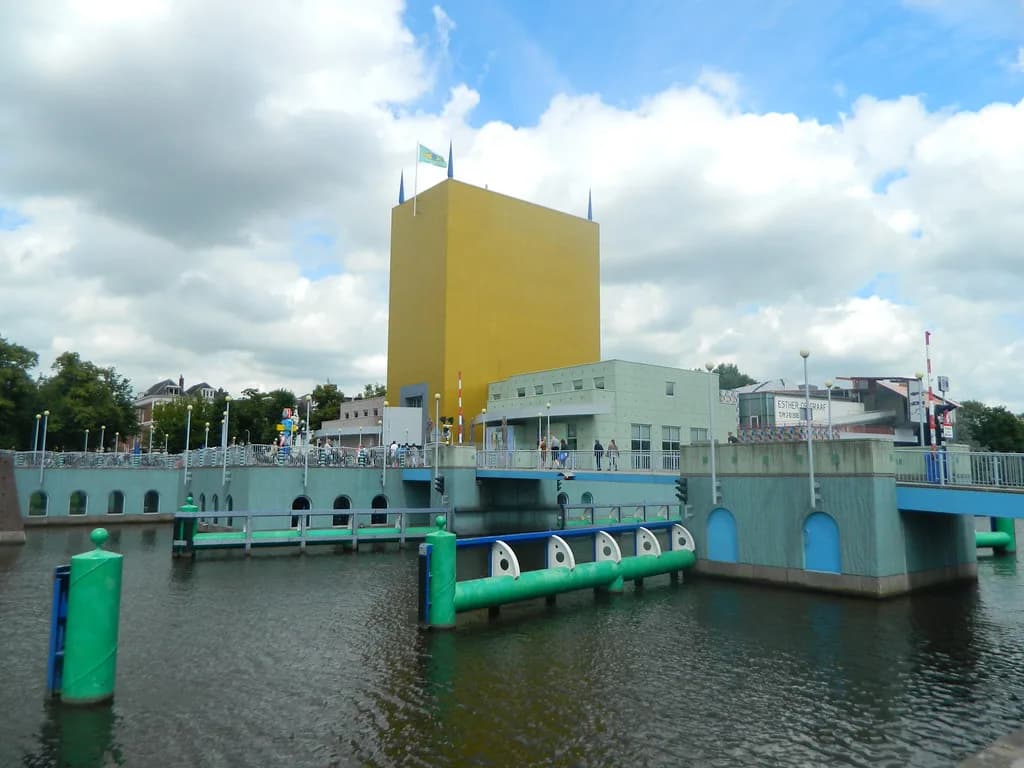
The Groninger Museum is the city's flagship art museum, housed in a complex that rises directly from the canal water and makes no attempt to blend in. Its galleries mix contemporary art with classical painting, and the museum sets out to challenge visitors to look at visual art with fresh eyes rather than to walk a predictable chronological line. If you have one museum slot in Groningen, this is the one to spend it on.
The building is its own draw. From the outside the museum reads as a cluster of contrasting pavilions in bold colour, and it is visible from the station approach before you have entered the city at all. Deciding whether you are coming for the architecture, the collection, or both is worth doing in advance: a quick exterior circuit and a single gallery floor is a very different visit from a full afternoon inside.
Where the museum is and how to reach it from the city centre
The museum stands in the water just south of the city centre, on the side facing the station, so it sits on the natural line between the two. From the station it is a few minutes on foot, which makes it an easy first or last stop if you arrive by train; from the Grote Markt you head south past the Vismarkt and across the bridge towards the station.
A useful walking shape is to start at the Grote Markt, where the Martinitoren marks the centre, drop south through the Vismarkt, and continue to the museum; afterwards you can loop back north through the streets around the Oude Kijk in 't Jatstraat for a coffee. That route strings the two squares and the museum together without any detour, and it works in reverse if you are heading for a train.
The building itself: the multicoloured structure in the water
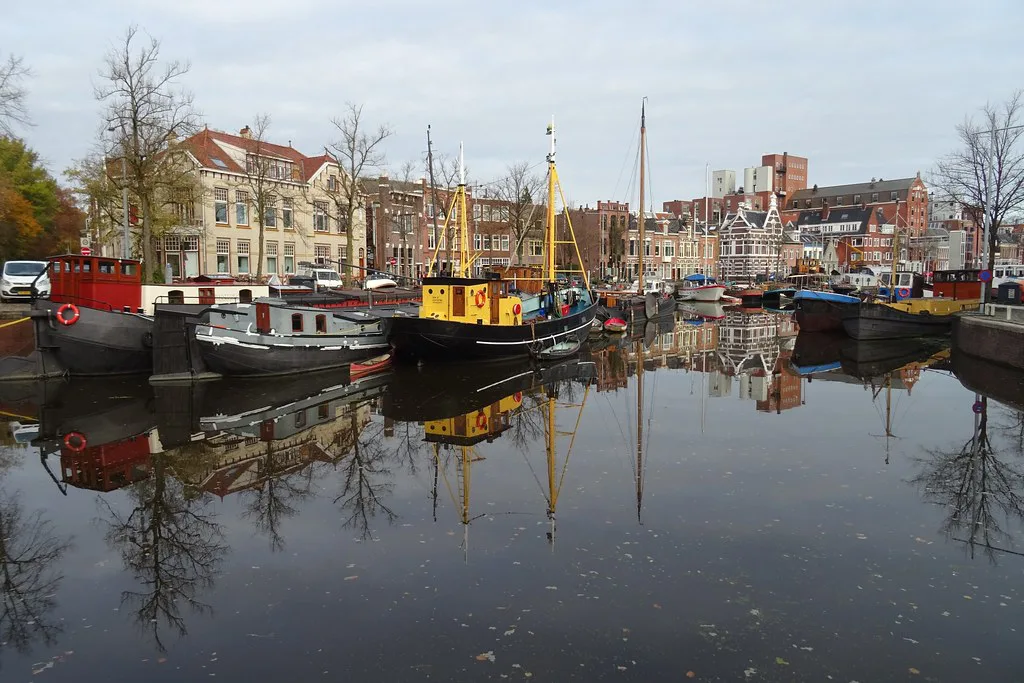
Treat the exterior as part of the visit rather than a preamble. The pavilions differ sharply in colour and material, and because the complex sits in water, the reflections change the effect as you move around it. Walk the waterside path before you go in, and look back at the building from the far bank: this is the view that explains why the museum is a landmark rather than just an institution.
The setting also makes the museum unusually photogenic in poor weather, when the wet paving and the canal surface sharpen the colours. If rain is forecast, plan the interior for the wettest part of the day and take the exterior circuit when it eases; the small scale of central Groningen means you can reorder your day without losing much time.
What to see inside: contemporary art, classical painting and temporary exhibitions
Inside, expect a mix rather than a single story: contemporary work, classical painting and rotating exhibitions share the building, and the museum's stated aim is to make visitors look at visual art differently. Give the temporary displays priority if something is on that you want to see, then use whatever time remains for the permanent rooms. The museum publishes its current programme, with what is on and when, on its own site.
If you are choosing between the museum and another indoor sight on a wet day, the Groninger Museum is the grander art stop and sits within easy walking distance of the station and the centre, which leaves room for a second stop nearby.
Opening days and hours, including the Monday closure
The museum is closed on Mondays and is listed as open from 10:00 to 17:00 on the days it operates. Confirm the published times on the day before you set out, since some museums adjust their hours seasonally; the opening-hours listing is the place to check.
Because Monday is out, a Monday in Groningen needs a different plan. Use that day for the squares and streets instead: the Vismarkt holds its market on Tuesdays, Fridays and Saturdays, and the surrounding shopping streets keep their own hours. That keeps a Monday useful even with the museum shut.
Ticket prices in euros and how to book
The museum sets its own ticket prices, concessions and any booking arrangements, so confirm the current euro price before you travel rather than relying on second-hand figures.
How much time to allow and a realistic half-day shape
Two to three hours covers the building and the main galleries at a reasonable pace; a serious art visitor should allow three hours or more. A practical half-day runs like this: start at the Grote Markt, walk down past the Vismarkt, spend the middle of the day in the museum, then come out and walk north through the Oude Kijk in 't Jatstraat for coffee on the way back. That fills four hours without rushing and leaves the evening free.
If your time in Groningen is only a day, put the museum in the morning and keep the afternoon for the centre. The museum is compact enough that a morning visit does not swallow the rest of the day, and the short walk back into town means you lose little in transit.
What's nearby: Grote Markt, Martinitoren, Vismarkt and the Noorderplantsoen
The Grote Markt is the city's central square, and the Martinitoren, the 97-metre tower known locally as the Olle Grieze, stands on it; the climb rewards you with a view over the city and the surrounding countryside. The Vismarkt, a short walk south, is a broad open space with fish stalls on Tuesdays, Fridays and Saturdays. Both are on the natural route between the station and the museum.
The Forum Groningen, on the Nieuwe Markt, is the other landmark building in the centre: an imposing but accessible modern structure that houses the Groningen Store tourist information desk. It makes a sensible second indoor stop if you want more after the museum, and its position in the middle of the shopping streets puts it right on your way back.
For green space, the Noorderplantsoen, north-west of the centre, has winding paths, sloping lawns and terraces around its edge, and is the obvious place to sit down after a morning indoors. Shops in the centre are generally open seven days a week, with Thursday late-night shopping until 21:00, so an afternoon of browsing after the museum fits easily.
Prinsenhof, Groningen, is a quieter historic corner of the centre and gives you a reason to walk north rather than straight back to the station at the end of the day. It is a small addition to a museum afternoon rather than a destination in itself, but it rounds off the walk neatly.
Practical points: cards, bags and busy periods
Check the museum's own website before you go for anything you need to know about what you can bring into the galleries and whether there is anything to arrange in advance. Weekends are the obvious times to expect more company at the desk.
Nearby alternatives if the museum is closed
On a Monday, head for the city's squares and shopping streets instead: the centre is compact, shops are open, and the walk between the Grote Markt, Vismarkt and Noorderplantsoen fills a morning comfortably. The Groninger Museum's closure does not empty your day, it just changes its order.
If rain settles in and you want another indoor stop, the Forum Groningen on the Nieuwe Markt is the closest large building to the museum route. For a different flavour of collection, Groningen also has its university museum, a smaller and more academic stop; the wider set of city guides is a sensible place to compare options before you commit.
Is the Groninger Museum worth half a day?
Yes, if you have a spare morning and any interest in art or architecture: two to three hours covers the building and the main galleries, and the walk there from the Grote Markt takes you through the best of the centre. Skip it on a Monday, when it is closed, and put the Vismarkt and the shopping streets in its place.
Build the visit into the middle of a walking day rather than treating it as a separate trip. Start on the Grote Markt, come south past the Vismarkt, and let the museum be the pause before you walk back north. For more, see Prinsenhof, Groningen.
Explore more Groningen guides
Frequently Asked Questions
How long should I spend at the Groninger Museum?
Two to three hours is enough for the building and the main galleries; allow three hours or more if you want to see the temporary exhibitions properly.
When is the Groninger Museum open?
It is closed on Mondays and is listed as open from 10:00 to 17:00 Tuesday to Sunday. Confirm the published times before setting out, since museum hours can change seasonally.
What is there to do in Groningen on a Monday?
The museum is shut, so use the day for the Grote Markt and the Martinitoren, the Vismarkt and the streets of the centre. Shops are open seven days a week, with late-night shopping on Thursdays.