
Paleiskwartier, Den Bosch: Modern Architecture Beside the Old Centre
Paleiskwartier is worth a couple of hours, not a day, for most short-break visitors to Den Bosch. It is a purpose-built district of contemporary architecture directly behind the station, and its standout is the Paleisbrug, a bridge designed as a small linear park that carries you on foot from the district towards the old centre.
This guide covers what the district is, how to walk it, which buildings to look for, how long the walk into the centre takes, and who it genuinely suits. It also explains the trade-offs: convenience and modern design on one side, the absence of historic streets and canals on the other.
What and where Paleiskwartier is
Paleiskwartier sits immediately behind Den Bosch's station, on the opposite side from the historic centre, and the railway line forms the hard boundary between the two. It is a large new district rather than a single sight, so you experience it as a grid of streets, squares and water rather than as one address.
In 2016 it was described as roughly thirty hectares, with space for about two thousand homes and 180,000 square metres of offices, built on former industrial land. Treat those figures as background on how the district came about rather than as current counts, and simply expect a lot of new-build housing, offices and an education boulevard.
The comparison with the rest of Den Bosch is the useful one. Where the Binnenstad has canals, medieval street lines and the Sint-Jan, Paleiskwartier has glass, steel, water and straight sightlines. It is a complement to the old town, not a rival to it.

Getting there and getting around on foot
Arrive by train at Station 's-Hertogenbosch and you are already at the edge of the district: the station's rear side opens onto Paleiskwartier. Walking is the sensible way to see it, because the streets are short, flat and laid out for pedestrians moving between the station, the offices and the water.
A guided architecture walk exists if you want the buildings explained rather than just seen: the Vrije Academie runs a walking tour of Paleiskwartier that covers the mix of striking buildings and contemporary architecture, including the Van Lanschot Bankiers headquarters, so check its current programme for dates and how to book.
From the district to the old centre, plan on a walk of roughly twenty to thirty minutes at an easy pace, with the Paleisbrug doing most of the work of getting you from the new district towards the Binnenstad. Bring a bike only if you are touring the wider city, since the district itself is compact enough on foot.

The character: contemporary architecture, offices and an education boulevard
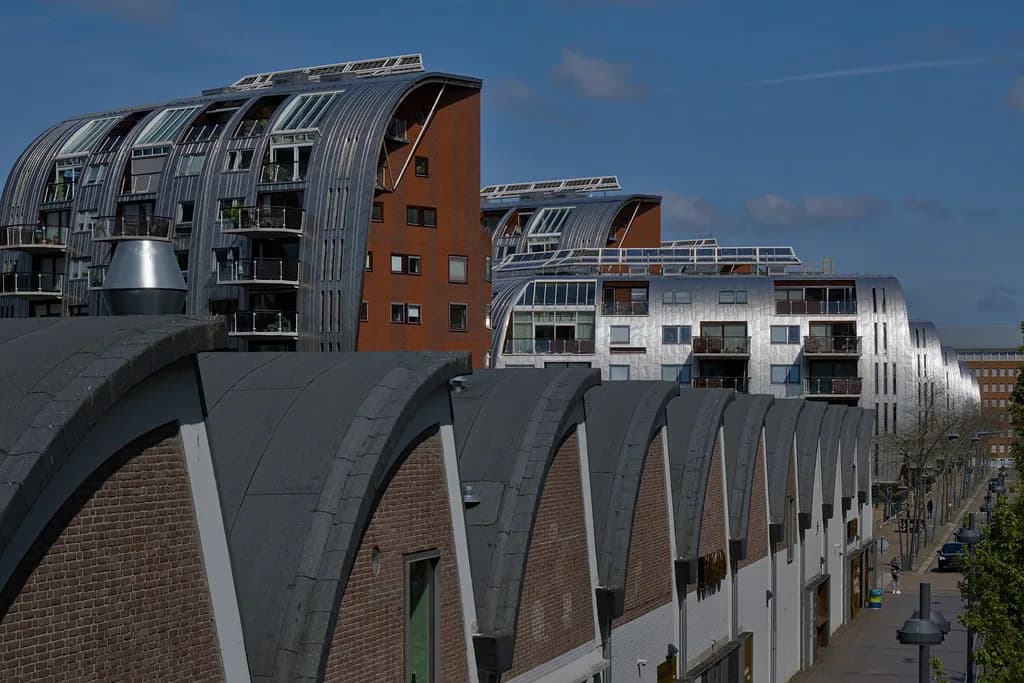
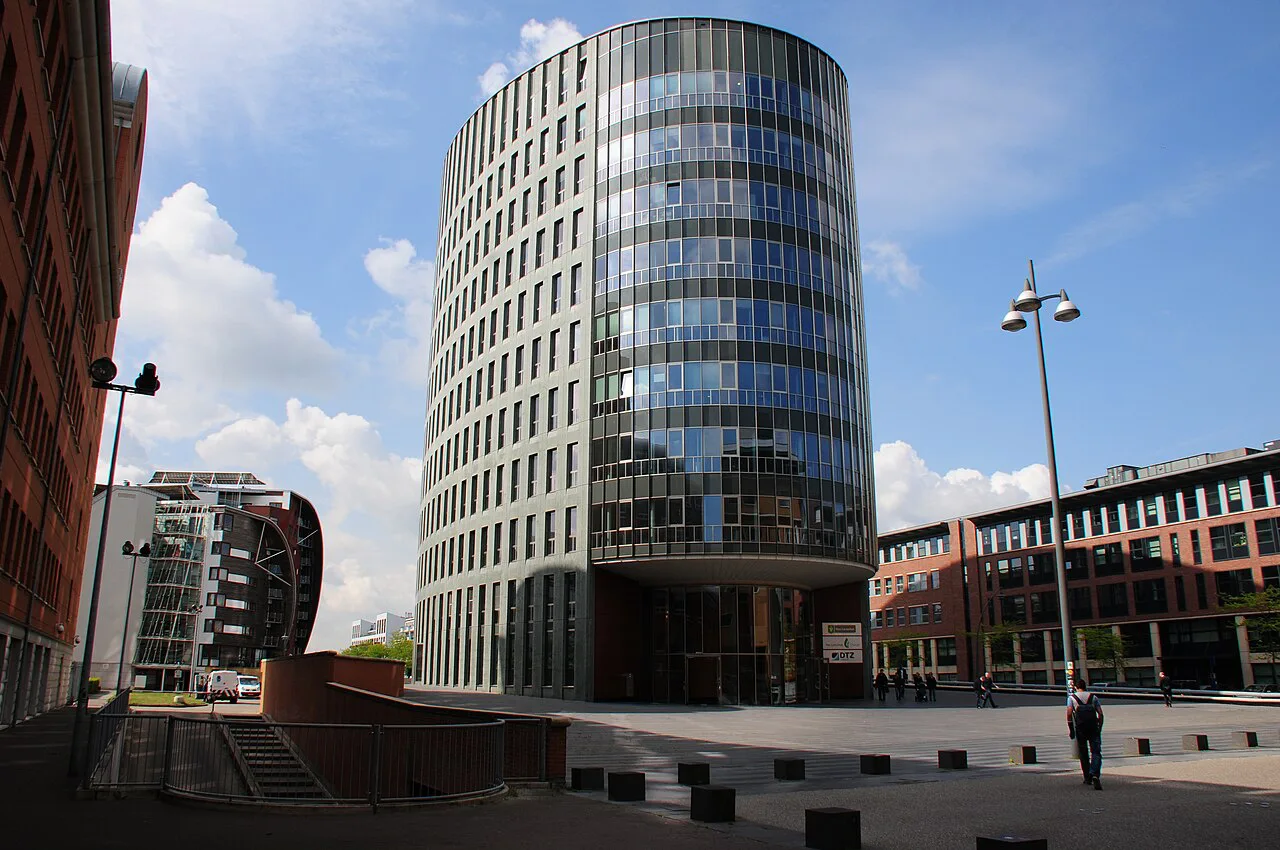
The district's appeal is architectural rather than atmospheric. Well-known Dutch and international architects designed individual blocks, which means the streets read as a catalogue of styles from the late twentieth century onwards rather than as a single coherent scheme.
Paleiskwartier also has an education boulevard lined with educational institutions, which explains why the streets fill with students alongside office workers during the working week. That mix gives the district a purposeful weekday rhythm and a notably quieter feel outside office hours.
Buildings to look for
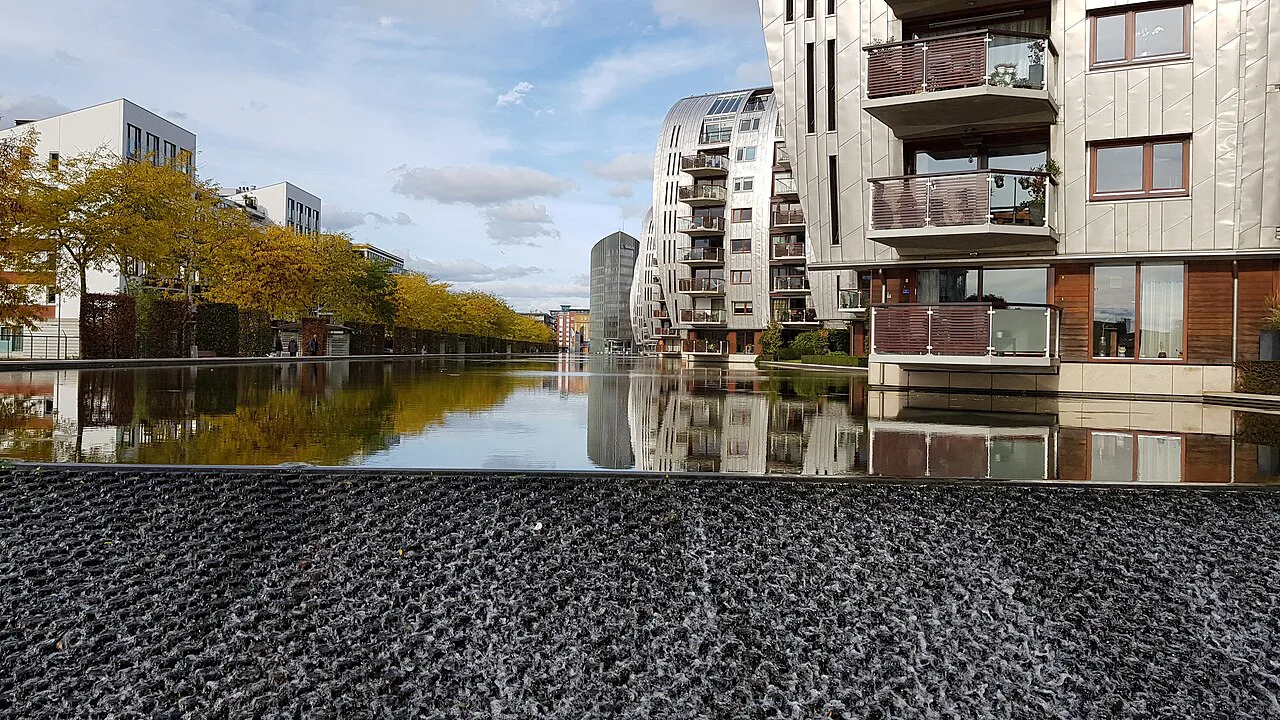
Four buildings do most of the visual work. The Armada's are high-rise blocks with bulging steel and timber façades that resemble ships under sail, and they were among the first structures on the former industrial site. The Riva building is a kantoorgebouw with a sharp prow that reads like the bow of an ocean liner.
The Jheronimustoren is the district's tallest building at 74 metres, with 23 storeys and 88 apartments, clad in milk-glass panels and set back slightly on its upper floors. The Paleis van Justitie is the courthouse, designed by Charles Vandenhove: an imposing new-build block that is a piece of architecture to walk around rather than a visitor attraction to enter.
If modern architecture is your reason for coming, the broader set of Den Bosch sights gives you the historic counterweight to see on the same trip, and the two together make a more interesting day than either alone.
The Paleisbrug: the district's best reason to walk into town
The Paleisbrug is the one piece of Paleiskwartier that a short-break visitor should seek out even if the rest of the district is only a passing glance. Designed by Benthem Crouwel with planting by Piet Oudolf, it links the district to the Binnenstad and works as a small linear park rather than a plain road bridge.
Residents quoted in 2016 put the bridge's cost at around seventeen million euros and criticised the expense; treat that as reported history, not as a current budget. Cross it on foot in either direction and you get the clearest single experience of how the new district knits into the old city.
The central pond and the layout
A large pond sits at the centre of the district, and the surrounding housing, including the ten Armada's, is arranged around it. The water doubles as a heat-and-cold storage system for the neighbouring homes, which is the kind of engineering detail that gives Paleiskwartier its character as a planned piece of urban design.
Use the pond as your orientation point. It is the central open space of the district, so a short loop around it, past the Armada's and towards the other blocks, is easy to plan even without a map.
What is within walking distance
The old centre, the Binnenstad, is the obvious walk from Paleiskwartier: cross the Paleisbrug and you are heading towards the medieval streets, the canals and the main squares. Residents in 2016 also singled out the Bossche Broek and the Gement as lying within walking distance, both green edges of the city rather than urban sights.
For a wider view of how the city's districts differ, Willemspoort, Den Bosch is another area worth understanding before you commit your days, and the historic core remains the main event for most visitors.
Who Paleiskwartier suits, and who it does not
Paleiskwartier suits architecture-minded travellers, anyone arriving by train who wants the shortest possible transfer to a bed, and visitors who have already seen the old centre and want a contrast. It does not suit travellers whose idea of Den Bosch is canals, medieval lanes and cafés on the water, because none of that is here.
If you want a residential neighbourhood with a different atmosphere within reach of the centre, De Muntel, Den Bosch makes a better base for a slower trip, and the neighbourhood guides set out the alternatives side by side.
If you are deciding where to spend a short break, the honest answer is that Paleiskwartier is a morning or an afternoon, best combined with the centre rather than replacing it. Treat it as a walk with buildings, not a destination in its own right.
Eating and the evening atmosphere
Paleiskwartier had small restaurants and a growing resident population by 2016, and residents pushed back on the idea that it was dead in the evenings. It does not have the dense cluster of places to eat that makes the old centre so easy to wander in the evening.
For a proper evening of eating, head for the centre instead: that is where Den Bosch's evening restaurants are concentrated, and it is a short walk or a quick hop from the district.
Do not plan on a theatre in the district: a resident in 2016 noted that the proposed theatre did not go ahead, and a cinema was spoken of as coming rather than confirmed as open. Keep your evening plans in the centre.
Where to stay
Paleiskwartier's practical advantage is its position at the station, which makes it the obvious choice if you arrive late or leave early and want to minimise transfers. It is a district of homes and offices rather than a hotel quarter, so look at what is actually bookable near the station before committing.
For a stay built around the old centre rather than the platform, other areas serve better; het Zand, Den Bosch is one to weigh if you want the centre on your doorstep rather than a walk away.
Practical points for a weekday visit
Weekdays bring about seven thousand students plus large numbers of office workers into the district, so the streets around the education boulevard and the office blocks are at their busiest at standard working and teaching hours. Come then if you want to see the place functioning; come at the weekend if you want quiet streets and clear photographs of the buildings.
There is an events square in the district, the Evenementenplein in Paleiskwartier, covered by municipal planning rules; the council publishes the current position on its own pages, so check there rather than relying on old event listings.
Beyond that, the district has no ticketed sights to schedule around: it is public streets, a bridge and a pond. That makes it easy to fit into a one- to four-day Den Bosch trip without booking anything.
Is Paleiskwartier worth crossing the railway for?
Yes, for the Paleisbrug and a short architecture walk, and no, as a substitute for the old centre. Cross on foot, loop past the pond, pick out the Armada's, the Riva building and the Jheronimustoren, and walk back into town with the Sint-Jan ahead of you.
If you are still assembling the rest of your days, the Den Bosch Neighborhoods: 4 Area Guides puts this district alongside the alternatives so you can see where it fits in a short break.
Explore more Den Bosch guides
Frequently Asked Questions
How far is Paleiskwartier from Den Bosch city centre?
The district sits directly behind the station, and the Paleisbrug carries you on foot from it towards the Binnenstad. Allow roughly twenty to thirty minutes on foot from the heart of Paleiskwartier into the old centre at an easy pace, longer if you stop on the bridge.
Is Paleiskwartier worth visiting in Den Bosch?
For most travellers it is a short walk rather than a half-day. The Paleisbrug and the cluster of modern buildings around the central pond justify an hour or two, especially if you like contemporary architecture, but there are no canals, medieval streets or major museums here, so keep the old centre as the main part of your trip.