
Waag Haarlem: visiting the old weigh house on the Spaarne

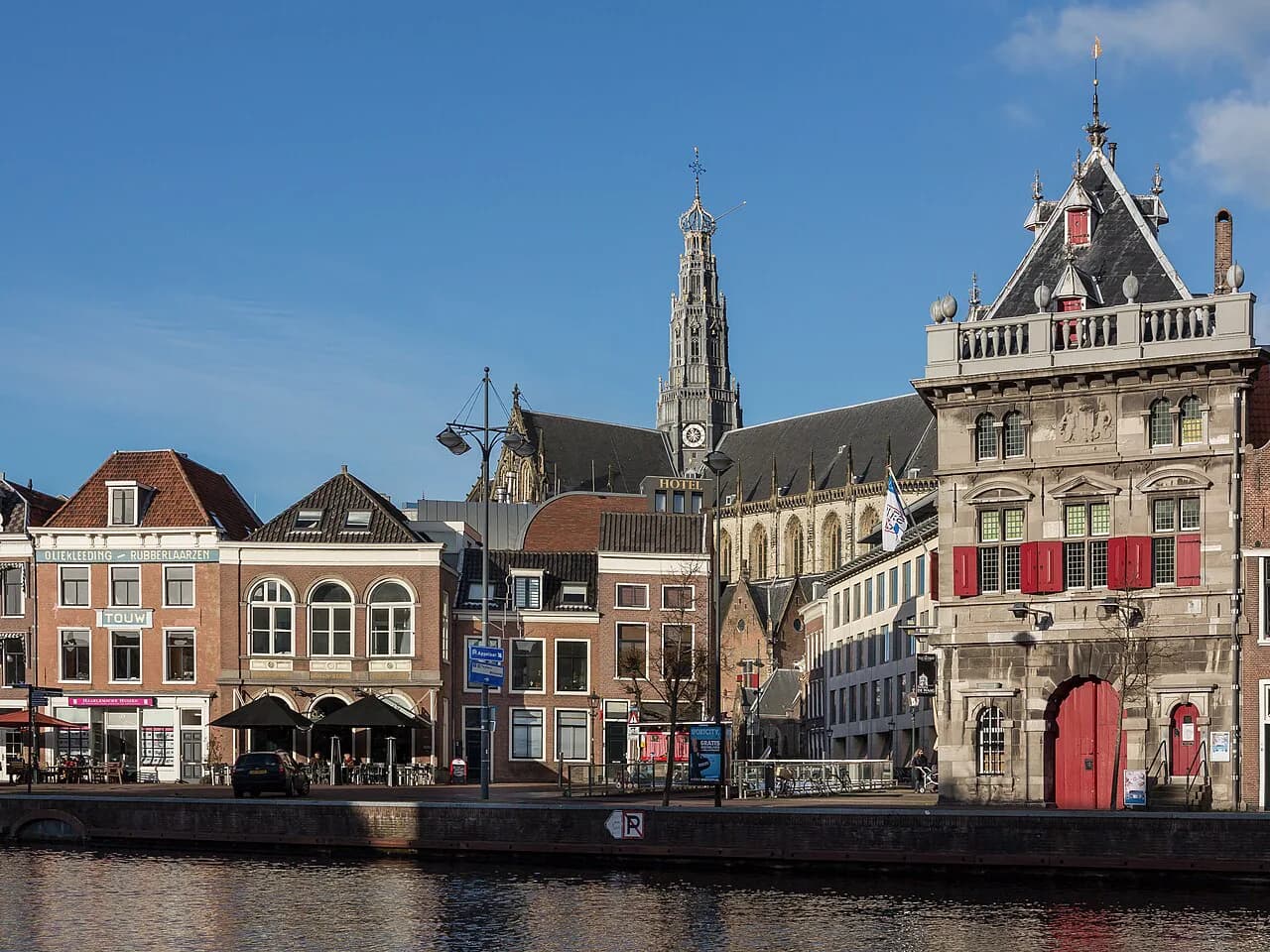
The Waag in Haarlem is a former weigh house, not a church or a museum. Merchants brought goods here to be weighed and taxed, and the building that did the job was put up in 1597–1599 on the corner of the Damstraat and the Spaarne. Today the ground floor is a café and the first floor belongs to an artists' society, so the visit is mostly about the stone facades and a coffee with a water view. This guide covers where it stands, what to look at, how long to allow and what sits within a short walk.
Where the Waag stands
The Waag occupies the corner of Damstraat and the Spaarne, with the river on its eastern side and the short Damstraat running south-west from it towards the Grote Markt and the city centre. The Visit Haarlem listing gives the building's address as Spaarne 30 on that corner and dates the construction to 1597–1599, probably supervised by Lieven de Key and designed by Cornelis Cornelisz and Willem Thybaut; the café on the ground floor gives its own address as Damstraat 29. From the Grote Markt it is a short walk north-east through the shopping streets, and most people reach it without planning the route.
From Haarlem station the walk into the Binnenstad is short, and the Waag works naturally as a stop on a loop between the Grote Markt and the river. A boat mooring sits a few metres from the café terrace, and the entrance to the Appelaar underground car park is directly outside for anyone driving in, as the café's own site notes.

The two Renaissance facades
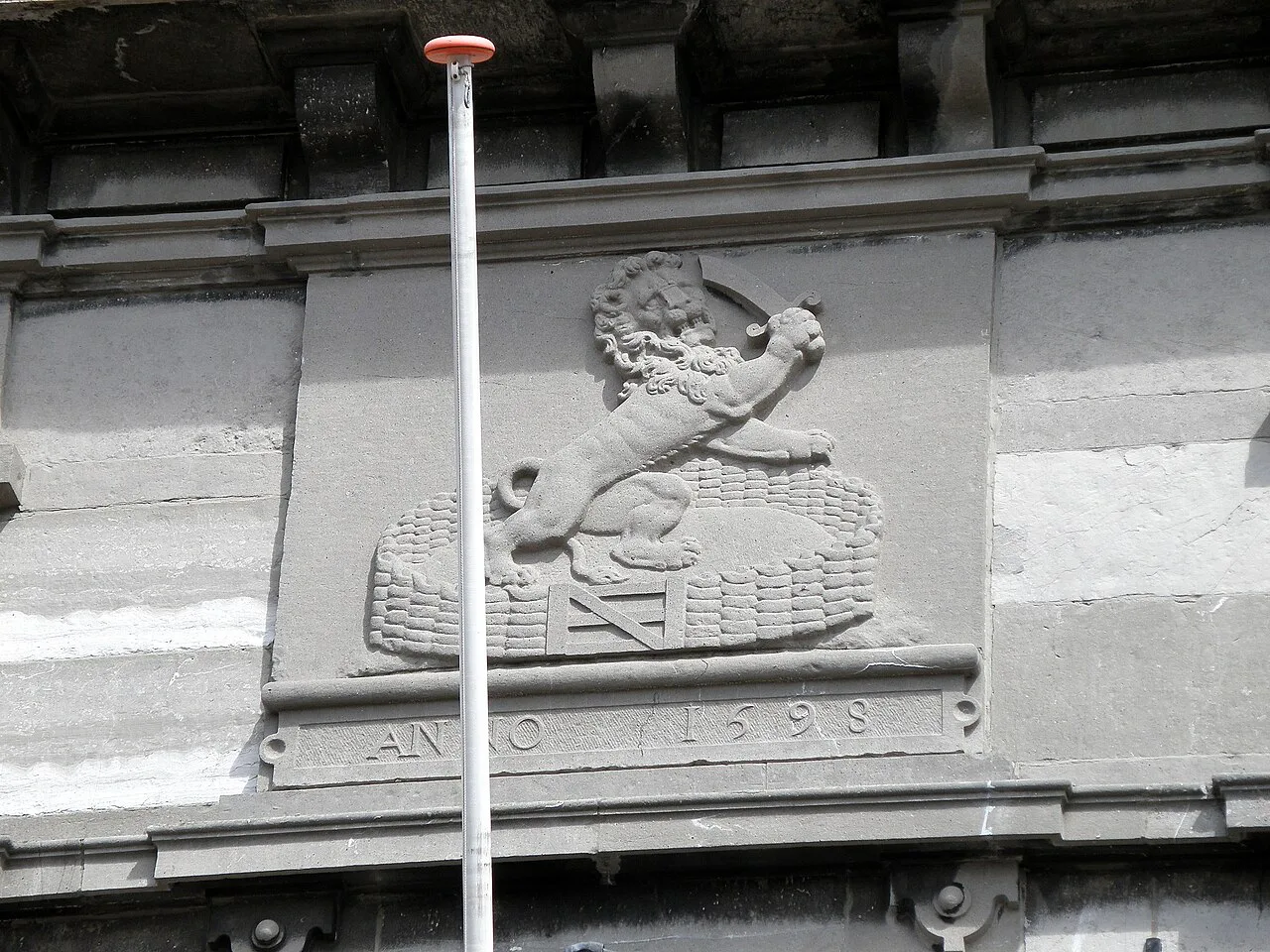
The detail most visitors walk past is that the Waag has two near-identical facades in Namur stone, each with round-arched and cross windows, but each carrying a different coat of arms. The Damstraat side shows the arms of Holland, while the Spaarne side shows the arms of Haarlem, a pair of markers that spell out the building's official role. Stand back on the bridge or the opposite bank to see the Spaarne elevation properly, then walk round to the Damstraat face for the second shield.
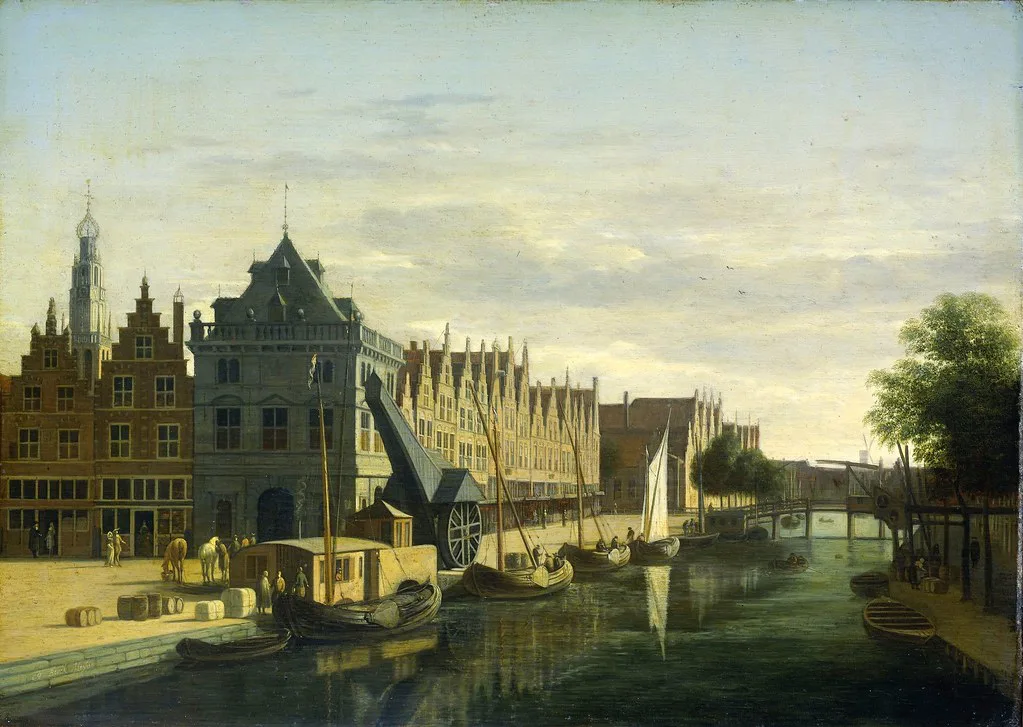
Construction is credited to 1597–1599, which places the building in the same rebuilding boom that gave Haarlem much of its Renaissance stonework. Until 1915 the weigh house operated on the ground floor, while the upper floors served for years as guild rooms. That history explains the civic swagger of the carving: this was a tax and trade building, and it was meant to look like one.
The café on the ground floor
The Visit Haarlem listing gives café hours of 08:30 to 19:00 on Monday, 08:30 to 18:00 on Tuesday, 08:30 to 17:00 on Wednesday and Thursday, and 08:30 to 18:00 on Friday, with the café listed as closed at the weekend. The café's own site instead announces food Wednesday to Saturday and Sunday live music from 17:00, so the two sets of hours do not agree and it is worth checking the café's own site before building a sit-down stop around it.
The café's own site describes a terrace facing the Spaarne, a daily dish built from local produce served Wednesday to Saturday, and live music on Sunday from 17:00 with free entry. Treat those as the café's own announcements rather than visitor information for the monument, and ring ahead if a table matters to you.
Inside the building
The ground floor is a café, so going inside means buying something rather than touring a museum. Above it, the first floor is home to the artists' association Kunst Zij Ons Doel (KZOD). Plan on the ground floor and the exterior.
You pay nothing to look at the exterior from the street; the building stands on a public corner and the facades are there to see for free. Budget for whatever you order if you sit down inside, and note the café's own site advertises its daily dish for €19.95 from Wednesday to Saturday.
How long to allow
Ten to twenty minutes covers the outside properly: both facades, the coats of arms, and a photograph from the Spaarne side. Add half an hour or more if you take a table on the terrace, where the view up the river is the reason most people linger. It is a small building, so it fits between bigger stops rather than filling a morning on its own.
Nearby sights within a short walk
The Grote of St.-Bavokerk and the Grote Markt are a few minutes inland, and Teylers Museum, Haarlem sits a short walk south along the Spaarne. Pairing the Waag with the church square and the museum gives you a compact half-day without any transport. The Frans Hals Museum and the Amsterdamse Poort lie further out and are better saved for a separate leg of the day.
Walk south along the Spaarne and you reach the Amsterdamse Poort at the old city limit. Either direction along the water keeps you on the same riverside path, which makes the Waag an easy hinge for a walk along the Spaarne.
Fitting the Waag into a Haarlem walk
A sensible one-day route starts at the Grote Markt with the church and the city hall, drops down to the Spaarne for the Waag, then follows the river to the Teylers Museum. That order keeps you moving in one direction and puts the coffee stop at the point where you want one. The rest of the day can go to the Frans Hals Museum or the windmill, depending on how much walking you want.
If you only have an afternoon, do the Grote Markt Haarlem and the Waag and leave the museums for a return trip. The building is free to look at and sits on the main walking line through the centre, so it costs you no detour. See the wider Haarlem Attractions: 11 Visitor Guides for the sights that need more of your day.
Is the Waag worth ten minutes?
Yes, as a short stop with a story. The Waag is not a museum and the exterior needs no ticket, but the two facades and the two coats of arms reward a few minutes of looking, and the riverside terrace is a good place to sit when the café is open. Build it into a walk between the Grote Markt and the Teylers Museum rather than making it the destination of a trip.
On a Sunday, check before planning on more than the exterior: the café's own site announces Sunday live music from 17:00 with free entry, while the Visit Haarlem listing shows the café closed at the weekend. Check the published hours before you set out, and treat any dish prices or music times as the café's own announcements rather than fixed visitor information. For more on the museum a short walk south, see Teylers Museum, Haarlem.
Explore more Haarlem guides
Frequently Asked Questions
Is the Waag in Haarlem free to visit?
Looking at the building from the street costs nothing. The ground floor is a café, so you pay only for what you order inside.
Can you go inside the Waag in Haarlem?
The ground floor is a café; its own site announces food Wednesday to Saturday and Sunday live music from 17:00, while the Visit Haarlem listing gives weekday café hours and weekend closure. Check before you travel. The first floor belongs to the artists' association Kunst Zij Ons Doel.