Haarlem Walking Tour: A Self-Guided Route Through the Old Centre
Walk Haarlem from the station to the Grote Markt, Sint Bavo, the hofjes and the Spaarne. Stop-by-stop order, timings and museum choices for one day.
On this page
A Haarlem walking tour needs one day, covers the old centre comfortably on foot, and starts at the station, which sits at the edge of the historic streets. The medieval layout is largely intact, the centre is made up of small islands divided by canals and the Spaarne, and almost every sight on this route is within a short walk of the next. This guide gives the stops in the order you actually reach them, with timings, museum choices and the guided alternatives at the end.
What the route covers and how to use it
The plan runs roughly as a loop: station, Grote Markt, Sint Bavo, the shopping streets, west to the Jopenkerk, south through the hofjes to the museums, then the Spaarne and De Adriaan before heading back. It is a walking itinerary rather than a checklist, so you can cut any leg without breaking the rest. If you are still deciding what to prioritise beyond this route, the wider list of Things to Do in Haarlem slots into the same streets, and the Grote Markt page covers the square in detail.
Trains from Amsterdam reach Haarlem in about 20 minutes, with numerous services per hour, and the station sits at the edge of the old city centre. The trade-off is that a day trip gives you one pass through these stops; staying a night or two buys time for two museums and a slower lunch.
From Haarlem station into the old centre
Leave the station and follow Kruisweg and Kruisstraat towards the centre; the step-gabled houses begin almost immediately and some date from medieval times. Two optional stops sit on this first stretch: Museumhuis Barnaat on Nieuwe Gracht, an early-19th-century city palace, and the Corrie ten Boom Museum on Barteljorisstraat, a house used during the Nazi occupation to hide Jews. Both are indoor visits, so treat them as swaps for museum time later rather than additions.
Allow around 15 minutes for the walk in without stops. The old town's street pattern is worth knowing before you set off, and the layout of Haarlem Old Town explains why the route bends the way it does between the station and the square.
Stop 1: the Grote Markt
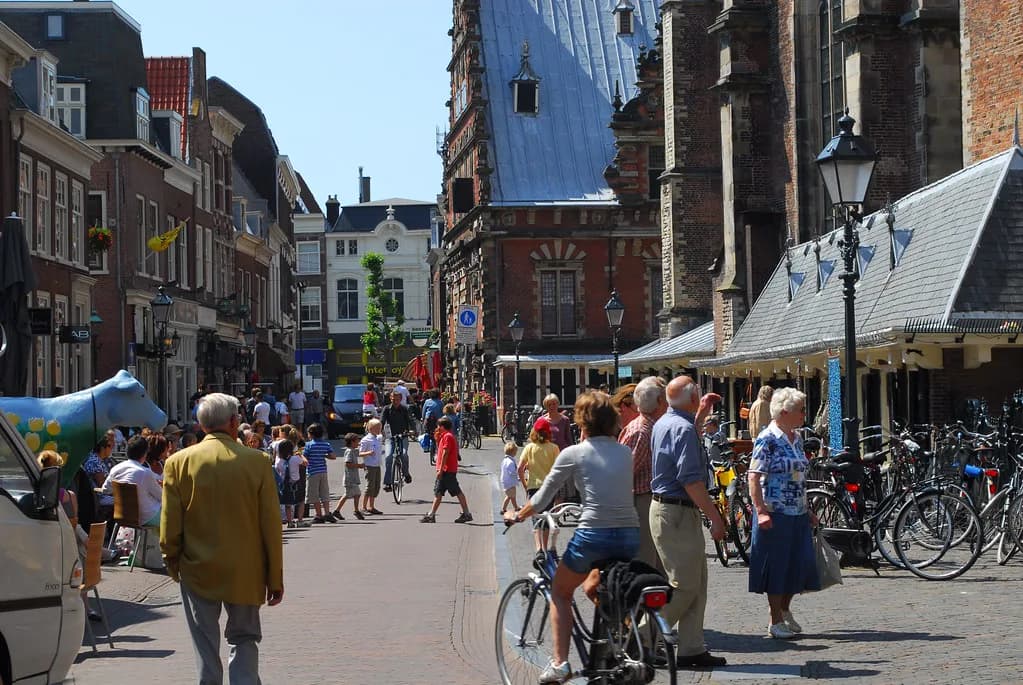
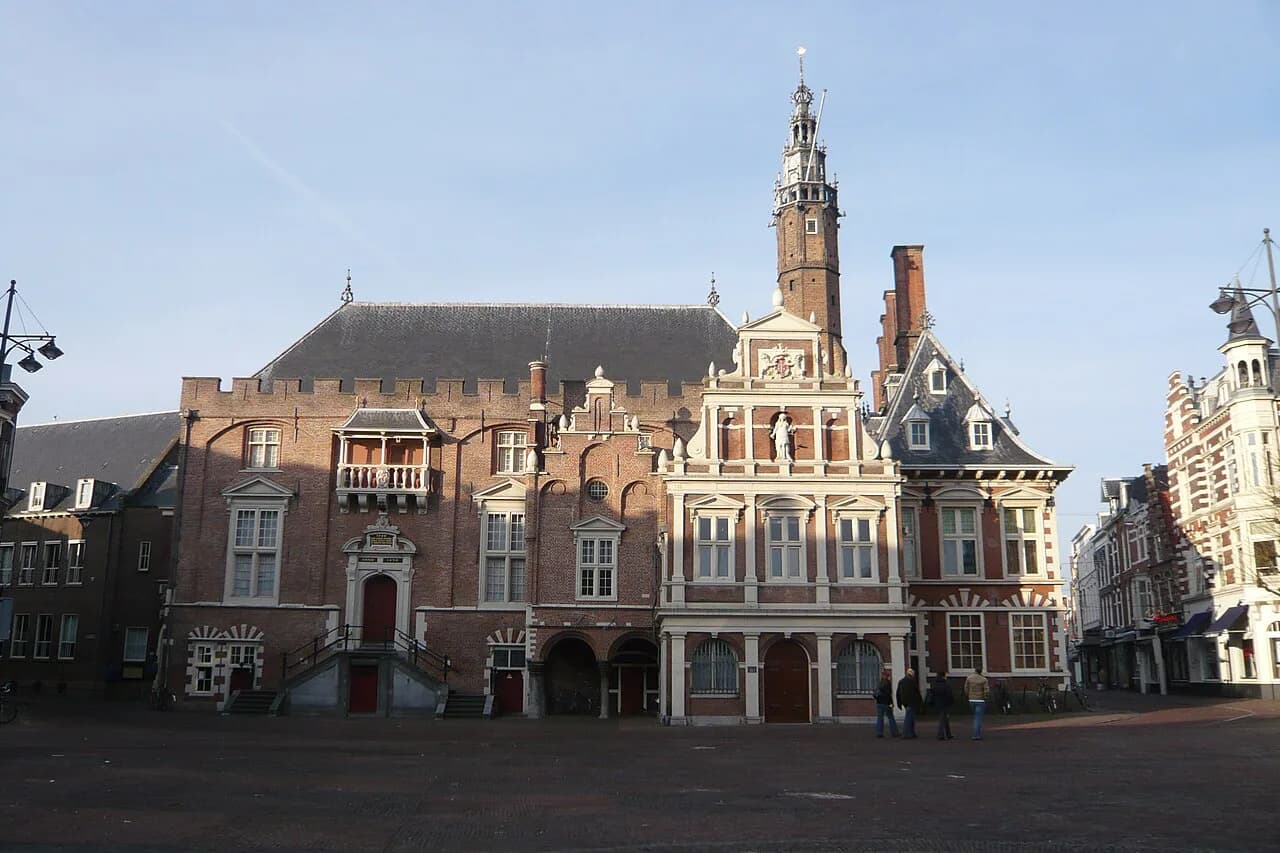
The Grote Markt is the focal point of the centre, with shopping streets fanning out in every direction and the Groenmarkt adjoining it. Around the square stand the medieval Stadhuis, the Hoofdwacht, which may be the oldest monument in Haarlem and dates from the 13th century, and the Vleeshal, now used as an art exhibition space. Walk the perimeter slowly: this is the densest cluster of historic buildings on the route.
Saturday is the day the square hosts a market, so a weekend walk means crowds and stalls rather than an open square. If you want the architecture unobstructed, plan the Grote Markt leg for a weekday morning and save browsing for later; the Haarlem market page covers what the stalls add to a visit.
Stop 2: the Grote or Sint Bavo Church
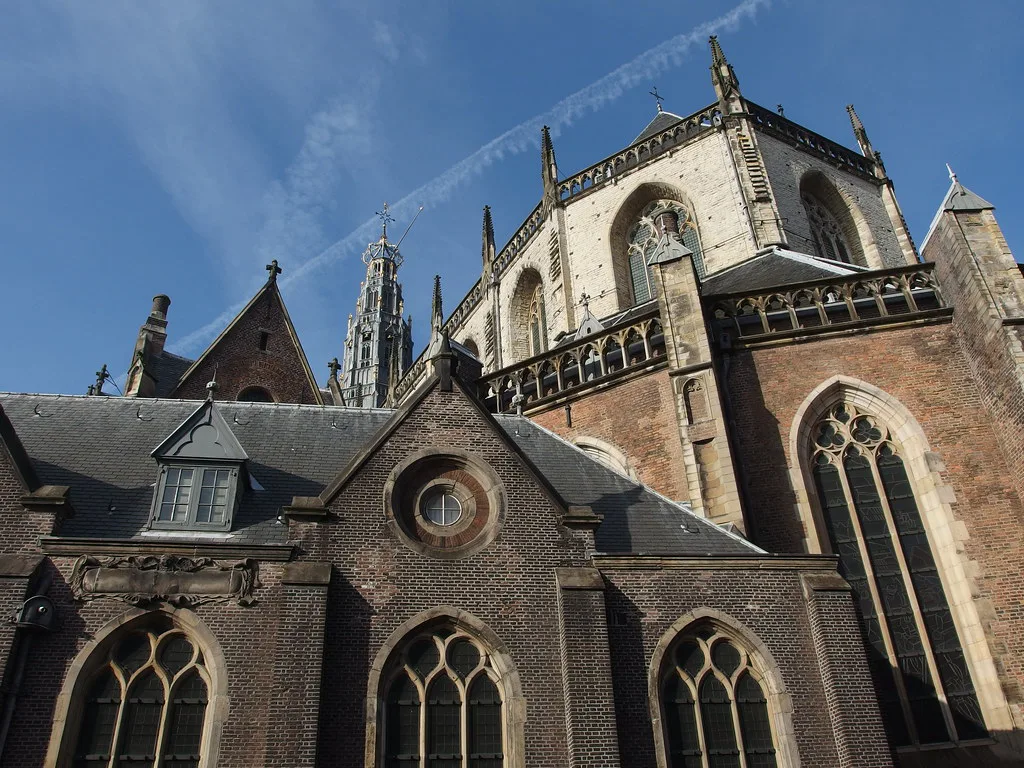
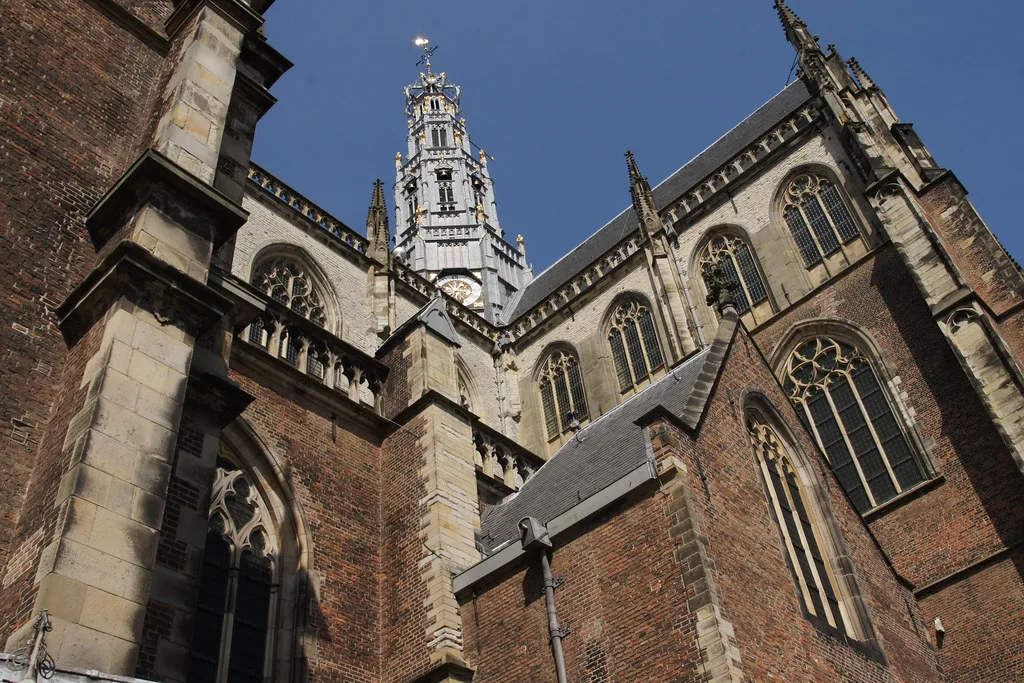
Sint Bavo, the Great Church, dominates the skyline of the square; the 15th-century Gothic building is one of Haarlem's defining sights. Inside, the draw is the 18th-century Christiaan Müller organ, once the largest in the world, which attracted musicians including Händel and Mozart. Look up at the nave roof as well as the instrument, because the ceiling is part of the reason the church rewards more than a photo stop.
If you are building the day around Haarlem's headline sights, this square and church are the pair to protect when time runs short. The rest of the route can Flex; the church visit is the one that sets the pace for the morning.
Stop 3: shopping streets and the Groenmarkt
From the square, wander the surrounding shopping streets and the Groenmarkt before heading west. This is the natural pause in the route: a drink on or near the square, a browse, then on. The guide to shopping in Haarlem sets out which streets are worth the extra minutes.
Stop 4: west to the Jopenkerk
Head west from the square along Zijlstraat, a street of handsome houses, shops and cafés, then continue towards Gedempte Oude Gracht. The landmark is the Jopenkerk, a former church that now houses the Jopen brewery. Haarlem was a major brewing centre in the 14th century and, in the Middle Ages, the third largest beer city in the Netherlands, with more than 50 breweries; the modern brewery revived the trade in the 1990s using original 15th-century recipes. Treat it as a look-in rather than a long stop unless beer is a priority, since the route still has the hofjes and museums ahead.
Stop 5: hofjes and quiet lanes
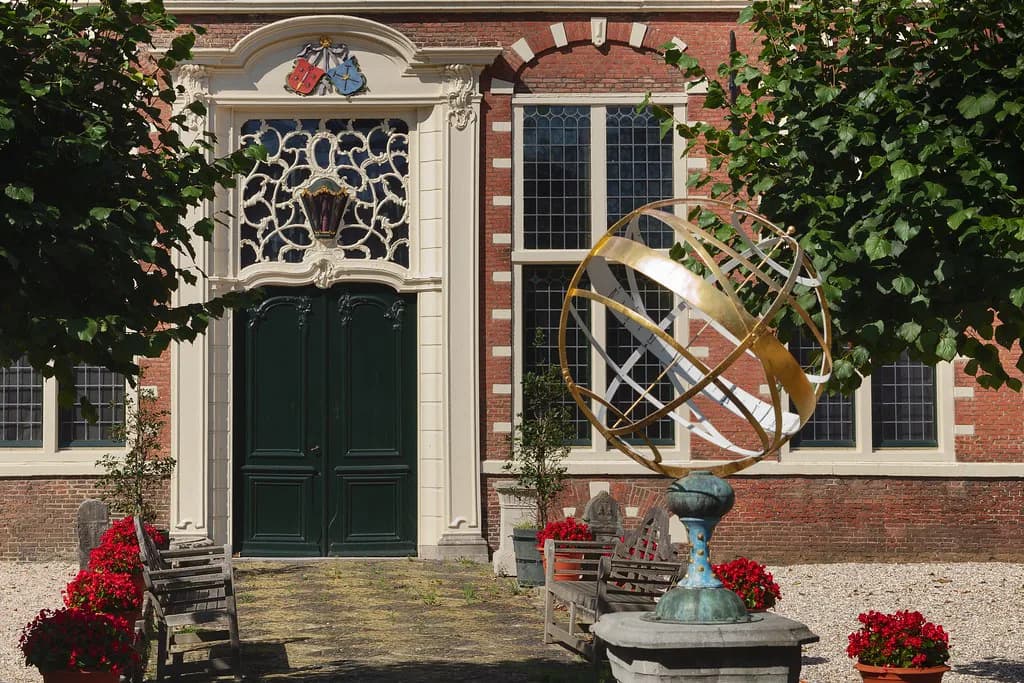
Head south along Gasthuisstraat and Tuchthuisstraat into the lanes and small squares where Haarlem's hofjes sit: blocks of houses, some from the 15th and 16th centuries, arranged around a communal courtyard garden. These are the calmest minutes of the walk and the easiest place to lose track of time. Some hofje gardens can be visited but not on Sundays, so a Sunday walk should treat them as views through gateways rather than garden visits.
Stop 6: Frans Hals Museum or Teylers Museum
Two museums anchor the southern half of the route, and with one day you should pick one. The Frans Hals Museum, covered in the museums in Haarlem guide, is the choice for painting and Haarlem's Golden Age portrait tradition; Teylers Museum suits anyone who prefers a cabinet of curiosities, drawings and scientific instruments. Choose before you set out, because deciding at the door costs walking time you will not get back.
Whichever you choose, check the opening days for your dates before you travel, since Dutch museums commonly close one day a week. Museum tickets are often cheaper bought online in advance than at the door, so book before you set out.
Stop 7: the Spaarne and De Adriaan
From the museums, drop to the Spaarne riverfront, where the route opens out after the narrow lanes. De Adriaan windmill stands on the river and is the landmark to aim for before you turn back towards the station. If your legs are done, a canal cruise replaces a stretch of walking rather than adding to it: sit down, see the city from the water, and rejoin the route near the centre.
Eastern edge: the Amsterdamse Poort, Bakenes and back
The Amsterdamse Poort and the Bakenes area sit on the eastern edge of the old centre, a quieter finish before the walk back to the station. Add this leg only if you have trimmed the museums or skipped the river; on a single day it is the first section to cut. The payoff is fewer people and a last look at the old town's edges before the modern streets take over.
How long it takes and how to split it
The full loop from the station works as a full day on foot with one museum and a sit-down break. Without a museum it is a comfortable half day, and that version suits anyone combining Haarlem with another stop. The route can be done in a day, but staying one or two nights gives you time for the museums and the surrounding area without rushing the square.
For a two-day split, front-load the Grote Markt, Sint Bavo and the shopping streets on day one, then use day two for one museum, the hofjes and the Spaarne. Two museums fit if you drop the eastern edge and the windmill leg. If you would rather see the city by bike on day two, the guide to cycling in Haarlem covers routes along the Spaarne instead.
Guided alternatives: the VVV city walk
VVV Haarlem runs a city walk every Friday and Saturday at 2:00 pm, limited to 14 people per guide and conducted in Dutch only. The cost is €9.50 per person. For a visitor without Dutch, that language restriction is the deciding factor.
A private guide is the alternative: €100 for a Dutch-language walk and €115 for German, English or French, lasting 90 minutes with a maximum of 14 people per guide. You choose the start and end points and the theme, from general monuments to hofjes, beer history or architecture. The trade-off is cost against flexibility: a private guide buys you the language you need and a route shaped around your interests.
Free walking tours in Haarlem
Free walking tours are offered in Haarlem with local guides, and booking is handled online in advance through the operator. They suit a first morning, when an overview helps you decide where to return. Book ahead for your dates rather than turning up on spec.
Practicalities for the walk
The walk stays within a compact centre, so comfortable shoes matter more than planning. Check each museum's opening day and whether it uses timed entry before you set out, and confirm whether hofje gardens are open on the day you walk, since some courtyard gardens can be visited but not on Sundays.
Self-guided or guided: which to book
Walk it yourself if you want the Grote Markt, Sint Bavo and the hofjes at your own pace and the freedom to drop the eastern edge when you tire. Book the VVV walk only if you understand Dutch, and book a private guide if you want an English-language commentary or a themed route such as the hofjes or beer history.
Whichever you choose, the loop from the station through the old centre and back is the version that fits a city break of one to four days without eating the whole trip.
Explore more Haarlem guides
Frequently Asked Questions
Is Haarlem worth seeing on a walking tour?
Yes. The old centre has a largely intact medieval layout, and the main sights, from the Grote Markt and Sint Bavo to the hofjes and the Spaarne, sit within one walkable loop from the station. One day on foot covers the highlights; two days let you add a second museum and slow down.
Do I need a guide for a Haarlem walking tour?
No. The route works as a self-guided walk because the centre is compact and the stops follow each other naturally. A guide adds context and language: the VVV walk is in Dutch, while a private guide can be booked in English, German or French for a higher fee.
What should I not miss on a Haarlem walk?
The Grote Markt with the Stadhuis, Hoofdwacht and Vleeshal, then Sint Bavo with its Christiaan Müller organ, are the core. West of the square, the Jopenkerk in a former church and the hofjes lanes are the next priorities, followed by the Spaarne and De Adriaan windmill.
Sources
Notes for your next Dutch city break
Optional updates to our Netherlands guides.
You might also like
Continue reading
More guides you'll find useful