Haarlem Old Town: What to See and How to Walk It
Walk Haarlem's old town on foot: Grote Markt, Sint-Bavokerk, the Waag, Molen De Adriaan and the courtyards, with realistic timings and museum open days.
On this page
Haarlem's old town is compact enough to cover on foot in a day, and ten minutes after leaving Haarlem station you can be standing on the Grote Markt. This guide covers what the historic centre actually contains, how the main sights group around two clusters, and how to split them into a half-day core or a full-day walk depending on how much museum time you want. For market days and what is on the square, see the Haarlem markets guide and the wider Things to Do in Haarlem picks.
The route is deliberately simple: church and market square first, then the Spaarne waterfront, then the quieter courtyards and side streets. Museum closures on Mondays and shorter Sunday opening make the day you choose part of the planning, not an afterthought.
What the old town covers
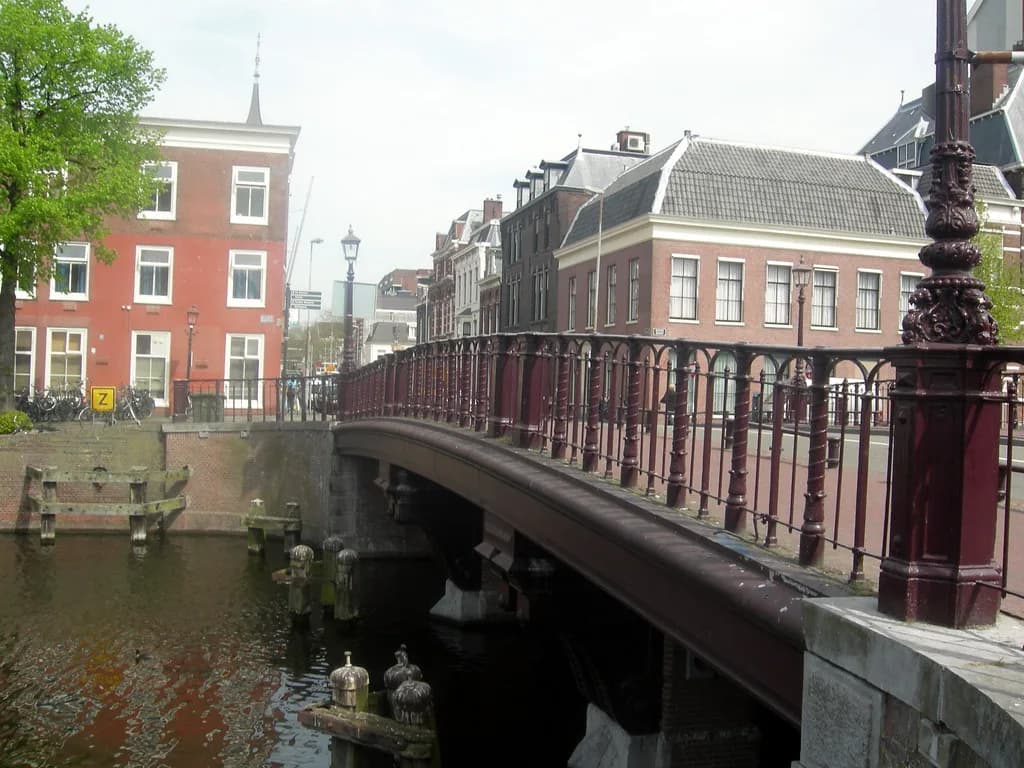
Haarlem's historic centre is the area enclosed by canals, with the Grote Markt as its beating heart and the Spaarne winding along its edge. Almost everything a first-time visitor comes for — the churches, the town hall, the market square, the windmill and the courtyards — sits inside that ring or immediately beside it.
The city is small next to Amsterdam, and that is the point. Haarlem keeps a village-like character in its centre, with monuments packed into streets that take minutes to cross rather than tram rides, which is why a single day here feels unhurried.
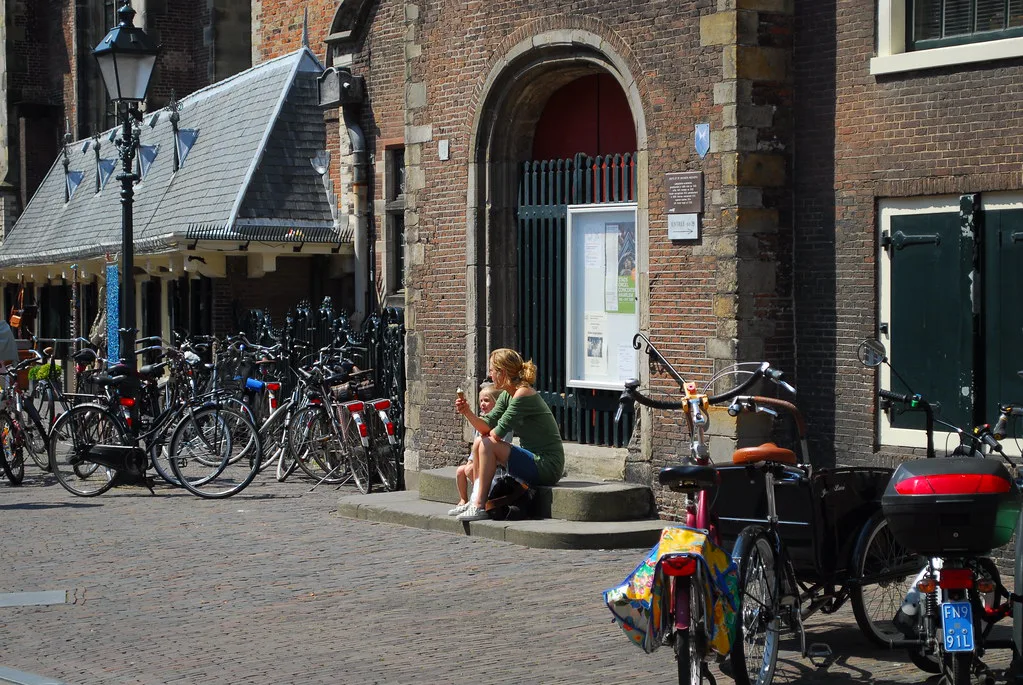
How the centre is laid out and how long you need
From Haarlem station to the Grote Markt is about a 10-minute walk, and the main sites sit inside an area you can easily cover in one day. A local bus (number 300) runs the same route, but it only saves a minute or two at best, so walking is the sensible choice.
Think of the old town as two clusters joined by short streets: the Grote Markt group — Stadhuis, Vleeshal, Sint-Bavokerk — and the Spaarne group — the Waag, Molen De Adriaan and the waterfront. Each cluster takes only a few minutes to cross on foot, which is what makes a half-day version realistic when museums are not the priority.
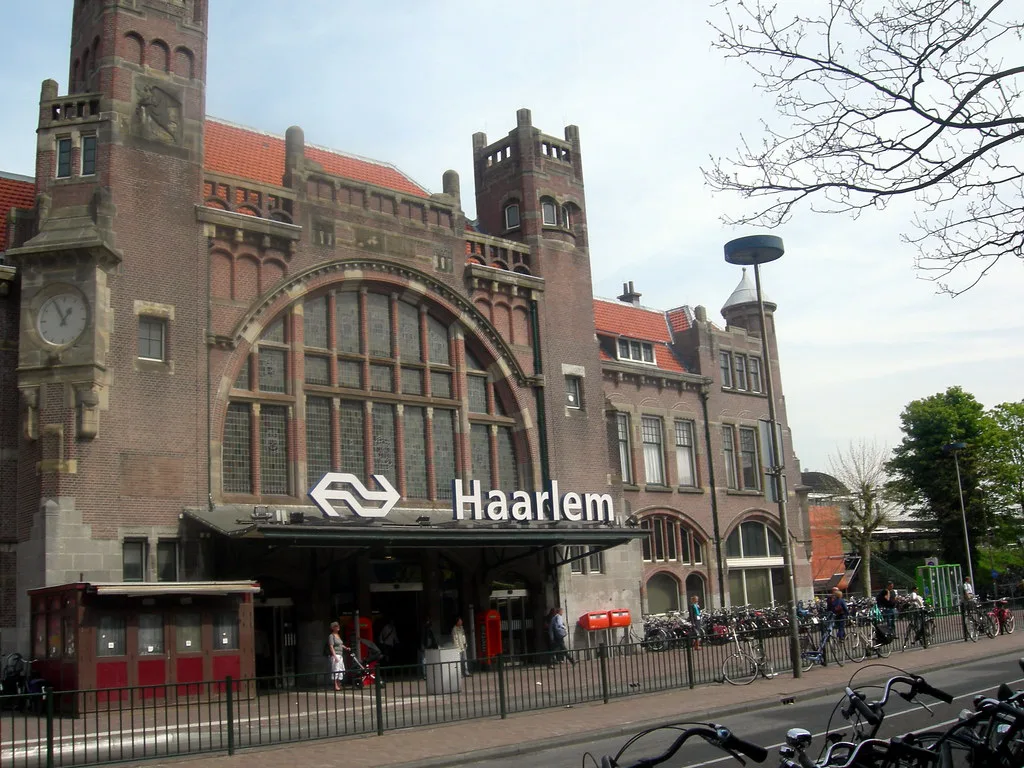
Start at Haarlem station, then walk to Grote Markt
Haarlem station is worth a look before you leave it: it is the only Dutch station in Jugendstil style, more than a century old, with tile panels and separate entrance and exit buildings. It has appeared on film, including Ocean's Twelve and Verhoeven's Zwartboek.
Head straight for the Grote Markt rather than detouring, and save the side streets for the return leg when you know how much time you have left. If you would rather follow a set route with the stops in order, the Haarlem Walking Tour does the sequencing for you, and the Things to Do in Haarlem guide groups the sights to build the rest of the day around.
Grote Markt: the Stadhuis and the Vleeshal
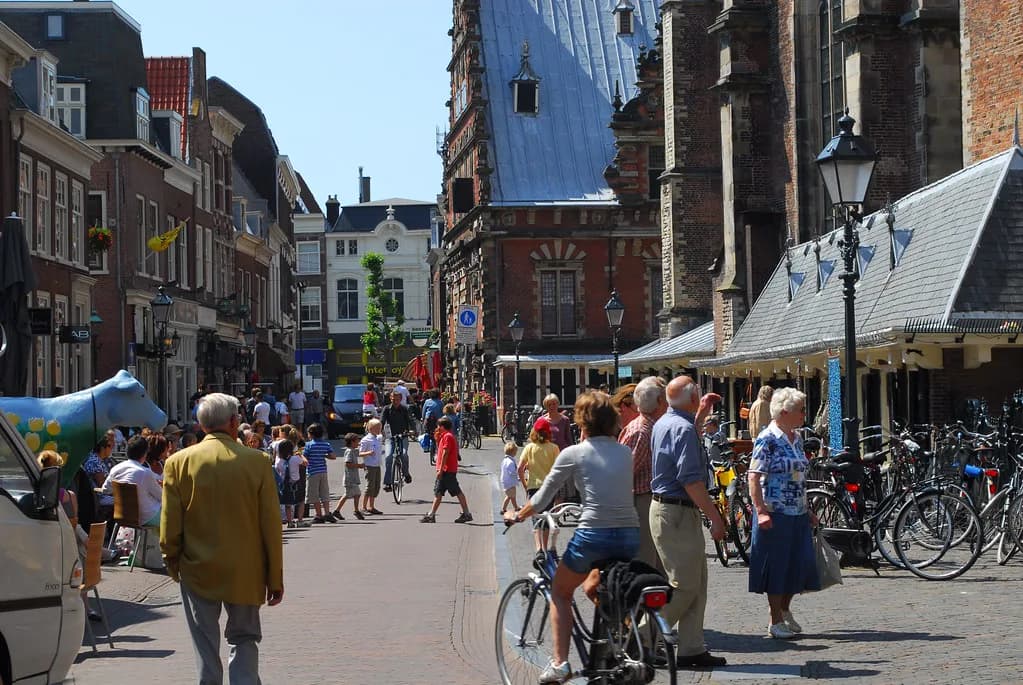
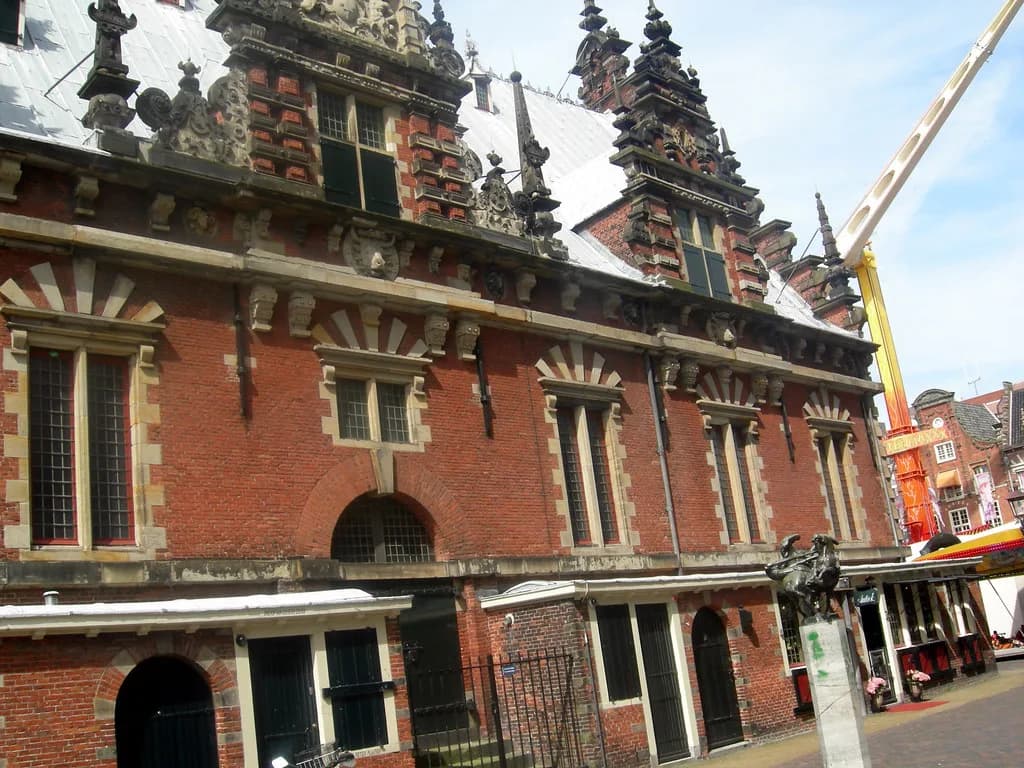
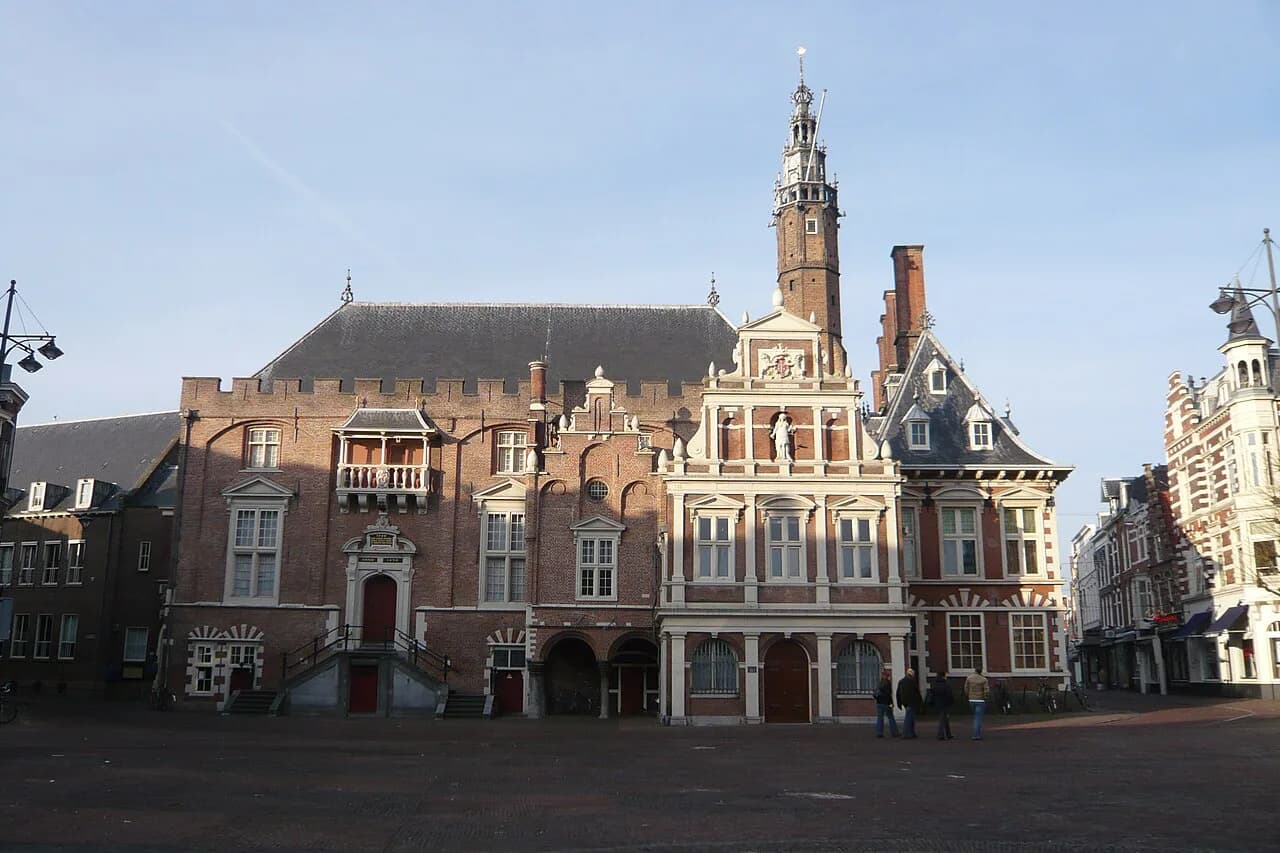
The Grote Markt holds two buildings that sum up the old town's architecture. The Stadhuis dates from 1250, and beside it the Vleeshal, the former meat hall, was designed by master builder Lieven de Key. Both are monuments rather than stops you queue for, so budget your time for looking rather than visiting.
The square is also where the city gathers, and it hosts events through the year, including Haarlem Culinair in August when local restaurants serve small drinks and bites on the square itself. If your dates are flexible, checking the calendar before you fix a day is worth the five minutes.
Sint-Bavokerk on the Grote Markt
Sint-Bavokerk is Haarlem's largest church, and its tower is visible from across the centre, which makes it the easiest landmark to navigate by. The building sits directly on the Grote Markt.
Do not confuse it with the Cathedral Basilica Sint Bavo, the main church of the diocese of Haarlem, built between 1895 and 1930 and open on some days for a vault tour. They are two different buildings with similar names, and first-time visitors mix them up regularly; the cathedral is the optional stop, not the one on the square.
The Waag on the Spaarne
On the Spaarne stands the Waag, the 1599 weigh house where traders weighed cheese and butter. It is a small stop but a useful marker that you have moved from the market cluster to the waterfront one, and it sets up the walk along the river towards Molen De Adriaan.
Molen De Adriaan: the museum mill
Molen De Adriaan towers twelve metres above the Spaarne, and it works as a museum mill: inside, the rotating sails set the ingenious wooden interior in motion. That mechanism is the reason to go in rather than just photograph it from the opposite bank, so treat it as a museum stop in your timings.
The mill sits on the river where the Spaarne winds through the centre, which puts it on the natural line of a canal-side walk from the Waag.
Amsterdam Gate and the old defences
The Amsterdam Gate is a city gate from 1355 and one of the clearest pieces of Haarlem's old defences left standing, marking the edge of the historic core. It rewards a short detour on the way back.
The courtyards: quiet in the middle of the city
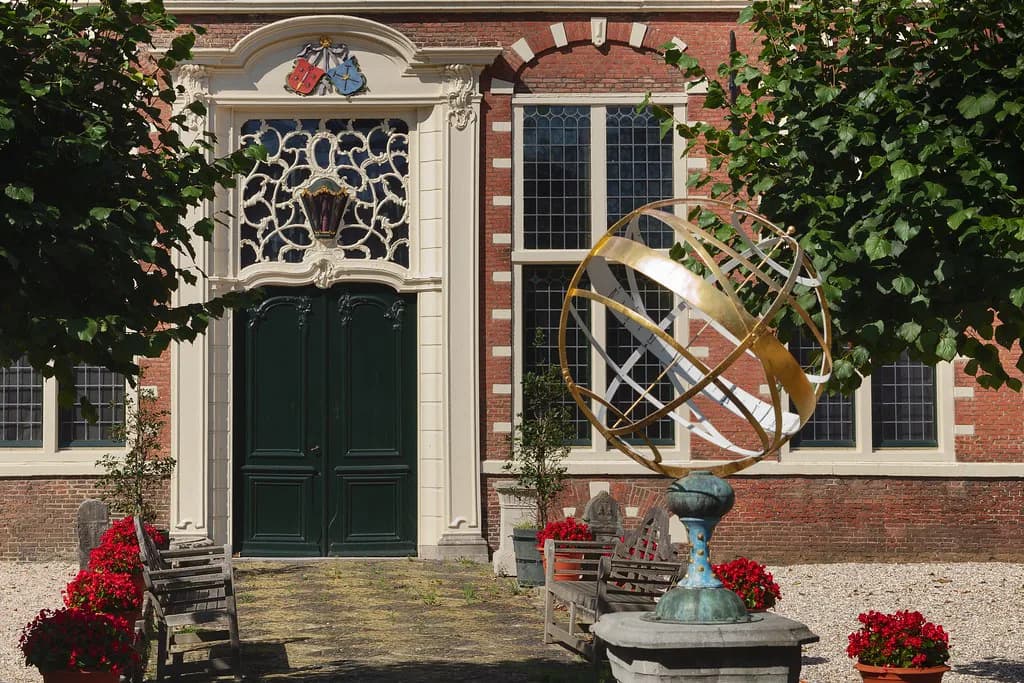
Haarlem's hofjes — courtyards — are peaceful paradises tucked into the centre, and they are the counterpoint to the busy market square. The practical approach is to look for the doorways and archways off the streets you are already walking rather than to build a separate route around them; the hofjes — courtyards guide covers the individual locations.
Keep them for the middle of the day, when the squares are at their fullest and the museums are busiest, or for the end of the walk when you want somewhere to sit rather than somewhere to queue.
Frans Hals Museum: indoor museum stop
The Frans Hals Museum is an indoor museum and gallery in Haarlem, and it closes on Mondays, which should decide which day you choose if the collection is the reason you came. The museum is easy to reach on foot from the Grote Markt.
Allow the museum to take a real slice of the day rather than squeezing it between two churches; the alternative is to leave it out and give the streets the hours instead. Check the museum's own site for current opening hours and ticket arrangements before you set the rest of the walk around it.
Teylers Museum and the Cathedral Basilica Sint Bavo as optional stops
Teylers Museum rounds out the museum cluster, and it too closes on Mondays, so a Monday visit risks losing both in one go. If your trip includes a Monday, put the streets, courtyards and waterfront on that day and move the museums to Tuesday to Saturday, when most sites keep their longest hours.
The Cathedral Basilica Sint Bavo is the other optional stop, open on some days for a vault tour, and worth adding only if the timing happens to suit your walk. It does not keep the same pattern as the museums on the square, so treat it as a bonus rather than a fixed stop.
Practical points: Mondays and Sundays
Monday is the constraint: the Frans Hals Museum, Corrie ten Boom House and Teylers Museum all close. Tuesday to Saturday most sites keep their longest hours; Corrie ten Boom House still closes on Sundays, and some shops shut or run reduced hours on Sunday, so a Sunday walk is better built around streets, churches and the Spaarne than around shopping or museums.
The De Gouden Straatjes — the Golden Streets — are the shopping streets to head for if you want to combine the walk with browsing, and they make most sense on a Tuesday to Saturday when shops are open longest. Ticket prices and arrangements vary between the museums and the mill, so leave room in the plan to adjust once you know your dates.
Half-day versus full-day, and when it is busiest
The half-day version is the Grote Markt cluster plus the Spaarne waterfront: Stadhuis, Vleeshal, Sint-Bavokerk, the Waag and Molen De Adriaan, with the courtyards picked up between them. The full-day version adds one museum, usually the Frans Hals Museum, and possibly the Cathedral Basilica if the vault tour is running, plus the Amsterdam Gate on the way back.
The centre is busiest in June, July and August, which are also the warmest months, so start early if you want the squares before the crowds build. Typical warm-season highs sit around 65–70°F and lows around 53–58°F, while December to mid-March runs cold at around 42–48°F, which is fine for walking if you keep the museum stops closer together.
If your dates are loose, April brings Museum Week discounts and the Bloemencorso flower parade, and the second weekend of September opens historic buildings normally closed to the public, free of charge. Those are reasons to shift a trip by a week; they are also reasons the centre fills up, so book the day around them rather than against them.
Which version of the walk suits your day
If you have one day, take the full version: market square in the morning, the Frans Hals Museum in the middle, the Spaarne and the mill in the afternoon, courtyards in between. If you have half a day, drop the museum and let the streets carry it — the walk between the two clusters is the attraction as much as any single building.
Avoid Monday for the old town if museums matter, and expect a quieter but partly shuttered Sunday. For the rest of the week the plan holds, and the only real variable is how long you let the Grote Markt keep you.
Sources
Notes for your next Dutch city break
Optional updates to our Netherlands guides.
You might also like
Continue reading
More guides you'll find useful