Haarlem Hofjes: The Almshouse Courtyards You Can Visit
Haarlem has 22 hofjes, the quiet almshouse courtyards behind its street doors. Here is what they are, which ones you can look into, and how to link them.
On this page
Haarlem has 22 hofjes, the small almshouse courtyards that sit behind ordinary street doors across the old centre. They are modest places, usually a doorway, a garden and a ring of tiny houses, so a hofjes walk is about glimpses and atmosphere rather than big sights. This guide explains what a hofje is, how the Proveniershof on the Grote Houtstraat differs from the charity courtyards, and how to link a few of them with the city's other stops in an afternoon.
What a Hofje Is and Why Haarlem Has So Many Courtyards
A hofje is a courtyard of small dwellings built around a garden, founded by a wealthy donor so that elderly or needy people could live there, often for little or nothing and under supervision. Haarlem's courtyards are often described as a good early form of care for the elderly. Many were funded by merchants and church figures, which is why so many carry a family name or a Saint's name.
The count matters when you plan a route. Twenty-two courtyards cannot be seen properly in an afternoon, so pick a handful and accept that most are glimpsed through a door or from a doorway rather than toured. A realistic plan is one grand courtyard, two or three intimate charity ones, and a café stop in between.
Which Hofjes You Can Look In and What You See
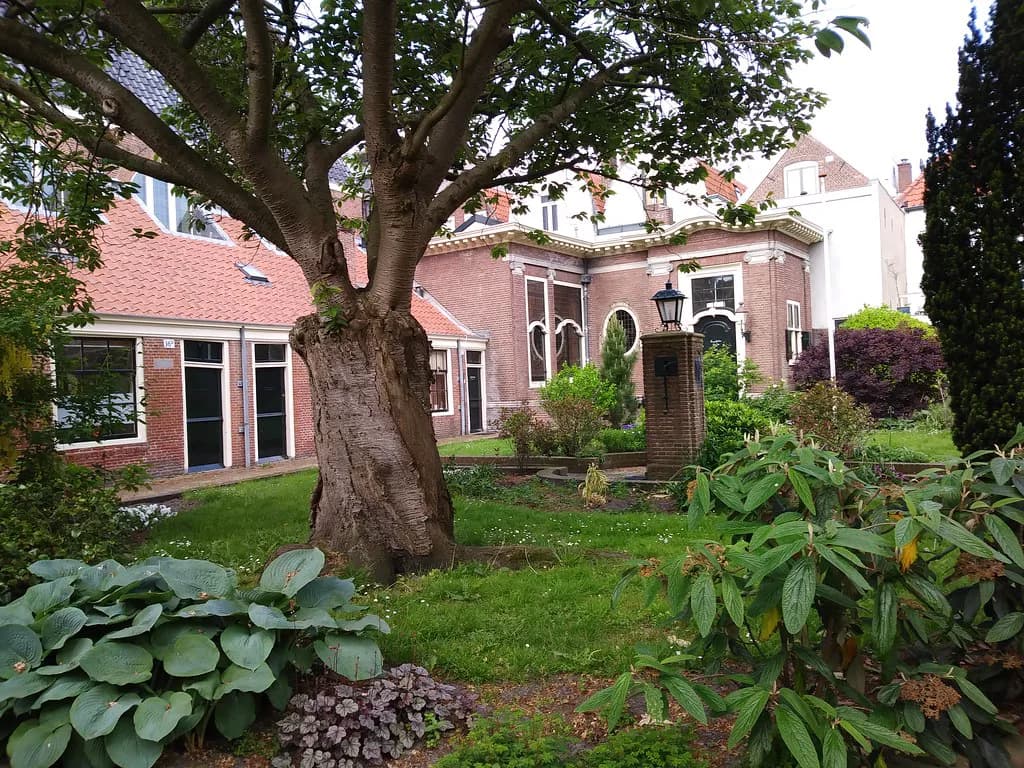
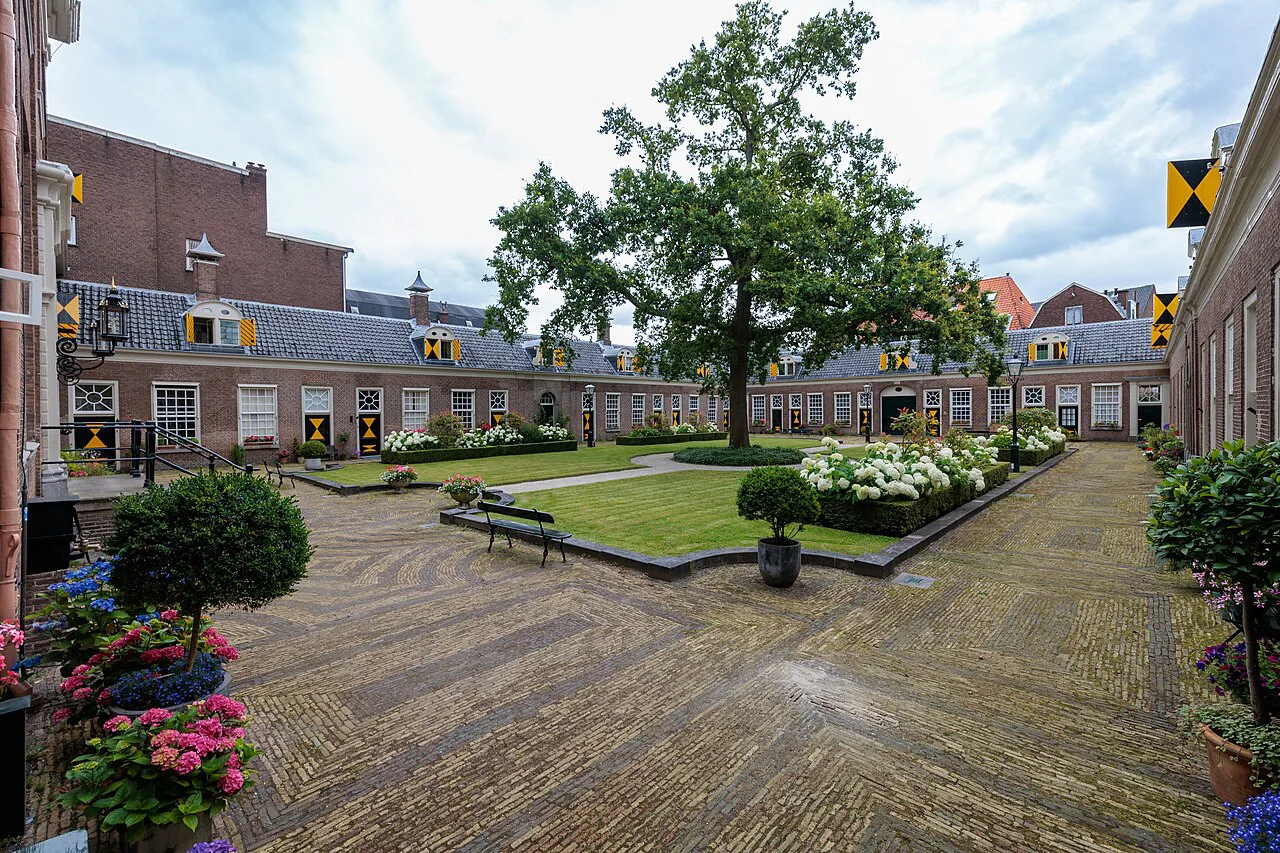
Most hofjes are homes first and sights second, so visiting means standing at the entrance and looking in, not walking among the front doors. Haarlem's courtyards are described as small houses set around a garden-style inner court, which is exactly what you will see from the gate. Read any plaque or nameplate at the entrance: where one exists it usually gives the founder and the year, which is the most informative thing on offer.
The best-known courtyard is Hofje De Bakenesserkamer, founded with money left by the merchant Dirck van Bakenes. Treat it as the anchor of a walk rather than a museum stop: you are there for the gatehouse, the planting and the quiet, not for exhibits or guided rooms. If you only have time for two courtyards, make this one of them.
The rest are scattered across the old centre, and several sit within a few minutes of each other on foot. Because documented opening arrangements vary from courtyard to courtyard, the practical approach is to walk past several entrances and go in only where the gate invites you. Treat a closed gate as normal rather than a disappointment.
Proveniershof on the Grote Houtstraat: A Grander Courtyard That Is Open to Visitors
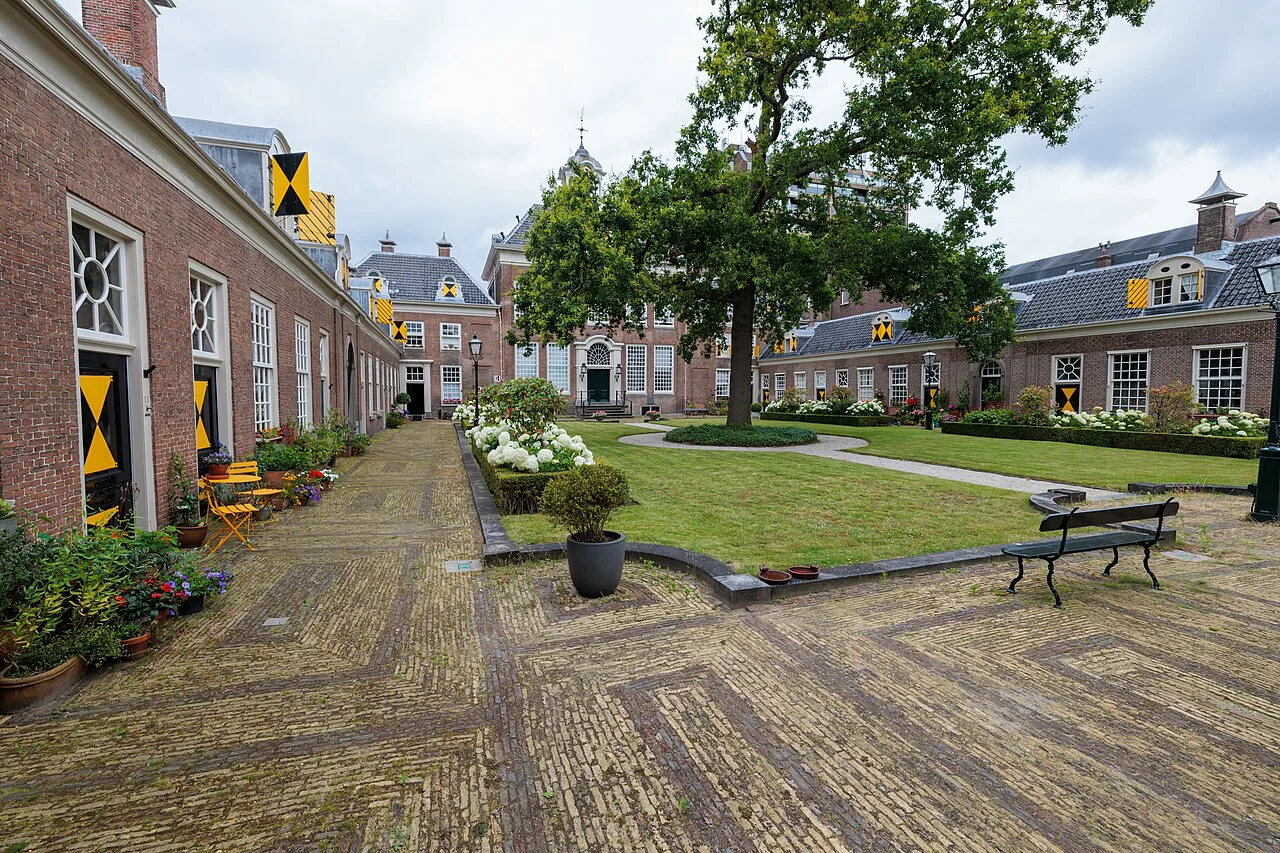
The Proveniershof at Grote Houtstraat 144 is the exception that explains the rule, and it is freely accessible to visitors. Its houses were not charity housing: wealthier citizens bought a place with a one-off payment and in return received lodging and meals in later life. That commercial origin is why the courtyard feels grander than the charity hofjes, and it is worth knowing before you compare them.
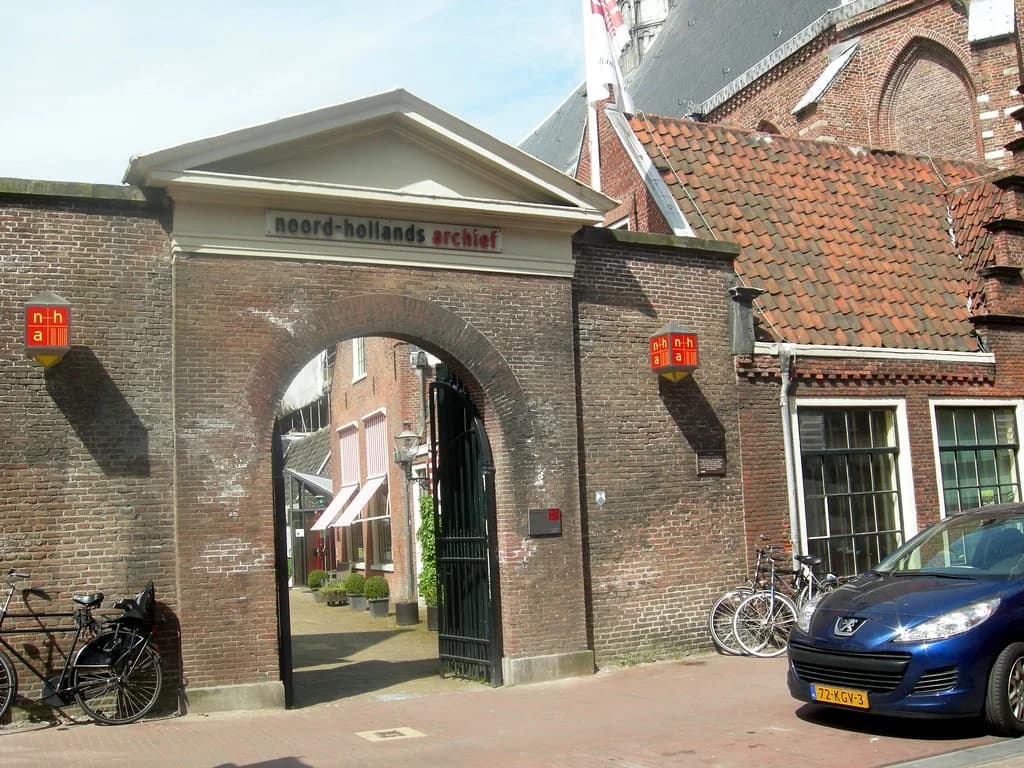
The site has layers that are easy to miss from the shopping street. A convent stood here from 1414, and after the Reformation the grounds passed to the city and then to the Sint Joris militia, who used the court for archery practice. The gate building you pass through was designed by city architect Lieven de Key and replaced the old convent building in 1592.
The hofje itself was founded in 1704, after an earlier inn on the site struggled, and the name Proveniershof came into use from 1866. The buildings were renovated in 1991 and are now large homes owned by the housing corporation Ymere, which rents them out; the Proveniershof is not part of the Stichting Haarlemse Hofjes. It is a lived-in courtyard, so walk through quietly and keep to the paths.
Its position on the busy Grote Houtstraat shopping street makes it the easiest courtyard to fold into a normal day of browsing. Step in on your way between the Grote Markt and the shopping streets, spend ten minutes, and carry on. That contrast, a silent court opening off a retail street, is the memory most visitors take home.
Hofje De Bakenesserkamer and Its Founding Story
De Bakenesserkamer takes its name from Dirck van Bakenes, the merchant whose bequest established it. Haarlem's best-known courtyard began as a single citizen's gift left to fund housing, and the foundation that followed still carries his name. That is the pattern behind many Dutch hofjes, and it makes the name on the gate the first thing worth reading.
Approach it as a courtyard to look at rather than a building to enter. The attraction is the arrangement: a gate, a garden and a tight ring of dwellings designed for supervision and warmth. Allow a few minutes, photograph nothing intrusive, and move on to the next entrance.
How Much Ground a Hofjes Walk Covers and How Long It Takes
A selective hofjes walk in the old centre is a short one: all the courtyards are within the historic core, so distances between them are minutes rather than kilometres. Budget two to three hours for four or five courtyards plus a coffee, and keep the pace slow because each stop is only a few minutes long.
Because a courtyard visit takes so little time, the walk is best treated as a thread through other sights rather than a standalone outing. The city has plenty to add along the way, and pairing courtyards with museums in Haarlem fills a full day without rushing. Build the route on a map before you go so you are not doubling back through the shopping streets.
When to Go: Quiet Hours and Respecting Residents
These are people's homes, so keep voices low and never enter a private stairwell or photograph residents or open doors. If you find a gate closed, accept it and do not try handles or gates that are latched. Treat a closed gate as normal rather than a disappointment, and go in only where the gate plainly invites visitors.
The Proveniershof is the one courtyard that is openly described as freely accessible, and even there the obligation is to walk quietly along the route rather than linger by windows. There is no visitor centre, so your preparation is simply knowing the history of the gate you are walking through. That is where a little reading pays off.
Linking the Hofjes With Other Haarlem Sights
The obvious pairing is architecture, since the gate building on the Proveniershof is by Lieven de Key, the city architect credited with its 1592 design. Start at the Grote Markt to read the square and the church tower, then work south through the shopping streets to Proveniershof and on to Bakenesserkamer. That order gives you the public city first and the private courtyards second, which makes the contrast sharper and gives a natural walking line.
For the older story behind the courtyards, the city's religious houses and charitable foundations explain why so many small courts cluster in the old centre. If you want the full visitor picture of the city before choosing your route, the Haarlem Attractions hub lists the main sights and their guides. Add one museum or church to the hofjes thread and the day is full without any long walks.
Should You Add Hofjes to Your Haarlem Day?
Yes, if you accept them for what they are: small, quiet courtyards with a gate and a plaque rather than a ticketed attraction. The Proveniershof is the surest stop because it is freely accessible and sits on the Grote Houtstraat, and De Bakenesserkamer is the one to seek out for its founding story. Plan three or four in an afternoon and spend the rest of the day on the city's churches and museums.
Skip them if you are short of time or travelling with impatient children, because the rewards are subtle and the stops brief. If you are here for two days, the better split is courtyards and architecture on one morning and the museums on the other. Confirm the entrance plaques and any notice on the gate when you arrive, since arrangements at each courtyard are set individually.
Explore more Haarlem guides
Frequently Asked Questions
How many hofjes are there in Haarlem?
Haarlem has 22 hofjes, the small almshouse courtyards hidden behind street doors in the old centre. They vary in size and character, from intimate charity courts to the grander Proveniershof on the Grote Houtstraat.
Can you go inside the hofjes?
Most work as homes, so visitors look in from the entrance instead of wandering among the front doors. Proveniershof at Grote Houtstraat 144 is the courtyard documented as freely accessible to visitors.
What is the difference between Proveniershof and the other Haarlem hofjes?
The charity hofjes housed people in need and were funded by bequests. Proveniershof was a bought place: wealthier citizens paid a one-off sum to secure accommodation and meals in later life, which is why its buildings look grander.
Do you need a ticket for a Haarlem hofjes walk?
No ticket is required to walk between the courtyards, and Proveniershof is freely accessible to visitors. The walk is self-guided, and the gatehouses and founding stories are what you come for.
Sources
Notes for your next Dutch city break
Optional updates to our Netherlands guides.
You might also like
Continue reading
More guides you'll find useful