The Hague History: What Shaped the City and Where to See It
A short history of The Hague for visitors, from the Hofvijver court and the Binnenhof to the Mauritshuis, Peace Palace and Panorama Mesdag.
On this page
The Hague's history is best read as a story of government rather than trade: a court grew beside the Hofvijver, the counts of Holland ruled from it, and the settlement became the seat of Dutch politics without ever taking the shape of a conventional walled city. That odd pedigree is why the historic core feels like a cluster of palaces, courts and embassies rather than a merchant town with a single main square. This guide follows the periods in order and ties each one to a place you can stand in on a short city break.
Before The Hague was a city: the court at the Hofvijver
The Hague began as a hunting estate and court settlement, and its fortunes changed decisively when, in 1358, rule of Holland passed to Duke Albert of Bavaria, who chose the site for his court. From then on the settlement by the Hofvijver was a residence of the counts of Holland rather than a self-governing town of guilds and walls.
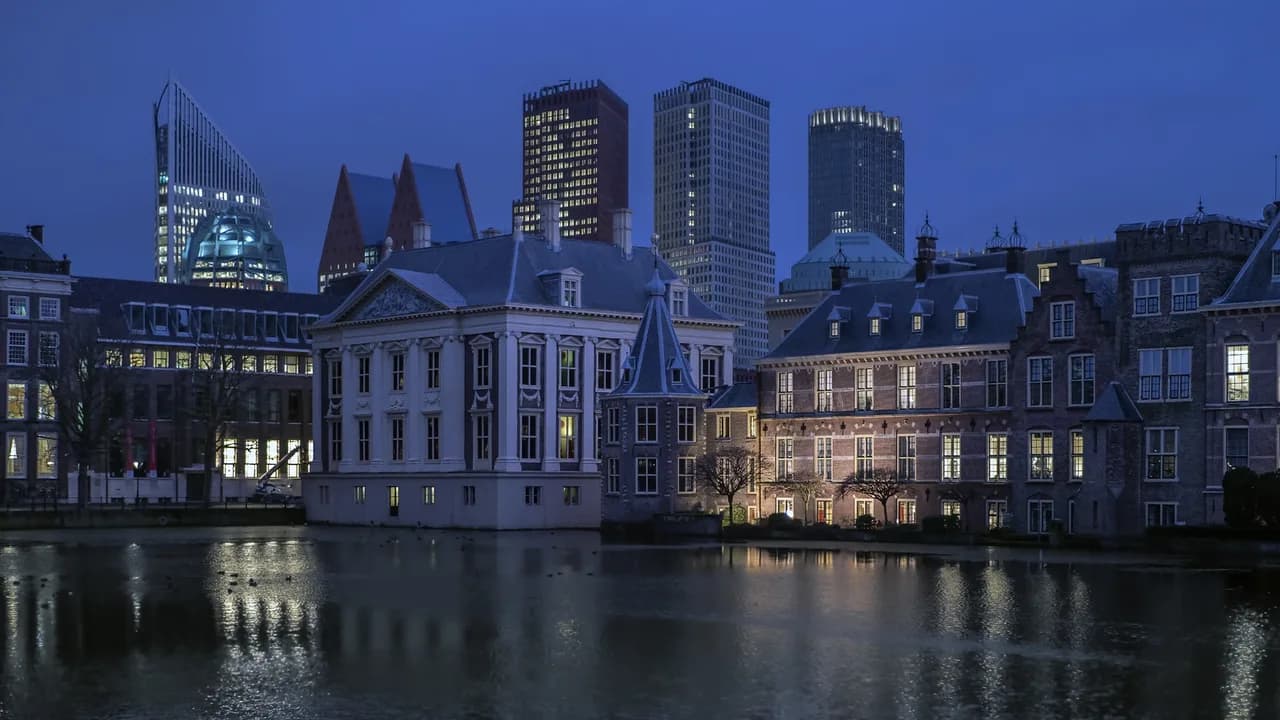
The Hofvijver, the calm lake at the centre of modern The Hague, is the best place to start because it preserves that original geography: the water on one side, the court buildings on the other. Stand beside it and you are looking at the same arrangement of pond and power that shaped the city.
Why The Hague never became a conventional city
Because the court sat here, The Hague developed as a seat of government and aristocratic residence while the trading wealth of Holland concentrated elsewhere. The result is a city of stately streets, embassies and townhouses rather than a dense ring of merchants' canals.
For a visitor this is practical good news: the political sights sit close together. The Hofvijver, the Binnenhof exterior, the Mauritshuis and Noordeinde line up within a short walk of each other, so you can cover the political heart in a single morning without transport — bearing in mind that the Ridderzaal itself is entered on a guided tour. The city's museums carry the story further, and the guide to Museums in The Hague sets out which collections reward a limited timetable.
The Binnenhof and the Ridderzaal: the heart of Dutch politics
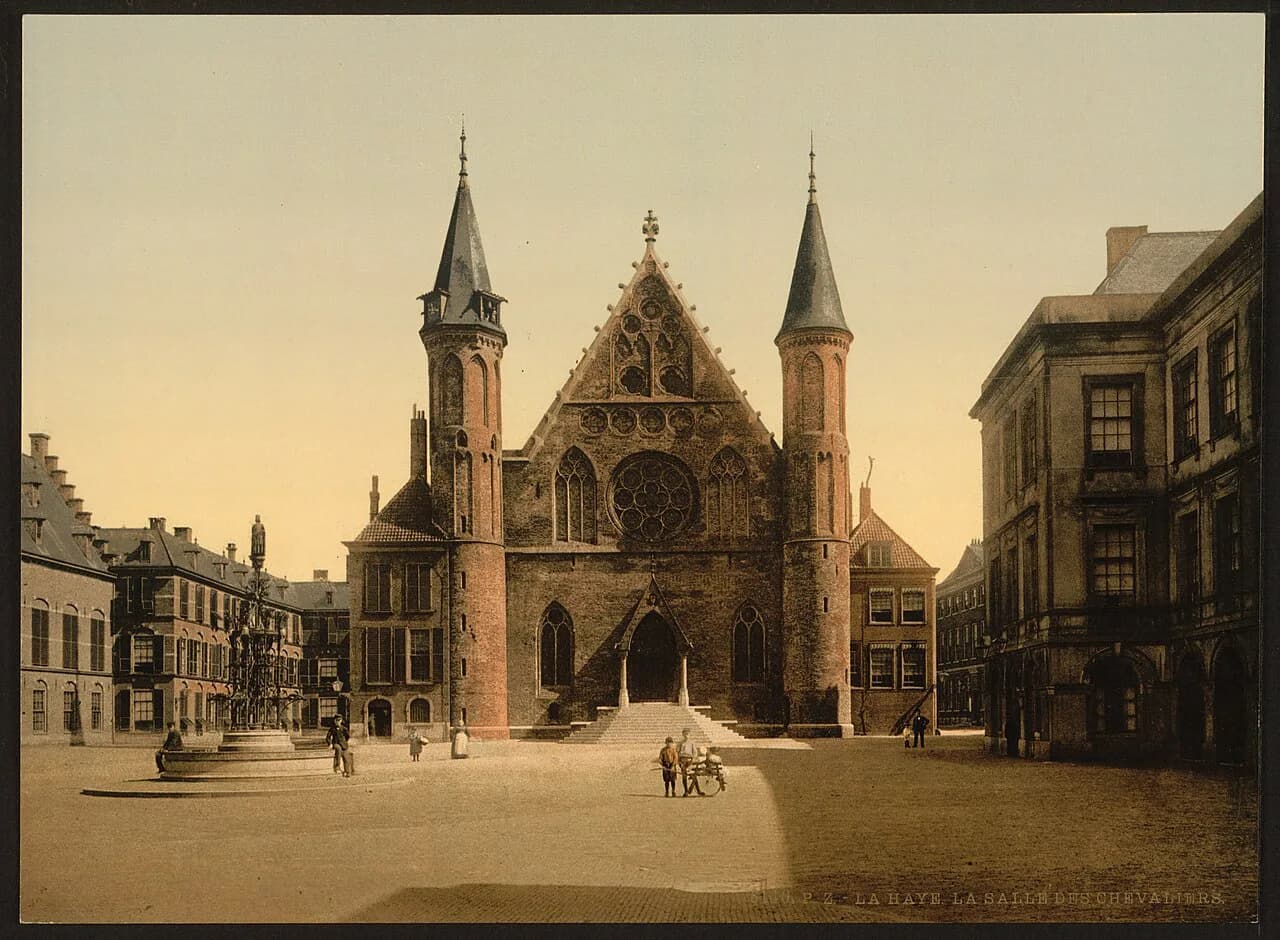
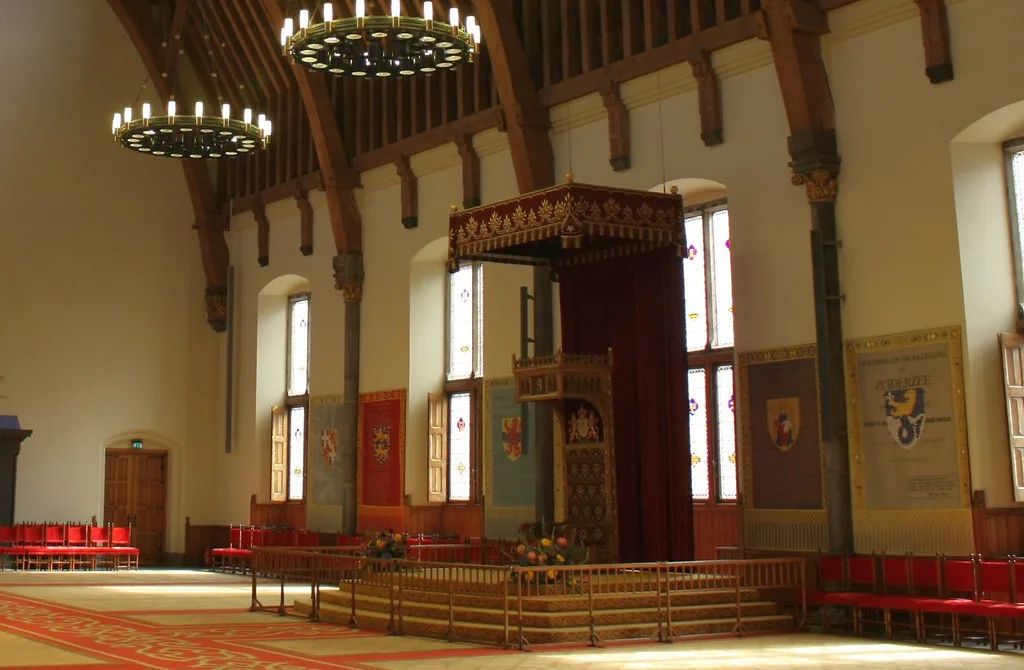
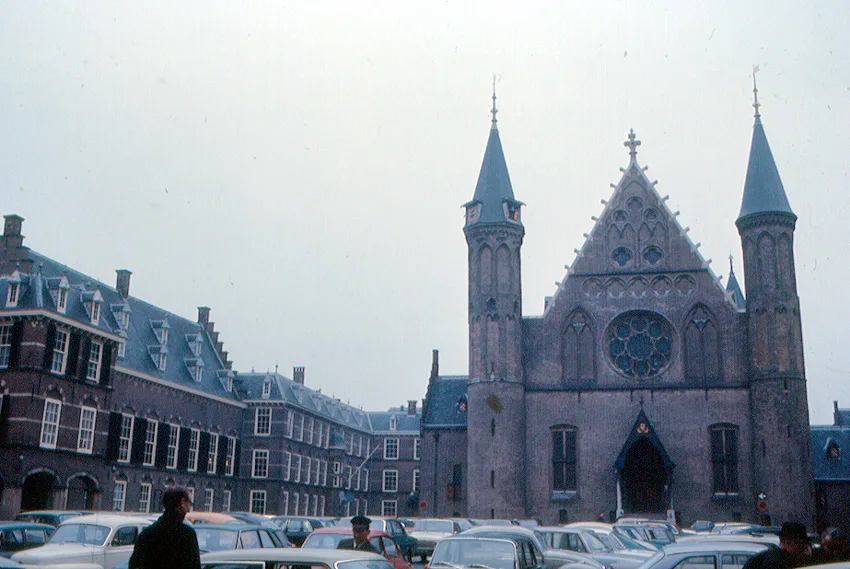
The Binnenhof, literally the Inner Court, represents the heart of Dutch politics. Its church-like Ridderzaal, the Knights' Hall, is used for state occasions, and the larger complex around it still holds the institutions of government.
Guided tours are the way to peek inside the Ridderzaal rather than wandering in unaccompanied, so plan around a tour rather than assuming you can walk in. The building's towers and roofline also make the Binnenhof the obvious anchor of any walk through The Hague Architecture.
The Mauritshuis and the Golden Age
East of the Binnenhof stands the Mauritshuis, an elegant seventeenth-century mansion that now holds Flemish and Dutch paintings from the fifteenth to the eighteenth centuries. The collection's centrepiece is Vermeer's Girl with a Pearl Earring, which alone justifies an hour in the building for most travellers.
The Golden Age is where The Hague's art collections are strongest, and the Mauritshuis is the compact, high-value version of that story compared with the larger collections elsewhere in the city. If you want to widen the picture to the city's other art, the guide to the city's art galleries picks up the thread.
The Peace Palace and the city of Peace and Justice
The Hague is known internationally as the city of Peace and Justice because several international organisations sit here, including the UN's International Court of Justice, which regularly holds trials. The Peace Palace itself, the Vredespaleis, was donated by the American steelmaker Andrew Carnegie and opened in 1913, a year before the First World War broke out, which gives its pacifist purpose a bitter edge.
For visitors the point is context, not spectacle: the palace is an institution at work, and the surrounding streets of stately embassies explain why this part of the city looks the way it does. Give it a look on a walk rather than a whole afternoon.
Panorama Mesdag and the nineteenth-century coast
Panorama Mesdag, a 360-degree painting of Scheveningen completed in 1881 by Hendrik Willem Mesdag, places you inside the fishing village and dunes as they were, which makes it the most vivid way to understand how The Hague and its coast once related. It is one of the city's more unusual attractions and a good substitute for the real seafront when the weather turns.
The real Scheveningen, the district on the coast, still draws crowds to its wide sandy beach and pier about ten minutes from the city centre, with fish sellers along the front. After the panorama, the modern seafront reads as the next chapter of the same story.
Madurodam: the Netherlands in miniature
Madurodam models Dutch landmarks at 1:25 scale, and it works as a quick orientation to the country as a whole rather than to The Hague alone. Families get the most from it, and children especially enjoy feeling like giants among the models.
Think of it as a geography lesson and a half-day for children, not a core stop for adult travellers with only a day or two. If adults are choosing between the miniature park and the historic centre, the centre is the stronger choice.
Seeing the history on foot: Binnenhof, Hofvijver, Noordeinde, Mauritshuis
The political and Golden Age sights form a compact loop: Hofvijver and Binnenhof on one side, Mauritshuis immediately east, then Noordeinde leading away. Allow a steady half day to see the exteriors, the Hofvijver and the Mauritshuis properly, and a full day if you add the panorama.
Keep any Ridderzaal guided-tour timing in mind when you set the route, and let the churches break up the palaces if you want a change of register; the city's older places of worship give a quieter version of the same centuries.
How much time the historic centre needs
Two days is the honest minimum for the centre plus one museum; three days lets you add Scheveningen and a second collection without rushing. The trade-off is real: every hour on the beach at Scheveningen is an hour not spent among the Hofvijver, Binnenhof and Mauritshuis, and in poor weather the beach loses its advantage entirely.
Travellers arriving by rail use Den Haag Centraal, about 45 minutes from Amsterdam and 30 from Rotterdam by train, with trams and buses from the station into the centre. That makes a one-night history-focused stop perfectly workable.
Where to start the story
Start at the Hofvijver in the morning, walk through the Binnenhof, book the Mauritshuis for the middle of the day and finish with Panorama Mesdag after Noordeinde. That single line covers the court, the Golden Age and the nineteenth-century coast in one day, with Scheveningen as the optional extra if the weather holds.
Frequently Asked Questions
Why is it called The Hague rather than Den Haag in English?
Den Haag is the Dutch name; the English form is The Hague, and the city's formal Dutch name is 's-Gravenhage. Locals say Den Haag, and English speakers usually say The Hague. Signs and timetables may use either, so don't be confused if you see them side by side.
How far is The Hague from Amsterdam?
Amsterdam is about 45 minutes from Den Haag Centraal by train, and Rotterdam is roughly 30 minutes away. Both run from the main station, which also has trams and buses into the centre. Treat those figures as journey approximations and check departure boards on the day.
Can you go inside the Binnenhof and the Ridderzaal?
The Ridderzaal is used for state occasions and can be seen on a guided tour rather than by walking in unaccompanied. The wider Binnenhof complex is the working centre of Dutch politics, so treat access as dependent on a guided tour rather than something you can simply wander into.
Is one day enough for The Hague's historic sights?
One day covers the Hofvijver, Binnenhof, Mauritshuis and Noordeinde comfortably if you start early and move at a steady pace. Add Panorama Mesdag and you have a full day. Scheveningen is better saved for a second day or a long afternoon.
Sources
Notes for your next Dutch city break
Optional updates to our Netherlands guides.
You might also like
Continue reading
More guides you'll find useful