
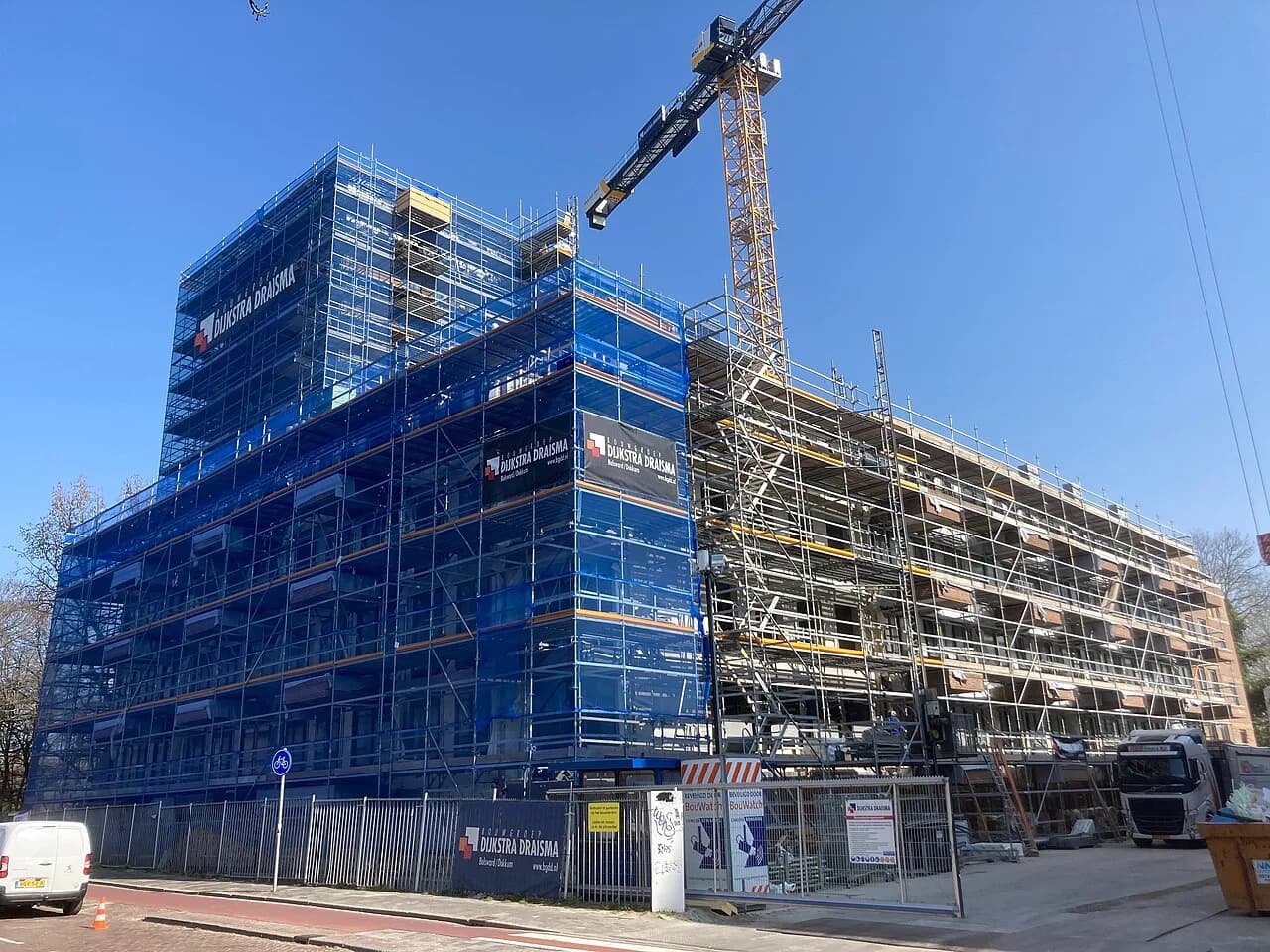
Korrewegwijk, Groningen: the pre-war district on either side of the Korreweg

The Korrewegwijk is a pre-war residential district in the north-east of Groningen, laid out on both sides of the Korreweg, the street the neighbourhood takes its name from. It is not a sightseeing district: come for an hour's wander through ordinary Groningen streets, not for museums or a hotel base. This guide covers what the district is, how its two halves differ, where its small neighbourhood meeting points are, and how to reach it on foot or by bike.
What the Korrewegwijk is
The district is a vooroorlogse wijk, a pre-war neighbourhood, spread either side of the Korreweg in the north-east of Groningen. The neighbourhood website still calls it the Korrewegwijk, and so do local organisations: WIJ Groningen, for instance, runs a WIJ Korrewegwijk team for the area, covering De Hoogte, Selwerderwijken, Cortinghborg, the Indische buurten, the Professorenbuurt and the Korrewegwijk.
The neighbourhood's own website describes it as a pre-war district of Groningen, sitting on both sides of the Korreweg, and the name is derived from that street. That description is the most useful way to picture it: low-rise streets built before the Second World War, arranged around one long spine road, rather than a district of monuments.
Where the district sits
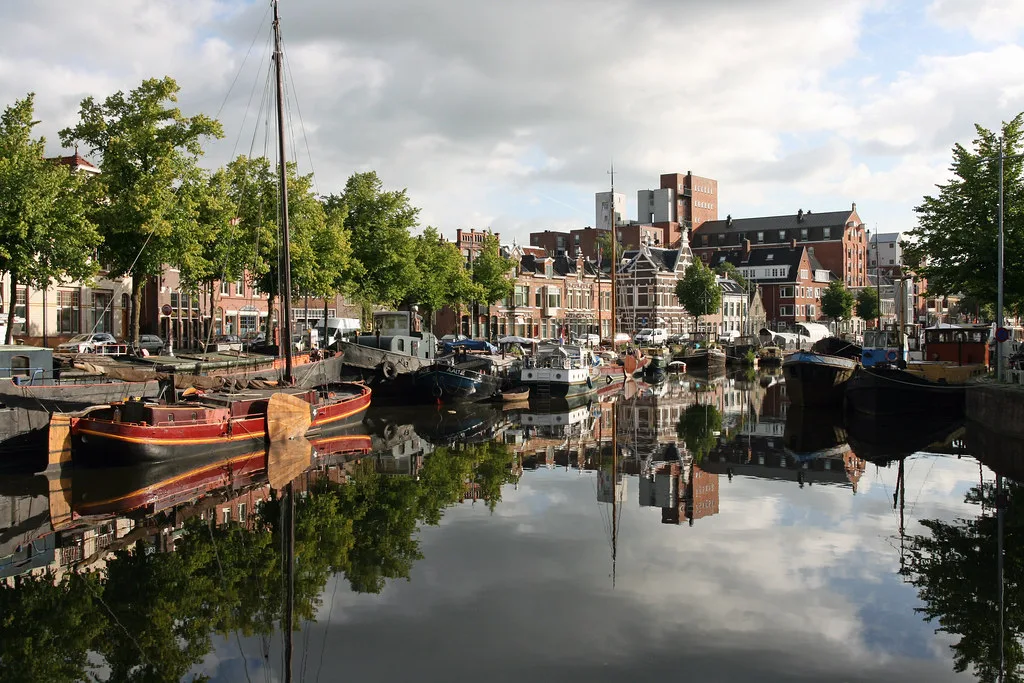
The Korrewegwijk is bounded by the Bedumerweg, the Van Starkenborghkanaal, the Oosterhamrikkanaal, the Boterdiep and the Rodeweg. Water forms much of the edge, which matters when you plan a walk: the canals give you a clear line to follow rather than an open-ended grid.
That boundary shape means the district is easiest to enter along the Korreweg itself or from the Bedumerweg side, and easiest to understand if you keep one of the canals in view as an edge. If you are weighing up which residential district to spend an afternoon in, the Groningen neighbourhood overview puts this area alongside alternatives such as Oosterpoort and Schildersbuurt.
Indische buurt and Professorenbuurt: the two halves
The neighbourhood website treats the Korrewegwijk as two named parts: the Indische buurt and the Professorenbuurt. Naming them matters when you are walking, because addresses, activity locations and local organisations refer to one half or the other rather than to the district as a whole.
The neighbourhood's own activity listings name streets from across the district, among them the Madoerastraat, the Molukkenstraat and the Javalaan, so a street sign is a useful clue to where you are. Keep a map to hand rather than relying on street names alone, and you stay oriented without much effort.
Who it suits, and who it does not
The district suits travellers on a longer Groningen break who have already covered the centre and want a quiet hour among ordinary streets, canals and pre-war housing. It is flat and compact, so it works well as a loop on a rented bike or a walk that ends back at the centre.
It does not suit a first-time visitor with one day in the city, and it is not a place to build a sightseeing weekend around. If a residential district with more of a buzz appeals, compare it with Schildersbuurt, Groningen before you decide where to spend your afternoon.
What to see on a wander
The Korreweg itself is the spine of the walk, with the canals at the edges giving the district its shape. Work out a loop that runs along the Korreweg and returns by one of the boundary waterways, and you see both the street pattern and the water that frames it in a single pass.
The main appeal is the pre-war street pattern rather than individual sights: consistent low-rise housing, brickwork and straight streets laid out along the road. Treat it as an architectural stroll rather than a checklist, and you will get more out of it than by hunting for a single highlight that is not there.
Floreshuis and Floresplein
The Floreshuis on the Floresplein is the neighbourhood meeting point, and the neighbourhood website lists events and exhibitions there. It is a community building rather than a visitor attraction, so what is on depends on the week rather than a fixed programme.
WIJ Korrewegwijk is based at Floresplein 19, with its entrance through the first door on the left of the Floreshuis main entrance. Its walk-in hours without an appointment are Monday, Tuesday and Thursday mornings from 09:00 to 12:00, and the location is wheelchair accessible. That makes it a practical stop if you need local information rather than a sight.
Smaller neighbourhood spots
Het Pand at Madoerastraat 16 appears in the neighbourhood's activity listings, including a homework club on Tuesday, Wednesday and Thursday afternoons. The Groenhuis at Madoerastraat 20 hosts the Fix'm Kluscafé, a repair café for small appliances, on Monday afternoons from 13:30 to 15:30; you pay only for parts, and it is closed during school holidays.
These are ordinary neighbourhood facilities rather than visitor sights, and they are best treated that way: useful for understanding how the district works, not as stops on an itinerary. Plan your walk around the streets and canals first and let these fill the gaps.
Getting there and getting around
The district sits close enough to the centre to walk or cycle, and the Korreweg gives a straightforward line into it. Cycling is the practical choice for a loop past the canals, and the neighbourhood is flat throughout. If you want a wider set of ideas for the rest of your trip, the Groningen attractions hub covers the city's main sights.
Once inside, getting around is a matter of streets rather than transport: nothing here needs a tram or bus. Hire a bike in the centre, ride out along the Korreweg, and use the boundary canals to turn the visit into a loop back into the city.
Where to eat and stay
This is a residential district rather than a restaurant or hotel quarter, and the sources here describe community facilities such as the Floreshuis and WIJ Korrewegwijk rather than places to eat or stay. Plan your meals around the centre and come out here for the walk.
Treat the Korrewegwijk as a daytime wander among ordinary Groningen streets and canals, and build the rest of your day around the city centre.
Safety at night
Nothing in the available sources rates the district for safety, and this guide does not offer a verdict. If you are planning an evening walk, stick to the streets you already know from daylight and ask at your accommodation.
Is the Korrewegwijk worth an afternoon?
Yes, if you have time for a slow loop through ordinary Groningen streets and canals, and no, if your trip is short and centre-focused. The district gives you a clear walk along the Korreweg between waterways, and the Floreshuis on the Floresplein as a neighbourhood landmark.
Pair it with the city's main sights and keep your eating and sleeping in the centre. For a wider set of residential districts to compare, start from the Groningen neighbourhood guides before you commit your afternoon.
Explore more Groningen guides
Frequently Asked Questions
Why is the neighbourhood called Korrewegwijk?
The name comes from the Korreweg, the street the district is built around. The neighbourhood website describes it as a pre-war district on both sides of the Korreweg in the north-east of Groningen, and the street name is embedded in the district name.
What is the Korreweg?
The Korreweg is the street that runs through the district and gives it its name. The neighbourhood is laid out on both sides of it, and it is the easiest line to follow on foot or by bike when you visit.