Parks in The Hague: Which Green Spaces Are Worth Your Time
Clingendael's Japanese Garden, the Palace Garden and wooded walks: how The Hague's green spaces work and which ones fit a one to four day city break.
On this page
Two parks cover most short breaks in The Hague: Clingendael, a landscape estate between the city and Wassenaar, and the Palace Garden behind Noordeinde. Clingendael is the one worth building a half-day around; the Palace Garden is a free, flat add-on to a central afternoon. This guide sets out what each one offers, how the walking works and how to pair a park with the district you are already exploring.
The catch is timing. Clingendael itself is open throughout the year at no charge, but its walled Japanese Garden admits visitors only for a short spring window in May and June and again in October, so a park-led day can hinge on the month you book. The rest of the estate, with its tearoom and winding paths, works in any season.
What The Hague's parks give you that the city centre does not
Central The Hague is compact and largely built up, so the green edge is where the city changes character. Clingendael is laid out in English landscape style, with groups of trees, reflective water, islands and the surprising course of ditches rather than straight French beds. That makes it a place for an unhurried loop rather than a quick look at a monument.
The Palace Garden does something different: it puts trees, lawns and picnic space a few minutes from one of the city's smartest shopping streets. Between them, the two cover both moods a short break needs, a proper walk in the countryside and a bench in the middle of a sightseeing day. If your itinerary is already full, free things to do in The Hague make the case for keeping a park in it, and things to do in The Hague is the place to slot one in.
Clingendael estate: English landscape park, tearoom and Japanese Garden
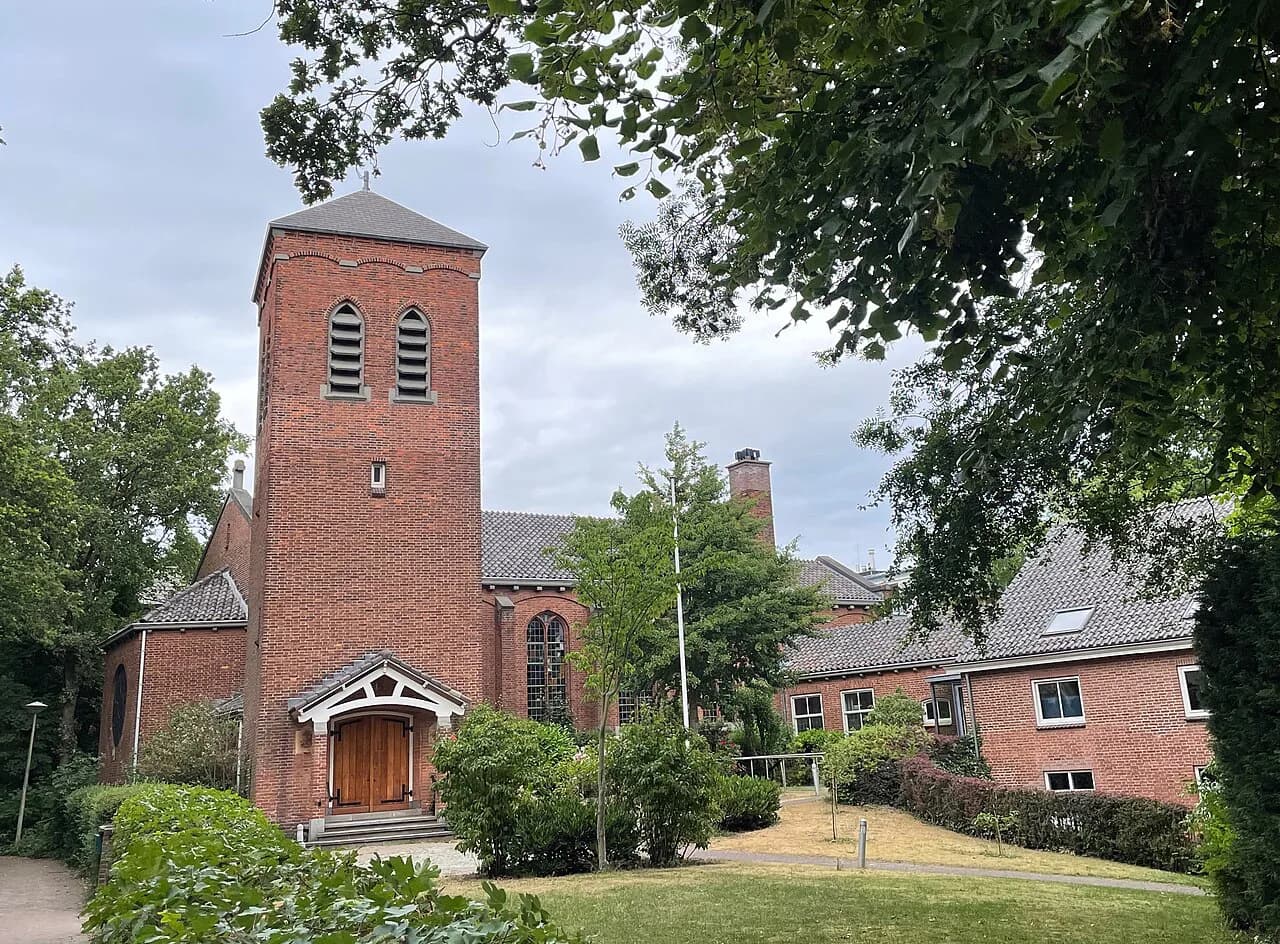
Clingendael sits between The Hague and Wassenaar and was opened to the public after the municipality bought the estate in 1954. The best-known feature is the Japanese Garden, the only one in the Netherlands dating from around 1910 and, at 6,800 square metres, the largest in the country. Because its plants and trees are fragile, it is fenced off and opened only for short periods.
Beyond the Japanese Garden, the estate holds an Old Dutch Garden with box hedges and flower beds laid out in the early twentieth century, a Star Forest and a snake wall once used to grow peaches, apricots and pears in its sheltered hollows. The former lodge house now serves as a tearoom, a sensible start or finish for a walk, with a terrace when the weather allows, a children's menu and a play corner. A Second World War command bunker disguised as a farm building also stands on the estate.
When the Japanese Garden at Clingendael opens and why it is fenced off
The Japanese Garden opens for a few weeks in spring, in May and June, and again in October. The estate's own calendar carries the current dates, and because the window is short it is worth fixing your visit around it if the garden is the reason you are going. Outside those weeks you see the park but not the garden, which is the single biggest planning decision on this page.
The reason for the restriction is fragility: the garden contains rare trees and plants that cannot take foot traffic year-round. Treat the published window as the fact it is rather than assuming a spring day will get you in, and have the rest of the estate as your fallback. The tearoom, the ponds and the wooded paths remain open whatever the garden does.
Walking and cycling Clingendael: paved paths, routes and the tearoom
Clingendael is a walking park first. Most paths are paved, which makes the estate unusually accessible for wheelchair users and pushchairs, and marked routes let you choose a shorter loop or a longer one. Allow a half-day rather than an hour: the estate is outside the centre, so the journey is part of the cost of the visit.
Cycling suits the estate too, with the tearoom as a natural stop and water available for dogs. If you want to combine the park with the coast or the dunes, sort out your bike first; cycling in The Hague covers routes and bike hire so you do not have to rely on the tram for the return leg.
The Palace Garden behind Noordeinde: a free daily park by the Royal Stables
The Palace Garden lies behind Noordeinde Palace, next to the Royal Stables, and is open to the public every day. It began in the early seventeenth century as a garden laid out for Frederik Hendrik's mother, then full of flowerbeds, ponds, fountains and marble statues, and was given to the municipality in the twentieth century. Today it is an ordinary Dutch park by local standards and a good picnic spot in summer, set between the stables and the working palace.
This is the park to use when you have an afternoon rather than a day. It needs no planning and drops neatly into a circuit of the city centre, which is where it beats Clingendael on convenience.
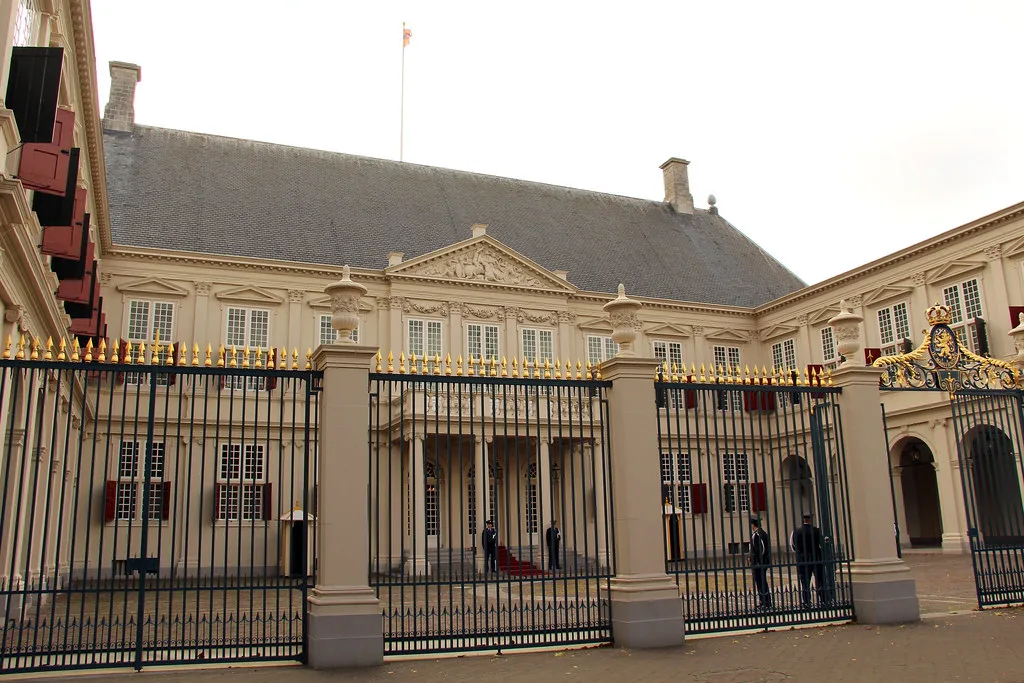
Noordeinde Palace: what you can and cannot go inside
Noordeinde Palace is King Willem-Alexander's working palace, so it is not open for individual visits. It opens to the public with the Royal Stables for several days each summer only, and the palace's own page carries that year's arrangement. On Wednesday mornings the King regularly receives new ambassadors there, and you can watch the state coach arrive with its mounted escort, hear the anthems and follow the inspection of the guard from outside.
The surrounding Noordeinde street is worth the walk in its own right, lined with fashion boutiques, galleries, jewellers and antiques dealers in art nouveau buildings, with cafés between them. It slots naturally into a shopping afternoon, and the wider picture of where to spend your money is covered in shopping in The Hague. From Den Haag Centraal the walk to Het Noordeinde takes about fifteen minutes, and several trams stop at Kneuterdijk.
Haagse Bos and Malieveld: the city-centre green edge
For green space without leaving the centre, Haagse Bos is the wooded park in the north of The Hague, and it is the practical choice on a short break when Clingendael's half-day does not fit. Treat it as a gentle add-on rather than a separate excursion.
Pair either with a walking route through the historic streets so the green stop sits inside a bigger loop. Our The Hague walking tour covers the central leg, and you can bolt the park on at the station end.
Pairing a park with a neighbourhood: Statenkwartier, Scheveningen and the Zeeheldenkwartier
The Statenkwartier sits behind the dunes of Scheveningen and has one of The Hague's best-known shopping streets, Frederik Hendriklaan, known locally as De Fred. The neighbourhood is full of the turreted architecture that gives the district its character, and the Kunstmuseum, the photography museum and the Omniversum cinema are all in the area around it. Scheveningen is a short walk away, so the district makes an easy green-and-coast combination on that side of town.
Bookshops are part of the draw: Paagman on the corner of Frederik Hendriklaan and Willem de Zwijgerlaan holds events and book presentations and can absorb an hour without effort. Frederik Hendrikplein is one of the district's green squares, a pleasant pause between shops.
The Zeeheldenkwartier, on the edge of the centre, is the other strong pairing. It is one of The Hague's most convivial districts, with authentic shops and cafés and art nouveau buildings that reward a slow wander, and in summer its squares and streets — Prins Hendrikplein, Piet Heinstraat, Prins Hendrikstraat and Anna Paulownaplein — fill with terraces where locals gather. It sits close enough to the centre to combine with the Palace Garden in one afternoon.
Park costs: what a green half-day adds to your budget
Both headline parks are free. Clingendael is freely accessible throughout the year, and the Palace Garden is open to the public daily, so the only real spending is the tearoom at Clingendael, a coffee on Noordeinde or a bike rental. That makes a park day one of the cheapest ways to fill time in The Hague, and it pairs well with the free squares and street wandering in the centre.
Museum entry is the variable to budget for separately, since the Mauritshuis and Kunstmuseum set their own prices and these change. Check the current tariff on each museum's own page before you commit a day to indoor sights. Kunstmuseum Den Haag is the district's headline collection, and the wider choice is set out in museums in The Hague.
When to go: spring for the Japanese Garden, summer for picnics
Spring is the season that matters if the Japanese Garden is on your list, with the published window running in May and June and October the second chance. Summer suits the Palace Garden, where a picnic on the grass is the point, and the terraces at Clingendael. Autumn colour makes the wooded estates worth a walk, and winter visits are about the paths rather than the planting.
Each season gives Clingendael its own character, from spring blossom around the Japanese Garden to autumn colour in the woods, and the estate is a pleasant walk in any of them. But if the Japanese Garden is the reason you are going, plan around its May, June or October windows rather than assuming a spring day will get you in. If you are weighing up how the city fits together across a few days, see more of The Hague's attractions to put the parks alongside the museums and squares.
Which park should you pick?
Choose Clingendael if you have half a day and want a proper walk, and book around May, June or October if the Japanese Garden is the draw. Choose the Palace Garden if you want green space folded into a central afternoon of shopping and museums, since it is open daily and costs nothing.
For a one- or two-day trip, the Palace Garden plus Haagse Bos is enough. For three or four days, give Clingendael its half-day and use the Statenkwartier or Zeeheldenkwartier for the rest of it.
Explore more The Hague guides
Frequently Asked Questions
Do you need tickets for Clingendael?
No. Clingendael is freely accessible throughout the year, including the walking paths and the tearoom. The Japanese Garden within the estate is the exception: it is fenced and opens only for short periods in spring and autumn, and the estate's calendar lists the current window.
Is Noordeinde Palace open to visitors?
Not normally. It is the King's working palace and opens to the public with the Royal Stables for several days each summer only. The Palace Garden behind it is a different matter and is open to the public daily.
Can you walk from the centre to a park?
Yes. Haagse Bos is within walking distance of Den Haag Centraal, and the Palace Garden is a short walk from Het Noordeinde, about fifteen minutes from the station. Clingendael is outside the centre and needs a tram or bike.
Sources
Notes for your next Dutch city break
Optional updates to our Netherlands guides.
You might also like
Continue reading
More guides you'll find useful