
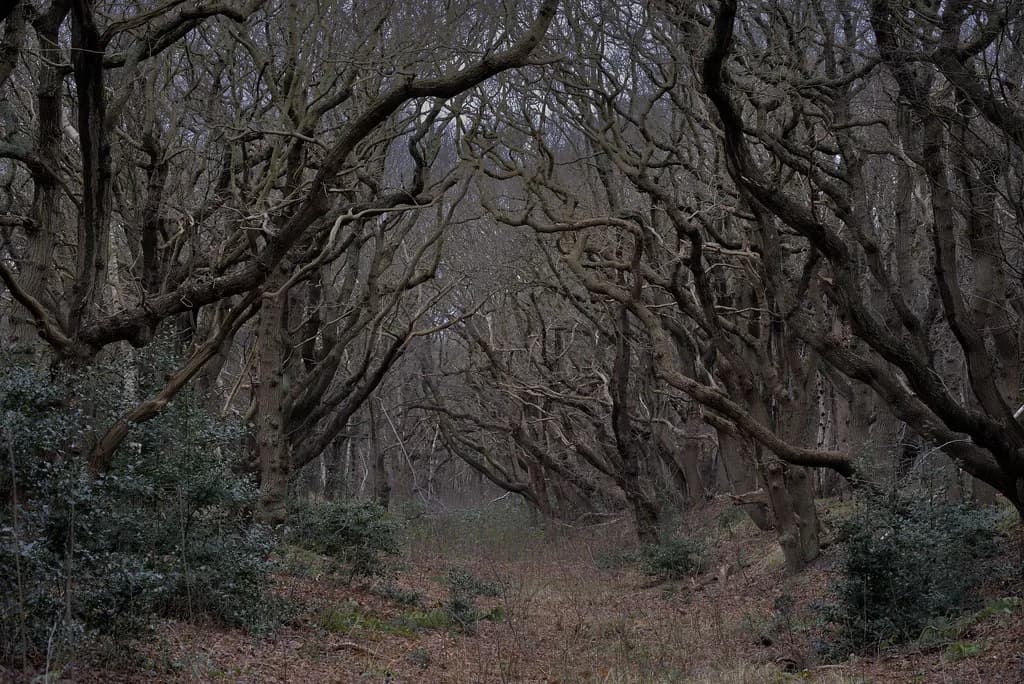
Haagse Bos: The Hague's Old Forest and How to Visit It
Haagse Bos is The Hague's own forest: around 100 hectares of old trees running from the Malieveld on the city side towards the municipality of Wassenaar. It is one of the oldest remaining forests in the Netherlands, a green corridor that has survived beside the city centre. Allow half a day if you want the pond, the nearby deer park and the palace viewpoints, or a couple of hours for a straight walk through.
This guide covers where the forest sits, how to walk in from The Hague Central Station, what to look for along the way and which parts are forest, which are parkland and which are playground. It also covers the one royal building you can see but not enter, and how to slot the forest into a wider day among the attractions.
What Haagse Bos actually is
The forest is a long, roughly rectangular band of mature trees in the Haagse Hout district, running from the Malieveld to the edge of Wassenaar. It is not a manicured city park: the official description stresses an extensive, centuries-old green landscape with a main pond at its centre, and paths that suit running, walking and picnics beside the water.
Its survival is the reason it feels old rather than simply leafy. In the 16th and 17th centuries many trees were felled, and the Act of Redemption (Acte van Redemptie) was drawn up to stop further felling and prevent the forest being sold. That protection kept intact a stretch of one of the country's oldest forests, with the Koekamp and Malieveld, historically part of the same landscape, adjoining it.
The forest was once part of a vast primeval woodland that stretched from Hoek van Holland past Amsterdam. Almost nothing of that original cover remains apart from Haagse Bos and the Haarlemmer Hout, which is what gives this walk its historical weight rather than just fresh air.
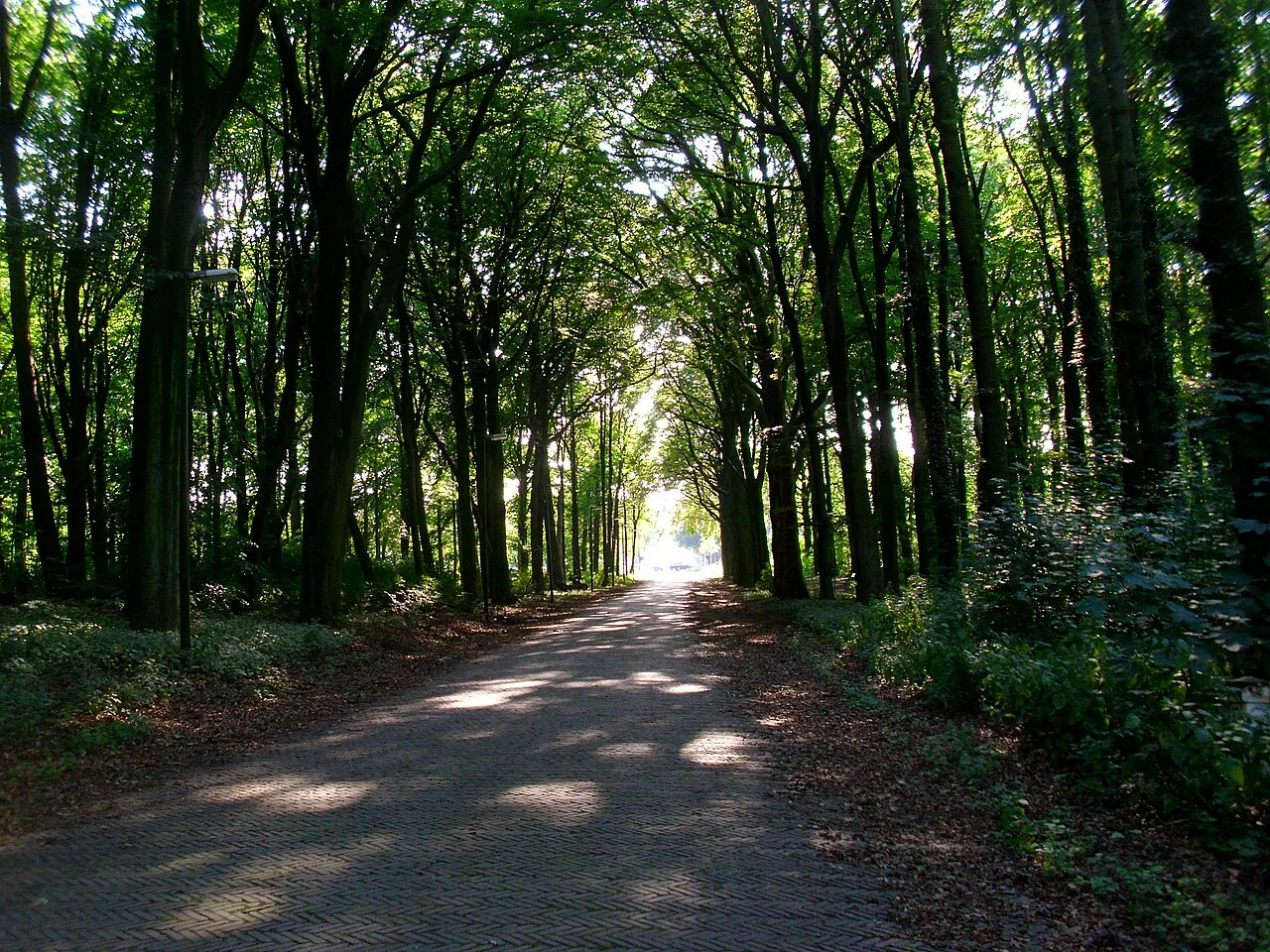

Where the forest sits in The Hague
Haagse Bos occupies the Haagse Hout district, with the Malieveld and Koekamp adjoining its city-facing edge and the Benoordenhoutseweg and Bezuidenhoutseweg framing it on either side. Treat the Malieveld end as your gateway: it is the closest point to the centre and the easiest place to get your bearings before heading into the trees.
The official address for navigation is Boslaan 12, 2594 NB The Hague. Huis ten Bosch Palace sits inside the forest between the Bezuidenhoutseweg and the Benoordenhoutseweg, so a path through the middle will bring you past its grounds rather than into the busiest part of the city.
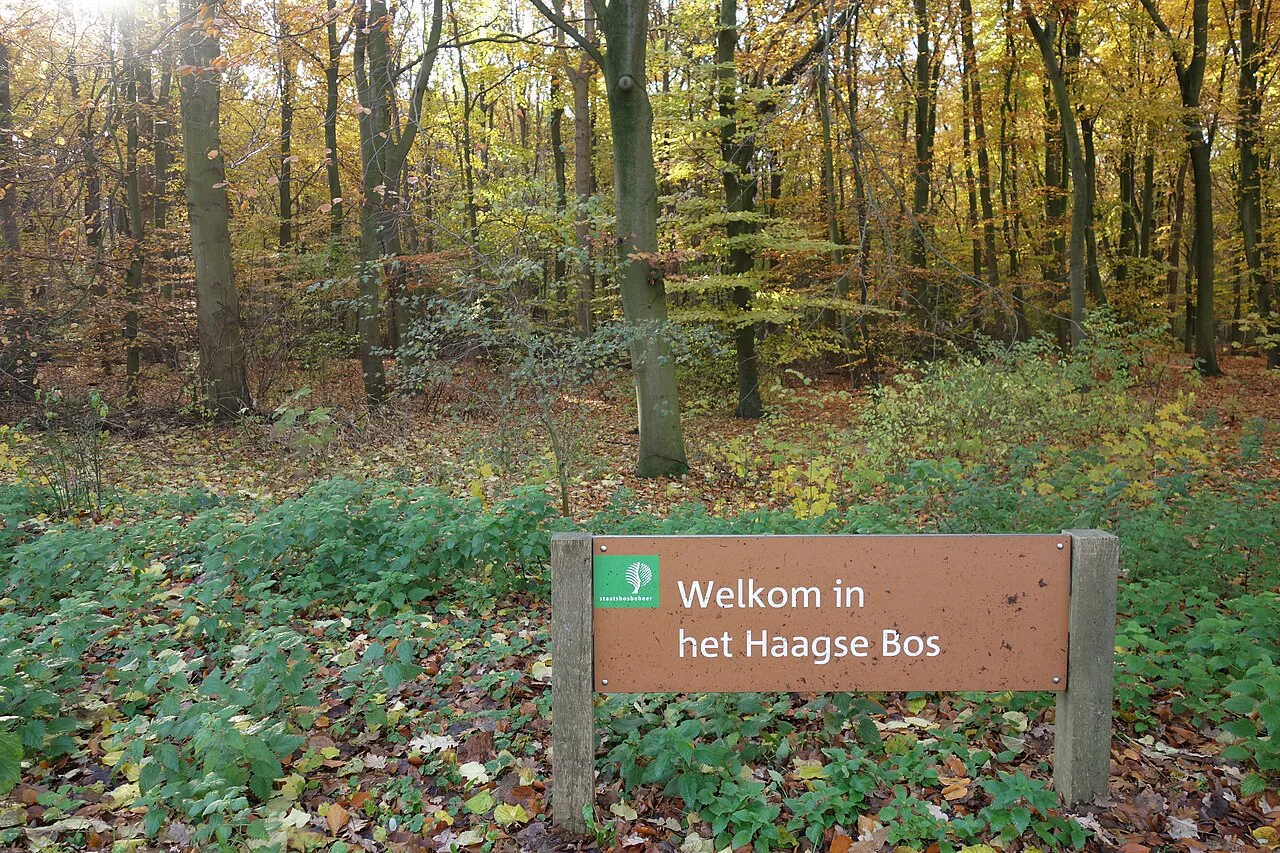

Getting to Haagse Bos
On foot is the simplest approach. From The Hague Central Station you can walk straight to the Haagse Bos, which puts the forest within an easy walk of the city's main rail hub and makes it a natural first or last stop of the day.
By car there are three nearby car parks: along the Bezuidenhoutseweg, beneath the Malieveld, and at the start of the Leidsestraatweg near Huis ten Bosch. Costs and capacity for each are not something to guess at, so check the operator's signage on arrival.
What to see on a walk through the forest
Start at the central pond, which the city's own visitor pages single out as the heart of the forest and the obvious spot for a picnic or a loop on foot. From there the pleasure is the old trees themselves, tall and closely spaced, with paths threading between them.
Autumn is when the forest shows off, turning colour across the whole canopy. Build the walk around that if you are choosing when to come, and keep the pond as your turning point if you want a short loop rather than the full length towards Wassenaar.
The forest is flat and its paths are straightforward, so it works as an easy cycle as well as a walk; the city promotes it among its cycling and walking routes. Bring a bike from the centre and you can cover the length of it and still be back for an afternoon museum slot.
Koekamp: the deer park on the forest's edge
Koekamp, on the city-facing edge of the forest, is the part that most people picture when they hear about deer in The Hague. It began as the hunting ground of the Counts of Holland, whose castle became the present-day Binnenhof, and it still works as an animal pasture with red deer and fallow deer roaming behind its fences.
It is also a forest park with large water features, and storks return to breed there each year. Combine it with the Malieveld next door, which historically formed part of Haagse Bos, and you have the two open, grassy pieces of the landscape before the tree cover proper begins.
Play forest Robin Hood
Children get their own corner of the forest in the Play forest Robin Hood, a route built around rope bridges, suspension bridges, cableways and climbing walls. It is framed as an adventure trail rather than a fenced playground, with rope swings and story spots on tree trunks for when the climbing is done.
Treat it as a stop on the walk: it is outdoor play equipment in the woods, so plan around the weather and let the children set the pace. Sturdy shoes are the practical call, since the fun is all ropes, bridges and climbing.
Huis ten Bosch Palace: see it, don't plan to go in
Huis ten Bosch was built in 1644 as a summer residence for Frederik Hendrik and his wife, and has belonged to the Dutch state since 1815, made available to the monarch. King Willem-Alexander lives there with his family, and Princess Beatrix lived there from 1980 until early 2014.
The palace is not open to the public, so do not build a visit around going inside. You can see it from the paths if you walk or cycle through the Haagse Bos, which is reason enough to take the route that passes it rather than skirting the edge of the forest.
How much time to allow
Two hours covers the pond, a stretch of old trees and a look at Koekamp, which sits at the forest's edge, if you walk briskly from the Malieveld end. Half a day lets you add the palace viewpoints, a slow loop of the whole forest and time sitting by the water.
If you are building the forest into a fuller day, pair it with the Binnenhof, which sits on the city side of the Malieveld and shares the same medieval origin story as the Koekamp hunting ground. A morning in the trees followed by an afternoon indoors is the sensible split.
What is nearby
The forest's city edge puts it within easy reach of the centre's main sights. The Binnenhof and the Mauritshuis are the obvious pair for a culture-heavy day, and the Peace Palace is a short onward hop if you are working through the city's institutions.
For a wider shortlist of what to see across the city, from the Girl with a Pearl Earring to the Panorama of Scheveningen, use the full set of guides to The Hague Attractions. The forest itself is best treated as a half-day of open air between museum visits rather than a base for the whole trip.
Is Haagse Bos worth half a day?
Yes, if you want one of the oldest green spaces in the city rather than another museum queue: the pond, the old trees, the deer at Koekamp just outside the tree cover and a glimpse of Huis ten Bosch make a coherent half-day on foot, and the walk from Central Station is short.
Skip it if your trip is short and centred on the Mauritshuis and the Binnenhof; the forest rewards a slower pace and a tolerance for weather. Either way, go in autumn if the calendar allows, when the canopy turns and the walk is at its best.
Explore more The Hague guides
Frequently Asked Questions
Is Haagse Bos free to visit?
The city's visitor pages present Haagse Bos as an open forest and park landscape — the pond, Koekamp and the play forest — covered as a place to walk, cycle and picnic, with no admission charge listed.
Can you walk from The Hague Central Station to Haagse Bos?
Yes. The official visitor page states that you can easily walk from The Hague Central Station to Haagse Bos, which makes it a practical first stop of the day or a leg-stretch before a train.
Are there toilets or cafés in Haagse Bos?
The visitor information concentrates on the pond, Koekamp, the deer and the palace; it does not describe toilets or cafés in the forest. Plan facilities around the city centre, which is a short walk from the Malieveld end.
Is Haagse Bos good for cycling?
It is flat and threaded with paths, and the city lists it among its cycling and walking routes. Bring a bike from the centre and you can ride the length towards Wassenaar and back without a climb.