
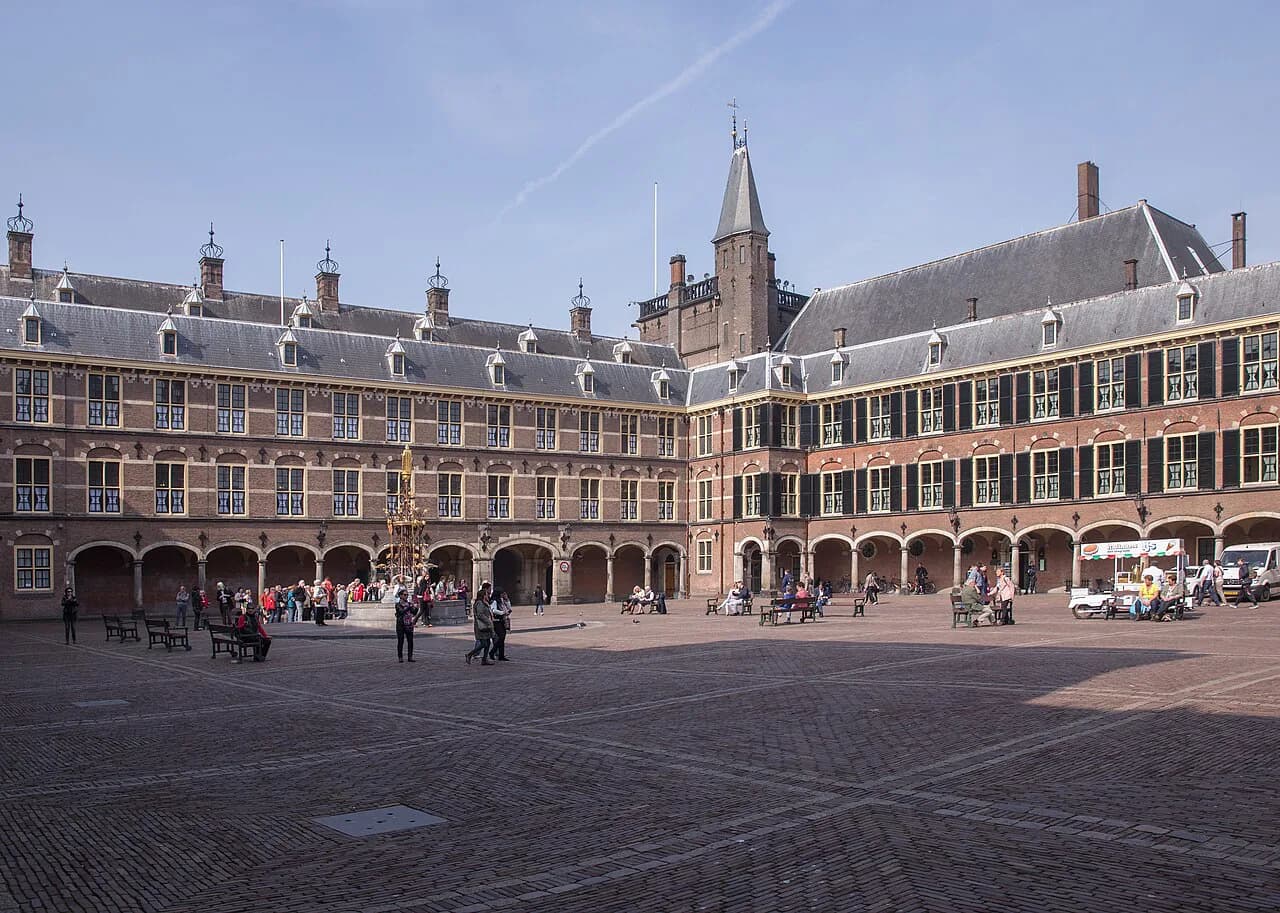
Binnenhof: the Dutch parliament complex in The Hague

The Binnenhof is the cluster of historic government buildings around the Hofvijver in central The Hague. The official city guide calls it the oldest still-functioning government building in the world, in use for some 800 years, and describes a large-scale renovation that is still under way — so a visit is about exteriors, the court pond and context rather than committee rooms. This guide covers what you can see, how long to allow, and how to pair it with the museums nearby. For the wider set of sights, see The Hague Attractions: 12 Visitor Guides.
What the Binnenhof is and why it matters
Four elements make up the picture most travellers recognise: the Ridderzaal (Hall of Knights) with its twin turrets, the Hofvijver pond in front of it, the small Torentje tower used as the Prime Minister's office, and the gateway that leads into the Inner Court. The Binnenhof has been the centre of Dutch political life for roughly eight centuries, and the Dutch parliament is based here, which is why the complex carries such weight despite its modest size.
The Ridderzaal is the ceremonial heart of the complex and the building most visitors photograph, while the Senate and House of Representatives occupy the surrounding wings. The debating chambers are not open to casual visitors, and the official page presents interior tours covering the Senate, House and Ridderzaal as something to look forward to once the renovation is complete, so plan on seeing the architecture from outside.

Where it sits in The Hague
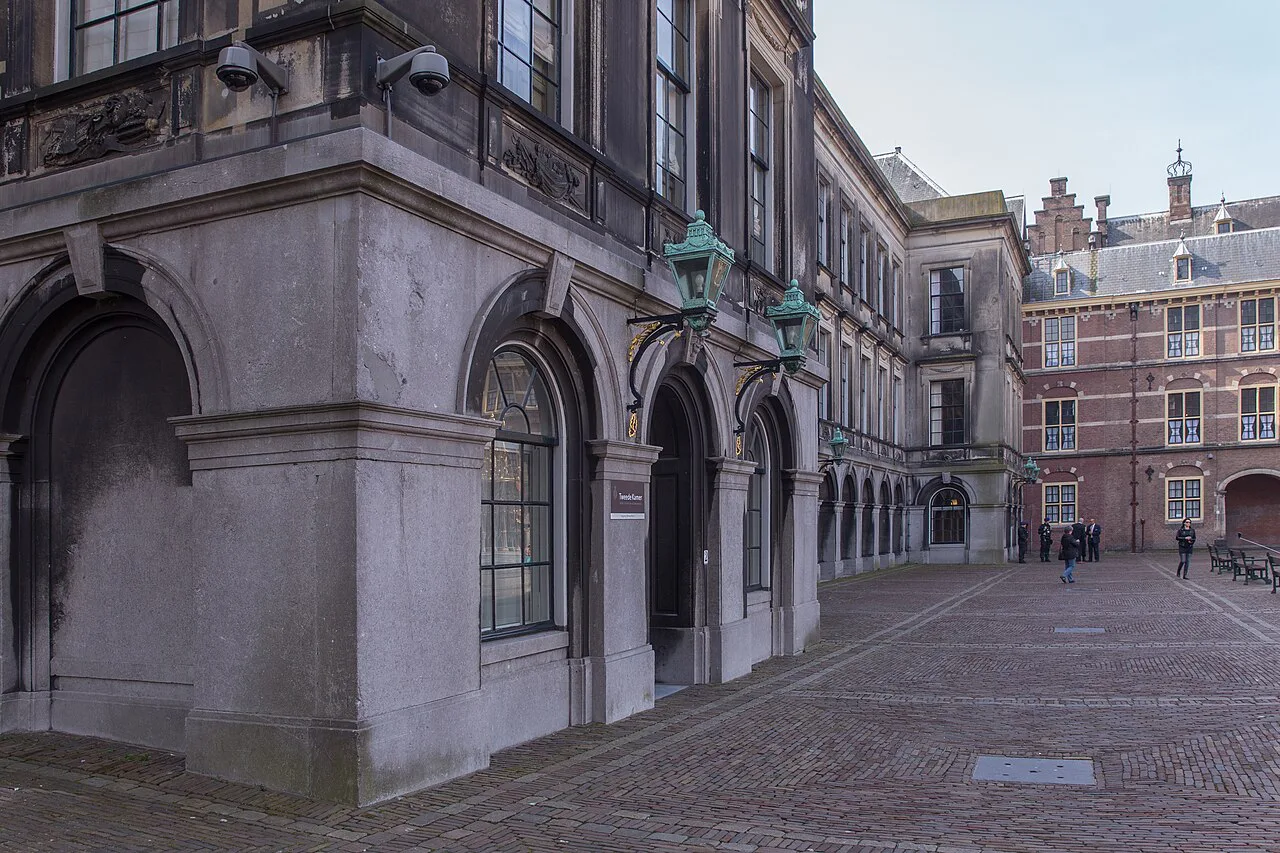
The Binnenhof occupies the block between the Hofvijver and the Buitenhof in the city centre, a short walk from the historic core and the shopping streets. It sits in the middle of the old centre, within easy reach of the Mauritshuis on the far side of the pond.
Because the complex sits in the middle of the historic core, it works as a natural anchor for a half-day rather than a standalone stop. You can approach from the Plein side, take in the gateway, view the Inner Court from the surrounding streets while the works continue, emerge by the Hofvijver, and continue towards the Mauritshuis on the far side of the pond.

Seeing it while the renovation continues
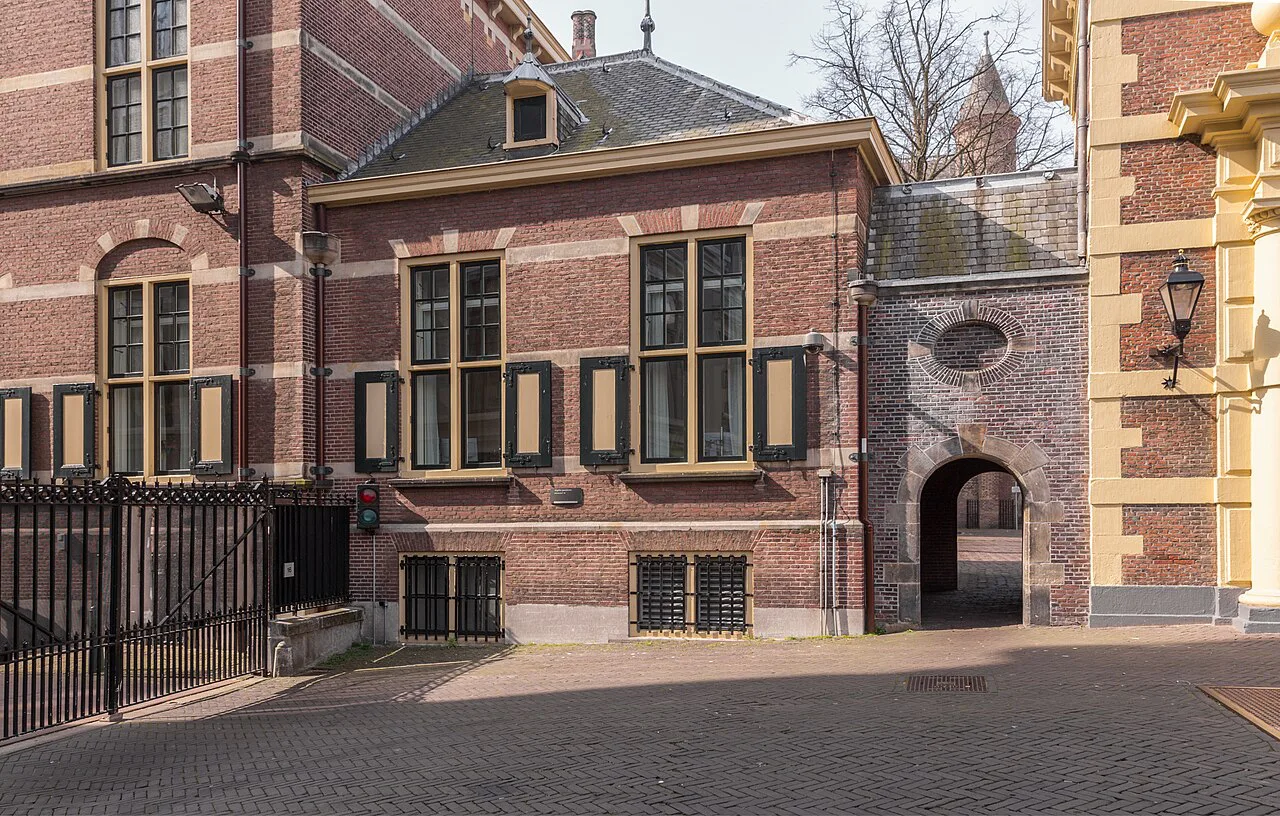
The renovation of the Binnenhof is in full swing, and the official visitor page treats that as an opportunity to dig into the complex's history rather than a reason to stay away. It presents tours of the Senate, House of Representatives and Ridderzaal as possible once the extensive renovation is complete, so treat the visit as a look at the exterior and the court from around the Hofvijver rather than an interior tour.
The classic view is from along the Hofvijver, where the pond, the Ridderzaal and the Torentje line up in one frame. The complex is broader than it looks from the street, so step back along the water to fit it in.
The Ridderzaal and the Inner Court
The Inner Court is the enclosed square at the centre of the complex, framed by the Ridderzaal and the parliamentary wings. The official city guide notes that you can walk or cycle through the Binnenhof, though with renovation work continuing some sides are hoarded off. Allow twenty to thirty minutes to take in the exterior views and photographs, or closer to an hour if you want to circle the Hofvijver as well. The complex is compact, so it does not fill an afternoon on its own.
The neo-Gothic fountain is one of the details worth pausing for, and there is the statue of Jantje to seek out too — legend has it you must sing to shake his hand. These small details are what make the complex feel like a lived-in political space rather than a monument behind glass.
Tours with ProDemos and the Renovation Information Centre
ProDemos runs tours of the Binnenhof that include visits to the Senate, the House of Representatives and the Ridderzaal, but the official city guide says those interior visits will be possible once the extensive renovation is complete. Check what ProDemos is currently running rather than assuming the full route is available.
The Binnenhof Renovation Information Centre is the place to learn what the works involve and how the complex is being restored, and it sits alongside the official Binnenhof information on the city guide. It is the stop that turns a building site into something comprehensible.
Nearby: the Haags Historisch Museum, the Mauritshuis and Lange Voorhout
The Haags Historisch Museum has staged an exhibition, 'Power', on 800 years of the Binnenhof, which the official city guide points to as the context-setting stop for the history behind the stones you have just walked past. It sits close enough to combine with the Hofvijver in a single morning.
The Mauritshuis, on the far side of the Hofvijver, is the obvious art stop to pair with the Binnenhof. Give yourself a comfortable block of time there if you want to do the collection justice, which makes a natural morning or afternoon alongside the parliament complex.
Lange Voorhout, the broad tree-lined avenue just north-east of the Binnenhof, is a pleasant route back towards the centre and a good place to sit down after the walking. The Peace Palace, a little further out, is the other major institutional sight in the city and works as a separate stop rather than a quick add-on. For more of the city's sights, see The Hague Attractions: 12 Visitor Guides.
Practical trade-offs: scaffolding, timing and fitting it into a day
The honest trade-off is that the Binnenhof is a construction site as well as a landmark, so photographs will include cranes and hoarding on some sides. If unspoiled facades matter more than the political story, this is not the moment to build a day around it; if you want to see the workings of Dutch democracy in place, the scaffolding is part of the story.
Time your visit for early morning or late afternoon to avoid the densest crowds around the Hofvijver. A half-day plan of Inner Court, Hofvijver and one museum is realistic; adding a second museum makes a full day.
Is the Binnenhof worth your half-day?
Yes, if you go expecting an exterior visit with real political weight rather than a guided walk through parliament. The Inner Court and the Hofvijver view are quick and central, which makes them an easy addition to any The Hague itinerary.
Pair it with the Mauritshuis or the Haags Historisch Museum, start early, and check what ProDemos and the Renovation Information Centre are currently running before you set out.
Explore more The Hague guides
Frequently Asked Questions
What do the Dutch call The Hague?
The Dutch name for The Hague is Den Haag. You will see it on station signs, tram stops and council websites, and locals use it in everyday speech. The English name appears on international timetables and in tourist material, but both refer to the same city.
Is Den Haag worth visiting?
Yes. The city packs the Binnenhof, the Mauritshuis, the Peace Palace and a strong museum cluster into a compact centre that suits a one- or two-day break.