
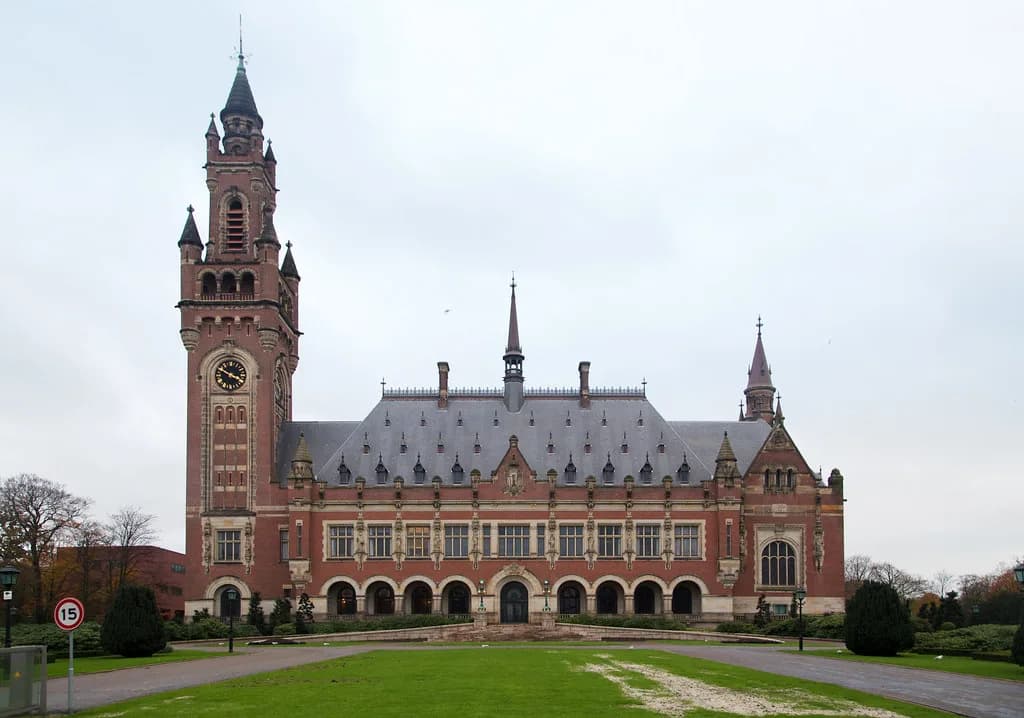
Peace Palace, The Hague: visiting the Vredespaleis
You cannot simply walk into the Peace Palace. The red-brick landmark on Carnegieplein is a working courthouse, so the realistic visit is the free visitor centre, the view through the railings, or a ticketed tour on one of the few days the courts are not sitting. This guide sets out each level of access, what it costs, and how to fit the palace into a city break in The Hague.
Allow 35 to 40 minutes for the visitor centre alone, or half a day if you pair it with the wider international zone. The palace sits west of the city centre, a walk or short bike ride from the Binnenhof, which makes it easy to combine with the Mauritshuis on the same day.
What the Peace Palace is and who works inside it
Four institutions share the building: the International Court of Justice, the principal judicial organ of the United Nations; the Permanent Court of Arbitration, created at the 1899 Hague Peace conference; the Hague Academy of International Law; and the Peace Palace Library. The International Criminal Court is a separate institution elsewhere in the city, not housed here.
The palace was paid for by the Scottish-American steel magnate Andrew Carnegie, designed by the French architect Louis Cordonnier, and opened on 28 August 1913. The Carnegie Foundation still owns and runs it, which is why access is controlled by the institution rather than by a tourism body.
Treat the address as a courthouse first and a sight second. That single fact explains the metal detectors, the passport requirement on tour days and the limited calendar, and it sets your expectations for what a visit actually delivers.
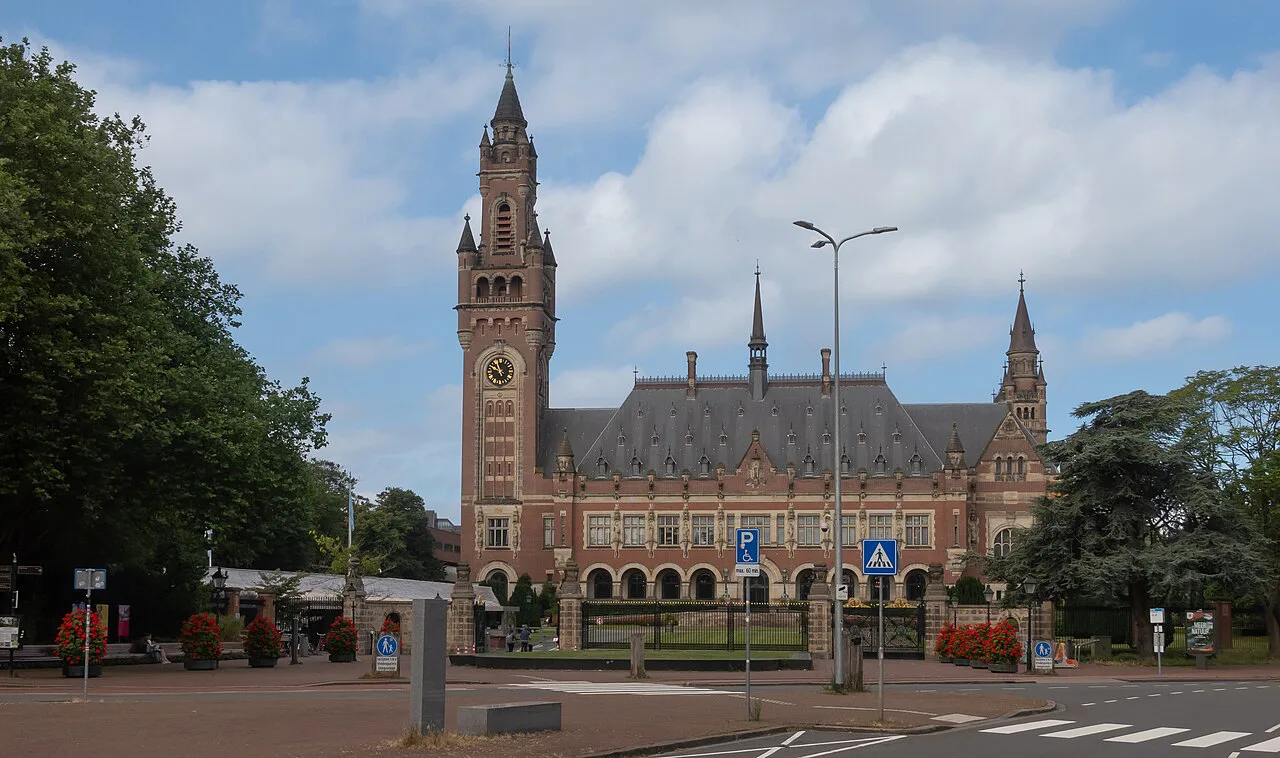

Where it is: Carnegieplein and the international zone
The Peace Palace stands on Carnegieplein, in a leafy quarter of embassies, villas and international institutions west of the city centre. It is a straightforward walk or bike ride from the centre, and the surrounding streets are pleasant in their own right.
Coming from the centre, head west past the Binnenhof and out towards the international zone; the palace tower is visible well before you arrive. If you are building a day around it, the Mauritshuis and the Binnenhof make a natural morning before an afternoon at the palace.
Bikes are a practical way to cover the distance from the centre. If you would rather not cycle, plan the walk to Carnegieplein from the city centre with enough time to enjoy the leafy streets of the international zone.
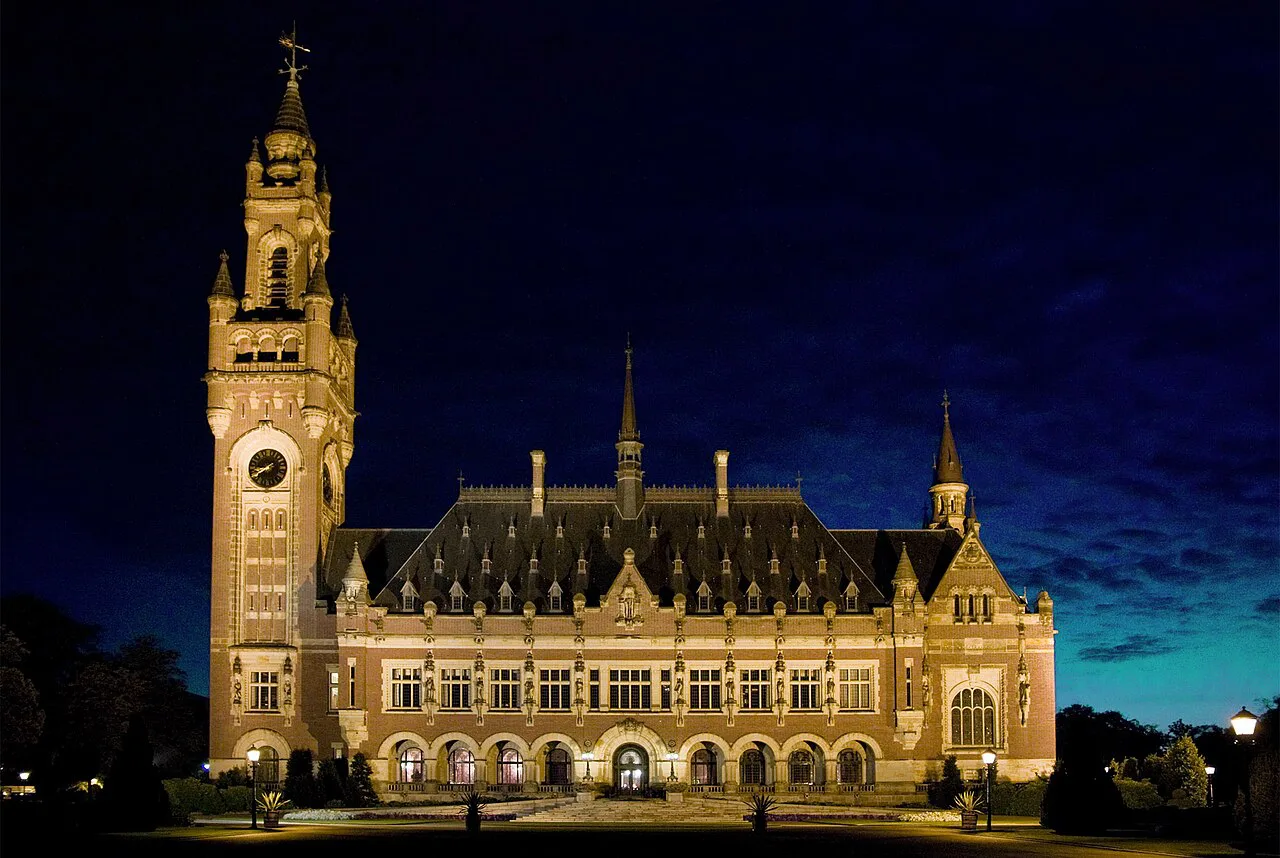

The free visitor centre: exhibition and film
The visitor centre beside the main gate is the one part of the site open to the public, with free entry and donations welcome. It holds an exhibition and film that take 35 to 40 minutes, and the audio tour comes in ten languages including English, German, French, Spanish and Italian.
Opening hours were Wednesday to Sunday, 12:00 to 17:00, when last published, with Monday and Tuesday closures. That pattern matters when you are planning a short break: if it holds, a Monday city break cannot include the visitor centre, so put the palace on a Wednesday or later.
The visitor centre is the low-risk option if your dates are fixed and the tour calendar is not in your favour. Budget around 40 minutes inside, plus time at the railings for the view of the building and gardens.
The view from the railings and the garden
Without a ticket you can still see the palace facade and its gardens through the railings, and the visitor centre gives you the best vantage point. The central tower, the brickwork and the gifts and memorials donated by states are the visual highlights from outside.
This is genuinely worth the walk even if every tour is sold out. The building's scale and the quiet of the surrounding streets are the point, and the international zone's other landmarks are within easy reach on foot.
Inside the Palace guided tour: selected days only
Interior tours run on several days a year, only when neither court is in session, and they sell out because each is capped at 20 people. Tours last 50 to 60 minutes, cost 17.50 euros per person and are free for children under 8, given in Dutch or English.
On palace tour days you need a valid passport or EU identity card at the gate, you pass through a metal detector, and bags and phones go into a locker. Wheelchairs and pushchairs have limited access and mobility scooters are not admitted, so plan accordingly.
Tickets are non-refundable, and tour dates are released on the Inside the Palace tour page rather than published as a fixed calendar. Check that page as soon as your travel dates are settled, because the court sitting schedule drives everything.
Inside, the tour shows the Great Hall of Justice and the gifts from member states, including Japanese tapestries, a Russian vase and a Swiss clock. It is a short, formal visit rather than a museum wander, so arrive early and travel light.
Around the Palace garden walk
On days when the interior is closed, a guided walk around the grounds and garden is offered at 13.50 euros, also 50 to 60 minutes and capped at 20 people. It covers the outside of the building and its setting rather than the courtrooms.
The garden walk involves many steps and is not suitable for wheelchairs. If mobility is a concern, the visitor centre and the railings are the practical alternative.
Is the inside tour worth planning a trip around?
Only if the building itself is the reason for your trip. The scarcity is real: tours run on court-free days, are capped at 20 people and are non-refundable, so chasing a date can distort the rest of your itinerary.
For most city-break travellers the visitor centre plus the railings is the better trade. You get the exhibition, the film and the facade in under an hour, and you keep the rest of the day for the Mauritshuis and the city centre, where the collection rewards a longer stay.
If you do want the interior, book the moment dates appear and build the day around it rather than squeezing it in. Treat the tour as the anchor of a half day in the international zone, with the visitor centre as the fallback.
Attending a court hearing
Public attendance at International Court of Justice hearings at the Peace Palace is possible with a passport, subject to hearings being scheduled and the institution's conditions on the day. The International Criminal Court is a separate institution elsewhere in the city, sits at a different building, and issues its own accreditation for visitors.
Hearings are not tourist attractions with published slots, so do not plan a trip around one. If you are in the city when a case is being heard, the gate is the place to ask.
How much time to allow: half day or full day
A half day covers the visitor centre, the railings and a walk through the international zone, with time left for the city centre. A full day makes sense if you have an inside tour booked or want to add the Mauritshuis and the Binnenhof in the same outing.
Build in slack for security on tour days: passport checks, metal detectors and lockers all take time. Leave bags at your accommodation and carry only what you need.
What else is nearby
The international zone is quiet and residential, so the nearby draws are institutional and architectural rather than commercial. Back in the centre, the Binnenhof and the Mauritshuis are the obvious pairings, and the Panorama Mesdag and the Kunstmuseum Den Haag reward a longer stay.
If you are weighing other ticketed museums against the palace, the Louwman Museum is a substantial half-day in its own right. The Hague Attractions: 12 Visitor Guides helps you sequence the city's big sights without criss-crossing the city.
Clingendael and the Haagse Bos lie further out from the centre and make a green extension if you are already this far from the city heart. Both are easier by bike than on foot.
Book the tour or settle for the railings?
Book the inside tour only if the palace is a priority and your dates are flexible. Otherwise plan around the free visitor centre on a Wednesday to Sunday, see the facade from the railings, and spend the rest of the day in the city centre.
Either way, check the visitor centre hours and the Inside the Palace tour page before you travel. Both can change around holidays and court sittings.
Explore more The Hague guides
Frequently Asked Questions
Can I visit the Peace Palace without booking?
Yes, the visitor centre beside the main gate is free and you can drop in without a reservation on the days it is open, which were Wednesday to Sunday, 12:00 to 17:00, when last published, with Monday and Tuesday closures. The palace interior is only accessible on ticketed tours held on selected days.
What does the Peace Palace inside tour involve?
The Inside the Palace tour is a guided visit of 50 to 60 minutes, capped at 20 people and held only on days when neither court is sitting. Tour dates are released on the Inside the Palace tour page, which is worth checking as soon as your travel dates are fixed.
What is the difference between the Peace Palace and the International Criminal Court?
The Peace Palace houses the International Court of Justice, the Permanent Court of Arbitration, the Hague Academy of International Law and the Peace Palace Library. The International Criminal Court is a separate institution elsewhere in The Hague.