
Delfshaven: Rotterdam's Old Harbour Quarter
Allow around two hours for Delfshaven's historic core: the old harbour and its canal-side lanes, the Pilgrim Fathers Church and the walk south to Museum De Dubbelde Palmboom sit within a short walk of each other.
The reason to come is contrast. Expedia describes Delfshaven as having emerged relatively unscathed while central Rotterdam was virtually flattened during the Second World War, leaving a pocket of pre-war brick buildings, narrow water and quays that looks nothing like the modern city around it. This guide covers what Delfshaven is, how to reach it, what to see and how to pace a visit.
Why Delfshaven looks different from the rest of Rotterdam
Delfshaven began life as Delft's port, which explains the name and the street pattern: a small harbour town laid out to serve a city inland. It became a district of Rotterdam in 1886, so its lanes follow older logic than the grid of the rebuilt centre.
That separate history is what makes a wander here feel like a different city. Expect narrow canals, brick quay buildings and historic wharf architecture rather than towers and glass, which is precisely why the district repays a deliberate detour from the modern core.
The borough around the old core is large, with roughly 73,000 residents, but the historic centre is compact and walkable. Treat the modern streets beyond it as the way in and out rather than part of the visit.

Where Delfshaven is and how to reach it
Delfshaven sits west of Rotterdam's centre, within a borough of about 73,000 residents. It is close enough to pair with a city day rather than needing its own trip, which is why the district works well as an afternoon change of scene.
A tram from central Rotterdam takes roughly 20 minutes, which makes Delfshaven easy to fold into a city day without needing a trip of its own.
If you are working through the city's sights, Delfshaven fits naturally into a wider plan: the modern architecture and museums cluster in the centre, while this district gives you the older layer. Our Rotterdam Attractions: 11 Visitor Guides covers the other stops worth slotting around it.

The historic harbour and canal-side lanes
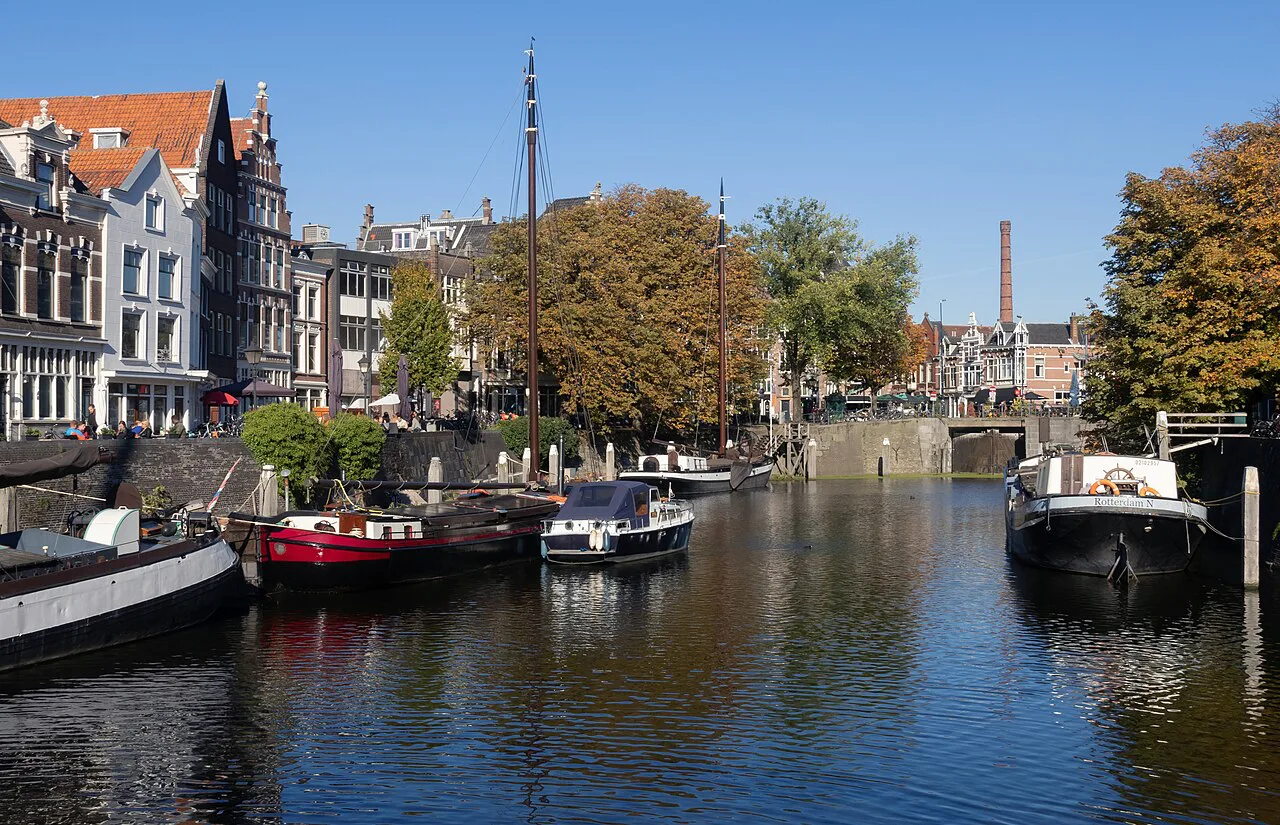
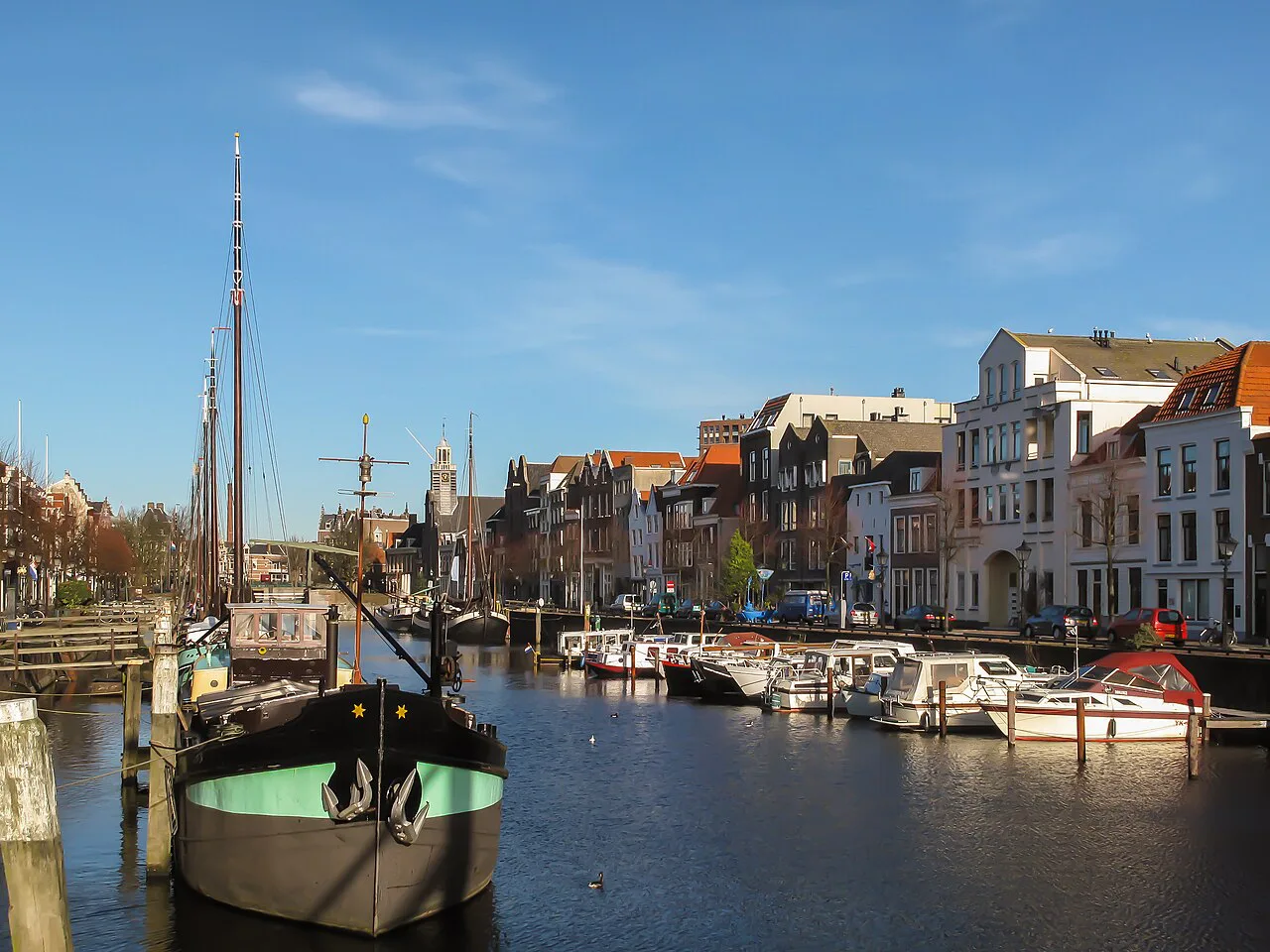
Start at the small inner harbour and walk the canal-side paths from there. Boats are moored along the water, the quays are lined with traditional buildings, and the whole circuit is short enough to cover on foot without rushing.
The waterside is also where the district's pace shows. This is a neighbourhood to sit in rather than tick off, and a slow loop past the moored boats and historic facades is the main pleasure of the visit.
The canal network is best explored on foot: follow the canal-side paths and look up at the gables. Keep the waterside walk to an hour at most, so the harbour and the church remain the core of the visit.
The Pilgrim Fathers Church and the 1620 departure
The Pilgrim Fathers Church is the specific reason most visitors come. The Pilgrims sailed from Delfshaven in 1620 at the start of their voyage to America, and the church is where they said their prayers before leaving. The exterior is dominated by a grand white bell tower that is easy to spot from the quays.
The white bell tower gives the church its outside interest, and the building itself is where the Pilgrims' story sits. Inside, models of the boats used for the dangerous crossing are the thing to look for. Check the church's current opening before planning on going inside.
Even from the quay, the white bell tower is the landmark to look for, and the surviving brick lanes around it are what gives the district its old-Holland character.
Museum De Dubbelde Palmboom
A short walk south of the church is Museum De Dubbelde Palmboom, which houses a collection of maritime artefacts including tools and equipment recovered around the globe by the East India Company, alongside material tracing Rotterdam's history. Treat the building and the surrounding quays as part of the walk.
If maritime history is a particular interest, our Maritiem Museum Rotterdam guide covers the city's main collection, which makes the natural place to follow up the harbour's story.
Build the rest of the Delfshaven visit around the outdoor sights, and confirm current access to the museum's collection before you go.
The reconstruction of De Delft
Nearby, work has been under way on the reconstruction of De Delft, a warship that sank in the North Sea in the 18th century. It is a working build in progress rather than a finished exhibit, so what you can see depends on the stage the shipwrights have reached.
Because it is a working build rather than a finished museum floor, check access before relying on getting close to the vessel. What the harbour and this project convey is the area's long seagoing culture rather than a polished display.
The windmill and the waterside paths
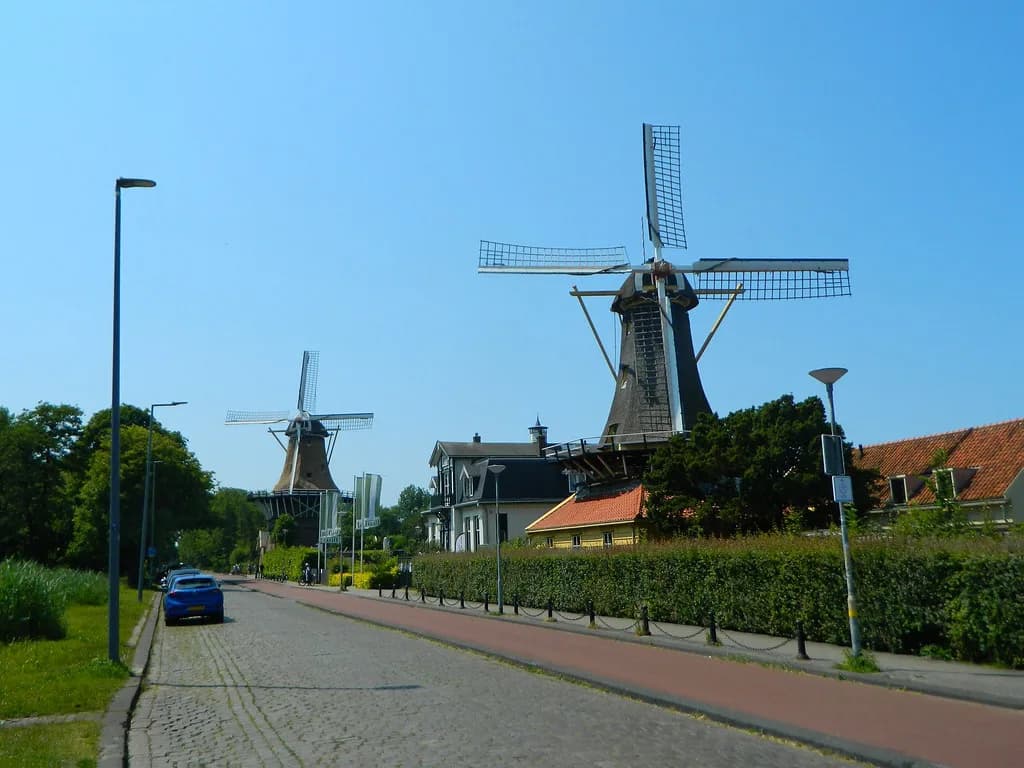
As you wander the canal network, you may pass a scale model of a traditional windmill. It sits among the waterside paths and makes a natural point to pause on a loop of the harbour.
The paths along the water are the thread that ties the sights together, so plan the visit as a walk with stops rather than a list of addresses. That is also why the historic core takes about two hours rather than a full day.
How long to allow
Two hours covers the harbour, the church and the surrounding quays at a comfortable pace. Add an hour if you want a longer waterside wander. The district has a slower rhythm than the centre but is easy to fit into a day.
Wandering the lanes and quays is the core of a visit here, and the pace is slower than central Rotterdam.
Date the Pilgrim history as you go: the departure you are tracing happened in 1620, and it is the old harbour and its brick buildings, not the water itself, that make the visit.
Nearby: what else pairs with Delfshaven
Back in the centre, Markthal Rotterdam is the obvious contrast to Delfshaven's old quays: a covered market hall where you can eat under a vaulted ceiling. It is an easy add-on to a ride back into town.
For contemporary art, the Kunsthal Rotterdam shows changing exhibitions and makes a firmly modern contrast to the maritime and Pilgrim history of the morning.
The Erasmusbrug and the Euromast give you the skyline view to finish the day, and both sit on the central side of town. Our Rotterdam Attractions: 11 Visitor Guides arranges these stops by area if you are building a full itinerary.
Is Delfshaven worth the detour?
Yes, if you want the older Rotterdam that the bombing spared. About two hours gives you the harbour lanes, the Pilgrim Fathers Church and the surrounding quays, and leaves the centre's museums and modern architecture for the rest of your day.
Skip it if your time in the city is short and you would rather concentrate on the centre. About two hours is the honest figure for the historic core, and because the main sights are outdoors, a visit fits around whatever else you have planned.