One Day in The Hague: A Realistic Walking Itinerary
Plan one day in The Hague with a route past Noordeinde Palace and out to the Statenkwartier, plus honest trade-offs on timing, gardens and opening days.
On this page
One day in The Hague realistically covers the centre around Noordeinde, a green stop at the Palace Garden, and one afternoon in the Statenkwartier — either Clingendael estate or the museum cluster. It does not fit Scheveningen, Madurodam, the Binnenhof and a full museum, so this plan groups the day by district to stop you crossing the city twice.
The shape is simple: palace and shopping street in the morning, lunch on Frederik Hendriklaan, then a single afternoon decision. That decision depends more on the season and the weekday than on your energy, because the Japanese Garden at Clingendael keeps narrow opening months and museums run on fixed weekly rhythms. If you are stretching the trip, this route works as the core of a Weekend in The Hague.
How The Hague is laid out
The Hague runs inland from the coast in a fairly straight line. The historic centre and Noordeinde sit in the middle, the Statenkwartier lies towards the dunes with Scheveningen just beyond it, and Clingendael occupies the green northern edge between The Hague and Wassenaar.
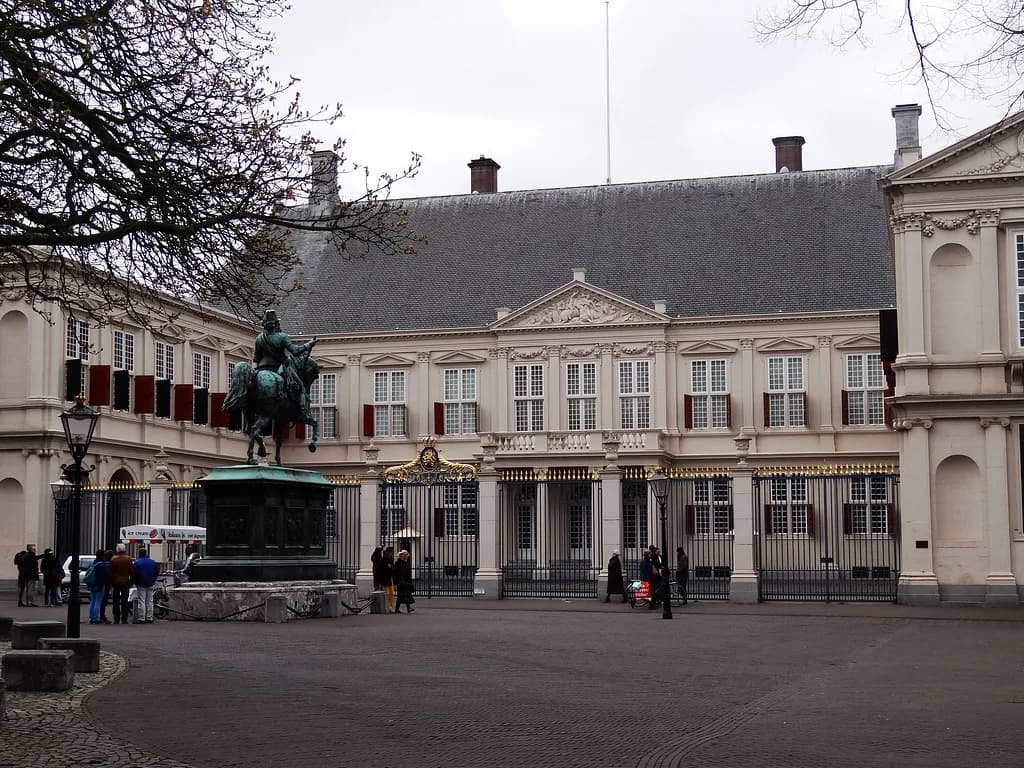
Noordeinde Palace stands on Noordeinde, one of the city's most elegant shopping streets, and the Palace Garden lies directly behind it next to the Royal Stables. From The Hague Central Station it is about 15 minutes on foot, with several trams stopping at Kneuterdijk.
The Statenkwartier is the neighbourhood behind the Scheveningen dunes, built around the shopping stretch of Frederik Hendriklaan, known locally as De Fred. Treat the centre and the Statenkwartier as your two anchors rather than adding a third district.
Morning: Noordeinde Palace and Noordeinde
Start on Noordeinde, where the palace has been the backdrop to royal weddings, births and funerals for generations and is now King Willem-Alexander's working palace. When he is in the country the royal standard flies above it.
The palace itself is not normally open for viewing: limited space and daily use as an office make it unsuitable for visitors. It opens to the public only for several days each summer together with the Royal Stables, with dates announced separately, so do not build your day around going inside.
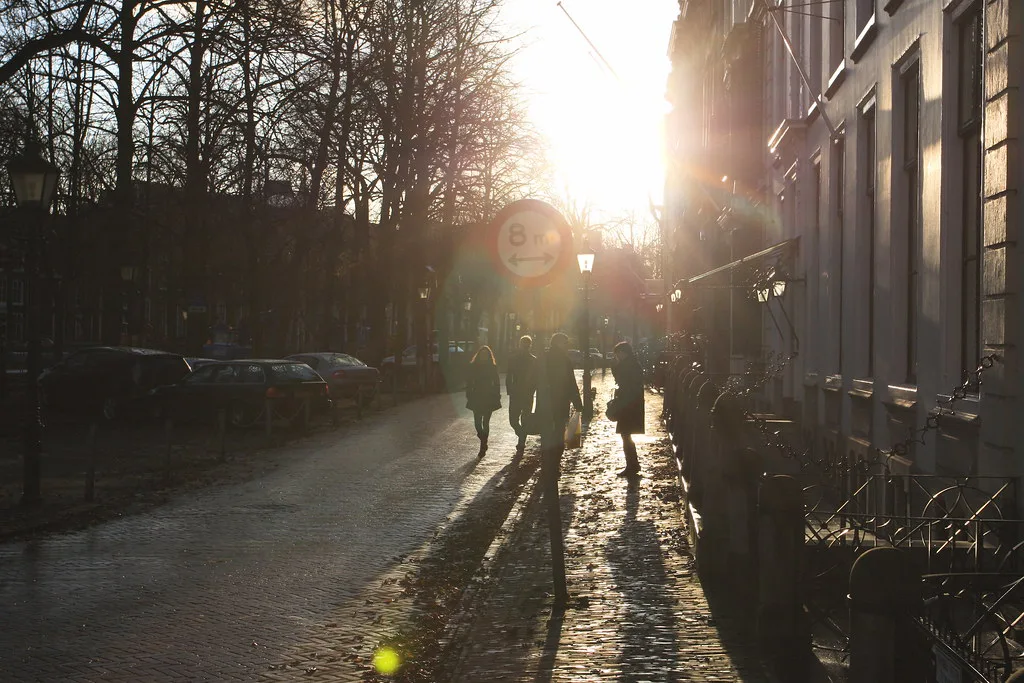
The street is the real reward. Noordeinde is lined with fashion boutiques, galleries, art and antiques dealers and jewellers in art nouveau buildings, with coffee cafés and restaurants between them — enough for an hour of browsing before you turn into the Palace Garden.
The Palace Garden: a low-commitment park stop
The Palace Garden behind Noordeinde Palace is open to the public daily, which makes it the lowest-commitment stop of the day: turn up, walk through, and leave when you like. It sits between the Royal Stables, the working palace and the Royal Archives.
The garden was laid out in the early seventeenth century for Frederik Hendrik's mother as the Princesses' Garden, full of flowerbeds, ponds, fountains and marble statues, and was later handed to the municipality. Today it reads as an ordinary Dutch park and works well as a summer picnic spot.
Give it twenty to thirty minutes: walk the length of it, sit for a few minutes, then head west. If rain sets in, this is the stop to cut, because your real time goes into the afternoon.
Midday: the Statenkwartier and Frederik Hendriklaan
Move west to the Statenkwartier for lunch and a browse along Frederik Hendriklaan, the neighbourhood's best-known shopping street. DenHaag.com describes the district as full of individual boutiques and good places to eat along De Fred and the surrounding streets.
Bookshops, clothing and leather-goods shops sit on and around Frederik Hendriklaan, and the architecture does half the work: turrets, bay windows and elegant brickwork appear on street after street. Frederik Hendrikplein gives you a green pause between shops.
For lunch, keep it simple and sit down properly rather than eating on the move — the afternoon needs a real break in the middle. The Statenkwartier has plenty of cafés and restaurants around the shopping street, and this is the moment to decide between the estate and the museums.
Afternoon option A: Clingendael estate
Clingendael is one of the most beautiful country estates in the Netherlands, laid out in English landscape style with a large pond, winding paths, islands and lawns grouped with trees. Throughout the year the estate is freely accessible, which makes it the best-value afternoon in the city and an easy choice if the weather holds.
Most paths are paved, so the estate is very accessible for wheelchair users and prams, and it is a genuine walking park rather than a single loop. Two marked routes of different distances start from the tearoom in the former lodge house.
Beyond the Japanese Garden you will find an Old Dutch Garden with box hedges and flower beds inspired by seventeenth-century garden art, the Star Forest, a farmhouse and a snake wall that once sheltered peach, apricot and pear trees. Look out too for the disguised Second World War command bunker, camouflaged as a farm building.
Afternoon option B: the museums in the Statenkwartier
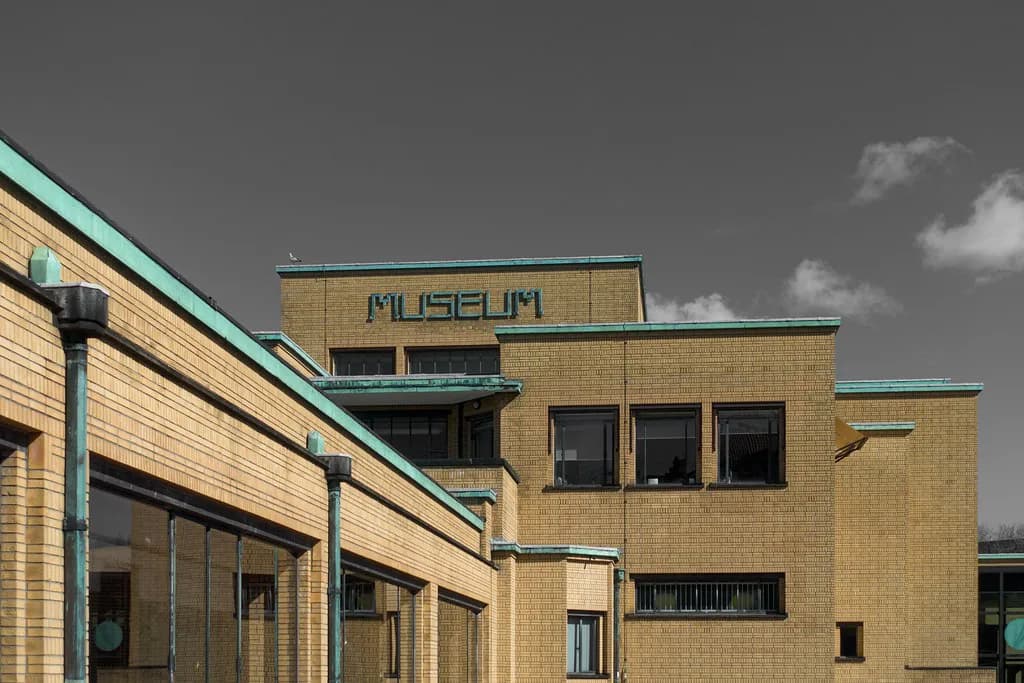
If the sky threatens or you want art rather than trees, stay in the Statenkwartier. Its art and photography museums are the neighbourhood's cultural anchors: the art museum holds a collection of around 160,000 works, including pieces by Mondriaan, Karel Appel and Gerrit Rietveld, and the surrounding cluster is worth a full afternoon.
Nearby, the Omniversum large-format cinema shows films for all the family, and the Koomans Poppentheater puts on puppet shows for children — useful if your group mixes ages. The museums sit close enough to Frederik Hendriklaan that you can do one properly rather than half of two.
Choose one and check its own website for that week's opening days and ticket arrangements before you commit, because opening days are not uniform across the city.
The Japanese Garden and your date
The Japanese Garden is Clingendael's showpiece: the only Japanese garden in the Netherlands dating from around 1910, the largest in the country at 6,800 square metres, and full of rare trees and plants. Because it is fragile, it opens only for a short period in spring (May/June) and again in October.
That single fact should shape when you book, not just what you plan to see. If your day falls outside those windows, you will see Clingendael at its best as landscape, tearoom and paths, and the garden is not yours to enter.
If your date does land in spring or autumn, flip the day: go to Clingendael first, because the garden is the reason you came, and leave the Noordeinde shops for late afternoon. Otherwise, treat the spring and October windows as the only times the Japanese Garden is open and plan around them. Our The Hague Itinerary covers a fuller version of the day if you want to compare.
Scheveningen at the end of the day
The Statenkwartier is only a short walk from Scheveningen, so an evening there costs you very little extra if you have spent the afternoon nearby. DenHaag.com puts the North Sea closer than you think, with the resort reachable on foot from the district's streets.
If you chose Clingendael, skip the coast: looping north to the estate and then west to Scheveningen turns a relaxed day into a timetable. Save Scheveningen for a longer break.
What to drop when your day is short
The first thing to drop is the second museum. One collection done properly beats two rushed, and the Statenkwartier's streets and squares are worth an hour on their own without a ticket stub. Read our guide to how many days in The Hague before you start cutting: two days buys you both halves of the city.
The second thing to drop is Scheveningen, unless you have already spent the afternoon in the Statenkwartier. Adding the coast to a Clingendael afternoon means spending most of your day moving rather than being anywhere.
The thing not to drop is the Palace Garden, precisely because it costs you nothing in time or money: it is a public park open daily. It also sits on the way between the morning's palace stop and your lunch, so it will never derail the rest of the plan. If you are weighing up the city as a whole, our is The Hague worth visiting guide sets out the wider case.
Getting between the pieces
The day divides naturally into two halves on foot: the centre around Noordeinde, then a ride west to the Statenkwartier. Walking from the centre to Frederik Hendriklaan is pleasant but eats into your afternoon, so take a tram for the transition and save your legs for the estate or the galleries.
Cycling is the local answer for the Statenkwartier to Clingendael stretch, and the estate is set up for it with the tearoom as a starting point for a ride as well as a walk. If you would rather not navigate bike paths in traffic, plan the afternoon so you only cross the district once.
Coming from Amsterdam, The Hague is close enough for a single day trip; the practical point is that a day trip leaves you with the two-anchor plan and no third district. When you have more time, use our The Hague Itinerary to build a second day around the museums and the coast.
Wednesday mornings at Noordeinde Palace
On Wednesday mornings King Willem-Alexander regularly receives new ambassadors presenting their letters of credence at Noordeinde Palace. The ambassador arrives early by state coach, escorted by mounted police, with four drumrolls, the visiting country's national anthem and an inspection of the guard — all of it visible from the street.
If your day falls midweek, start the morning at Noordeinde rather than the garden and linger outside the palace for a while; if your day is a weekend, there is nothing to wait for and you can move straight along the street. Watch from outside; it is not an event to book or rely on.
Which afternoon should you choose?
Pick Clingendael if you want fresh air, paths suitable for a pram or wheelchair, and a plan that costs nothing to enter — and if your date is outside spring and autumn, go for the wider estate of woodland, paths and tearoom, treating the Japanese Garden as somewhere you will not get into rather than a destination. Pick the museums if the weather is uncertain or you want one substantial collection with a coffee stop on De Fred.
Whichever you choose, confirm the museum's opening day and the Japanese Garden's spring and October windows before you set out, then leave the rest of the day loose. One day in The Hague rewards a short list done well far more than a long one rushed, and this plan slots into a longer Weekend in The Hague if you can stretch the trip.
Explore more The Hague guides
Frequently Asked Questions
Is Noordeinde Palace open to visitors?
Not normally. DenHaag.com describes the palace as King Willem-Alexander's working palace and explains that limited space and daily use as a reception area and office make it unsuitable for receiving visitors. It opens to the public for several days each summer together with the Royal Stables, with those dates announced separately, so you can see the exterior and the street at any time but should not plan around going inside.
Is the Palace Garden open to the public?
Yes. The garden behind Noordeinde Palace is open to the public daily. It sits between the Royal Stables, the working palace and the Royal Archives, and it works as a short walk or a summer picnic stop.
When is the Japanese Garden at Clingendael open?
DenHaag.com gives a short period in spring (May and June) and again in October, because the fragile garden contains rare trees and plants. It is the only Japanese garden in the Netherlands dating from around 1910 and the largest in the country at 6,800 square metres. Check the spring and October windows before fixing your date.
Is Clingendael free to enter?
Yes. DenHaag.com states that Clingendael is freely accessible throughout the year. Most paths are paved, which makes the estate very accessible for wheelchair users and prams, and two routes of different distances start from the tearoom in the former lodge house.
Can I see the royal ceremony at Noordeinde Palace?
On Wednesday mornings King Willem-Alexander regularly receives new ambassadors presenting their letters of credence, and DenHaag.com notes that from outside the palace you can watch the arrival of the state coach, listen to the national anthems and follow the inspection of the guard. It is something to watch from the street rather than an event to book.
Is the Statenkwartier near Scheveningen?
Yes. The Statenkwartier sits behind the Scheveningen dunes, and DenHaag.com describes the seaside resort as only a short walk from the district, so an evening by the sea costs very little extra if you have spent the afternoon there.
Sources
Notes for your next Dutch city break
Optional updates to our Netherlands guides.
You might also like
Continue reading
More guides you'll find useful