Rotterdam Old Town: Which Historic Quarter to Walk
Rotterdam's old town is scattered, not central: Delfshaven's canals, the Oude Haven and pre-war streets, with walking times and honest trade-offs.
On this page
Rotterdam does not have one old town. The centre was largely flattened in the Second World War, so the historic fragments that survive sit in separate pockets: Delfshaven out to the west, the Oude Haven and a scatter of pre-war streets in the middle. Plan two short walks rather than one continuous loop, and decide first how much of your trip the old town deserves against the modern city that replaced it.
This guide sets out what each pocket contains, how the pieces connect, and how to fit them into a one- to four-day break. For the wider city beyond the historic corners, our things to do in Rotterdam guide covers the rest area by area.
What 'old town' means in Rotterdam
Central Rotterdam was almost completely destroyed in the war, and what stands there now is largely post-war reconstruction. Delfshaven, a district on the Nieuwe Maas to the west, came through relatively unscathed, so its characterful pre-war buildings contrast sharply with the modern architecture downtown. That single fact shapes every plan: the atmosphere you want from an old town is mostly in Delfshaven, not in the centre.
The area has its own history as a place rather than just a pretty backdrop. It began as part of Delft, was given municipality status in 1811, and became a district of Rotterdam in 1886. Knowing that helps you read the street plan: this is a small former port town that was absorbed, not a quarter laid out by Rotterdam's planners.
So treat Rotterdam as a city of two historic textures. The centre gives you the Oude Haven and isolated pre-war survivors set against the skyline; the west gives you a compact, low-rise waterside district that still looks like the Holland of old. First-time visitors expecting a Dutch canal ring should adjust their expectations before they arrive.
How the historic bits are laid out
Delfshaven sits west of the centre on the Nieuwe Maas, and the cited guide puts it roughly 20 minutes from central Rotterdam by tram, which makes it a deliberate hop rather than a stroll from your hotel. Budget the out-and-back journey as part of the visit rather than an afterthought, and check the current tram route and stop before you set off.
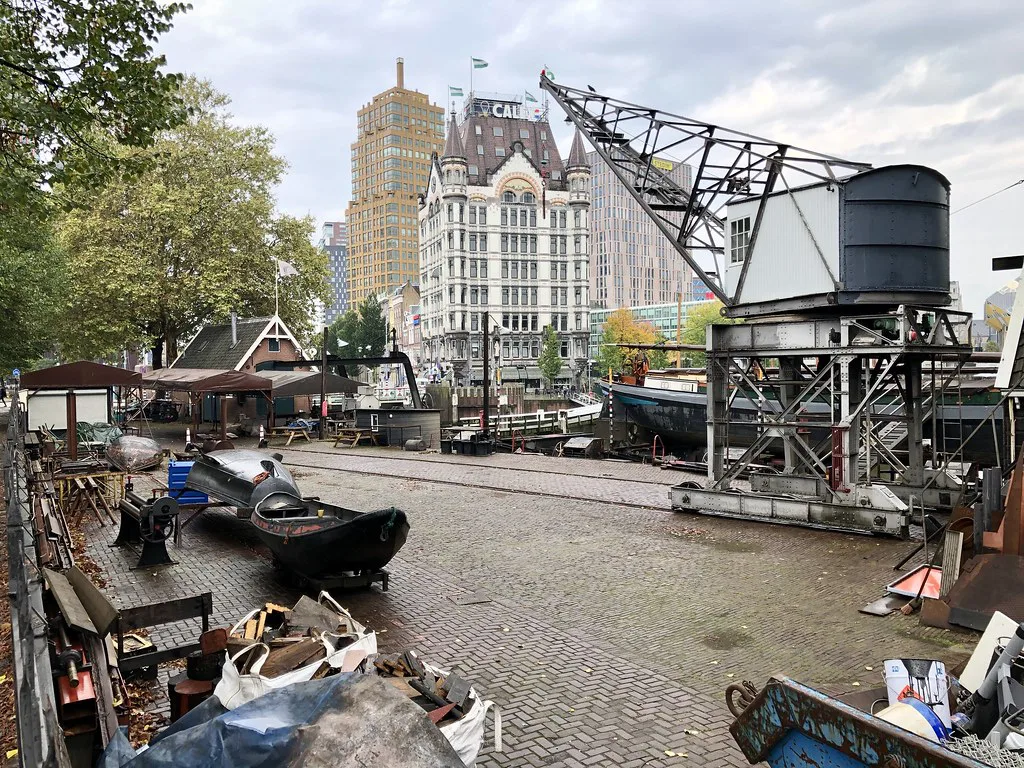
The Oude Haven, Rotterdam's old harbour, is the historic hotspot of the city centre itself, on the north bank of the Maas. Between the two you have the surviving pre-war streets of the centre, which are best folded into a city-centre walk rather than hunted down individually. Our Things to Do in Rotterdam, Area by Area guide covers the individual sights in more depth if you want to build a longer list.
Practically, that means one walk in the centre and one half-day in Delfshaven. Trying to link them on foot eats the time you would spend actually looking at things.
Delfshaven: canals, the Pilgrim Fathers Church and the harbour streets
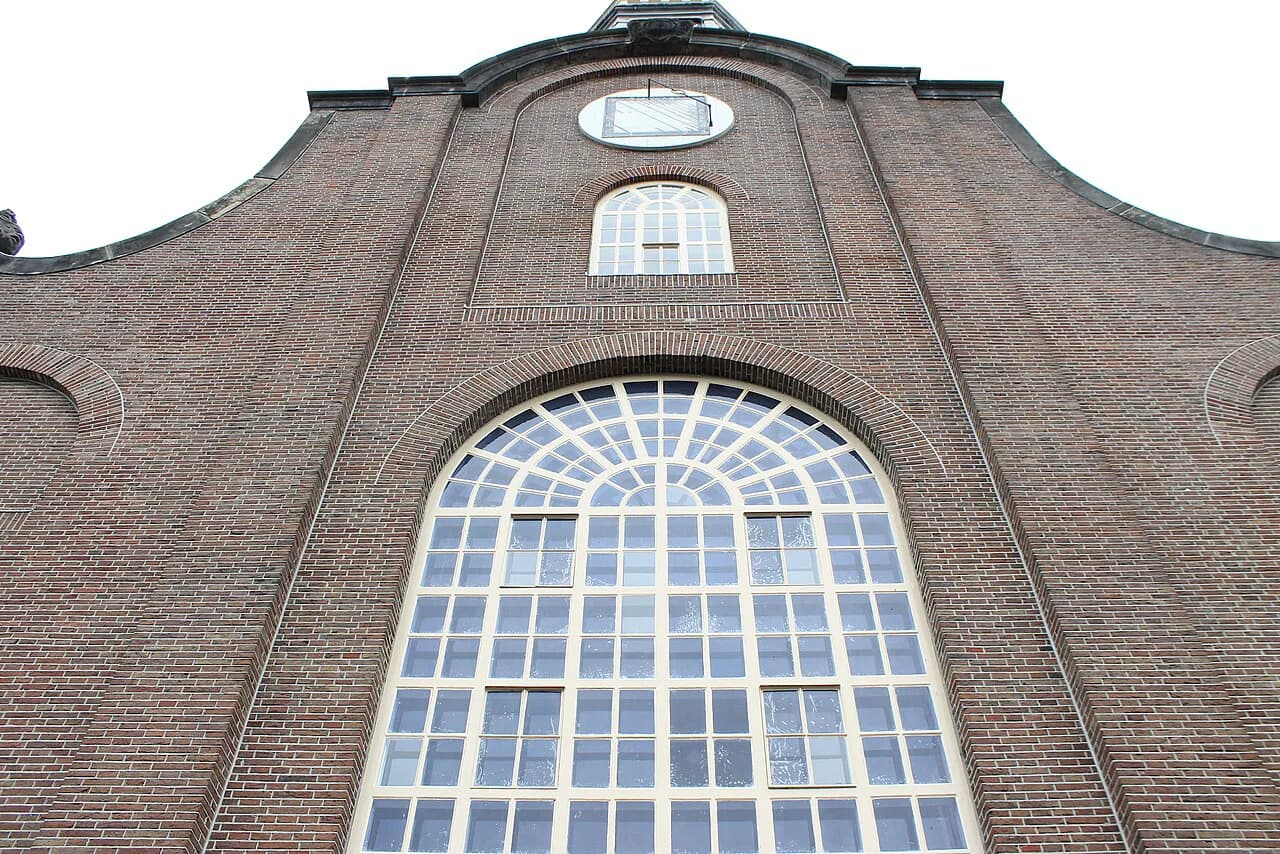
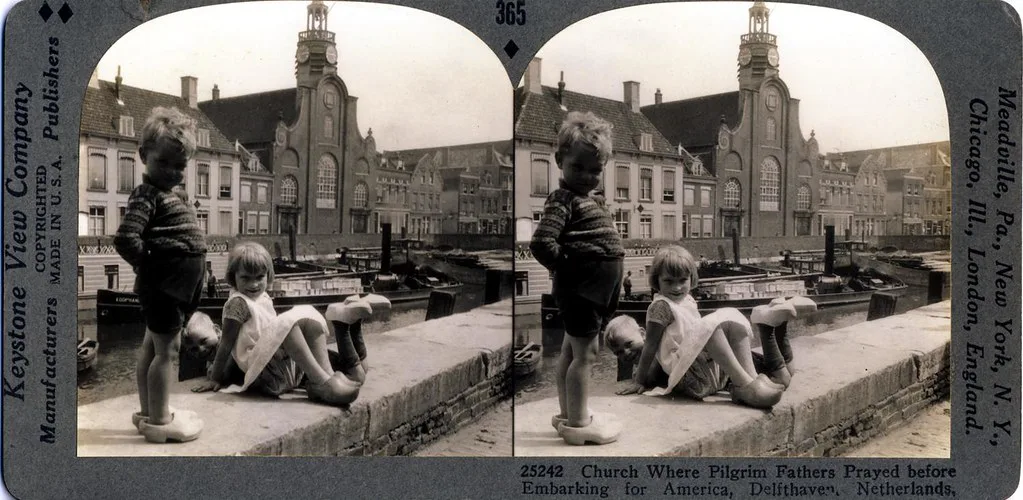
Delfshaven is best known as the port from which the Pilgrims left for America, and the Pilgrim Fathers Church marks the spot where they prayed before departing in 1620. The exterior is dominated by a grand white bell tower, which is the landmark to steer by when you come off the tram.
The cited description mentions models of the boats used for the crossing inside the church, which would make the stop worthwhile even for travellers with little interest in religious history. Treat it as a short, focused visit rather than a museum afternoon, and confirm the church is open before you build a day around it.
Around the harbour, the canal network rewards slow wandering. Walk the canal-side paths past a scale model of a traditional windmill, and note that bikes can be rented from local shops if you want to cover more ground.
This is the corner of Rotterdam to prioritise if historic streets are your reason for coming. It is also the least like the rest of the city, so place it early in the trip rather than squeezing it in before your train home.
De Dubbelde Palmboom and the reconstruction of De Delft
A short walk south of the Pilgrim Fathers Church brings you to De Dubbelde Palmboom, described as a museum holding maritime artefacts gathered worldwide by the East India Company, alongside a collection tracing Rotterdam from prehistory to the present. It suits travellers who want objects and context rather than another canal view. Museum opening days and hours change, so check before travelling out for it.
Nearby, the source notes work on the reconstruction of De Delft, a warship that sank in the North Sea in the 18th century, presented as a way to get a feel for the district's seagoing culture. The description refers to touring the vessel, but a working reconstruction can have restricted hours or be closed to visitors, so confirm access to the shipyard before relying on it.
Choose between the two if time is tight. The museum gives you the broad sweep of Rotterdam's maritime history; the shipyard gives you one vessel in detail.
The Oude Haven and the rebuilt centre
The Oude Haven is the historic hotspot of the centre, a harbour on the north bank of the Maas that has developed into a lively city quarter. It works well as the anchor of a centre walk, with the modern landmarks and surviving pre-war streets close enough to link on foot.
What makes it distinctive is the contrast: old harbour water and boats on one side, the post-war skyline rising behind. Rather than treating Rotterdam as uniformly modern, read the Oude Haven as the place where the old port and the rebuilt city sit in the same frame.
A self-guided walking format suits this area well, since the interest is in the streetscape rather than any single ticketed sight. For a defined route, a self-guided Delfshaven tour product covers the western district, and our Rotterdam Walking Tour sets out another way to order the same ground on foot.
Walking the centre: which streets to fold into a route
Build the centre walk around the Oude Haven and let the surviving pre-war streets fill the gaps between it and the modern landmarks you already want to see. Rotterdam is a manageable city to cross on foot, with the historic fragments close enough together to link in a single afternoon.
Keep the walk loose. The pleasure here is the mix of scales, from harbour water and low old buildings to the towers behind, and a rigid checklist of addresses works against that. If you want named sights beyond the harbour, work from our Things to Do in Rotterdam, Area by Area guide rather than trying to cover everything.
How many days Rotterdam needs if the old town is your priority
Two days is enough to see both historic pockets without rushing. Give one half-day to Delfshaven, including the tram ride each way, and one afternoon to the Oude Haven and the centre streets.
With three or four days you can add the modern architecture and museums that make Rotterdam worth the trip in its own right, and return to Delfshaven for a slower evening by the water. On a one-day visit, pick one pocket: Delfshaven for atmosphere, the Oude Haven for convenience.
Practical points: trams, bikes and pace
The tram is the sensible way out to Delfshaven, at roughly 20 minutes from the centre. Cycling works well once you are there, with canal-side paths to follow and bikes available from local shops, but the ride from the centre adds distance you may not want on a short break.
Pace differs sharply between the two areas. Delfshaven is less busy than the city centre and rewards a leisurely couple of hours or more; the Oude Haven sits in the thick of things and suits a shorter, busier stop. Plan the quiet half of your day for the west.
Why Rotterdam's old town differs from Amsterdam's canal ring
Amsterdam's canal ring gives you a continuous historic fabric you can walk for hours without leaving. Rotterdam gives you fragments: a preserved former port town in the west and a harbour in the centre, with rebuilt city in between. That is the trade-off, and it is worth accepting rather than fighting.
The advantage is contrast. Few cities let you move from seventeenth-century waterside streets to a wholly modern skyline in a single tram ride, and that shift is the reason to visit Rotterdam rather than another Dutch city with a uniform old centre.
Which historic quarter should you walk first?
Start with Delfshaven if the old town is why you came. It holds the strongest concentration of pre-war character, the Pilgrim Fathers Church and the maritime museum, and it deserves a proper half-day rather than a hurried detour.
Keep the Oude Haven for the centre leg of the trip, where it slots naturally into a walk among the modern landmarks. Together the two give you a more honest picture of Rotterdam than either one alone.
Explore more Rotterdam guides
Sources
Notes for your next Dutch city break
Optional updates to our Netherlands guides.
You might also like

Continue reading
More guides you'll find useful