Rotterdam Itinerary: A 2–3 Day Plan by Area
A day-by-day Rotterdam itinerary grouped by neighbourhood, with the Markthal, Cube Houses, Euromast, Depot Boijmans Van Beuningen and Delfshaven.
On this page
Two days is enough to see Rotterdam's headline sights without rushing, and a third day lets you add Delfshaven and the Cube Houses at a relaxed pace. The trick is to group each day by geography so you are not crossing the Maas twice, which is why this plan starts in the centre, moves through the Museumpark and saves the historic west side for last.
Rotterdam rebuilt itself after the Second World War with bold architecture and a skyline that looks nothing like Amsterdam's canal ring, so expect modern towers, big public squares and a working port rather than gabled houses. Each day below has a fixed anchor sight, a museum stop and a clear walking route between them.
How many days Rotterdam needs
Two full days covers the Markthal and Laurens Quarter, the Erasmus Bridge and Euromast, plus one serious museum stop. Three days adds Delfshaven, the Cube Houses and time for street art or vintage shopping in Zwaanshalskwartier without cutting anything. If you are weighing up a longer trip, how many days in Rotterdam breaks down what each extra day actually buys you.
Build the plan around geography, not around a wish list. The centre, the Museumpark and the Kop van Zuid sit within walking distance of each other, while Delfshaven is a separate westward trip that deserves its own half-day. Rotterdam Centraal puts you at the northern edge of the centre, so start walking south from there and work towards the river; the Rotterdam Weekend Break compresses this into a shorter frame.
Day one: Centrum and Kop van Zuid on foot
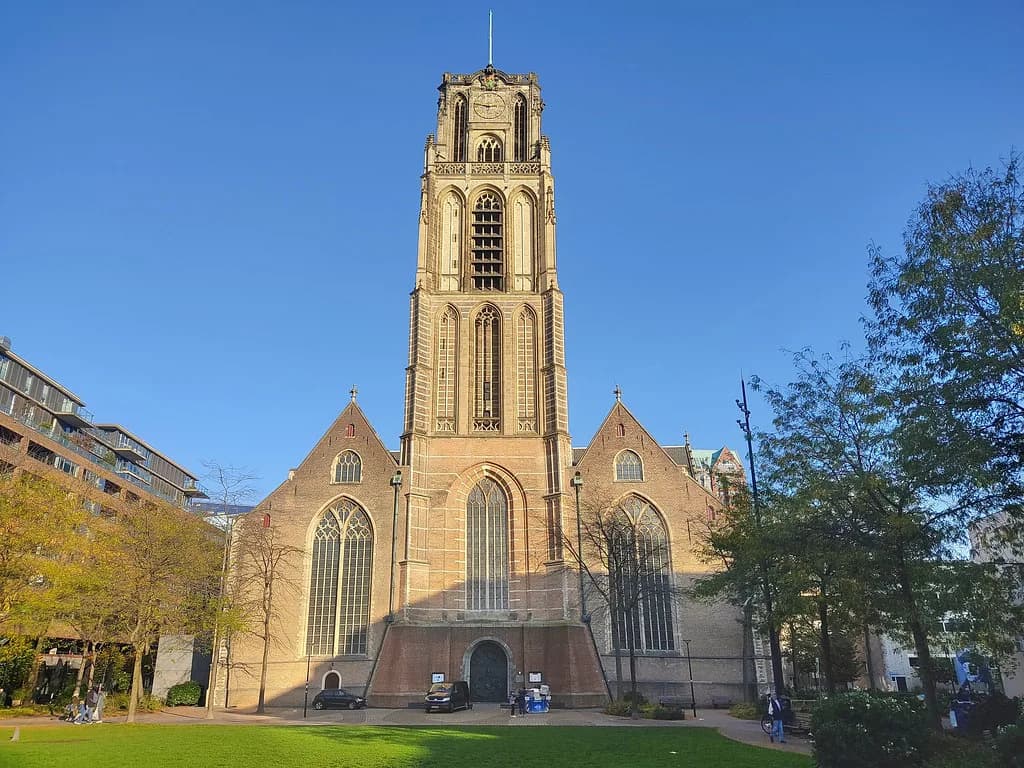
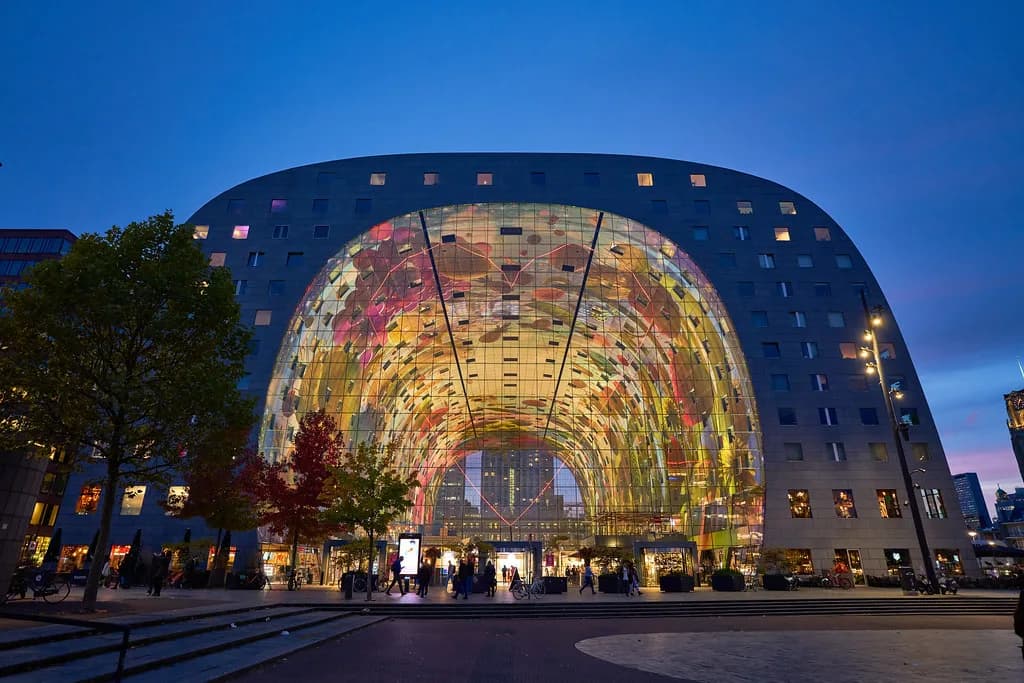
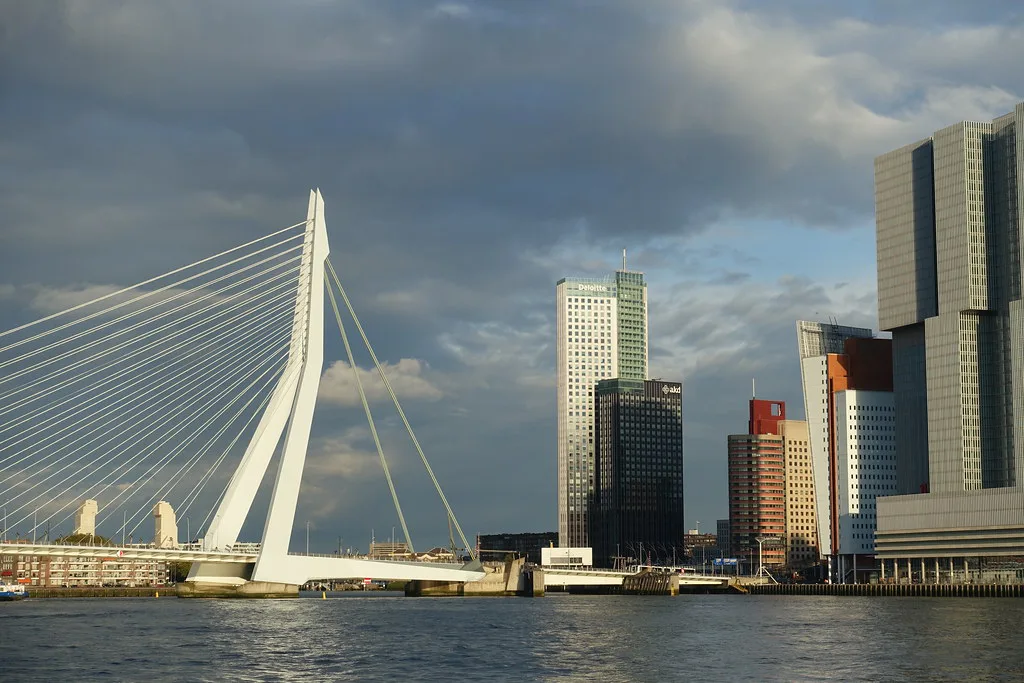
Start at Markthal, the arched food hall under its painted ceiling, which makes an easy first stop before the city properly opens. Walk south through the Laurens Quarter to Hoge Square and the Grote of Sint-Laurenskerk, the medieval church at the heart of a quarter rebuilt after the wartime bombing, then continue to the river. The Markthal sits a short walk from both, so this sequence needs no transport at all.
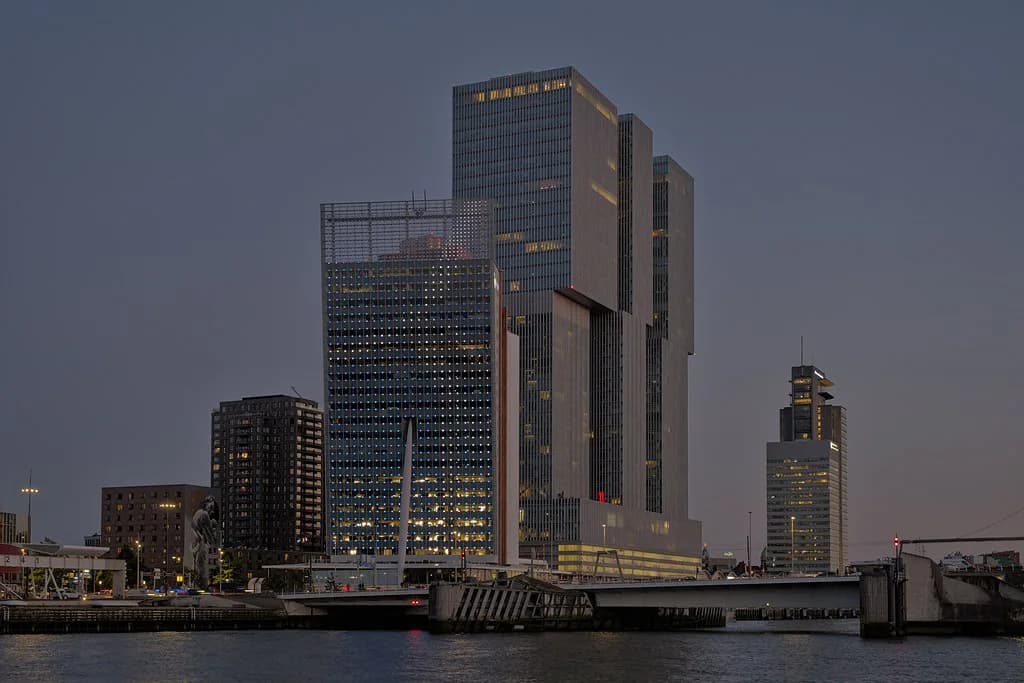
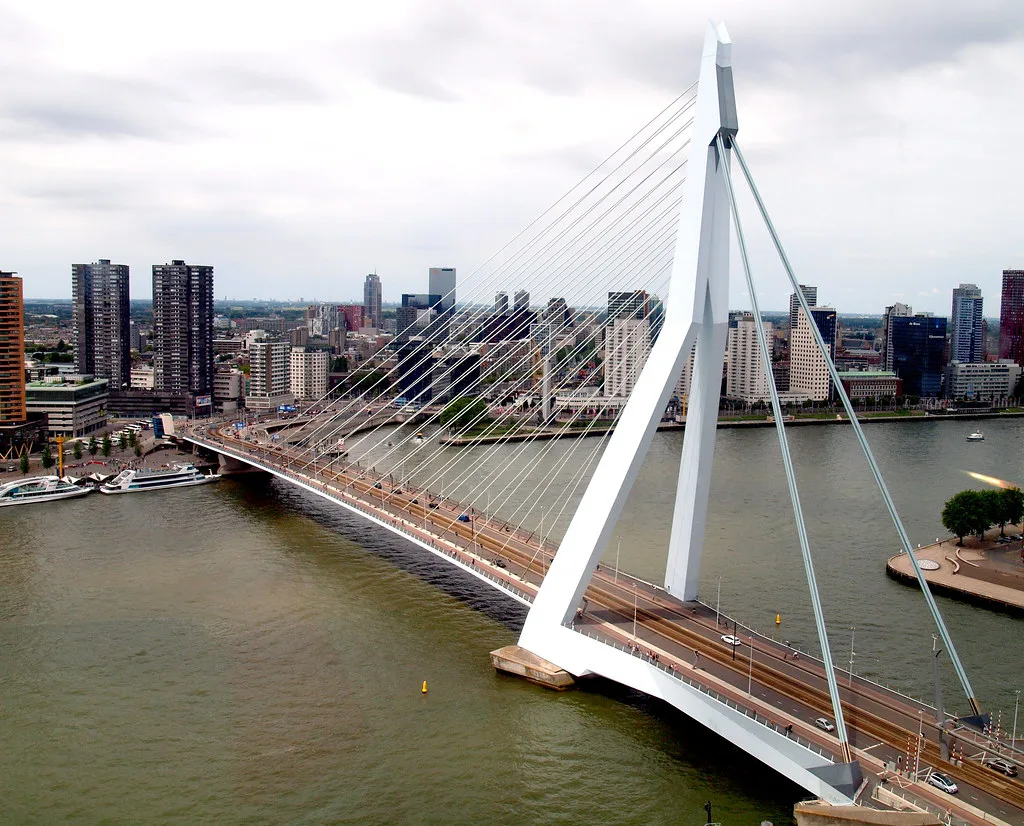
Cross the Maas on the Erasmus Bridge, the white pylon-stayed crossing that has become the city's symbol, and you arrive on the Kop van Zuid. From there the Euromast is the obvious next stop for a view back over the whole city. The Erasmusbrug appears on most short-break routes, and a Rotterdam Weekend Break fits the same bridge-and-tower day into a tighter frame.
If you would rather buy one ticket than assemble several, the Rotterdam City Card bundles public transport with discounts on attractions, museums and restaurants. Check which of the day's stops it actually covers before you buy, because a card only pays off if you use the transport and the discounts on the same day.
Day two: Museumpark and the museum stop
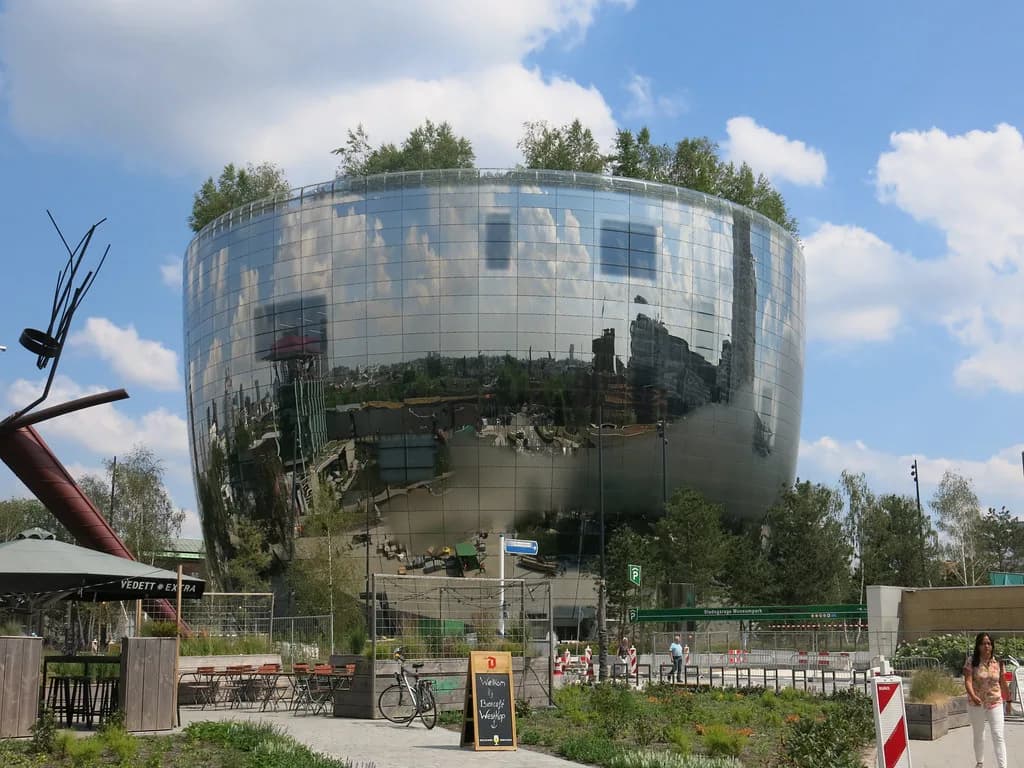
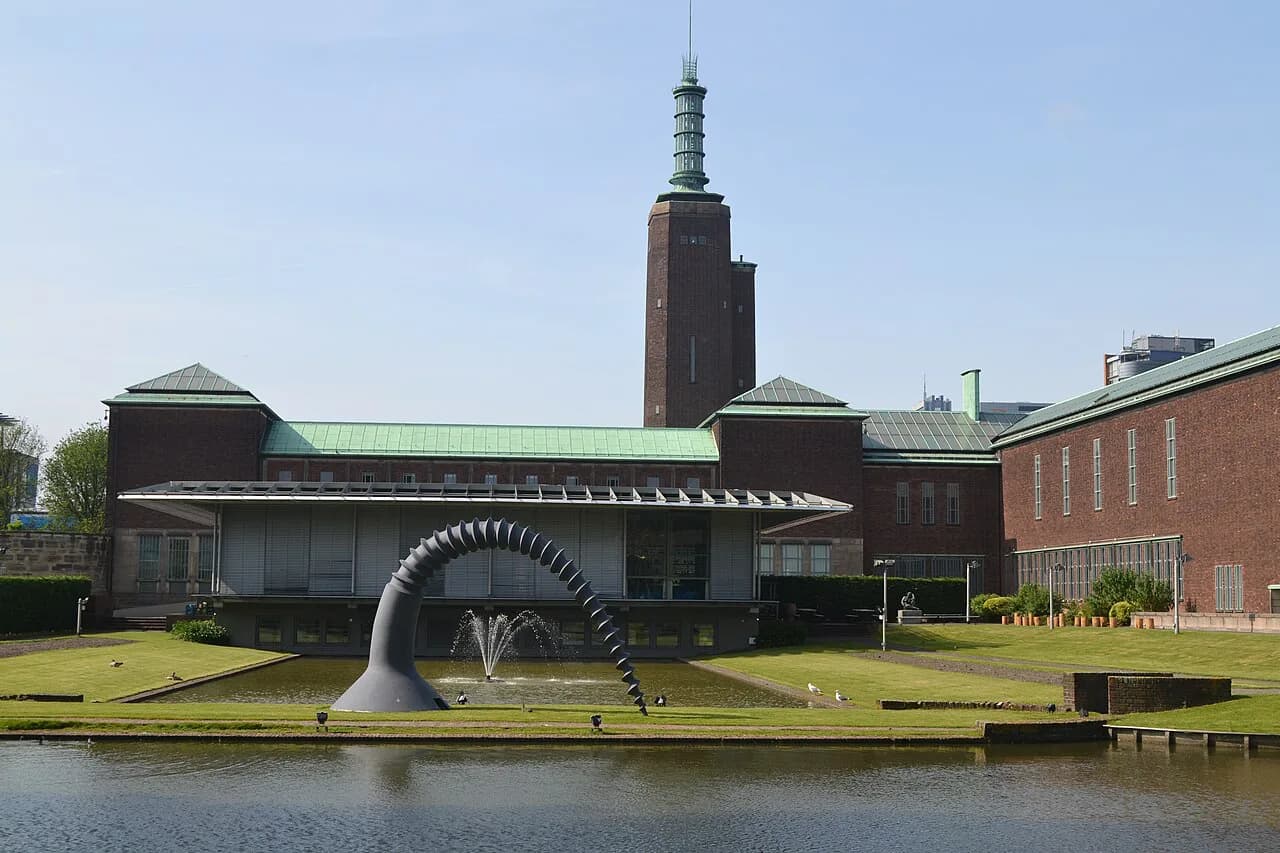
Give the whole day to the Museumpark cluster. Depot Boijmans Van Beuningen, the mirror-clad art storage building, is the standout: you go inside a working storage facility for Museum Boijmans Van Beuningen rather than a conventional gallery, so it rewards curiosity about how collections are kept. Kunsthal Rotterdam sits in the same park, so you can pair the two without moving far.
Treat the Depot as your anchor and Kunsthal as the flexible second stop, since one museum done properly beats two done badly. The walking between them is short and flat, and Het Park next door gives you somewhere to sit when the galleries run out. If you only have a single day in the city, One Day in Rotterdam is the tighter version of this plan with the museum stop trimmed to a single venue.
Opening days vary between Rotterdam's museums, so check each venue's own site for the date you plan to visit and keep the museum day flexible enough to swap with an outdoor day if a closure catches you out.
Day three: Delfshaven and the modern city
Head west to Historic Delfshaven, the old harbour quarter with a completely different scale from the city centre. It is the part of Rotterdam that keeps most of its pre-war character, and it rewards a slow walk rather than a checklist. Come back east for the Cube Houses, the tilted yellow cubes near Blaak, which you can see from outside in minutes or explore from within.
Street art is the other reason to slow down here. Guided street art walks run in the city, and they make sense if you want the murals explained rather than simply photographed. If you are choosing between this day and another Dutch city, a Den Bosch itinerary is the alternative for travellers who prefer medieval streets to modern architecture.
Arboretum Trompenburg is the green counterweight if the weather holds, and Diergaarde Blijdorp, the zoo founded in 1857, is the family option with themed areas from a bat cave to a Mongolian steppe. Neither is on the tightest centre route, so pick one rather than trying to fit both around Delfshaven. Notice that the route here is spread out: this is the day where a bike or a tram saves real time.
How to get around Rotterdam: walking versus cycling and the water taxi
The centre is genuinely walkable. Markthal, the Laurens Quarter, the Cube Houses and the Erasmus Bridge all sit within a comfortable stroll of each other, and the Museumpark is a short walk west of the centre. Save transport for Delfshaven and Blijdorp, which are too far to reach on foot without eating into your day.
Cycling is faster than walking for the spread-out stops and suits Rotterdam's flat, wide streets. The water taxi across the Maas is the other real option: it is quick and it puts you on the Kop van Zuid without the bridge walk, but you pay per crossing and the saving only matters if you are short of time. Walking the Erasmus Bridge is free and gives you the skyline view, so treat the boat as a time-versus-money trade rather than a treat.
A water taxi ride across the Maas is one of the quickest ways to link the centre with the Kop van Zuid, and it doubles as a short trip on the river itself. Pay per crossing rather than expecting it to be covered by a transport pass, and decide in advance whether the view from the bridge is worth the walk instead.
Filling the edges: markets, free art and vintage shopping
The Rotterdamse Oogst Markt, the harvest market, is the local food stop, and it suits a morning better than an afternoon. Kunstavond, an evening of free art exhibitions, is the cheapest way to see the city's galleries if your dates line up with it. Both are worth building a flexible half-day around rather than forcing into a fixed schedule.
Zwaanshalskwartier is where vintage shopping happens, in the older northern neighbourhood rather than the centre. The floating farm is the other unusual stop: a working dairy on the water, which is a genuinely Rotterdam answer to a city with no space to spare. Neither is essential on a first two-day trip, so treat them as third-day or repeat-visit material.
What a Rotterdam city break costs in euros
Set a budget around three things: museum tickets, transport and food. The Rotterdam City Card bundles unlimited public transport with up to 25% off attractions, museums and restaurants, so it is worth pricing against your own list before you commit. Check current ticket prices on each museum's own site, because entry charges change and a bundled card only saves money if you use what it covers.
Walking is free and covers most of days one and two, so the transport line on your budget can stay close to zero until the Delfshaven day. Food is where costs creep: a Markthal graze, a sit-down dinner and a coffee stop add up faster than any single museum ticket. Budget for one paid attraction per day rather than three, and the trip stays manageable.
When to go and which days sights close
Opening days vary between Rotterdam's museums, so check the Museumpark venues' own opening days before fixing the order. If the Depot or Kunsthal is shut on your dates, swap the museum day with Markthal, the Erasmus Bridge and the Euromast. This single scheduling decision saves more disappointment than any other choice in the plan.
Spring and early autumn give you the best walking weather for a route this outdoor-heavy, and summer brings the busiest queues at the Euromast and the Markthal. Winter daylight is short and cuts into the Delfshaven half-day, so shift that visit earlier if you travel between November and February. Check each venue's own opening days before you lock the order of your days.
Two days versus three days: what to cut
With two days, keep day one and day two exactly as written and drop the Delfshaven day entirely. That gives you the Markthal, the bridge, the Euromast and one museum without a rushed finish. Do not try to squeeze Delfshaven into the evening of day two, because the light and the atmosphere are the point of going.
With one day, choose between the centre-and-river route and the museum day rather than attempting both. The centre route shows you why Rotterdam looks the way it does; the museum day is the better choice if you have already seen the Dutch canon elsewhere. If you want a second Dutch city for comparison, a Groningen itinerary gives you a very different northern character.
Which version of the plan should you book?
Book three days if you want Delfshaven, the Cube Houses and a museum day without compromise, and two days if the Markthal, the Erasmus Bridge and the Euromast are enough. Either way, check the museum opening days first and keep a free outdoor day in reserve.
The plan works because it moves in one direction across the city rather than bouncing across the Maas. Fix the museum slot first, then let the walking days fill in around it.
Explore more Rotterdam guides
Frequently Asked Questions
What can you do for free in Rotterdam?
Walking the Erasmus Bridge, seeing the Cube Houses from outside, exploring the Laurens Quarter and Hoge Square, and strolling the Museumpark all cost nothing. Kunstavond, an evening of free art exhibitions, is the best free option if your dates line up with it.
Is Rotterdam good for a first trip to the Netherlands?
Rotterdam suits travellers who want modern architecture, a working port and a compact centre more than a canal-ring postcard. If you want gabled houses and medieval streets, Rotterdam will feel like a different country; if you want bold rebuilding and big public spaces, it delivers.
Sources
Notes for your next Dutch city break
Optional updates to our Netherlands guides.
You might also like
Continue reading
More guides you'll find useful