Netherlands Itinerary: How to Plan 3, 5 or 7 Days Beyond Amsterdam
Build a Netherlands itinerary of three to seven days around Utrecht, The Hague, Rotterdam and Haarlem, with train hops, days per stop and museum opening days.
On this page
Three days is enough for one Dutch city and one short hop; five days is enough for two bases without a wasted travel morning; seven days lets you add Maastricht or Groningen. This guide builds the trip around Utrecht, Rotterdam, The Hague, Haarlem and Delft, treats Amsterdam only as the arrival hub, and shows what each extra day actually buys you.
Every plan here runs on the same logic: fewer bases, more day hops. A hotel change eats a morning even when the train ride is short, so the itineraries below move you two or three times at most and use the rail network for everything in between.
How many days the Netherlands needs: 3, 5 or 7 days
Three days suits a first visit built on one city: pick Utrecht or Haarlem as your base and spend the third day on a half-hour hop to a second place. You will see canals, a church tower and one good museum, and you will walk rather than rush.
Five days lets you hold two bases and drop the wasted travel mornings. A common split is Utrecht for two nights and Rotterdam or The Hague for two, with Delft as a half-day from either. The 5-Day Netherlands Itinerary sets out that two-base structure in full if you want a ready-made version, and the The Hague itinerary covers that base in depth.
Seven days adds a genuine extension rather than more of the same: Maastricht in the south or Groningen in the north, each worth a night of its own. If you want a ready-made five-day version to build on, start with the 5-Day Netherlands Itinerary and extend it at either end.
Anything past a week starts to reward slower travel, with more small cities and fewer rail hops. If you have that much time, the 10 day Netherlands itinerary spreads the same cities out and adds stops between them.
Which Dutch cities to combine and in what order
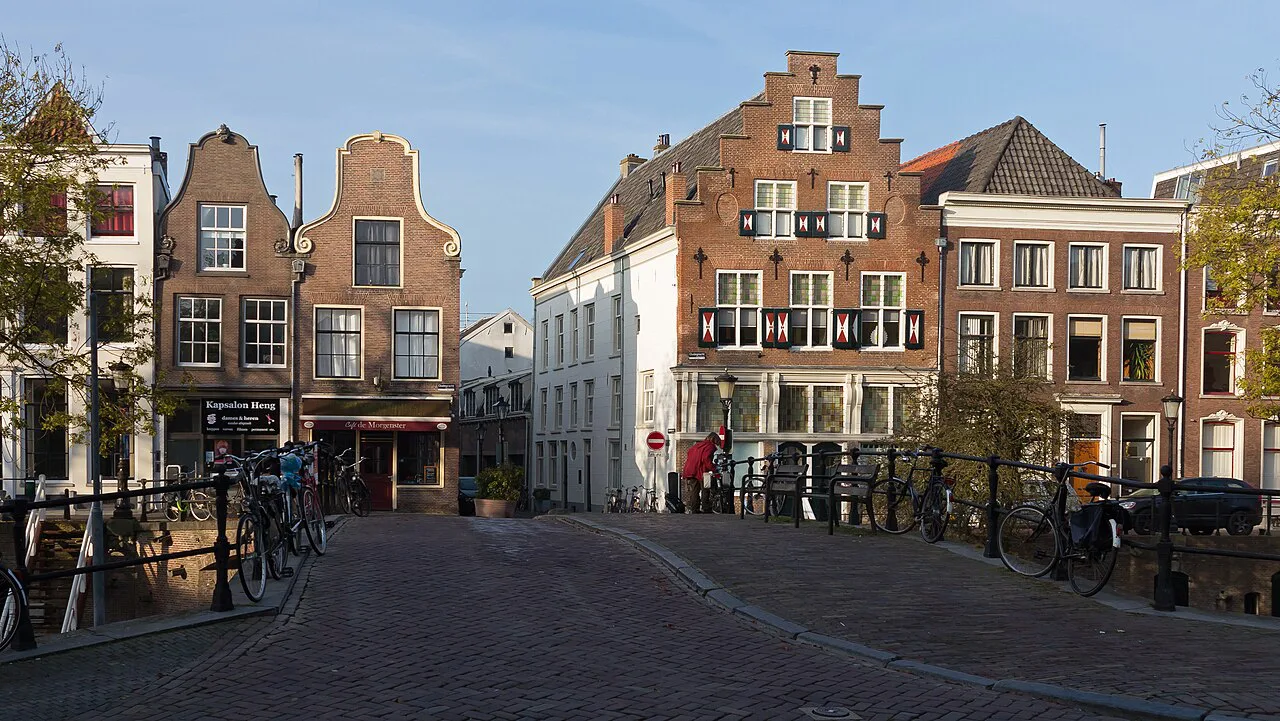
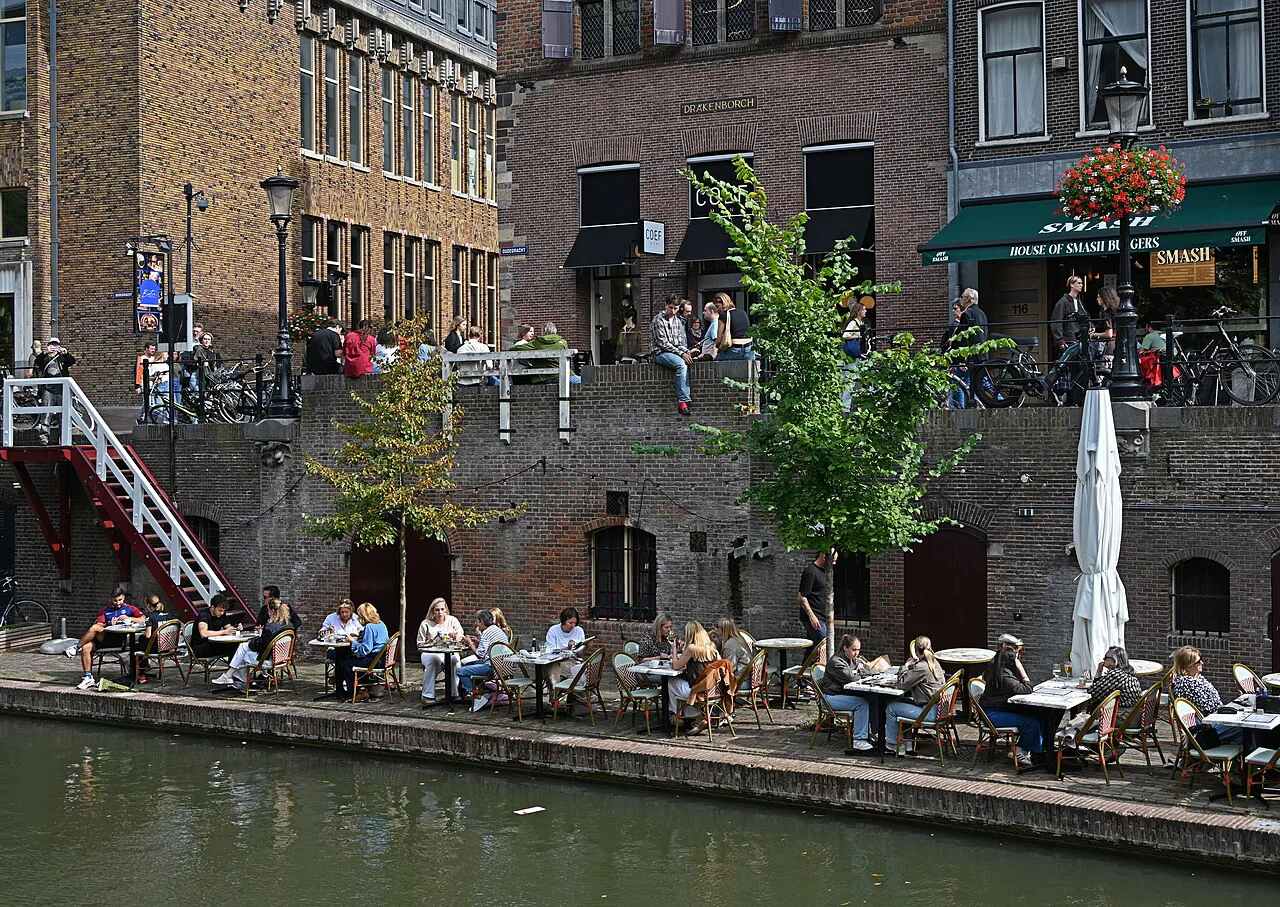
Start with Utrecht. It is compact, central, and gives you the Oudegracht wharf level and the Domtoren in a single walkable centre, which makes it the best first impression of a Dutch city that is not Amsterdam. From there the natural line runs west to Rotterdam and The Hague, or north to Haarlem.
Is the Netherlands worth visiting without Amsterdam? Yes, if you want canal cities at a calmer pace. Utrecht's Oudegracht, The Hague's Binnenhof and Mauritshuis, Rotterdam's post-war architecture and the smaller stops at Haarlem and Delft make a full trip on their own, and the trains between them are short.
Can you see the Netherlands without a car? Yes. The rail network links the cities on these routes, and most are short hops suited to a morning move.
Which Dutch towns work best for a short break? Delft and Haarlem are strong choices for a short break, with small canals, gabled houses and walkable centres. Utrecht offers one of the most dramatic canal settings, because the Oudegracht has a lower wharf level you can walk along.
Rotterdam and The Hague sit close enough to be one leg of the trip, but they feel like different countries: Rotterdam is post-war architecture and the Markthal, The Hague is the Binnenhof and the Mauritshuis. Delft fits between them as a walkable half-day of small canals and gabled houses.
Haarlem works as a quieter first or last stop, close to the arrival hub and easy to walk in an afternoon. Maastricht and Groningen are the two real extensions: pick one, not both, unless you have a week or more.
If you are still deciding how to split the map, the guide to where to go in the Netherlands sorts the options by trip length and character rather than by charm alone.
Getting between cities by train: which hops are short enough for a half-day move
The Dutch rail network is dense, and most of the hops on these routes are short enough to move between bases before lunch. Utrecht is a useful central base for hops west to Rotterdam and The Hague or north to Haarlem, and the trains between the big cities run frequently.
Rotterdam and The Hague are a short hop apart, with frequent trains, and Haarlem sits on the same corridor from the arrival hub. On these legs a base change costs you a morning rather than a day, so a two-base trip stays relaxed.
Use the train rather than a car for the city legs. Driving in old Dutch centres is confusing and parking is expensive, which is the usual argument for leaving the car out until you head for the countryside.
The longer extensions are the exception. Maastricht is a two-and-a-half-hour run south and Groningen is a long haul north, so treat either as a stay of at least one night rather than a day return.
A 3-day itinerary built on one base
Base yourself in Utrecht for all three nights. Day one is the old centre: climb or circle the Domtoren, walk the Oudegracht wharf level, and let the compact street plan do the work. Day two takes a short train to Haarlem or Delft for a full day on foot. Day three returns to Utrecht for whichever museum you skipped.
The alternative is Haarlem as a base, with a day in Delft and a day in Utrecht. Haarlem is smaller and quieter, which suits a short break, but Utrecht's position makes the day hops shorter overall.
A 5-day itinerary: two bases, no wasted travel mornings
Spend two nights in Utrecht and two in Rotterdam, with the fifth day as a half-day in Delft on the way back. Move between bases on the middle morning so the train ride replaces a walk rather than eating into a sightseeing day.
In Utrecht, give the Domtoren and the Oudegracht one full afternoon and keep a morning for the museum you care about. In Rotterdam, the Markthal and the post-war architecture around it fill a solid half-day, and The Hague is close enough for the Binnenhof and Mauritshuis on the fifth day.
If you would rather not plan it yourself, a guided or self-guided five-day structure can work for this shape, balancing city days against a countryside day. Five days is where a structured itinerary starts to pay off.
A 7-day itinerary with a southern or northern extension
Run the five-day shape, then add two nights either in Maastricht for the south or Groningen for the north. Both reward a slower pace: Maastricht for its squares and old streets, Groningen for its market square and student-city energy and its own itinerary.
The 7-Day Netherlands Itinerary sets out how to sequence the extra days without doubling back on the rail network. If you prefer a smaller-city route, Den Bosch sits between Utrecht and the south and works as a one-night stop with its own itinerary.
Keep the extension honest: adding a seventh day on the ground means adding a seventh day of things to do, not just a longer train ride. One full day in either city plus a travel half-day is the realistic unit.
Where to base yourself in each city
In every city except the arrival hub, book near the central station and walk or cycle from there. This is the standard advice for Dutch city breaks, and it keeps every base change under twenty minutes.
Utrecht earns two nights, Rotterdam two, The Hague one or two, Haarlem one, and Delft none unless you want a quiet evening by the canals. Maastricht and Groningen each earn at least one night, because the journey there and back is the cost.
Rotterdam and The Hague can share a base if you accept a short commute: sleep in one, day-trip to the other, and skip the hotel change. The trade-off is a slightly longer walk to the sights on the day you travel out.
What to see in Utrecht: Domtoren, Oudegracht and a compact old centre
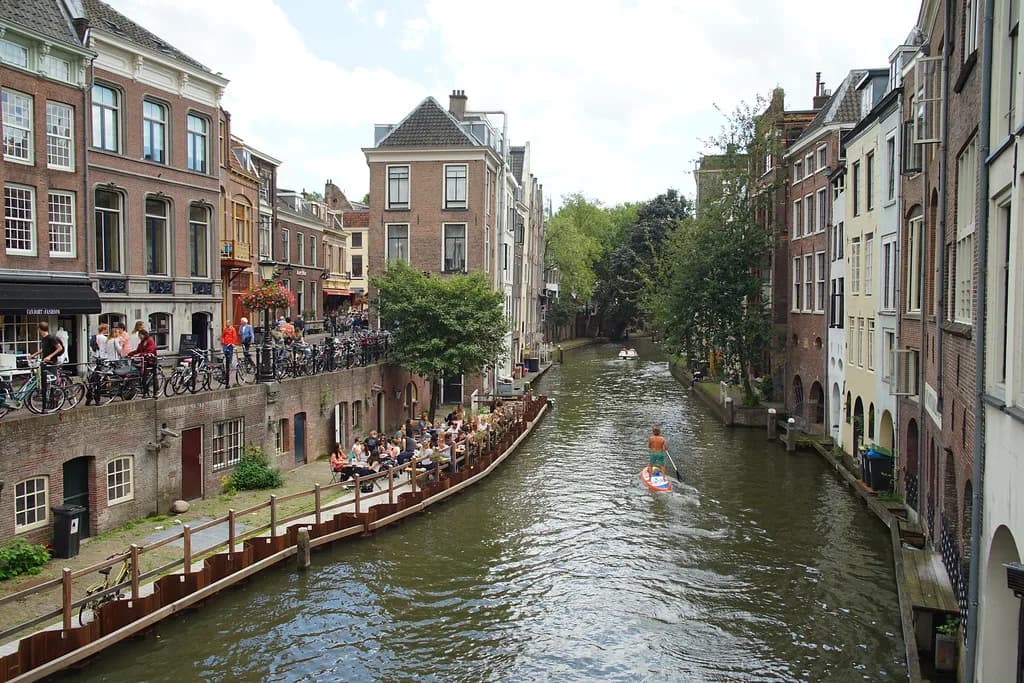
The Domtoren is the anchor, and the Oudegracht is the reason to walk slowly: the canal has a lower wharf level with arched cellars that most short-break visitors miss. Give the centre a full afternoon on foot rather than a rushed morning.
Utrecht is one of the oldest cities in the Netherlands and packs canals, churches and museums into a small centre, which is why it rewards a whole day rather than a stopover.
What to see in The Hague: Binnenhof and Mauritshuis as the anchor
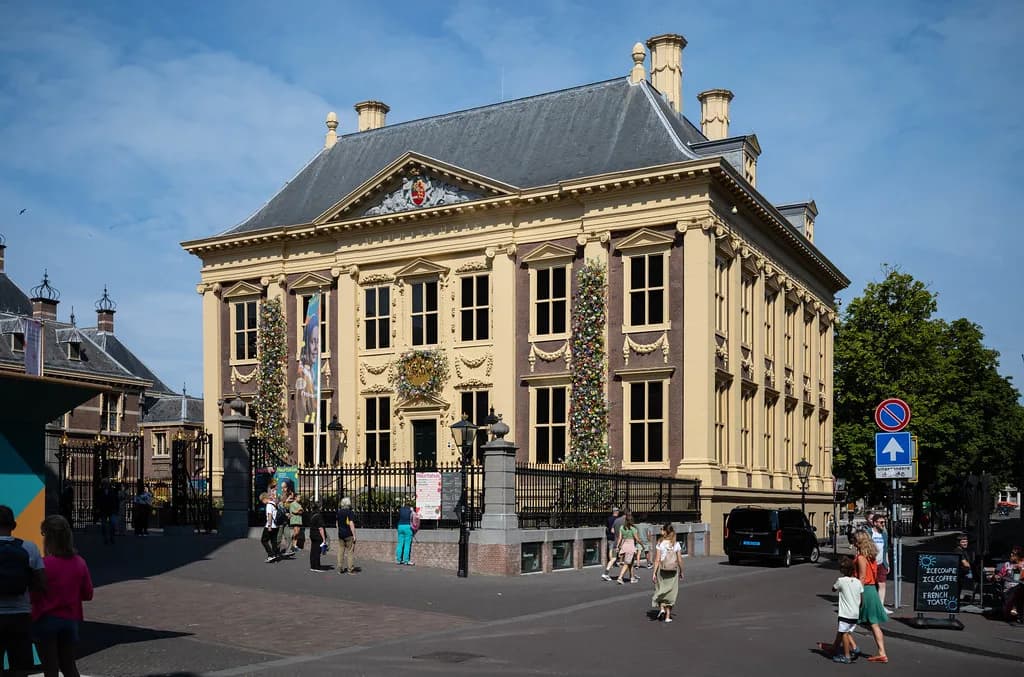
The Binnenhof and the Mauritshuis sit within a few minutes of each other, so treat them as one half-day rather than two separate outings. The Mauritshuis is the art stop; the Binnenhof is the political heart and the photo.
The Hague rewards a night rather than a rushed day, because the city spreads out beyond the centre. Pair it with Delft for a short hop that turns a single base into two places.
What to see in Rotterdam: Markthal and post-war architecture
The Markthal is the easy anchor, and the post-war architecture around it is the real reason to come. Rotterdam was bombed heavily in the Second World War and rebuilt in a bold, modern style, which is why it looks nothing like the canal cities.
A day in Rotterdam is enough for the Markthal, a walk along the water and one museum, but it pairs well with The Hague or Delft as a second half-day.
What to see in Haarlem and Delft as smaller, walkable stops
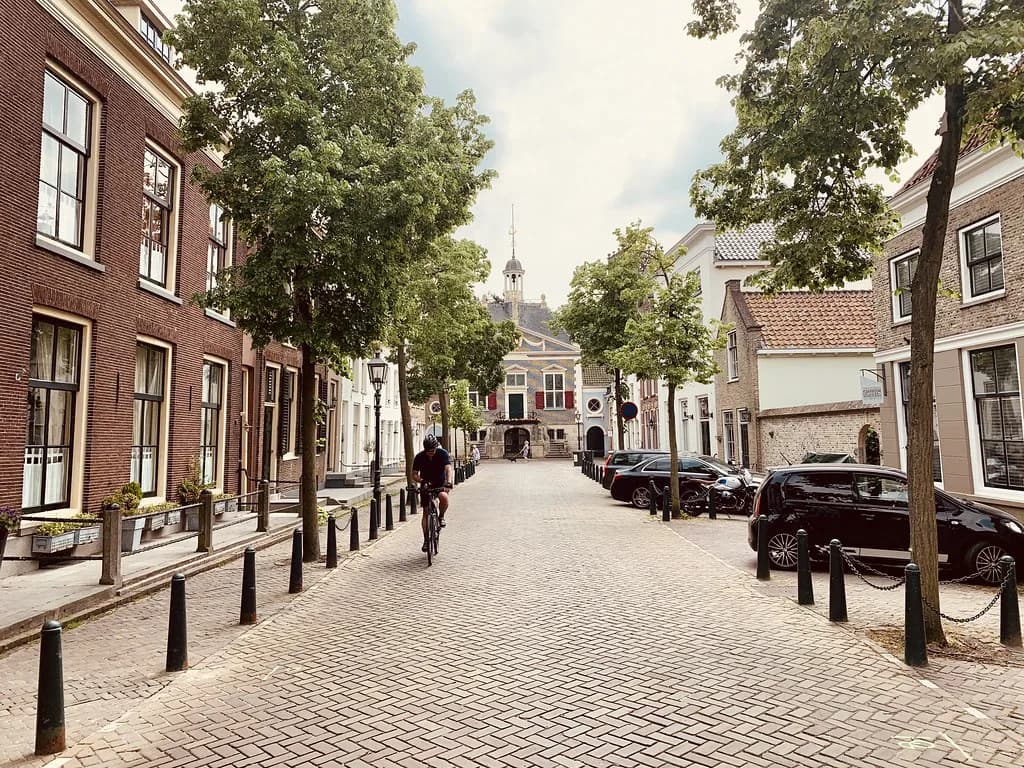
Haarlem is the easiest small city to add, with a compact centre that suits a first or last day. Delft is the other, with small canals and gabled houses that look like a Vermeer painting, and it makes a natural half-day from The Hague or Rotterdam.
Both cities are walkable in a day, so do not give them two nights unless you want a slower pace. The trade-off is that they have fewer big museums than Utrecht or The Hague.
When to go: tulip season, summer crowds and typical climate averages
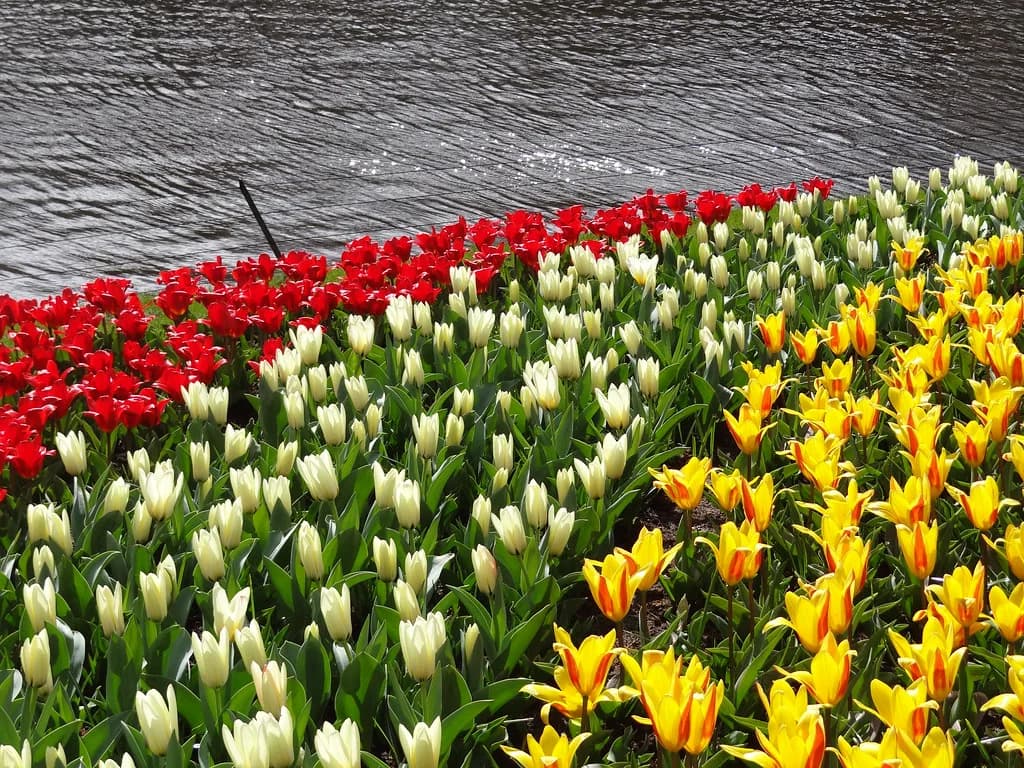
Spring is the strongest reason to pick a date: the tulip fields and Keukenhof sit in the April to early May window, and it is worth booking ahead if flowers are the point of the trip.
Summer brings the crowds and the highest prices, while spring and autumn give you milder days and shorter queues. The Dutch weather is changeable year-round, so plan one indoor museum per day rather than a fixed outdoor schedule.
Museum opening days and timed tickets
Check each museum's opening days before you fix the route, because Dutch museums do not share a single weekly pattern. Monday is the day to move between cities or walk a city rather than plan a museum, and shops in many towns open later on Monday morning.
Some museums use timed tickets, so book the slot before you commit to a train time. Leave the flexible day for the museum you care about most and slot the smaller sights around it.
What the trip costs in euros and how to budget per day
The Netherlands is one of the more expensive countries in Europe, though it is cheaper than travelling in the United States and far from the most expensive in Europe.
Budget by the day rather than by the sight: one museum ticket, one proper meal and one train hop per day is a realistic unit. For a fuller breakdown of what a short city break costs in euros, read is the Netherlands expensive before you book.
Fares and museum prices change, so add each one to your plan from the operator or museum website when you book.
Walking and cycling: how far you can realistically cover in a day
Dutch cities are small enough to walk, and cycling covers roughly three times the ground in the same time. Rent a bike for one full day rather than every day, and use it for the longer edge-of-centre sights.
No Dutch trip is complete without a bike at some point, though the rules of the road take a little getting used to. Stay on the cycle paths and follow the locals rather than cutting across traffic.
For a half-day move between cities, walking beats cycling: the train takes the bags and you walk the new centre on arrival. Save the bike for the day you stay put.
Common itinerary mistakes: too many bases, Amsterdam-only transfers and overpacked days
The biggest mistake is a new hotel every night. Each move costs a morning even on a short hop, so two or three bases over a week beats five.
The second is routing everything through the arrival hub and treating it as a base when it is only a transfer point. Start in Utrecht and you cut the wasted journey.
The third is overpacking the days: two museums, a tower and a boat in one afternoon leaves no room for the walking that makes these cities. One anchor sight plus one optional stop is the realistic daily shape.
Which itinerary length fits your trip?
Pick three days if you want one city done properly, five days if you want two bases without wasted travel mornings, and seven days if a southern or northern extension is the point of the trip. Beyond that, slower travel with smaller cities pays off more than another rail hop.
Whichever length you choose, book the museum slots first, then build the train hops around them. That single ordering removes most of the planning friction from a Dutch short break.
Explore more Netherlands guides
Frequently Asked Questions
Is the Netherlands worth visiting without Amsterdam?
Yes, if you want canal cities at a calmer pace. Utrecht's Oudegracht, The Hague's Binnenhof and Mauritshuis, Rotterdam's post-war architecture and the smaller stops at Haarlem and Delft make a full trip on their own, and the trains between them are short.
Can you see the Netherlands without a car?
Yes. The rail network links the cities on these routes, and most are short hops suited to a morning move. Driving in old Dutch centres is confusing and parking is expensive, so the train is the simpler choice for a city break.
Which Dutch towns work best for a short break?
Delft and Haarlem are strong choices for a short break, with small canals, gabled houses and walkable centres. Utrecht offers one of the most dramatic canal settings, because the Oudegracht has a lower wharf level you can walk along.
Sources
Notes for your next Dutch city break
Optional updates to our Netherlands guides.
You might also like
Continue reading
More guides you'll find useful