Tulip Fields in the Netherlands: Where to Go and When
Tulip fields in the Netherlands explained: the Bollenstreek around Lisse, when the bloom peaks, why you cannot walk into the rows, and how to see them by bike.
On this page
The tulip fields of the Netherlands are working farmland in the Bollenstreek, the bulb belt around Lisse and Keukenhof, roughly 40 km from Amsterdam. They typically peak between mid-April and early May, and you can admire them free from public roads and paths. This guide sorts the regions, the season, the field rules and the bike approach, so you can plan a half-day among the flowers around a city break.
What the open tulip fields actually are
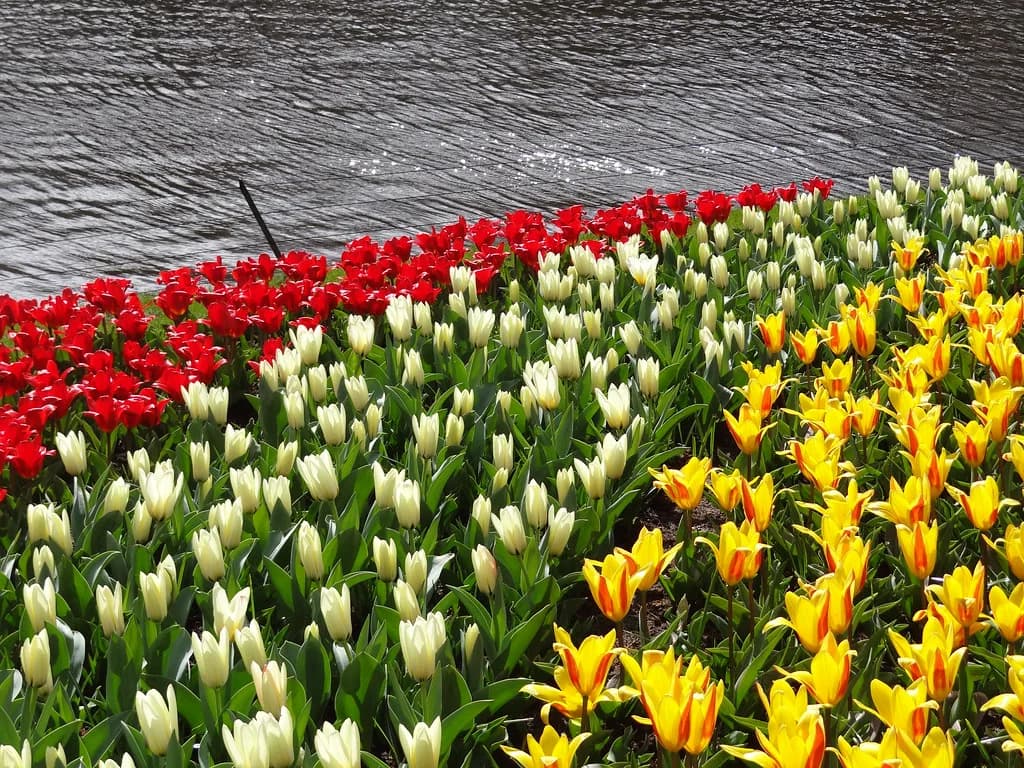
Open tulip fields are commercial farmland, not attractions. Growers plant bulbs in long rows for the bulb trade, and what is in colour shifts from week to week as varieties come and go. The bloom is not a fixed calendar event, so no field is guaranteed to be at its best on the day you arrive.
The contrast with Keukenhof is the key decision. Keukenhof is a large designed garden with an entry ticket, laid out for visitors and planted for a spring season. The open fields are free to look at from the roadside, but they are spread across a whole region rather than gathered behind one gate.
Where the fields bloom: the Bollenstreek around Lisse
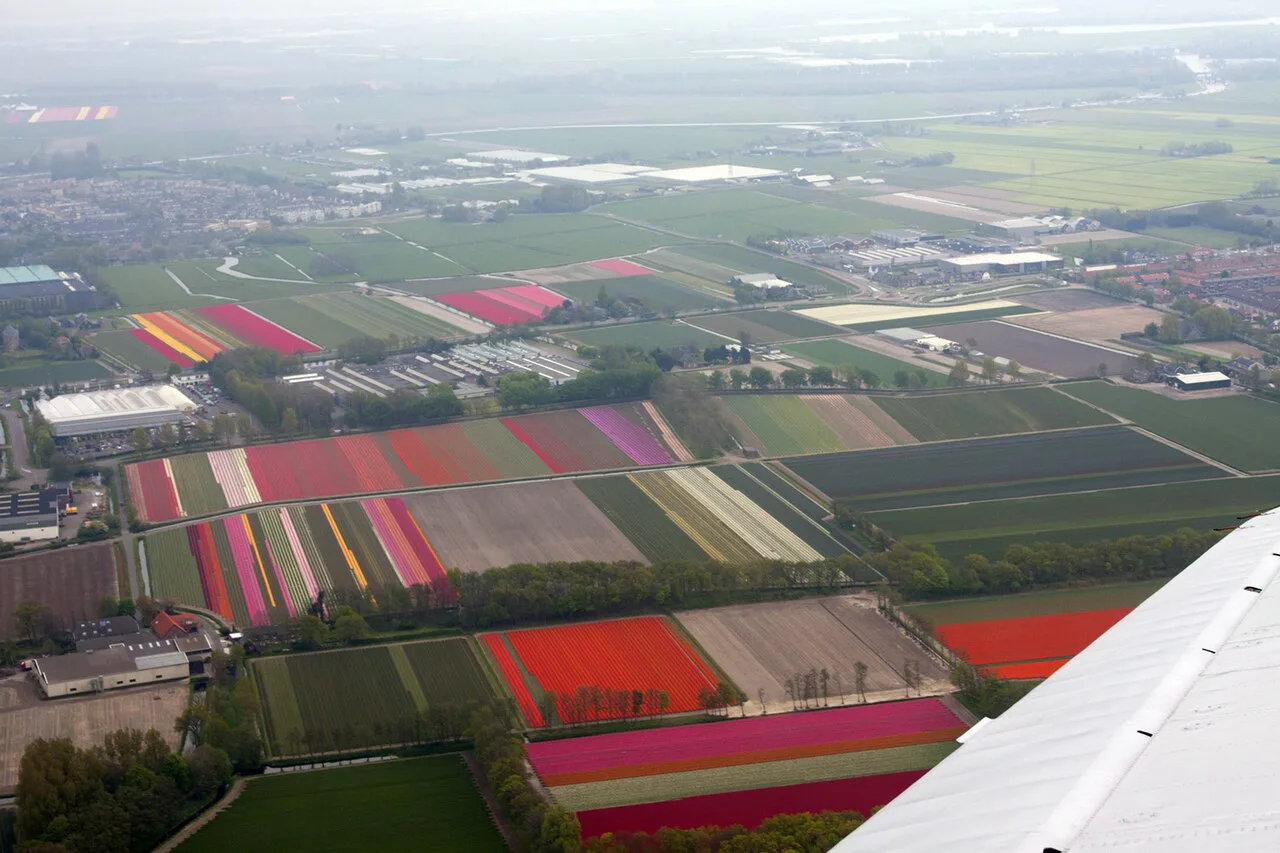
The Bollenstreek runs behind the North Sea dunes between Haarlem and Leiden, and Lisse sits at its centre. The bulb fields surround the Keukenhof estate and stretch out towards the coast, which is why the area is the default choice for a short trip. Lisse is roughly 16 miles out of Amsterdam, so it works as an afternoon rather than a full day.
Where are the tulip fields near Amsterdam? The best-known bulb fields are in the Bollenstreek, the belt of farmland around Lisse and Keukenhof, roughly 40 km from Amsterdam. The fields surround the Keukenhof estate and stretch towards the North Sea dunes between Haarlem and Leiden.
When do the tulip fields bloom? The open fields are typically in colour from roughly mid-April into early May. The exact peak shifts with the weather, and Keukenhof's own season runs from 18 March to 9 May 2027, but that is the garden's calendar and not a guarantee for the surrounding fields.
Can you walk into the tulip fields? No. The rows are commercial farmland and walking in is not allowed without the grower's permission, because trampling damages the crop and shoes can carry soil, bacteria and pests between fields.
The most straightforward plan is to travel to the Keukenhof area and explore outwards from there. Buses run towards the garden in season, and once you are in Lisse you can ride the lanes between fields on a hired bike. Driving and parking near Keukenhof is the other option, though you still want two wheels or good walking shoes once you are out among the bulbs.
A first visit works best as a loop south and west of Lisse, taking in the quieter lanes away from the main approach road. The Keukenhof approach gets the crowds; a few kilometres out, the roads narrow between fields and you get the long colour bands to yourself. If you want the garden as well, read the Keukenhof guide before you fix your day, because the two visits work best in one block.
Keukenhof or the open fields: what each one gives you
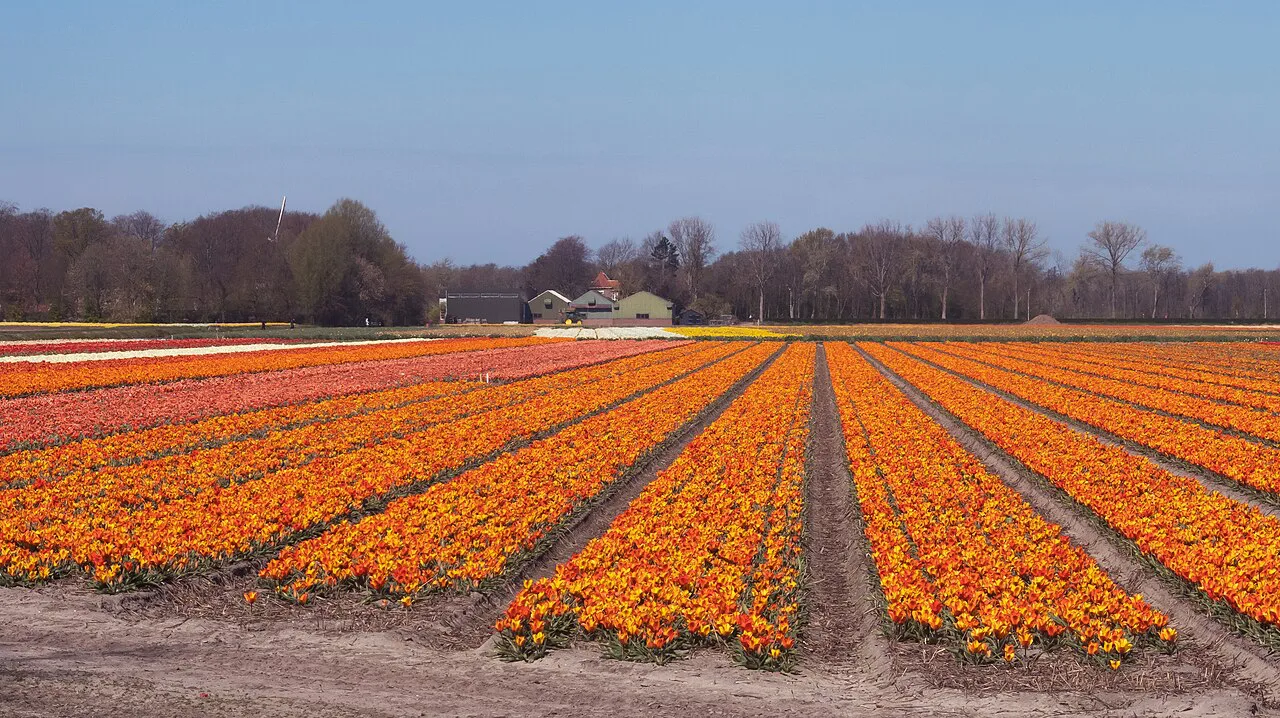
Keukenhof is open from 18 March to 9 May 2027, daily from 08:00 to 19:00, with entry closing at 18:15. That fixed window makes it easy to plan around, and the garden's mix of beds and displays means a wet spring day still works. The trade-off is a ticket and a crowd, especially at weekends and in the middle of the season.
The open fields give you the landscape the garden cannot: horizon-to-horizon colour with no queue and no fee. What you give up is certainty, because the show depends on the growers' planting schedule and the weather. Most visitors pair the two, using the garden for designed displays and the surrounding lanes for the wide views.
If you decide on the garden as well as the fields, get your entry sorted for the day you want rather than leaving it to the gate, because the garden is busy at weekends and in the middle of the season. The Keukenhof Tickets page sets out how the entry system works. Build the field ride into the same day so you are not paying for two separate journeys into the bulb region.
When the tulip fields bloom
The region's open fields are in colour over a spring window that runs from roughly mid-April into early May. After it, the growers cut and lift bulbs and the colour drains from the rows. Cool springs push the peak back, warm ones bring it forward, so treat any date as a target rather than a booking.
Keukenhof gives you one fixed point in an otherwise movable season. Its 2027 opening runs from 18 March to 9 May, which sits inside the broader spring blooming period. The open fields around it are a separate, weather-led show, so use the garden dates to plan the trip, not to guarantee rows of colour on any particular day. Outside the spring blooming period, plan the trip around something other than flowers.
For a broader view of how the Dutch spring unfolds week by week, the guide to the best time to see tulips in the Netherlands helps you pick your dates before you travel. In the final days before you go, check a live flower map too, because individual fields turn over quickly.
Why you cannot walk into the rows
Walking into a tulip field is not allowed without the grower's permission. The crop is a farmer's livelihood, and trampling the rows damages plants that are being grown for bulbs. Shoes also carry soil, bacteria and pests between fields, which is a real risk in a bulb-growing region.
Photograph from the public road or path, keep off the soil, and never pick the flowers. A long lens or a low angle over a ditch gives you the shot of rows receding to the horizon without a single stem underfoot. The same rule applies even where a field looks unvisited and the track beside it seems inviting.
If you want to stand among the tulips, head to a visitor-facing flower farm or show garden where a photo among the blooms is part of the offer. Tulip Experience Amsterdam, The Tulip Barn, De Tulperij in Voorhout and Annemieke's Pluktuin are among the tulip spots named in a round-up of places to see tulips in the Netherlands, and Hortus Bulborum in Limmen appears in the same list for anyone interested in older tulip varieties.
Seeing the fields by bike
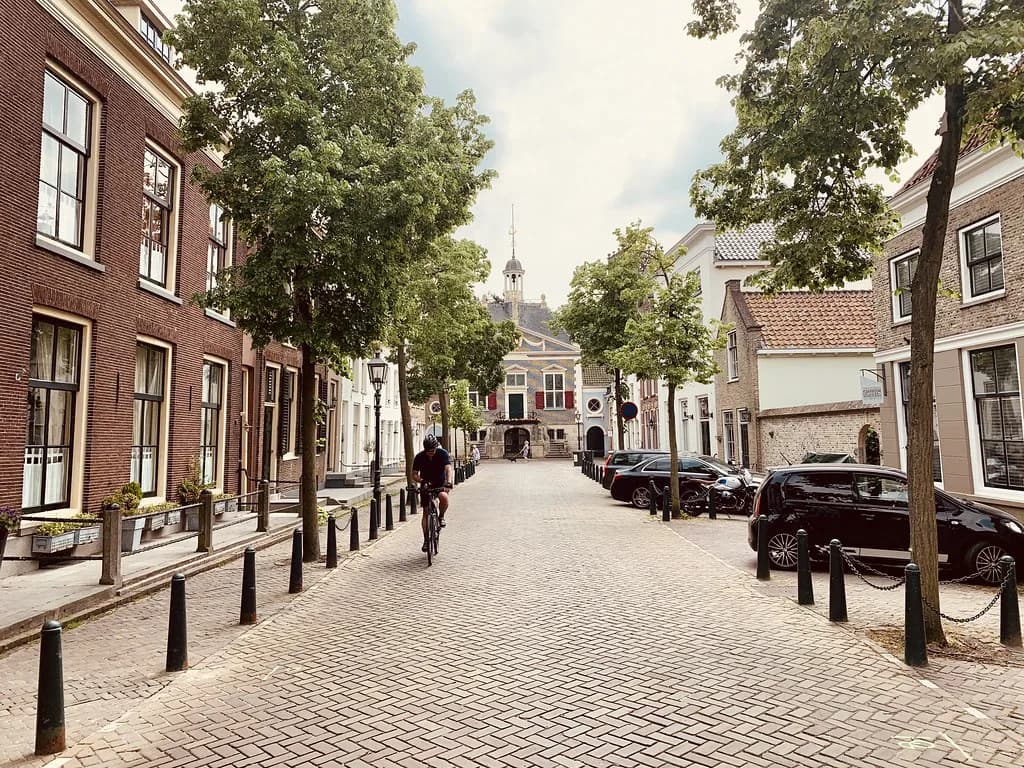
The fields are spread out, and riding them by bike is the most practical way to cover the Bollenstreek. Ride out from the Keukenhof area after arriving by bus, or bring a bike on the train to Leiden or Haarlem and start from there. A half-day gives you a comfortable loop with stops; a full day lets you push further towards the coast.
Plan the loop around what you actually want: colour, photographs, a farm visit. A route that strings together the lanes around Lisse and towards the dunes covers the classic views without long stretches of nothing. Keep an eye on the wind, which decides how hard the return leg feels more than any hill does.
A self-guided tulip bike tour is a sound option if you would rather not plan the route yourself, and it saves you sorting out bike hire on the ground. Bike hire in the bulb region is seasonal, so sort your cycle before the day you ride; the guide to cycling in the Netherlands covers the rules of the road.
Visiting from Haarlem or The Hague
You do not have to base yourself in Amsterdam to see the bulb fields. Haarlem sits at the northern end of the Bollenstreek and is a natural start for a ride south through the fields towards Lisse. The Tulip Fields Near Haarlem guide covers the lanes and villages on that side in more detail.
The Hague and Leiden work equally well from the south, with Leiden the closer of the two to the bulb belt. From either city, take a bike on the train and start riding from the station side nearest the fields. That turns a field visit into a half-day outing rather than a separate excursion.
Tulip fields beyond the Bollenstreek
The Bollenstreek is the best-known bulb region, but it is not the only one. Zeeuws-Vlaanderen and Goeree-Overflakkee have their own tulip routes, and Drenthe has a Tulpenroute that works as a spring drive rather than a single field.
These regions make sense if you are already in the area rather than travelling across the country for flowers. The Bollenstreek wins on access from the Randstad and on the density of fields within a short ride. Elsewhere you need a car or a long bike day to string fields together, and the scenery is more open polder than postcard rows.
Spring events add another layer if your dates are flexible. The tulip festival in the Netherlands covers the wider calendar of flower events around the bloom.
Photographing the fields from the roadside
Early morning and late afternoon are the best light in the bulb fields, when the rows catch low sun and the colours deepen. Midday flattens the scene and brings the tour buses. Wind is constant, so a fast shutter helps when you are shooting across the rows.
Keep your kit light and your feet on the path. A standard lens covers most roadside shots, and a longer one compresses the rows into bands of colour. Stay on the road edge rather than climbing onto farm machinery, into ditches or over fences for a better angle.
Fitting the fields into a short city break
Allow a half-day for the fields if you are riding from Lisse, and most of a day if you are combining them with Keukenhof. A realistic plan is a morning in the garden and an afternoon loop through the lanes, or the reverse if you want soft light for photographs. Trying to add a second city on the same day is where short breaks go wrong.
In a one to four day break, give the bulb region its own block rather than squeezing it between museum visits. Haarlem and Leiden both make good bases, with the fields a bike ride away and a city to return to in the evening. If your trip falls outside the spring window, the best time to visit the Netherlands covers what the country offers in other seasons.
Which tulip day should you book?
Pick the Bollenstreek around Lisse for a first tulip trip: the fields are close to Haarlem, Leiden and The Hague, and a bike turns them into a half-day. Add Keukenhof if you want designed beds and indoor shows and are willing to book a ticket before you go; skip it if wide views and no entry fee matter more.
Aim for mid-April to early May, ride the lanes rather than the rows, and save your close-up tulip photographs for a visitor farm where standing among the flowers is the point. Check the garden's own site and a live bloom map in the days before you travel, then leave the rest to the weather.
Explore more Netherlands guides
Frequently Asked Questions
Where are the tulip fields near Amsterdam?
The best-known bulb fields are in the Bollenstreek, the belt of farmland around Lisse and Keukenhof, roughly 40 km from Amsterdam. The fields surround the Keukenhof estate and stretch towards the North Sea dunes between Haarlem and Leiden.
When do the tulip fields bloom?
The open fields are typically in colour from roughly mid-April into early May. The exact peak shifts with the weather, and Keukenhof's own season runs from 18 March to 9 May 2027, but that is the garden's calendar and not a guarantee for the surrounding fields.
Can you walk into the tulip fields?
No. The rows are commercial farmland and walking in is not allowed without the grower's permission, because trampling damages the crop and shoes can carry soil, bacteria and pests between fields. Photograph from public roads and paths, and never pick the flowers.
Are the tulip fields free to visit?
You can admire the open fields for free from public roads and paths. Keukenhof, by contrast, is a ticketed garden with its own entry system.
What is the best way to see the tulip fields?
By bike, riding the lanes around Lisse, or on a guided or self-guided tour from Amsterdam. The fields are spread out across the region, so two wheels cover more ground than walking.
Where can you stand among the tulips for a photo?
At a visitor-facing flower farm or show garden, such as Tulip Experience Amsterdam, The Tulip Barn, De Tulperij in Voorhout or Annemieke's Pluktuin, where a photo among the blooms is part of the offer.
Sources
Notes for your next Dutch city break
Optional updates to our Netherlands guides.
You might also like

Continue reading
More guides you'll find useful