Netherlands in Spring: When to Go, Tulips and What's On
Plan a Dutch city break in spring: when the tulips bloom, what the weather is really like, which towns and gardens are worth your days, and what to skip.
On this page
April is the safest month for a spring city break in the Netherlands: it is when the tulips are most likely to be out and the days are long enough for a garden visit plus a cycle. March is quieter and colder, May is warmer but the bulb fields are past their best. This guide covers timing, the Keukenhof and Lisse trade-off, windmills at Zaanse Schans, and the towns that reward a spring stop.
Plan around two different kinds of flower day. Keukenhof is ticketed, walled and busy; the bulb fields around Lisse are open countryside you can cycle past for nothing. Treating them as one outing is the most common mistake, because the garden sits in Lisse but the fields lie outside it, and our tulip fields Netherlands guide sets out the wider picture.
When spring starts in the Netherlands and which months count
Spring in the Netherlands means roughly March to May. April is the month to aim for if tulips are the point of the trip: DutchReview notes that as April approaches the tulips begin to blossom, and it points walkers and cyclists towards the fields around Den Haag, Leiden and Haarlem.
Early in March you get thinner crowds and a real risk of grey, wet days; later in May you get warmth and terraces but the bulb fields are being cleared. If your dates are fixed by school holidays, build the trip around cities and treat flowers as a bonus rather than the centrepiece.

What spring weather feels like and how to plan days around it
Spring weather here is often changeable rather than reliably warm, so plan for sunshine, wind and a sharp shower within the same afternoon. Build each day around one indoor anchor, such as a museum, a church tower or a boat, and keep the outdoor part flexible so a wet morning does not wreck the schedule.
Layers and a waterproof shell are more useful than a heavy coat by late April. Wind is the detail visitors underestimate, particularly on open water and in the bulb fields, where there is nothing to break it.
Tulip timing: when the fields and gardens are at their best
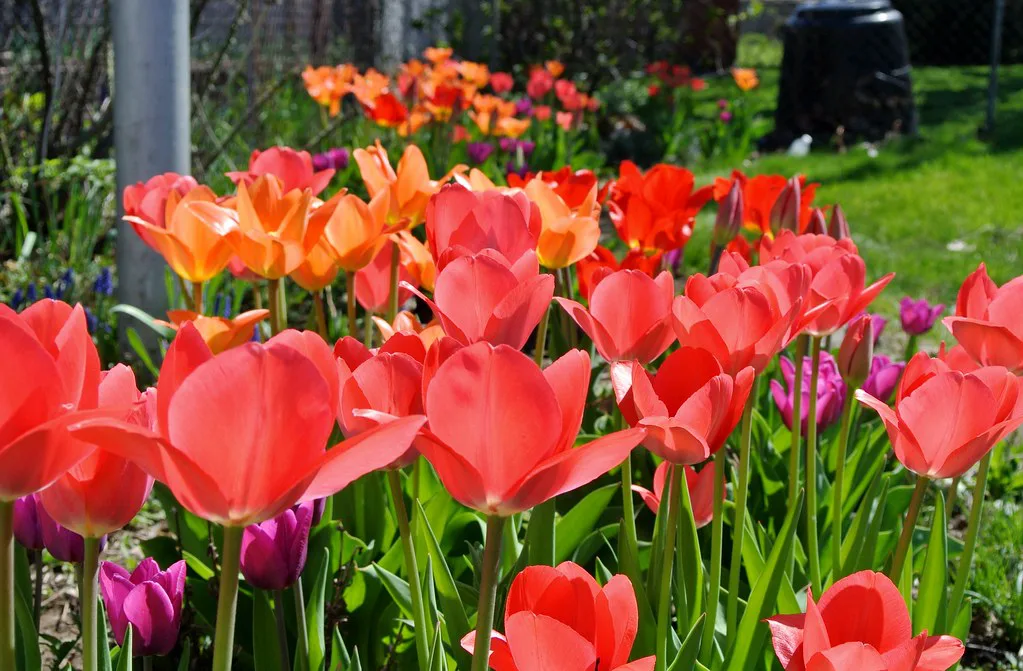
Tulip season is short and moves with the weather, so treat any specific week as a target rather than a guarantee. The Keukenhof garden runs for about eight weeks each year, which is why travel writing about the Netherlands in spring clusters into a narrow window.
For the fields rather than the garden, the bulb belt between Haarlem, Leiden and The Hague is the classic ground, and you can read up on the best time to see tulips before fixing dates. Cycling is the practical way in: you cover more ground than on foot and can stop where a field edge allows, without blocking farm access tracks.
Keukenhof: what it is, how long it takes and how to avoid the crush
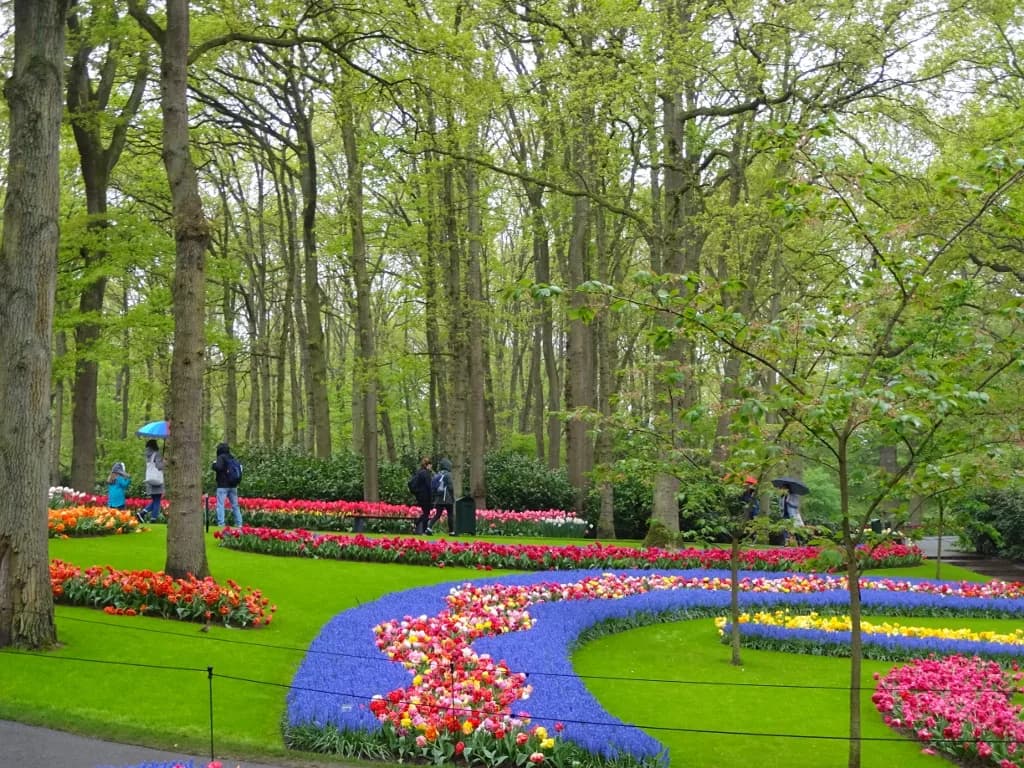
Keukenhof is one of the largest flower gardens in the world, with roughly seven million bulbs planted each year and a different theme annually. In 2018 it opened daily at 08:00 and coach groups arrived from late morning, so an early entry bought quieter hours that season; check current opening times before you go.
Allow half a day for the garden itself. Beyond the beds there are water gardens, ponds and a petting zoo, which is why families tend to run longer than couples. Buy Keukenhof tickets ahead of peak April dates, when the garden and its coaches are at their busiest.
Getting there without a car is straightforward from the Leiden side, and staying outside Amsterdam often makes the morning easier. If you are coming from the capital, the journey is a train plus a connecting bus rather than a single hop, and it is worth reading how to get to Keukenhof without Amsterdam before you commit to a base.
Cycling the bulb fields around Lisse rather than only the garden
The flower fields are not part of the Keukenhof: they sit outside the garden walls, and cycling them is a separate outing from the ticketed garden. Rent-a-Bike van Dam has a rental point at the car park in front of the main entrance, and it hands out routes of differing lengths around the Lisse fields.
Route signage in the fields can be unclear, and the writer of one account ended up navigating with Google Maps instead, so carry a phone with offline maps and a rough plan of which lanes to take. The reward is space: the fields are far quieter than the garden, with no queue for a viewpoint.
If you would rather not cycle, pick a base with fields on the edge of town. The tulip fields near Rotterdam and the Haarlem tulip fields both give you short rides or walks to bulb ground without a car.
Zaanse Schans: windmills, clogs and how much of a day it takes
Zaanse Schans is a preserved neighbourhood in the town of Zaandam, about a 15-minute train ride from Amsterdam, with eight remaining windmills. The Zaan region was once an industrial area with hundreds of windmills producing mustard, paint, paper and linseed oil, and some of the surviving mills are open to the public for a small fee while village houses now hold museums and souvenir shops.
The Kooijman Wooden Shoe Workshop explains how clogs are made and is the stop most visitors remember. Give Zaanse Schans half a day to a full day if you like industrial history; two hours is enough for a windmill photo and a wander.
Star-fort towns worth a spring stop: Naarden and its walls
Naarden is one of the Netherlands' star-fort towns, its angled bastions and sloped walls emerging about five hundred years ago to better defend townships against increasingly strong cannons. Walk in over the moat, through the gates and up onto the walls for the view back over the town.
It is a 20-minute walk from Naarden-Bussum station, which makes it an easy half-day from Amsterdam or Utrecht. The town also has markets, curiosity shops and thrift stores, so it fills a damp afternoon better than a bare field.
Hanseatic Zwolle: canals, Museum de Fundatie and a boat rather than a walk
Zwolle is a Hanseatic city whose centre is dense with boutiques, local shops and places to eat, and Museum de Fundatie holds a substantial visual art collection. The city's monuments read best from the water, so take a boat tour or hire one yourself rather than only walking the streets.
Zwolle works as an overnight stop on the route from Almere Centrum, where a change of train takes about an hour. Pair it with Naarden on the same rail line for a two-town spring day.
Utrecht in spring: the city plus Haarzuilens and Geertje's Hoeve for families
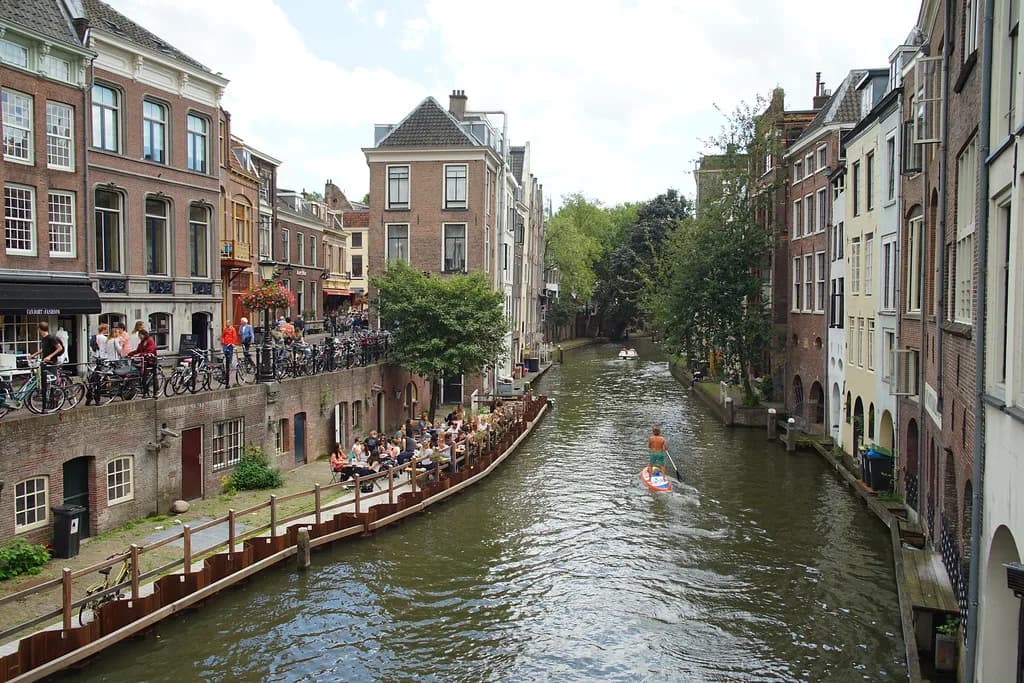
Utrecht's own centre, with the Oudegracht wharves and the Domtoren, is the obvious base, but the suburb of Haarzuilens is the family draw. Geertje's Hoeve is a small working farm with animals, a barn selling fresh produce and a cherry orchard across the road, plus a play area for children.
This is a half-day add-on rather than a day in itself, and it suits a trip where the tulips are a side dish. Keep the city day for the wharves and the tower, and slot the farm in when the weather is kind.
Leiden and The Hague: city days with bulb fields close by
Leiden and The Hague (Den Haag) give you two proper city days with bulb ground on the doorstep. DutchReview points to the fields around Den Haag, Leiden and Haarlem as the places to walk or cycle alongside tulips in spring, so you can cycle out in the morning and be back among museums and cafés by late afternoon.
Leiden and The Hague sit within the bulb belt that DutchReview places around Den Haag, Leiden and Haarlem, so base here for two nights and you can combine a garden or field day with a city day without changing hotels.
Picking tulip fields you can walk or cycle past for free
Not every flower experience needs a ticket. Walking or cycling beside the bulb fields around Den Haag, Leiden and Haarlem is free and, for many travellers, better than a garden queue: you see the colour at scale with nobody herding you along a path.
Stay on lanes and field edges, never walk into a row of bulbs, and remember these are working farms. De Floratuin near Den Helder offers a tulip garden where you can pick your own flowers at around €0.25 a stem, and the garden has its own café.
Spring events worth planning a trip around
King's Day is the spring date most likely to shape a trip, filling city streets with markets and orange clothing. It is a national holiday rather than a ticketed event, and it makes accommodation in the big cities harder and pricier, so book early or pick a smaller town, as our King's Day Netherlands guide explains.
Beyond King's Day, spring programming varies by city and year. Check the tourist board for the specific city you are visiting before you build an itinerary around any festival you have seen mentioned elsewhere.
How many days each place needs and how to combine them by train
A realistic spring break is three to four days: one for the Keukenhof, half a day for the Lisse fields, one city day, and one spare for weather. Two days is enough only if you drop either the garden or the fields, and the Netherlands in April guide covers how the month's dates shift what is open.
By train, the natural pairing is Leiden or The Hague for flowers, then Haarlem or Utrecht for a city. Naarden and Zwolle chain together on the Almere line if you want a second overnight, and Netherlands in May is the warmer, later version of the same trip.
Honest trade-offs: crowds, cold snaps and days that do not go to plan
The busiest weeks are also the best weeks for flowers, so accept one crowded day rather than trying to avoid them all. Go early, buy ahead and treat the garden as a morning job.
A cold snap can hold the bulbs back a week or two, and a warm spell can end the season early. Have a wet-weather alternative such as a museum town like Zwolle or a star fort like Naarden, so a grey day still pays off.
Which spring trip should you book?
If tulips are the reason for the trip, base yourself in Leiden or The Hague for three nights, book a garden morning and spend the afternoon on a rented bike in the Lisse fields or the free bulb belt around Den Haag, Leiden and Haarlem. Leiden and The Hague also work as a base for the bulb belt, and the tulip festival Netherlands guide shows what else is running while you are there.
If you have already done the flowers, take the train east to Naarden and Zwolle and treat spring as a city season instead. Book two nights rather than one, because the value of these towns is in the slow mornings rather than the highlights.
Frequently Asked Questions
Is April a good time to visit the Netherlands?
April is the strongest spring month: the tulips are usually in bloom and the days are long. It is also the busiest, so book the Keukenhof and your accommodation well ahead and start garden days at opening.
What is the best month to go to the Netherlands for tulips?
Aim for April. The tulips begin to blossom as April approaches on the fields around Den Haag, Leiden and Haarlem, and the Keukenhof garden runs for about eight weeks within the season; the exact week shifts with the weather each year, so treat any date as a target rather than a guarantee.
Can you see tulip fields without paying for the Keukenhof?
Yes. The bulb fields around Den Haag, Leiden and Haarlem are working farmland you can walk or cycle beside for free. Stay on the lanes, respect the crop, and keep a map handy because signs are thin on the ground.
Sources
Notes for your next Dutch city break
Optional updates to our Netherlands guides.
You might also like
Continue reading
More guides you'll find useful