Cycling in the Netherlands: Routes, Rules and How to Start
Plan a cycling break in the Netherlands: how the knooppunten network works, which long-distance routes to ride, and how wind and weather shape your day.
On this page
Cycling in the Netherlands is easy to start because the country is flat, heavily signed and built around separated cycle paths rather than shared traffic. Roughly 3,750 kilometres of signposted long-distance LF-routes thread through that network, and international EuroVelo routes 2, 4, 12, 15 and 19 run through the country. This guide explains how to plan a ride from numbered junctions, which long-distance routes suit a short break, and how wind, weather and trains should shape your days.
It is written for travellers on a one to four day city break who want a half-day or full-day ride rather than a full touring holiday, though the same tools work for longer trips. You will find honest trade-offs between coastal dunes and sheltered inland riding, advice on riding with children, and how to fold a bike into a rail journey.
What cycling in the Netherlands is actually like
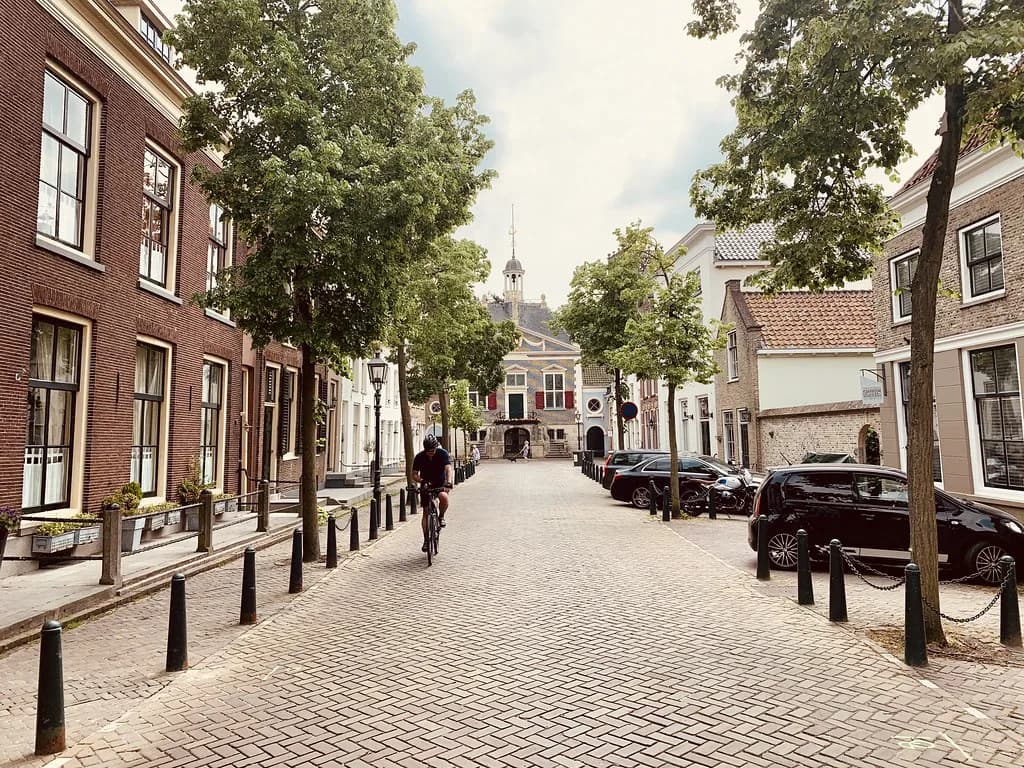
The Dutch network is unusually forgiving for anyone used to sharing a road with fast traffic. Many roads carry separate, dedicated cycle lanes, and cyclists get their own crossings and traffic lights, so you spend far less time negotiating junctions than you would at home. That infrastructure is why so many people who rarely ride at home find a Dutch day out manageable.
The landscape helps as much as the engineering. Much of the riding is flat, with long sightlines and regular places to stop, and the South Holland coast in particular is dune-backed rather than hilly. The honest catch is exposure: flat, open ground offers little shelter when the wind picks up, so distance matters less than direction.
Outside the big cities, the network opens into quiet countryside, historic towns, coastal islands and national parks such as De Hoge Veluwe in Gelderland, one of the largest nature reserves in the country. Treat the cities as hubs rather than the whole story, and a short break suddenly has more rideable options than days. If you want the rules of the road in detail, the cycling rules Netherlands guide covers right of way, lights and signage.
How the knooppunten junction system works
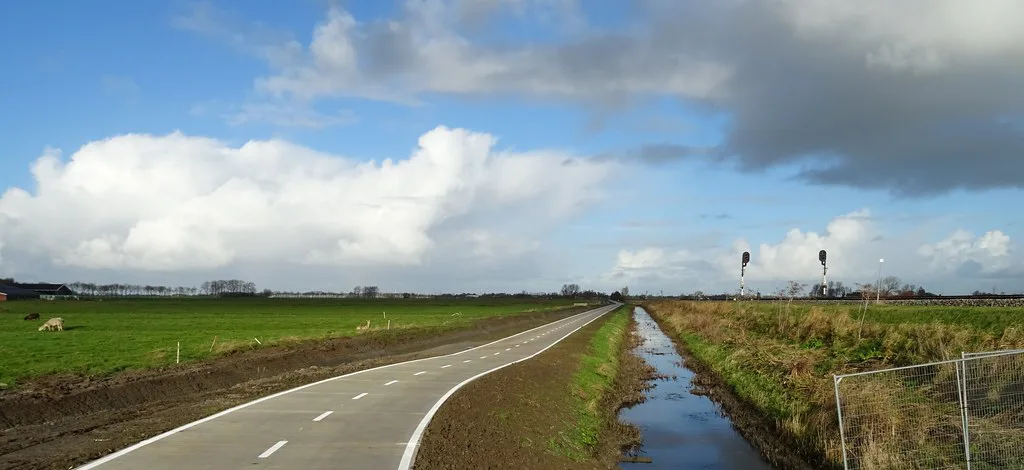
Dutch recreational routing runs on knooppunten, a grid of numbered junctions where signs point you to the next number rather than naming a destination. You string numbers together into a route of whatever length you fancy, and navigation becomes a matter of following one digit at a time. Most tourist offices and rental points hand out printed maps showing the numbered grid.
Where are the best places to cycle in the Netherlands? For a short break, the dunes of the LF Kustroute along the South Holland and Zeeland coast and the riverbanks of the LF Maasroute are the two strongest choices. Inland, the quieter countryside around historic towns such as Alkmaar and Edam, the island of Texel, and De Hoge Veluwe national park give you shelter and variety.
Is the Netherlands bike-friendly? Yes. Many Dutch roads have separate cycle lanes for the exclusive use of cyclists, and cyclists get their own crossings and traffic lights.
What is the 80% rule in cycling? It does not appear in the Netherlands route and network material here, and it is not a Dutch traffic rule. Treat any claim about a percentage rule with caution and check the official source it comes from before applying it to your riding.
The numbering is what makes the system flexible: you can replan mid-ride by picking a different next number, or shorten a loop without retracing a whole route. Digital tools such as the Fietsknoop app replicate the same logic on a phone, which is useful when a printed map runs out at the edge of a province.
For a first ride, write down four or five numbers before you set off and stop checking the map every few minutes. Riding a loop rather than a linear route helps you absorb the numbering without pressure. A fuller explanation of building routes this way sits in the knooppunten cycling network guide.
The LF long-distance routes: coast and river
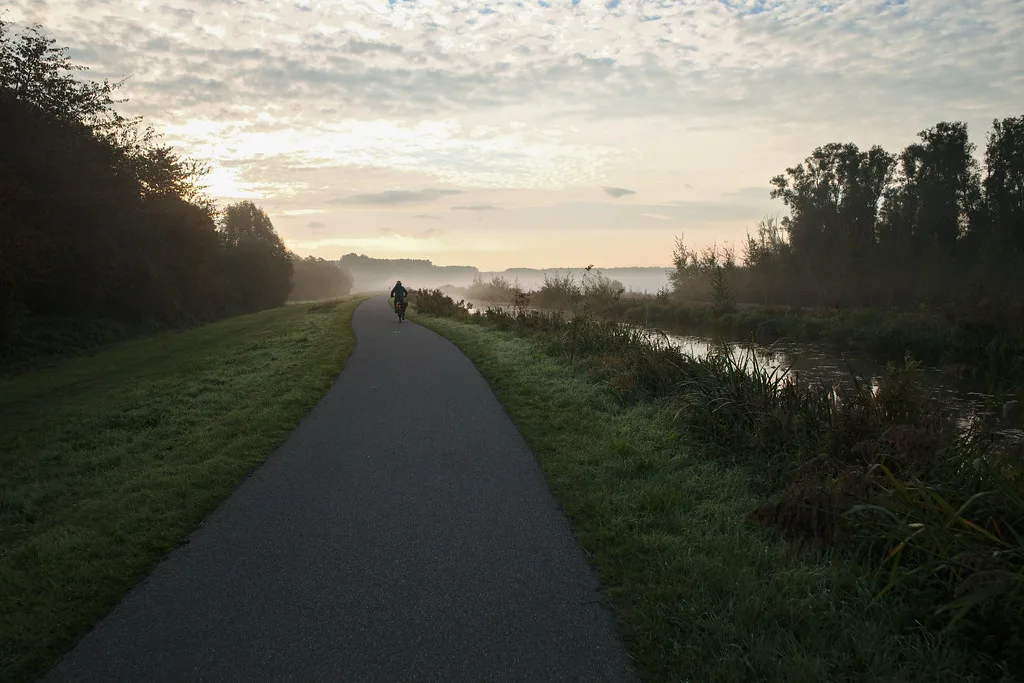
The LF-routes form a national network of signposted long-distance routes, coordinated by Fietsplatform, and several of them are sections of international EuroVelo routes. Two are especially useful for a short break: the LF Kustroute along the coast, part of EuroVelo 12, and the LF Maasroute, part of EuroVelo 19.
The LF Kustroute is characterised by long stretches of dune, both along the Dutch coast and on the islands of South Holland and Zeeland, with small seaside resorts and historic towns breaking up the riding. Expect open views and a steady breeze; the dunes give some shelter but rarely a full break from a headwind. Guidebooks and GPX files for the route are published by Fietsplatform and commercial map makers.
The LF Maasroute follows the Meuse from Maastricht, where the river roughly enters the country, to Hook of Holland where it reaches the sea, then runs a little inland towards Rotterdam. That makes it a river ride rather than a coastal one, with calmer water-level scenery and towns spaced along the banks. If you have four days, riding a stretch of either route from a fixed base is more realistic than covering the whole thing.
Short city-break rides from The Hague and Scheveningen
The Hague makes a practical base because the city mixes parkland, a large northern district at Scheveningen and roughly 60 kilometres of cycle path loosely linked as the Parkenroute. You can ride city parks, reach the coast and still be back for an evening in the centre. It also sits on the coast road that Cycling UK's route description follows north from Hook of Holland.
Scheveningen itself is part leafy suburb and part seaside resort, so a ride out from the centre can combine parkland with a stretch of dune path without a long transfer. That is the efficient way to use a short break: pick one direction for the morning and let the junction numbers bring you home by a different line.
If you are arriving without a bike, sort out bike rental Netherlands options before you travel, since not every hotel or rental point stocks family or child-sized machines. Hiring locally near your base also avoids the hassle of moving a bike by train at peak times.
Coast versus inland: dunes, wind and shelter
Coastal riding gives you the dunes, the resorts and the sense of space that draws people to the North Sea Cycle Route, but it leaves you exposed to a prevailing wind with little to break it. Inland riding gives up the sea views for shelter from trees, hedges and built-up edges, and it often lets you link historic towns more directly.
The practical rule is to choose the coast on a settled day and the inland network when the wind is strong or the showers are frequent. On the coast, ride out into the wind first and take the tailwind home, so a tired finish is a fast one. That single decision does more for an enjoyable day than any kit upgrade.
For families and less confident riders, the inland option usually wins: shorter sightlines, more junctions to bail out at, and towns within reach if the weather turns. The dunes are wonderful, but they are a fair-weather friend.
Wind and changeable weather: planning a day's direction
Dutch weather is changeable even in summer, with showers possible at any time of year, and wind can be the bigger obstacle on open ground. Check the forecast and wind direction before you set off, then design the day so the headwind comes first and the return leg is assisted.
Carry a lightweight waterproof jacket and waterproof covers for your bags, and wear layers you can shed as the day warms. If the wind turns out stronger than expected, be willing to shorten the route or use a train for part of the return rather than grinding out a miserable final hour.
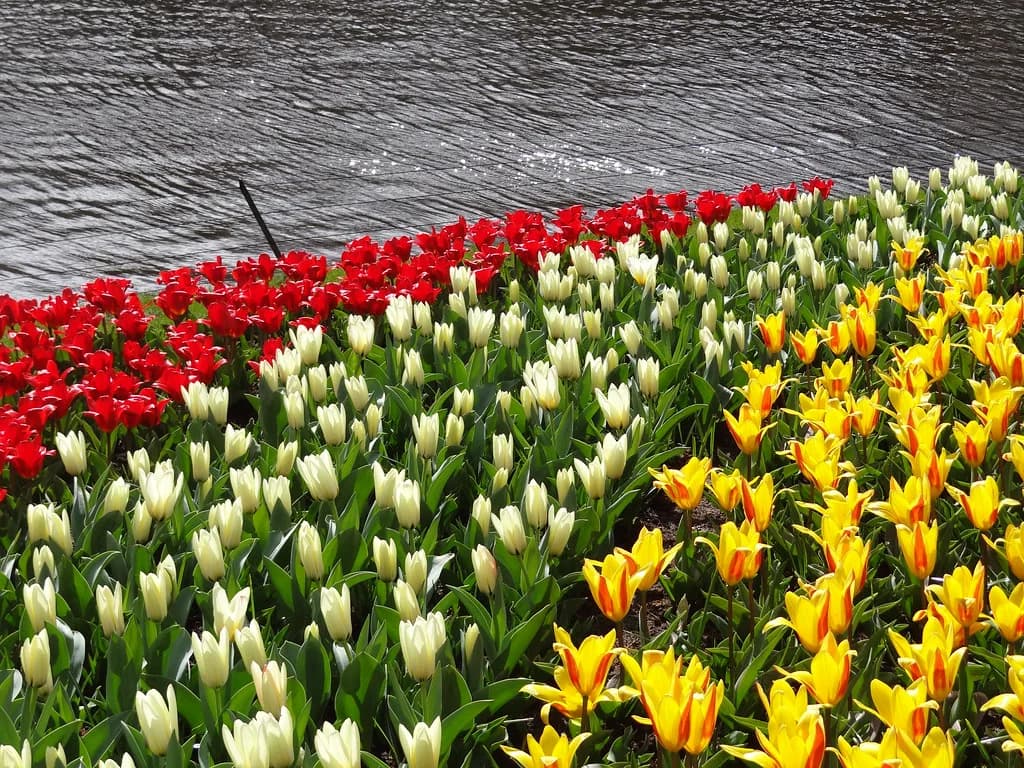
Season matters for what you will see as much as for comfort. Spring brings the bulb fields into colour, which is the strongest reason to time a cycling break early in the year rather than in high summer; the best time to visit the Netherlands guide weighs that against crowds and daylight.
Bike and barge, and other ways to structure a short trip
Bike and barge tours are a genuine alternative to point-to-point touring: you ride by day and the boat moves your luggage and your bed, so you avoid repacking and can cover ground without committing to a full touring setup. They suit mixed-ability groups, where one rider wants a long day and another prefers a short one.
The trade-off is flexibility: a barge itinerary fixes your start and finish points, so you lose the freedom to change plans at a junction. For a first cycling holiday with children or nervous riders, that structure is usually worth the constraint.
Taking bikes on Dutch trains and mixing rail with riding
Dutch trains are easy to use, which makes rail-assisted days a sensible way to extend your range without riding a long transfer. Ride out one way and take the train back, or skip a dull suburban stretch entirely.
The catch is that taking a full-sized bike on a train usually needs a separate ticket and can be restricted at busy times, so check the operator's rules for your specific route before you rely on it. Folding bikes are treated differently from full-sized ones, which matters if you plan to mix rail and riding every day.
For repeated short hops, station bike hire such as OV-fiets pairs well with a rail pass. The OV-fiets guide sets out what the scheme involves before you commit, and if you are starting from scratch the Bike Rental in the Netherlands guide covers the rental options in more detail.
City cycle paths versus provincial routes
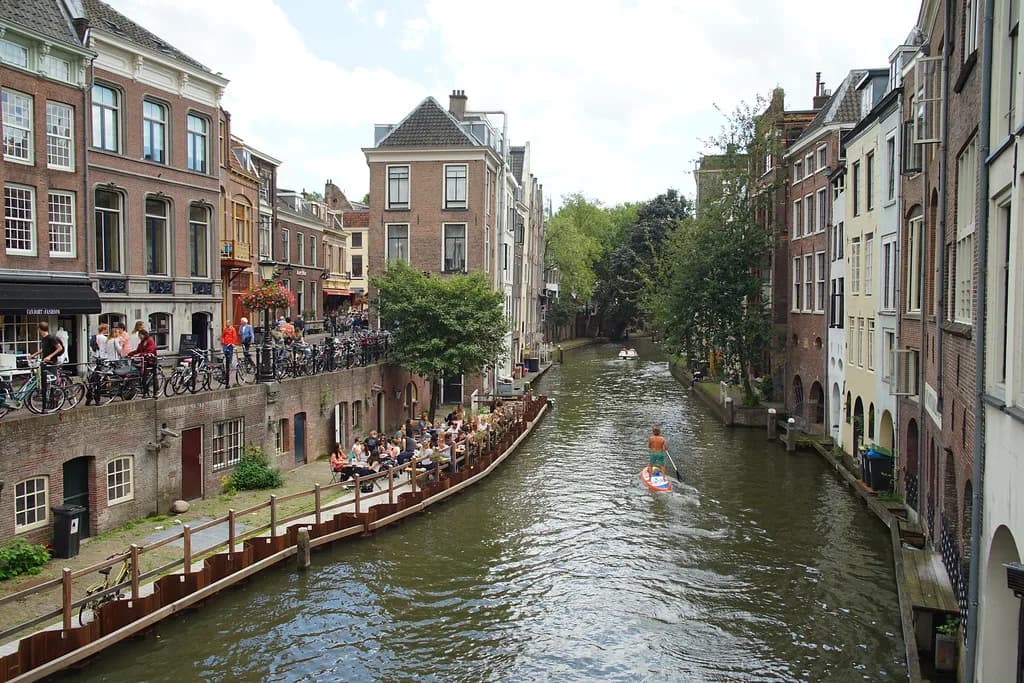
Busy city cycle paths are a different sport from provincial riding: expect crowds, varying speeds and a lot of unspoken etiquette at junctions and traffic lights. Amsterdam is the obvious example, and the pace there is brisk enough that hesitant riders can feel in the way.
The quieter cities and the countryside are the better place to build confidence, and a base such as The Hague gives you both without the crush. If you are staying in a big city, ride out early before the paths fill and save the centre for walking.
What to see beyond the cities by bike
Beyond the major cities the riding takes you through historic towns such as Alkmaar and Edam, island landscapes such as Texel with its dune-backed coastal paths, and forest and heathland in nature reserves. These are the rides that make a bike worth having on a city break rather than a single afternoon's novelty.
If you like to break a ride with a museum, plan the day around opening days rather than the other way round, since many Dutch museums close early in the week. The best museums in the Netherlands guide is a useful filter for picking a town to aim at.
Riding with children or inexperienced cyclists
The Dutch network works for beginners because the infrastructure does the hard thinking: separated lanes keep you away from fast traffic, and the junction numbers mean nobody has to navigate while riding. The Bell family's first cycle tour, with a twelve-year-old and a rider who preferred to avoid busy roads, is a useful benchmark for what the network can absorb.
Keep daily distances modest on a first trip, pick inland routes with frequent bail-out junctions, and hire bikes that actually fit each rider rather than making do. Shorter days with a proper stop beat long days that end in tears.
How many days you need
A single day gets you one good loop from a city base, typically a half-day of riding plus a stop. Two to three days let you ride both a coastal and an inland route and use a train to extend one of them. Four days or more is where a bike and barge trip or a stretch of an LF route becomes realistic rather than aspirational.
For a first visit, two riding days folded into a four-day city break is a good ratio: enough time on the bike to enjoy it, enough off it to see the museums and squares you came for. Add days only if you are happy to spend most of each one in the saddle.
Maps, GPX files and practical kit
Printed junction maps from tourist offices and rental points are the simplest backup, and GPX files from the LF route guides are the better option for longer days. Maps at a scale of about 1:50,000 work well for day riding and are available for the main EuroVelo routes through the Netherlands.
Bring a lock you trust, a waterproof layer, and a way to carry a map or phone where you can see it without stopping in traffic. If you are hiring, ask what is included with the bike before you leave the shop, since lights, panniers and locks are not always standard.
Which ride should you book first?
Start with a single junction-planned loop from your base, ideally inland on a windy day and along the coast when the forecast is settled. If that goes well, add a rail-assisted day on the LF Kustroute or LF Maasroute rather than trying to ride the whole thing in a short break.
Sort your bike out before you arrive, whether that means a rental or a subscription scheme, and keep the first day short enough to enjoy the second. If you want the full picture on hiring and schemes, start with the Bike Rental in the Netherlands guide.
Explore more Netherlands guides
Frequently Asked Questions
Where are the best places to cycle in the Netherlands?
For a short break, the dunes of the LF Kustroute along the South Holland and Zeeland coast and the riverbanks of the LF Maasroute are the two strongest choices. Inland, the quieter countryside around historic towns such as Alkmaar and Edam, the island of Texel, and De Hoge Veluwe national park give you shelter and variety. Pick a base with a station and you can combine several of these in one trip.
Is the Netherlands bike-friendly?
Yes. Many Dutch roads have separate cycle lanes for the exclusive use of cyclists, and cyclists get their own crossings and traffic lights. The country also has a dense signposted network of numbered junctions, so you can plan a route without following a road map. Busy city paths such as Amsterdam's are the exception where you need to be alert.
What is the 80% rule in cycling?
It does not appear in the Netherlands route and network material here, and it is not a Dutch traffic rule. Treat any claim about a percentage rule with caution and check the official source it comes from before applying it to your riding.
What is the longest bike path in the Netherlands?
There is no single answer in the sources here. The signposted LF network covers roughly 3,750 kilometres of long-distance routes, and the LF Kustroute is part of that, but individual path lengths vary by section. For a specific route, use the Fietsplatform route pages and GPX files.
Sources
Notes for your next Dutch city break
Optional updates to our Netherlands guides.
You might also like
Continue reading
More guides you'll find useful