Bike Rental in the Netherlands: How It Works and What to Check
How bike rental works in the Netherlands, from app-unlocked city bikes to holiday-park hire, plus what to check on the bike, locking rules and how to compare costs.
On this page
Renting a bike in the Netherlands comes down to two routes: an app-based city bike you unlock with your phone, or a staffed counter at a shop or holiday park. App rental suits a short city break where you want a bike within walking distance; a counter suits families and anyone who wants to size a bike properly with a person on hand. This guide covers how each works in practice, what to inspect before you pay, the riding rules that surprise UK and US visitors, and how to compare value.
Donkey Republic is one example of the app model in The Hague: you open the app, it shows nearby bikes on a map, you unlock with a tap, and you finish the ride by locking up at a drop-off point marked in the app. The operator lists flexible options from a short ride to a full day, a week or a monthly membership.
What bike rental in the Netherlands actually looks like
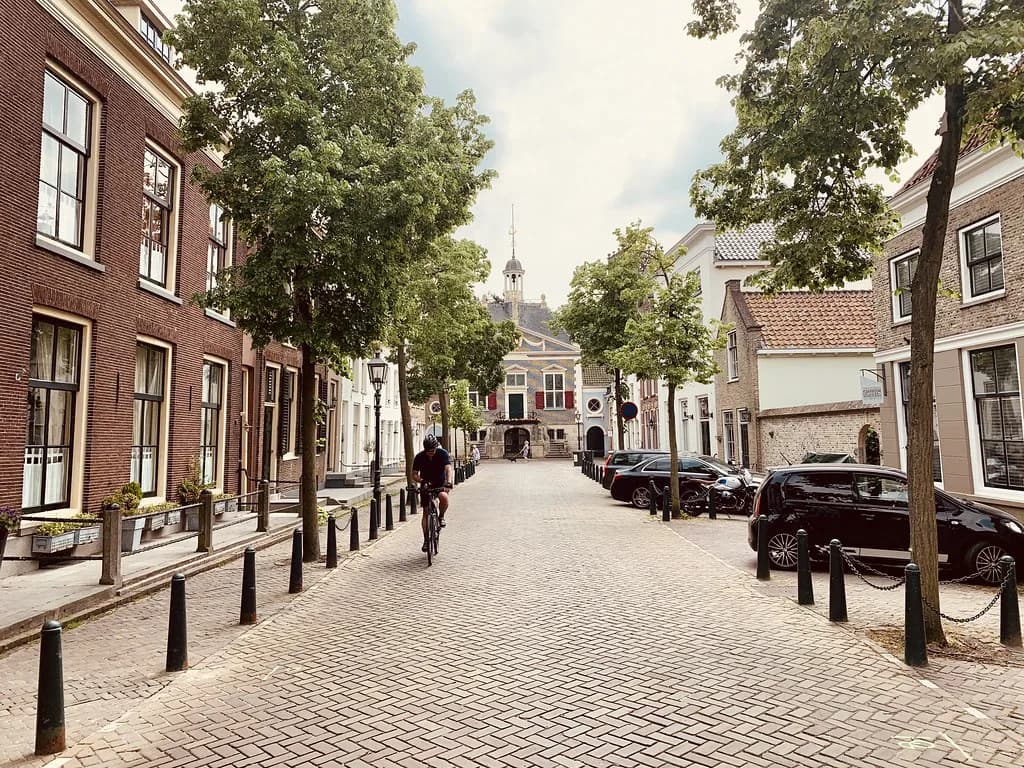
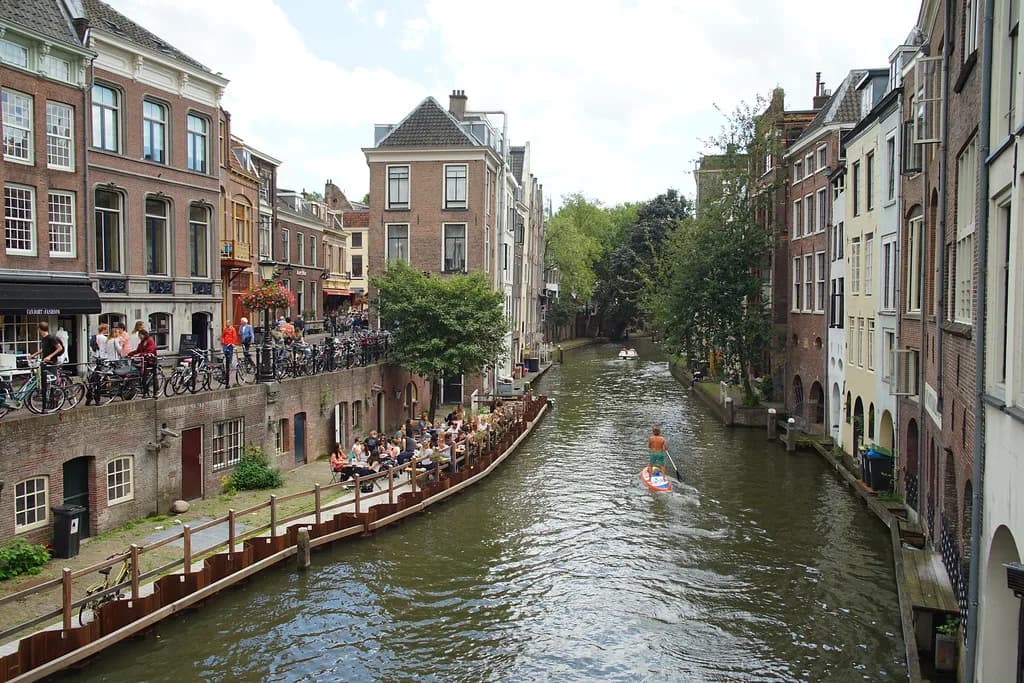
Outside Amsterdam, Dutch city breaks work well by bike because the distances are short and the cycle network is dense. The practical split is between app-unlocked bikes that live on street corners and staffed rentals attached to shops or holiday parks. If you are new to Dutch riding, read up on cycling in the Netherlands before you book anything, because the infrastructure works differently from British roads.
A one-day city break needs one bike for a few hours, so app rental wins on convenience. Longer stays or groups with mixed heights and confidence levels get more from a staffed rental where you can sort out fit and questions in person. Neither route is universally cheaper; it depends on how long you keep the bike.
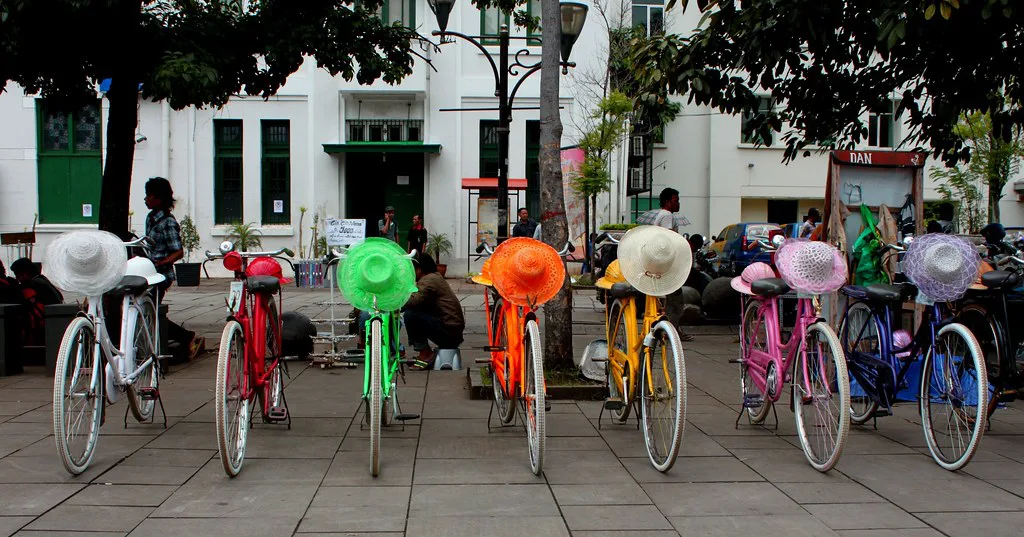
App-based rental: find, unlock, ride, lock
In the app model, you locate a bike on the map, choose your rental option, unlock with your phone, ride, then lock the bike at a designated drop-off. Donkey Republic sets out this sequence for The Hague and lists flexible options from a short ride to a full day, a week or a monthly membership.
Are helmets required when cycling in the Netherlands? Helmet rules depend on the rider and the situation, so confirm the current position with your rental operator or the local authority before you ride. Many Dutch riders go without one in town, but that is a local habit and not legal advice for your own trip.
Can you rent a bike for a month in the Netherlands? Some app-based operators, such as Donkey Republic, list monthly memberships alongside short rides, so a month is feasible in that model. Whether a particular city has the bike type you want for your dates is a separate question, so check the app.
How do you pay for a bike rental in the Netherlands? It depends on the operator: app rentals settle payment through the app, while staffed counters may ask for a deposit or ID. Ask when you book rather than assuming either way.
Two practical points follow from that. First, your phone is your key, so a charged battery matters more than usual. Second, the ride ends where the app says it ends, not necessarily where you stop, which is a different discipline from ordinary bike parking.
The bikes are aimed at people who want transport rather than a guided tour. Prices depend on the option you choose, so compare the rate for the exact block you need before you commit.
Shop and holiday-park rental: when a counter is better
Holiday parks put a person between you and the bike, which matters if you are unsure of frame size or want extras such as a child seat or tag-along sorted out. EuroParcs, for example, offers bike rental at its holiday parks as a guest facility, so guests can hire on site.
The trade-off is that a counter has to be staffed when you want the bike, and the operator sets the terms, so ask when you book. For a family with three different heights, sorting the bikes out in person is worth the time.
What to check before you ride
Run through the same short inspection whatever the rental type. Squeeze both brakes and check the pads bite before the lever reaches the bar; spin the wheels and look for a buckled rim; press the tyres and top up if the valve is accessible. Then switch on the front and rear lights so you know they work.
Sit on the bike and set the saddle so your leg is almost straight at the bottom of the pedal stroke; a saddle left low for a previous rider is the most common cause of sore knees on a city break. Test the gears through the range, confirm the lock is with the bike and that you know how it operates, and check the frame size against your height rather than guessing.
Finally, photograph the bike and any existing damage before you set off. That record protects you if a rental disputes condition at return, and it takes seconds.
Locking rules and where you may leave a rental bike
Locking rules depend on the operator, and for app bikes the rule is the drop-off zone rather than the nearest railing. Donkey Republic asks riders to end trips at a drop-off shown in the app, park so the bike does not block pathways or entrances, and treat the bike with care for the next rider.
For a staffed rental, ask at the counter whether the bike must come back to the shop or can be left elsewhere, and whether the lock is a frame lock, a chain or both. Do not assume that because one operator allows flexible drop-off, another does.
Cycling rules that catch out UK and US riders
The biggest adjustment is riding on the right and treating the red-surfaced cycle path as a road with its own traffic, not as a pavement you may share with pedestrians. British riders in particular have to unlearn the habit of hugging the kerb and riding slowly in the middle of a lane. Keep right, ride predictably, and let faster riders pass on the left.
Signals matter. Indicate turns with your hand, and expect other cyclists to overtake without much warning, so check behind before you move out. A bell is for warning, not for scolding; a light touch is enough.
Helmet use, lighting and local enforcement vary, so do not take a fellow traveller's certainty as gospel. Ask the rental operator about the equipment supplied and check the current position with the local authority before you ride.
City-by-city notes: The Hague, Rotterdam and other Dutch cities
The Hague is well suited to app rental because the city spreads from the Centrum to Scheveningen, and a bike shortens that run considerably. Pick up a bike near your base, ride out towards Scheveningen using a signed cycle route planned in advance, and return it to a drop-off rather than improvising parking at the coast.
Rotterdam rewards wandering, so plan a loop rather than point-to-point hops. Wherever you ride, the numbered-junction system is the easiest way to build a route without a guide: note the numbers from a map, then follow the signs between them.
For longer rides, plan a route in advance using the numbered junctions and signed long-distance routes rather than improvising from the city centre.
Electric bikes: what changes and what to weigh up
An e-bike extends your practical range and flattens headwinds, which helps if you want to combine a city with the coast or a park in one day. Donkey Republic offers pedal and electric bikes in The Hague, so the choice exists, though availability of a specific type at a specific moment is not guaranteed.
The trade-offs are weight and handling. E-bikes are heavier to manoeuvre at low speed and to park, they need charged batteries, and the assist changes how quickly you cover ground next to other path users. If you are not used to one, take an empty stretch first.
Cost: what drives the price and how to compare options
The main drivers are duration and bike type. App rental is priced per ride, per day or as a subscription, with flexible options to match your schedule; holiday-park rental is offered as a guest facility at the park, quoted separately from the cost of your stay. Because there is no single national tariff, compare the rate for the exact block you need rather than a headline daily figure.
Review pages collect opinions from across the country and are not a quote for a particular city, so treat them as a prompt to compare rather than a price guide, then get the actual figure from the operator for your dates.
Do the arithmetic against public transport for the days you actually plan to ride. Two short rides in a day rarely beat walking; a full day out to the coast or a park often does.
Trade-offs: app rental versus shop rental versus a short subscription
Choose app rental when you want spontaneity: a bike near your base, no counter queue, and a drop-off at the end. Choose a staffed rental when you need fit, accessories or advice, and when returning to the same place is no inconvenience. Choose a subscription only if you will ride most days of a longer stay, since the commitment only pays off with regular use.
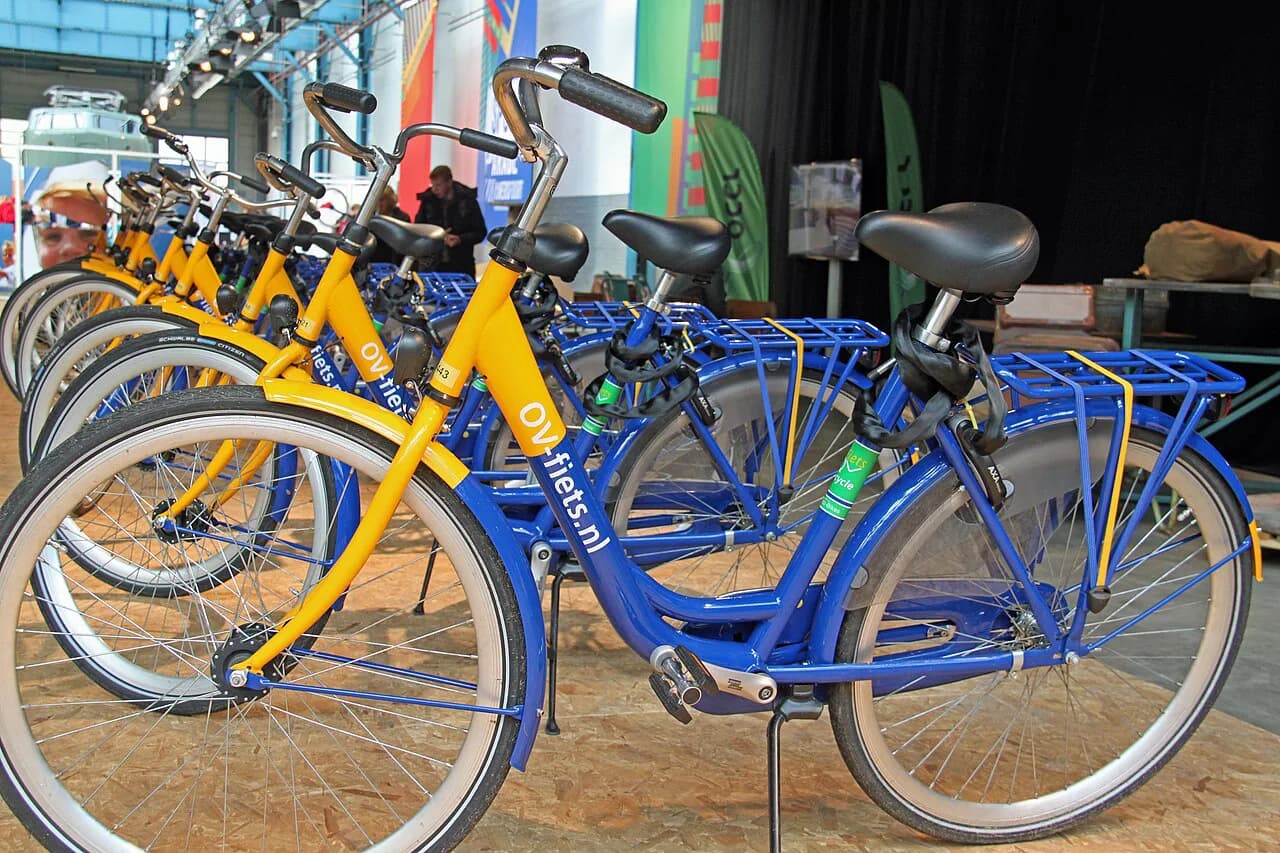
If your trip mixes bike hire with trains, it is worth knowing how the Dutch bike-and-rail hire scheme works from stations, which suits short hops at the start and end of a journey. It is a different model from app rental and worth comparing before you commit.
Whichever you pick, the riding itself is the point. A bike turns a two-day city break into something closer to four days of ground covered, without the tram map.
Which rental suits your Dutch city break
For a one to three day city break, pick app rental for convenience and a staffed counter when you need a properly fitted bike or accessories. If you are staying longer or travelling by train, weigh a short subscription or the station scheme against what you would otherwise spend on trams.
Decide before you arrive, so the first hour of your trip is spent riding rather than queuing, and confirm current availability and rates with the operator before you travel.
Explore more Netherlands guides
Frequently Asked Questions
Are helmets required when cycling in the Netherlands?
Helmet rules depend on the rider and the situation, so confirm the current position with your rental operator or the local authority before you ride. Many Dutch riders go without one in town, but that is a local habit and not legal advice for your own trip.
Can you rent a bike for a month in the Netherlands?
Some app-based operators, such as Donkey Republic, list monthly memberships alongside short rides, so a month is feasible in that model. Whether a particular city has the bike type you want for your dates is a separate question, so check the app.
How do you pay for a bike rental in the Netherlands?
It depends on the operator: app rentals settle payment through the app, while staffed counters may ask for a deposit or ID. Ask when you book rather than assuming either way.
Is it cheaper to rent a bike or use public transport in a Dutch city?
For two short hops a day, walking or public transport often wins; for a full day out, a bike usually gives better value. Compare the rate for your exact rental block against the fares for the same days.
Sources
Notes for your next Dutch city break
Optional updates to our Netherlands guides.
You might also like
Continue reading
More guides you'll find useful