Zaanse Schans: Windmills, Workshops and What to Expect
Zaanse Schans is a windmill village near Zaandam. Here is what to expect, how long to allow and how it compares with Kinderdijk and Schiedam.
On this page
Zaanse Schans is a compact village of windmills, wooden cottages and craft workshops near Zaandam, north of Amsterdam. It is not a single gated museum: you walk into the village and choose which mills, workshops or the Zaans Museum to enter. This guide covers what you see there, how long to allow and how it compares with the other big windmill sites in the Netherlands.
What Zaanse Schans is and what you actually see there
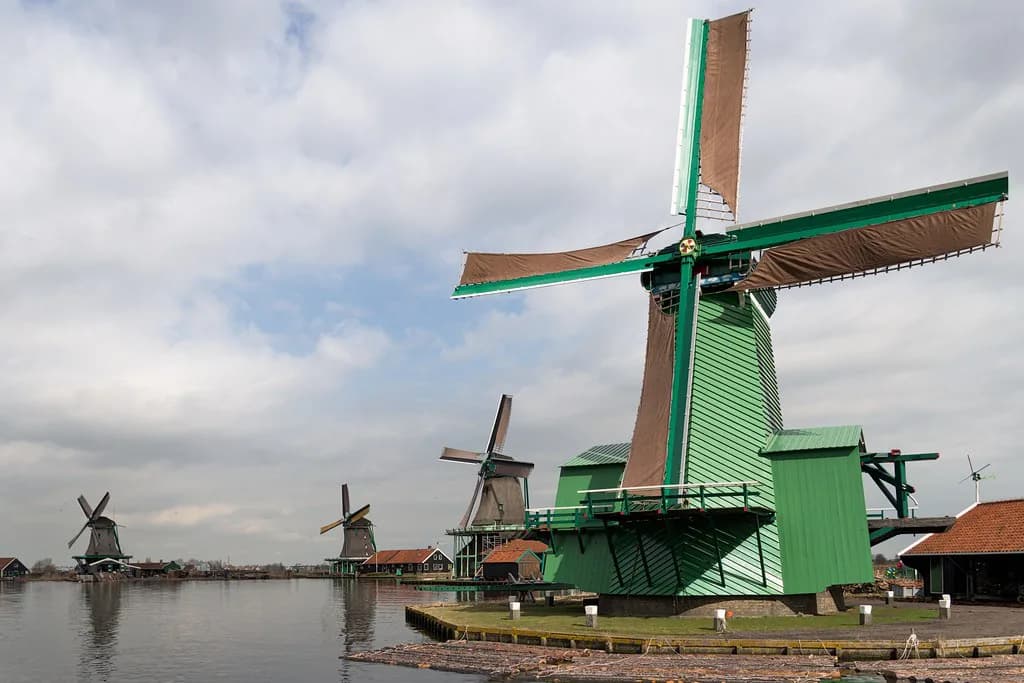
Zaanse Schans is a compact village of windmills and wooden houses near Zaandam, north of Amsterdam. You walk into the village itself and then decide which mills, workshops or the museum you want to enter and pay for separately. Treat it as an open-air collection rather than a sight you queue for once.
The draw is the combination: windmills and timber houses close together, with small craft workshops among them. Parts of the village are lived in rather than staged, and some buildings are not open to visitors. If you want the wider context of why the Zaan region had so many mills, the story belongs to Dutch windmills as an industry rather than to this one village.
Where it sits near Zaandam and Zaandijk and how the layout works on foot
The village sits close to Zaandam and Zaandijk, with the mills and wooden houses grouped tightly together. Walking from one end to the other takes only a few minutes; there is no internal transport and no need for any. The riverside path is flat and easy on foot.
Can you walk from Zaandam to Zaanse Schans? It is a longer walk than from Zaandijk Zaanse Schans station. Zaandijk Zaanse Schans is the closer station and gives the shorter riverside walk into the village, so use that one if the mills are your only goal.
How long do you need at Zaanse Schans? Two to three hours covers the village, a couple of mills and the workshops. Add an hour for the Zaans Museum, or a further hour or two if you walk on to Zaandijk or rent a bike.
Is Zaanse Schans free to enter? Walking around the village does not require a ticket, but individual mills, the Zaans Museum and some workshops are separate attractions with their own arrangements, so check what you plan to visit before you go.
Zaandijk Zaanse Schans is the station named for the village and the obvious arrival point for the mills. Zaandam is the larger station with more trains, but it leaves a longer walk or a short bus ride. If you are coming from Amsterdam for the mills alone, Zaandijk Zaanse Schans is the sensible choice.
The windmills at Zaanse Schans: what a mill visit involves
The mills here are a mixed group, and what you can enter and pay for varies from mill to mill. Working mills are the point of the village, but not all are open to the public at once. Staircases in old mills are steep and tight, which is awkward with a large bag.
Not every mill is open every day, and the ones that are can depend on volunteer millers being present and on wind conditions for running the sails. That variability is part of the appeal, but it means you should treat any single mill as a bonus rather than a guarantee. If seeing the interior of a particular mill matters, build in time to try two or three rather than pinning the day on one.
Wooden houses, workshops and craft demonstrations in the village
Between the mills, the village is a row of wooden houses: some shops, some workshops, some private homes with plaques explaining their original trade. Craft demonstrations are the reason many people stay longer than planned. Treat the shops and workshops as a browse rather than a curated museum visit.
This is also where the village shows its commercial edge most plainly. The main street has souvenir shops aimed largely at coach groups. The quieter pleasure is the side paths along the water, where you can look at the backs of the houses and the moorings without a crowd around you.
The Zaans Museum as the indoor option if the weather turns
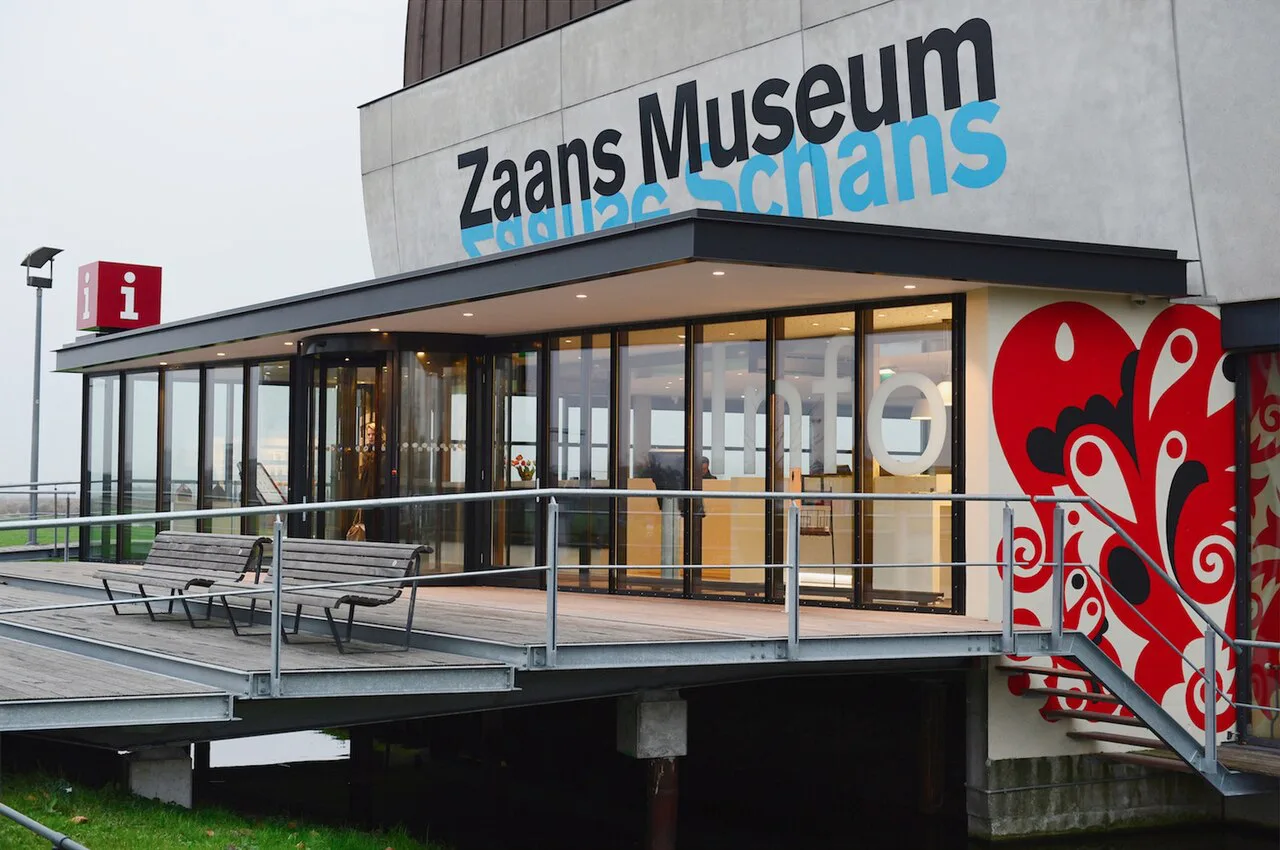
The Zaans Museum is the indoor stop, covering the region's industrial and windmill history. It is the one place here where you get interpretation rather than demonstration, and it is where to go when the rain sets in or when you want the background before looking at the mills. Check its opening days and ticket price before you travel.
Because it is a separate attraction, it also gives you a way to structure a wet day: museum first, then the mills and exterior workshops in whatever dry window appears. If you are travelling with children who need a break from walking, this is the natural pause point.
How long to allow: a half-day against a full day
A half-day is enough for most visitors: two to three hours covers the walk through the village, a mill or two and the workshops, with time for a coffee. That fits neatly into a morning or an early afternoon from Amsterdam, and leaves the rest of the day free. If you are building a longer Dutch trip, this is one of the easier windmill stops to slot in alongside a city stay.
A full day makes sense if you add the Zaans Museum, walk on to Zaandijk and take in the older village streets there, or rent a bike to follow the Zaan. The OV-fiets scheme works from Dutch stations, hired with an NS Flex subscription on your OV-chipkaart; NS charges per 24 hours (€9.80 at the current tariff), adds a €5-per-day surcharge after three days and caps hire at seven days, with returns to the same location. Hiring one at Zaandijk Zaanse Schans lets you cover more of the riverside on two wheels.
Getting there by train and the walk in from the station
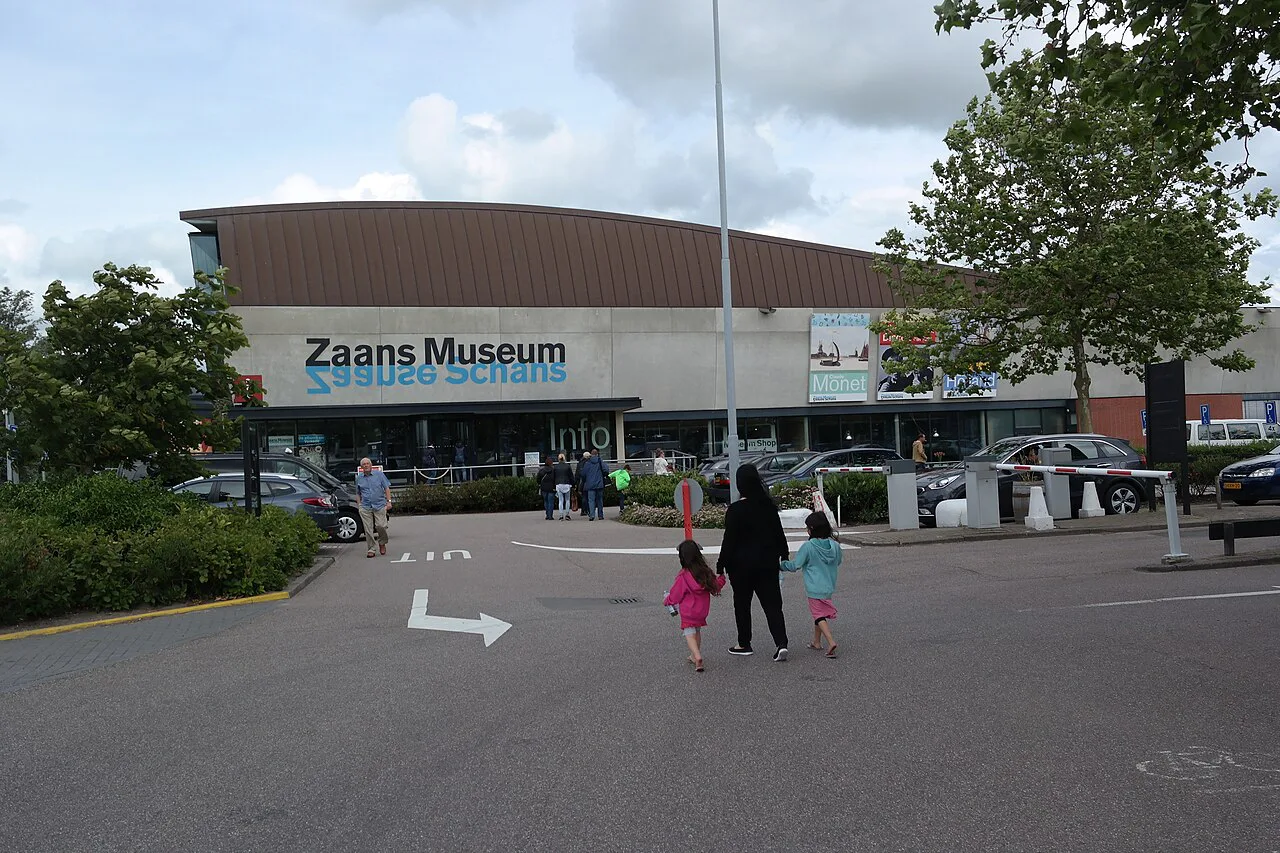
Trains run from Amsterdam Centraal towards Zaandam and on to Zaandijk Zaanse Schans, and the journey is short enough that this is a straightforward half-day trip rather than an expedition. Zaandijk Zaanse Schans station sits close to the village, and the walk in follows the riverside.
If you are staying in Rotterdam or The Hague, the trip is longer and better paired with a night in Amsterdam or Zaandam rather than done as a dash. Coming by car is possible, and the coach traffic is the main reason the village feels crowded at midday. Arriving by train also puts you on the quieter bank, which is a better first impression.
When to go: weekday against weekend, and seasonal differences
Weekday mornings are the calmest window: coach groups tend to arrive late morning and build through midday, so an early start gets you a shorter mill queue. Weekends bring Dutch day-trippers as well as international visitors, and the village paths are narrow enough that this shows. Late afternoon on any day is also quieter as the coaches leave.
Spring and summer give you the best chance of the sails turning and the outdoor paths being pleasant, while autumn and winter cut the appeal of standing on an exposed riverbank. Rain is common in any month, which is where the Zaans Museum earns its place in the plan.
Honest trade-offs: crowds, commercial edges and what it is not
Zaanse Schans is popular, and it shows: the main path can be shoulder-to-shoulder in high season, the shops sell the same souvenirs as anywhere else, and much of what you see is heritage presented for visitors rather than an untouched old town. If you want solitude and genuine industrial landscape, this is not it. If you want working mills and wooden houses in a compact, easy-to-reach place, it delivers.
It is also not a whole day of sightseeing in itself unless you actively add things: the village core is small, and without a museum visit or a bike ride you will be done well before lunch. Plan the rest of the day around it rather than expecting it to fill the day. That framing is what turns a slightly commercial visit into a good half-day out.
Zaanse Schans or Kinderdijk, if you only have time for one
Kinderdijk is the other obvious choice, and the two are genuinely different. Zaanse Schans gives you working mills in a village setting; Kinderdijk gives you a landscape of mills in open polder, which is more dramatic as scenery and less varied as a visit. Kinderdijk is also further from Amsterdam and sits near Rotterdam, which shapes the logistics.
If you are based in Rotterdam, Kinderdijk is the natural pick for the open polder landscape. If you are based in Amsterdam and want mills close at hand, Zaanse Schans wins on convenience. Travelling from Rotterdam to Kinderdijk by water bus and bus is covered separately in the guide to Kinderdijk from Rotterdam.
A third option, often overlooked, is the Schiedam windmills: the tallest historic windmills in the world, standing in a town centre with a gin distillery history. That is a different day out again, better suited to a Rotterdam stay than to an Amsterdam one. Compare the three before committing, because the right choice depends on where you are sleeping.
Which windmill day is right for you?
Take Zaanse Schans if you want an easy half-day from Amsterdam with mills you can walk into and workshops to browse, and accept the crowds and the souvenir shops as the price of that convenience. Give it a full day only if you add the Zaans Museum and a bike ride along the Zaan. The guide to Windmills in the Netherlands puts these sites in context.
Choose Kinderdijk instead if you want the wide polder view and are based south or west, and choose Schiedam if you want mills in a town rather than a village. Whichever you pick, check the day's mill openings and ticket arrangements before you travel, since they vary by season and by mill.
Explore more Netherlands guides
Frequently Asked Questions
Can you walk from Zaandam to Zaanse Schans?
It is a longer walk than from Zaandijk Zaanse Schans station. Zaandijk Zaanse Schans is the closer station and gives the shorter riverside walk into the village, so use that one if the mills are your only goal.
How long do you need at Zaanse Schans?
Two to three hours covers the village, a couple of mills and the workshops. Add an hour for the Zaans Museum, or a further hour or two if you walk on to Zaandijk or rent a bike.
Is Zaanse Schans free to enter?
Walking around the village does not require a ticket, but individual mills, the Zaans Museum and some workshops are separate attractions with their own arrangements, so check what you plan to visit before you go.
What is the famous windmill village near Amsterdam?
Zaanse Schans, near Zaandam, is the windmill village most people mean. Schiedam, near Rotterdam, has its own historic windmills and is a different trip.
Sources
Notes for your next Dutch city break
Optional updates to our Netherlands guides.
You might also like
Continue reading
More guides you'll find useful