Schiedam Windmills: The Tallest Historic Mills in the World
Schiedam's windmills are the tallest historic mills anywhere, set in a jenever town of canals, a park and a Cobra museum. Here is how to see them.
On this page
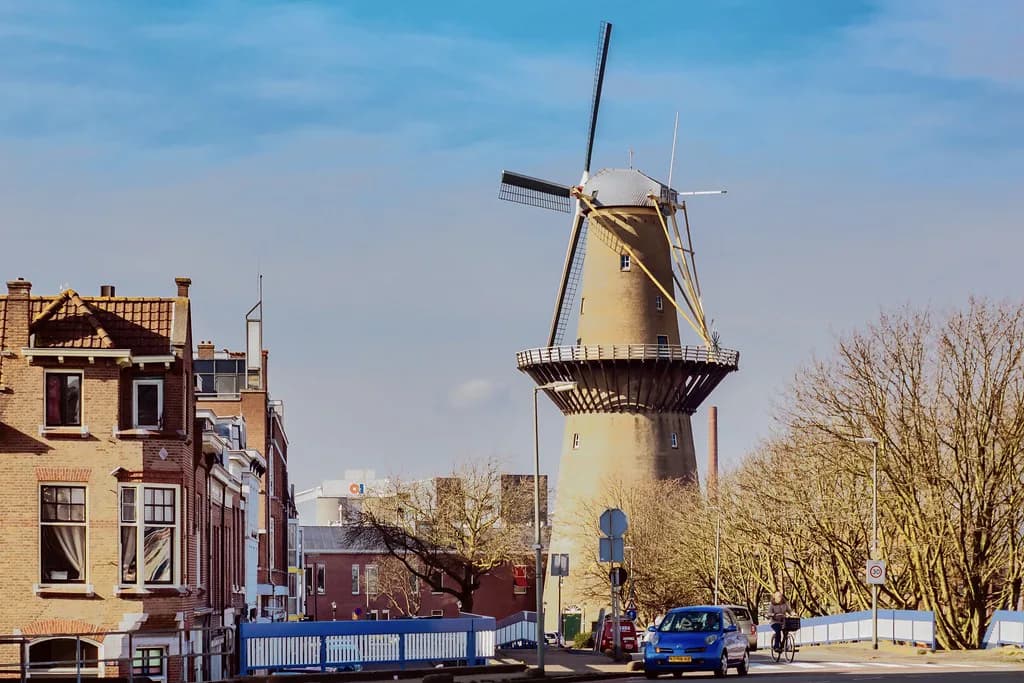
Schiedam's windmills are the tallest historic mills in the world, and they stand within a short train hop of Rotterdam rather than out in open polder. Five of them were raised in the jenever boom so the sails could catch wind above the tall distillery buildings, which is why the town's skyline looks the way it does. This guide covers which mills accept visitors, what to pair with them, how long to allow and how to arrive.
Plan on half a day for the mills and the old centre, or a full day if you add the Stedelijk Museum and a canal walk. Schiedam works best as a Rotterdam side-trip: the town has direct rail links to Rotterdam, Amsterdam, Delft, Leiden, Haarlem and The Hague, so you can slot it into a city break without moving hotels.
Why Schiedam's windmills are so tall
The height is a direct product of drink. When jenever distilling took off in the 1700s, Schiedam filled with distilleries, and the millers needed sails that cleared the rooflines to catch steady wind. Five huge mills went up for that purpose, and the trade that paid for them made the town wealthy.
That story is the reason to look at the mills as industrial architecture rather than a photo backdrop. You are seeing the physical footprint of a gin economy that traded worldwide, and the same wealth built the canals and warehouses you walk past between mills. If you want the wider context of Dutch milling, the windmills in the Netherlands overview covers the different types and regions.
Which mills you can see and which take visitors
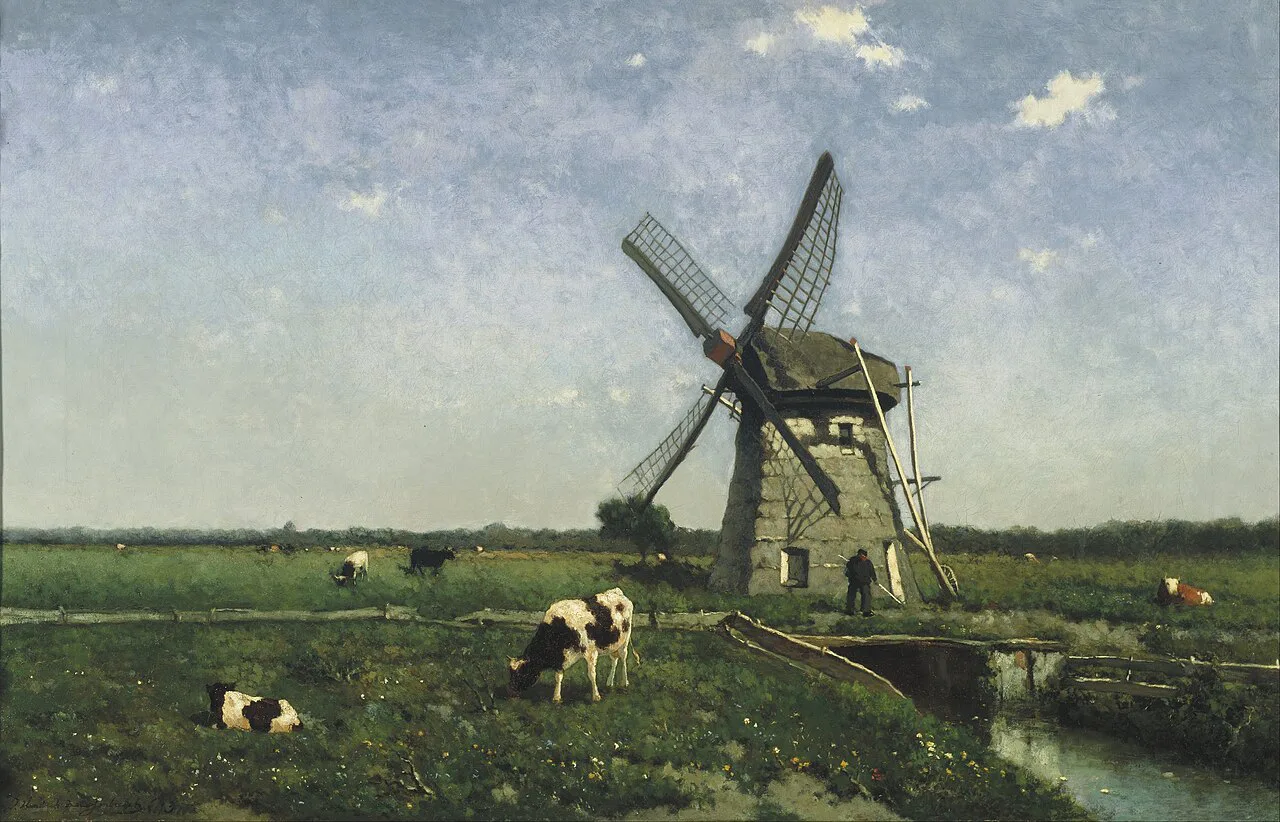
Treat the mills in two groups: those you admire from outside and those with something inside. Molen De Walvisch is described as one of the largest windmills in the world and a working mill that is open to visitors.
Can you go inside the Schiedam windmills? Molen De Walvisch is described as a working mill open to visitors, and De Noord houses a restaurant, with guided tours offered depending on which mills are open rather than at every mill. Plan around those two and check their current opening days before travelling, as days differ by mill, and treat the other mills on the skyline as streetscape.
How long does a visit to the Schiedam windmills take? Allow around ninety minutes to two hours for the mills themselves if you go inside one and eat at De Noord, plus time to walk between them, since they are spread across the town rather than lined up in a row. Add two hours for the Stedelijk Museum and a canal stroll to make a full day.
Are Schiedam's windmills the tallest in the world? They are described as the tallest historic windmills in the world, built in the jenever era so the sails cleared the tall distillery buildings. Verify current access and any tour arrangements with the individual mills, since visitor arrangements differ.
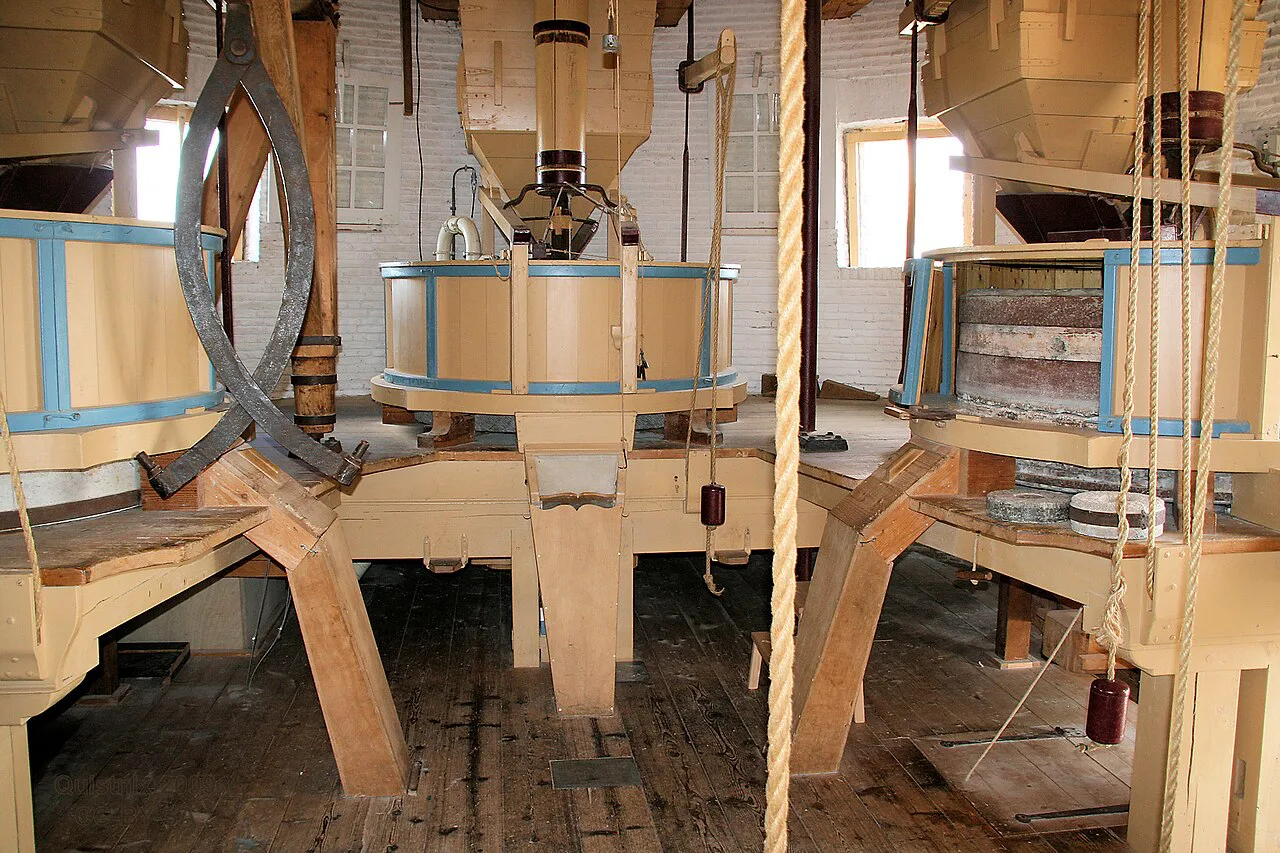
De Noord is the second name to know, because the mill houses a restaurant, and guided tours are offered depending on which mills are open, with the chance to watch the sails turn from inside. Do not assume every mill on the skyline can be entered; plan your day around De Walvisch and De Noord and treat the rest as streetscape.
If your mental image of Dutch mills is the green wooden village cluster, this is a different experience: brick, industrial-scale and urban. Travellers set on the classic postcard version should compare with Kinderdijk, the UNESCO World Heritage site in the polder, before deciding which to prioritise.
What the mills are worth to a visitor
Give the mills ninety minutes to two hours if you go inside one and eat at De Noord, and less if you are content to circle them on foot. The payoff is scale: standing at the base of a mill this tall makes the wind and the gearing legible in a way that smaller mills do not. Allow extra time for the walk between them, since they are spread across the town rather than lined up in a row.
Opening days vary by mill, so build the day around whichever mill is open when you are there rather than the reverse. Check the current days for De Walvisch and De Noord before you travel, and keep the Stedelijk Museum as your fallback if a mill is shut.
Jenever, the gin trade and the Schiedam skyline
Schiedam's identity is bound up with jenever, the Dutch gin that made the town rich from the 1700s onwards. Ketel One is the brand most visitors recognise, and the distilling wealth is what paid for the mills, the canals and the merchant houses.
You do not need a distillery booking to enjoy this; the story is written into the streets and the mill heights. Pair a jenever-themed walk with the mills and you have a coherent half-day rather than a single sight. For a contrasting mill day, Kinderdijk, the UNESCO World Heritage site in the polder, shows the classic landscape version of Dutch milling.
Stedelijk Museum Schiedam and the Cobra collection
Stedelijk Museum Schiedam is the wet-weather card to play. It runs changing exhibitions alongside a permanent collection of work by the Cobra group, the post-war Dutch and Belgian artists whose colour-heavy work suits a grey afternoon.
Pair it with the mills rather than choosing between them: see the mills first while the light is good, then retreat indoors. Confirm the museum's opening days for your dates before relying on it, since opening hours vary between Dutch museums.
Canals and De Plantage, the 1767 park
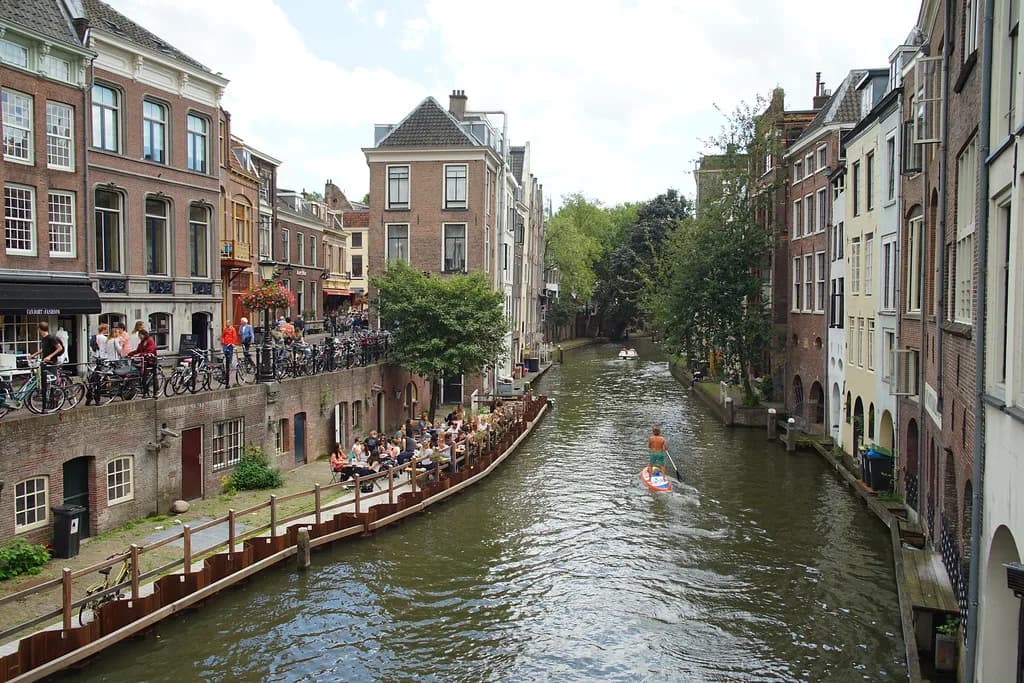
Schiedam has canals that are pleasant to walk or cruise, and they knit the mills into a legible circuit through the centre. De Plantage, near Koemarkt, is the oldest city park in Holland, laid out around 1767, and makes a natural rest stop between the museum quarter and the mills.
The Passage is described as the main shopping arcade in the centre, useful if you need to fill an hour or shelter from rain. Both sit within easy walking distance of the core, so you can chain park, arcade and canal without transport.
The 43-km cycle route through Midden-Delfland
If you have a bike, the serious option is a 43-km loop that links Schiedam with the green polders of Midden-Delfland. It is a full-day ride, not a town-centre spin, and it takes you from jenever-town streets into open country.
The loop is a serious undertaking, so judge it honestly against your fitness and the weather; if 43 km sounds like too much, the town-centre mills and the park are a satisfying shorter day.
Getting the timing right
The main planning risk is a closed mill. Opening days are set by each mill, so check De Walvisch and De Noord for your exact dates, and hold the Stedelijk Museum as the substitute if one is shut.
If you are weighing Schiedam against other mill days, the UNESCO World Heritage listing at Kinderdijk is the standard for heritage scale, while Schiedam wins on urban context and access from Rotterdam. The Windmills in the Netherlands hub sets out the alternatives side by side.
How to reach Schiedam from Rotterdam
Schiedam has direct trains from Rotterdam, Amsterdam, Delft, Leiden, Haarlem, Dordrecht and The Hague, so it is a straightforward rail trip rather than a coach excursion.
Driving means the A4 and A20 with signed exits into the centre, but parking is heavily reserved for residents and meters are expensive, so the train is the lower-friction choice. Local buses and trams cover the town, paid with an OV-chipkaart bought and topped up at stations; Schiedam Centrum is the arrival point for the centre.
Schiedam or Kinderdijk for your mill day?
Choose Schiedam if you want tall mills with a town attached: a museum, canals, a 1767 park and a jenever story, all within a short train ride of Rotterdam. Choose Kinderdijk if your priority is the classic polder landscape and the UNESCO World Heritage setting.
For a Schiedam day, arrive mid-morning, see the mills and De Noord first, add the Stedelijk Museum in the afternoon and finish along the canals. If you are coming from Rotterdam for a single day, the same logic applies: build the trip around the mills' opening days, not the other way round.
Explore more Netherlands guides
Frequently Asked Questions
Can you go inside the Schiedam windmills?
Molen De Walvisch is described as a working mill open to visitors, and De Noord houses a restaurant, with guided tours offered depending on which mills are open rather than at every mill. Plan around those two and check their current opening days before travelling, as days differ by mill, and treat the other mills on the skyline as streetscape.
How long does a visit to the Schiedam windmills take?
Allow around ninety minutes to two hours for the mills themselves if you go inside one and eat at De Noord, plus time to walk between them, since they are spread across the town rather than lined up in a row. Add two hours for the Stedelijk Museum and a canal stroll to make a full day.
Are Schiedam's windmills the tallest in the world?
They are described as the tallest historic windmills in the world, built in the jenever era so the sails cleared the tall distillery buildings. Verify current access and any tour arrangements with the individual mills, since visitor arrangements differ.
Is Schiedam easy to reach from Rotterdam?
Yes. Schiedam has direct train services from Rotterdam and other Dutch cities including Amsterdam, Delft, Leiden, Haarlem and The Hague, with Schiedam Centrum serving the centre. If you are driving, parking is resident-restricted and metered, so the train is simpler.
Sources
Notes for your next Dutch city break
Optional updates to our Netherlands guides.
You might also like
Continue reading
More guides you'll find useful