Dutch Windmills History: Why They Were Built and Where to See Them
Why the Dutch built thousands of windmills, how polder and industrial mills worked, how many survive today, and where to see working mills in the Netherlands.
On this page
Dutch windmills existed to do two jobs: keep low-lying land dry and drive industry without fuel. Polder mills pumped water so lakes and marshes could be farmed, while industrial mills ground grain, pressed oil, made paint and sawed timber. This guide traces that history from the thirteenth century to today's surviving mills, then names the sites where you can see each type working, starting with our overview of windmills in the Netherlands.
Expect roughly 1,050 windmills and 150 watermills in the country today, a small fraction of the nineteenth-century total. The Zaanstreek and Kinderdijk are the two clearest places to understand the difference between an industrial mill and a drainage mill on a short break.
What Dutch windmills were built for: draining polders and powering industry
The first mills in the Netherlands were stand mills that ground grain into flour, and they appear in the thirteenth century. Coastal areas along the southern North Sea and the Channel had seen windmills from the second half of the twelfth century, so the Dutch were adapting an existing technology rather than inventing it. The early mills were small, turned on a central post and did one job: flour.
The decisive Dutch addition was the polder mill, which first appears in the fifteenth century. These mills lifted water from low fields into canals and rivers, allowing land below sea level to be drained and farmed. Without that pumping, a large share of the country would be too wet to use, which is why drainage became the mills' most consequential role.
Industrial mills came next, and they were just as important. Wind powered oil presses, paint works and timber sawing, so a mill could turn a raw crop or a tree trunk into a saleable product without coal or a river strong enough to turn a wheel. That combination of free power and water transport explains why mill towns grew into manufacturing centres.
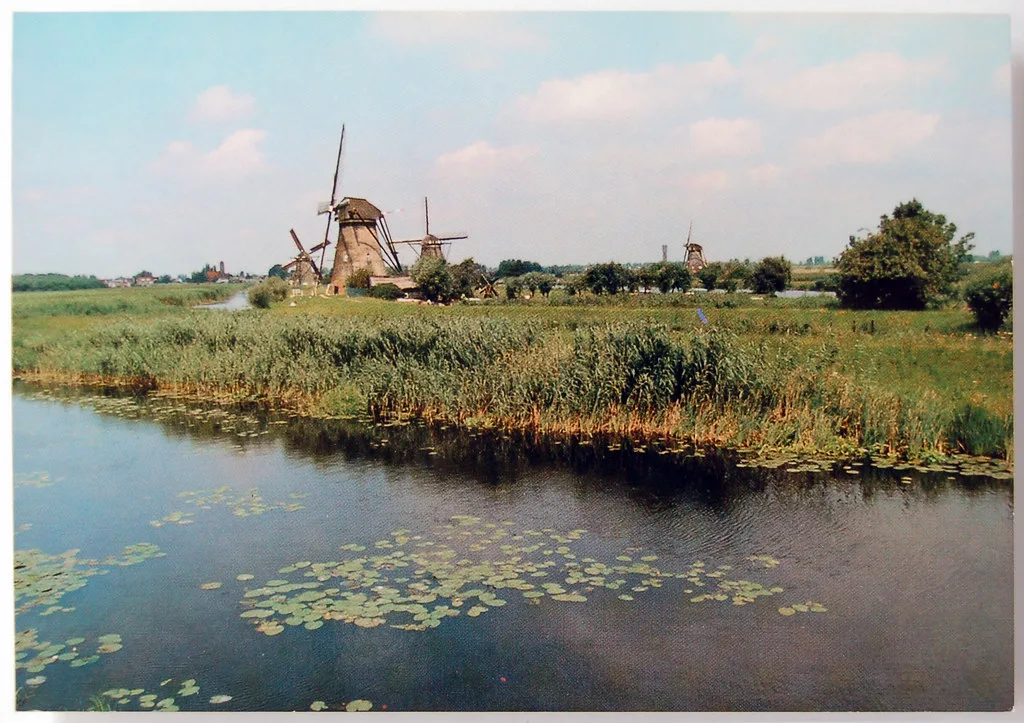
A short timeline: twelfth-century coastal mills to the 9,000 mills of the nineteenth century
Windmills spread along the southern North Sea coast from the second half of the twelfth century, and reached the Netherlands in the thirteenth. From the seventeenth century the Dutch mill tradition expanded steadily, reaching an estimated 9,000 mills in the second half of the nineteenth century. That figure is a historical peak, not a count of what stands today.
Did the Dutch invent the windmill? No. Windmills appear along the southern North Sea and Channel coasts from the second half of the twelfth century, and the first Dutch mills date from the thirteenth century.
Why did the Netherlands have so many windmills? Two reasons: the country needed to pump water out of low land to keep it usable, and wind offered free power for grinding grain, pressing oil and sawing timber. Around 1731 the Zaanstreek alone had 583 windmills, and the national total peaked at an estimated 9,000 in the second half of the nineteenth century.
What are the five facts worth knowing before you visit a Dutch windmill? First, most surviving mills are protected monuments, not factories. Second, a blue pennant in front of a mill traditionally signals that a volunteer miller has opened it to visitors.
The Zaanstreek shows how dense this could become: around 1731 the region had no fewer than 583 windmills. That concentration of sawmills, oil mills and other workshops made the area, together with Amsterdam, one of the first industrial centres in the Netherlands. The mills were not a rural curiosity but the power supply of an early manufacturing economy.
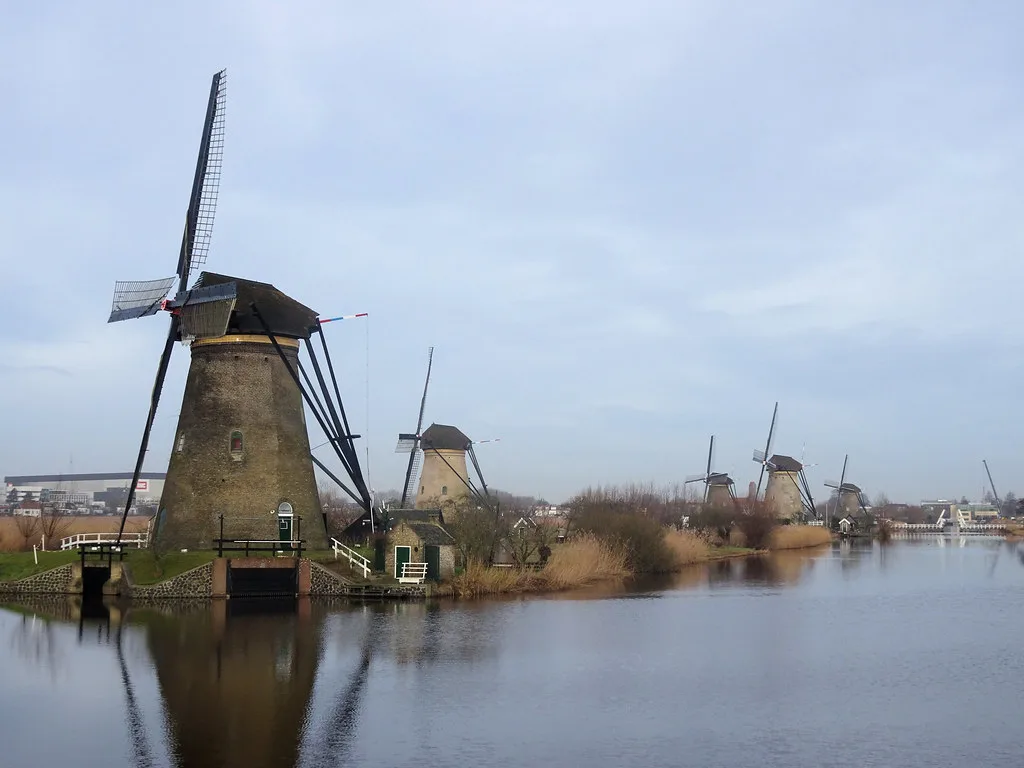
Polder mills and the land they created, including the Schermer, Purmer and Beemster
Polder mills did more than keep existing fields dry: they made new land. Drainage milling emptied lakes and pools, and the Schermer, Purmer and Beemster were among the water bodies laid dry this way. Those names are worth knowing because they describe a landscape that exists only because of wind-driven pumps.
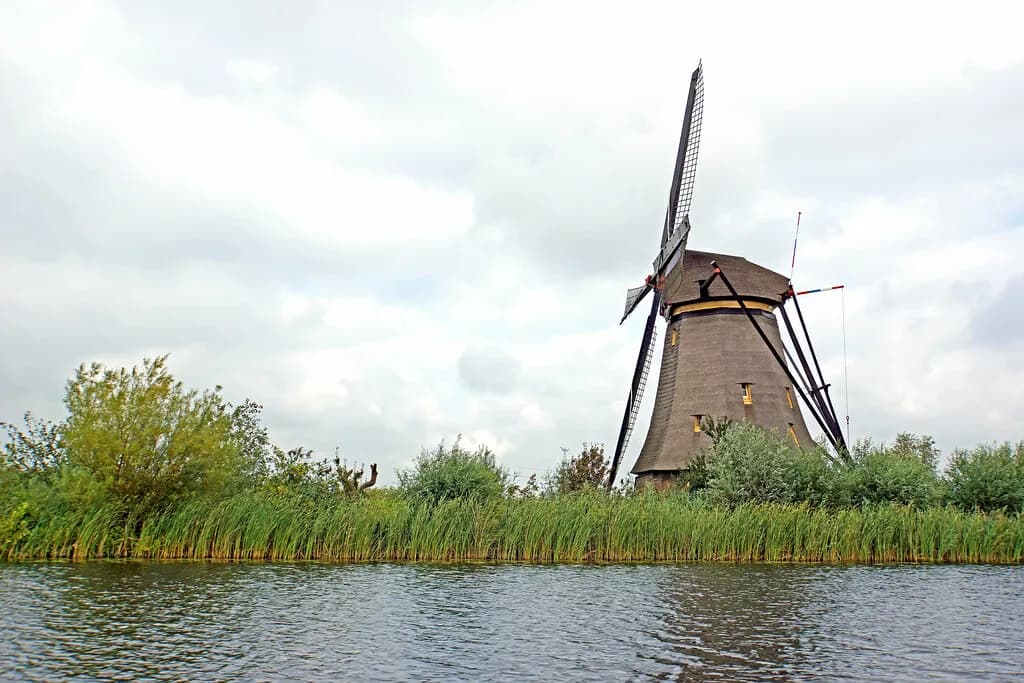
When you visit a drainage site, look for mills arranged in a row, each lifting water a short distance to the next. That layout is the practical signature of a polder operation, and it is what you see at Kinderdijk, where a line of mills drains the low land along the canals. Our Kinderdijk guide explains the layout and how to walk the site.
If Kinderdijk fits your route better from the south, Kinderdijk from Rotterdam covers the approach from the city rather than from Utrecht or Dordrecht. Either way, plan the visit around walking the canal banks rather than touring a single mill interior.
Industrial mills: grain, oil, paint, sawing timber, and the Zaanstreek as an early industrial centre
Industrial mills turned wind into manufacturing capacity. Grain mills made flour, oil mills pressed seeds, paint mills ground pigment, and sawmills cut imported timber into planks for shipyards and houses. Because the Zaan region combined wind, water transport and trade, it became one of the first industrial centres in the country.
The Zaanse Schans preserves this working landscape on the Zaan, a short trip from Amsterdam. Its mills are individual workings with their own trades, which is why the village suits readers who want to see several mill types in one afternoon. Our Zaanse Schans guide covers the layout of the village.
How many windmills survive in the Netherlands today, and why so many stopped
After the Second World War, economic and technical change brought the vast majority of the remaining mills to a standstill. Steam and then electric power did not depend on the weather, so mills that had once been essential became expensive to keep. Protection efforts then developed, and many mills survived as monuments rather than factories.
Around 1,050 windmills and 150 watermills survive, protected as monuments, and volunteers keep many of them running. The survival count is approximate and should be read as a snapshot, not a fixed figure.
The practical result for travellers is that most surviving mills are monuments first and attractions second. Some are open regularly, others only when a volunteer is available, so treat any mill visit as a stop to confirm locally rather than a guaranteed interior tour.
How to tell a working mill from a preserved monument: the blue pennant and volunteer millers
Many surviving mills are run by voluntary millers, and some welcome visitors on Saturdays. The traditional signal is a blue pennant: when it is out by the mill, everyone is welcome, so look for the flag when you arrive.
Use the flag as your planning tool rather than a timetable. Look for it on the mill itself when you arrive, and build flexibility into the day so a closed mill is a detour rather than a wasted trip.
Where to see the different mill types: Zaanse Schans for industrial mills, Kinderdijk for polder mills
Zaanse Schans and Kinderdijk are two clear places to see Dutch windmills, and they show different things. Zaanse Schans demonstrates industrial mills: sawmills, oil mills and a mustard mill clustered along the river. Kinderdijk demonstrates drainage, with a line of polder mills keeping a low landscape habitable.
An independent account of Zaanse Schans notes that the village itself is open all year and that opening hours apply to the individual attractions rather than the settlement. So you can walk the streets and see the mills from outside on any day, then pay for interiors only where a mill is open.
Town mills are the third option and suit a short city break better than a countryside excursion. Examples include windmill de Adriaan in Haarlem and the Schiedam windmills, which sit close to a city centre. Our overview of windmills in the Netherlands covers the full spread of sites across the country.
Visiting Zaanse Schans: sawmills, oil mills and a mustard mill in one riverside village
Zaanse Schans packs several named mills into one riverside walk. De Kat, De Bonte Hen and De Huisman are among the mills you can pick out, and the 18th- and 19th-century timber buildings around them explain why the village reads as a working settlement rather than a museum display. The mills here include sawmills, oil mills and mustard mills that are still in use.
The approach is part of the visit: the walk from the station to the village takes about fifteen minutes through the old town street. Budget for that on foot rather than expecting to step off a train at the mills. Public transport times and fares change, so confirm them before you set out.
The village is open all year, but individual attractions such as the mills and workshops keep their own hours. Check hours and prices for the specific mill you want to enter rather than budgeting from an old figure. Our Zaanse Schans guide covers what sits where inside the village.
Practical trade-offs for a short city break: a half-day at the mills versus more time in town
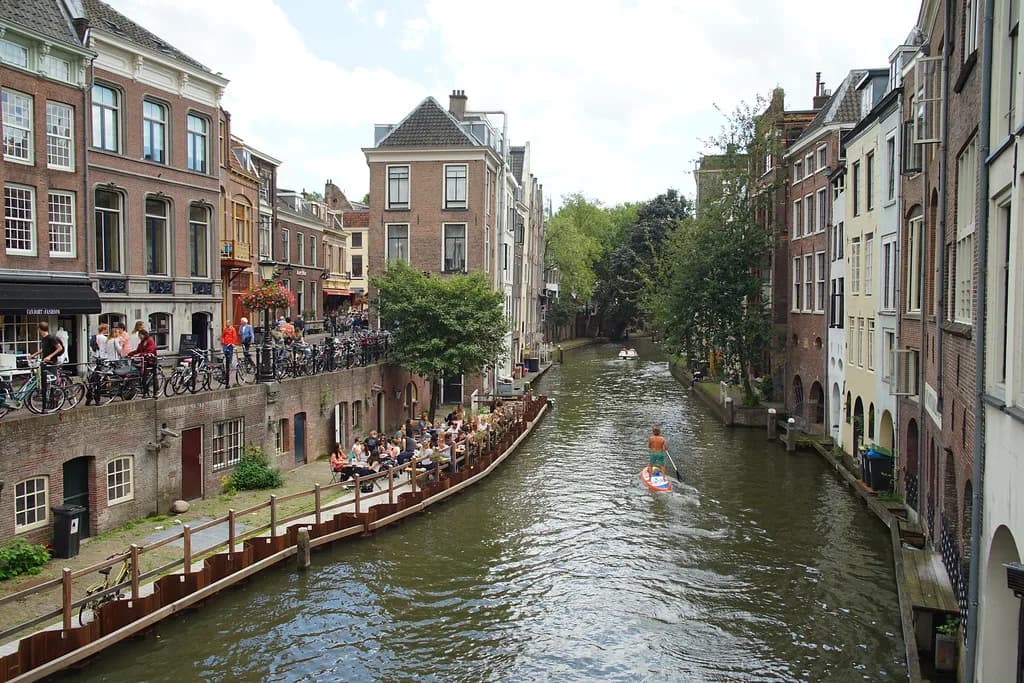
A mill visit costs about half a day once you count travel each way, walking and a look inside a couple of mills. On a one- or two-day city break that trade-off is real: half a day at Zaanse Schans is half a day not spent in Utrecht's Oudegracht or in a museum.
My pick for a two-day trip is one mill site, not two. If you want drainage history, go to Kinderdijk; if you want the industrial story with several named mills in one place, go to Zaanse Schans. Trying to do both compresses each into a rushed visit and leaves little room for the city itself.
For a three- or four-day break, add a town mill such as Molen De Adriaan in Haarlem or one of the Schiedam windmills, which fits a city day rather than replacing one. Our guide to the windmills in the Netherlands is the place to match the mill type to your route before you book.
Which mill site to pick for your trip
Pick Zaanse Schans if you want the industrial story: named sawmills, oil mills and a mustard mill in one riverside walk, with a village open all year and paid interiors. Pick Kinderdijk if you want to see why the Dutch drained their land, with a line of polder mills along the canals.
For a short city break, one site plus one town mill is a better use of time than two countryside excursions. Look for the blue pennant when you arrive, and confirm current opening days and interior prices on the site's own page before you travel.
Frequently Asked Questions
Did the Dutch invent the windmill?
No. Windmills appear along the southern North Sea and Channel coasts from the second half of the twelfth century, and the first Dutch mills date from the thirteenth century. The Dutch contribution was scale and application, especially drainage and industrial uses.
Why did the Netherlands have so many windmills?
Two reasons: the country needed to pump water out of low land to keep it usable, and wind offered free power for grinding grain, pressing oil and sawing timber. Around 1731 the Zaanstreek alone had 583 windmills, and the national total peaked at an estimated 9,000 in the second half of the nineteenth century.
What are the five facts worth knowing before you visit a Dutch windmill?
First, most surviving mills are protected monuments, not factories. Second, a blue pennant in front of a mill traditionally signals that a volunteer miller has opened it to visitors. Third, draining lakes created land such as the Schermer, Purmer and Beemster. Fourth, the national total peaked around 9,000 before falling to about 1,050 wind- and 150 watermills. Fifth, Zaanse Schans and Kinderdijk show industrial and polder types respectively.
How long does a visit to Zaanse Schans take?
Allow about half a day including travel, the fifteen-minute walk from the station and a look inside a couple of mills. The village itself is open all year, but individual attractions keep their own hours, so check them before setting out.
Sources
Notes for your next Dutch city break
Optional updates to our Netherlands guides.
You might also like
Continue reading
More guides you'll find useful