Molen De Adriaan in Haarlem: the Spaarne Windmill
Molen De Adriaan is Haarlem's rebuilt windmill on the Spaarne: its 1778 origins, the 1932 fire, the 2002 rebuild and how a short guided visit fits a city break.
On this page
Molen De Adriaan is Haarlem's rebuilt city windmill on the Spaarne, and for most visitors it is a short stop of around an hour. What you see is a reconstruction rather than the 1779 original, so go for the setting, the story and the riverside position rather than for old timbers. This guide covers the mill's history, how to reach it, what the mill itself says about visiting and how to fold it into a one-to-four-day Haarlem break.
What Molen De Adriaan is and why it stands on the Spaarne
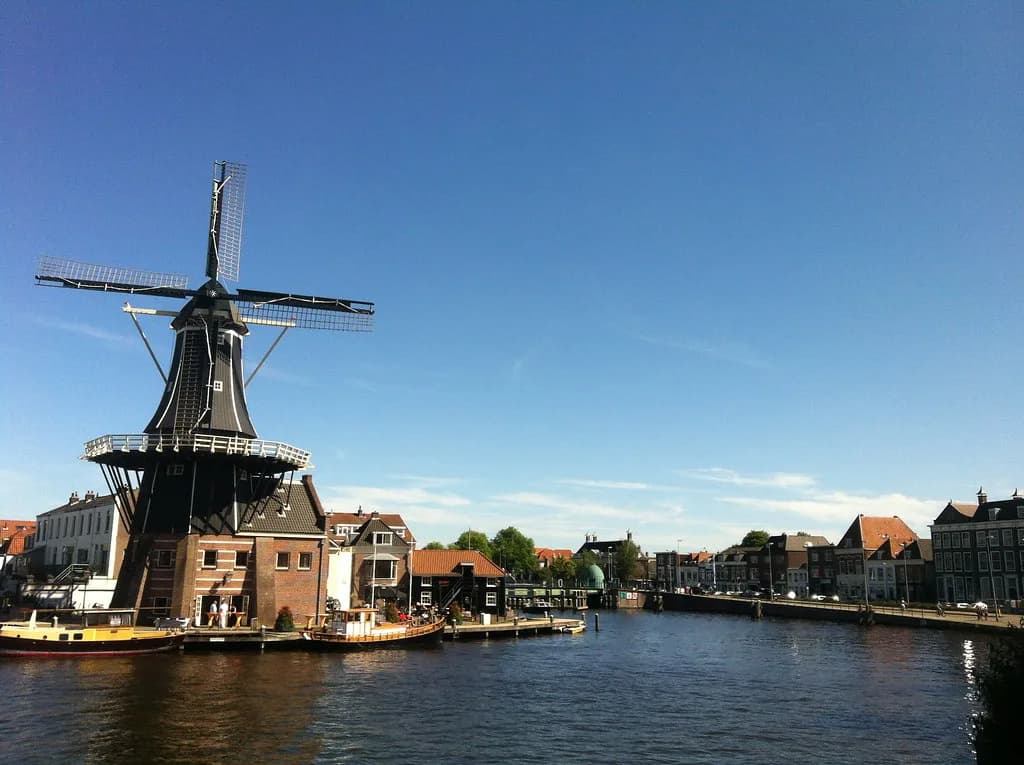
De Adriaan is a tower mill on the Spaarne, built on the base of the old Goê Vrouwentoren near the centre of town so that its sails could rise high above the river and catch the wind. The Amsterdam trader Adriaan de Boois won Haarlem's permission to build it in 1778, and the mill opened on 19 May 1779. A tobacco merchant bought it in 1802 and ground tobacco rolls into snuff until 1865; it was later transformed into a wind and steam mill, from which corn was ground.
That riverside position high above the Spaarne is what let the sails catch every breath of wind, and it also makes the mill easy to visit from the old centre. It works best as a stop on a loop through Haarlem rather than a destination in its own right.
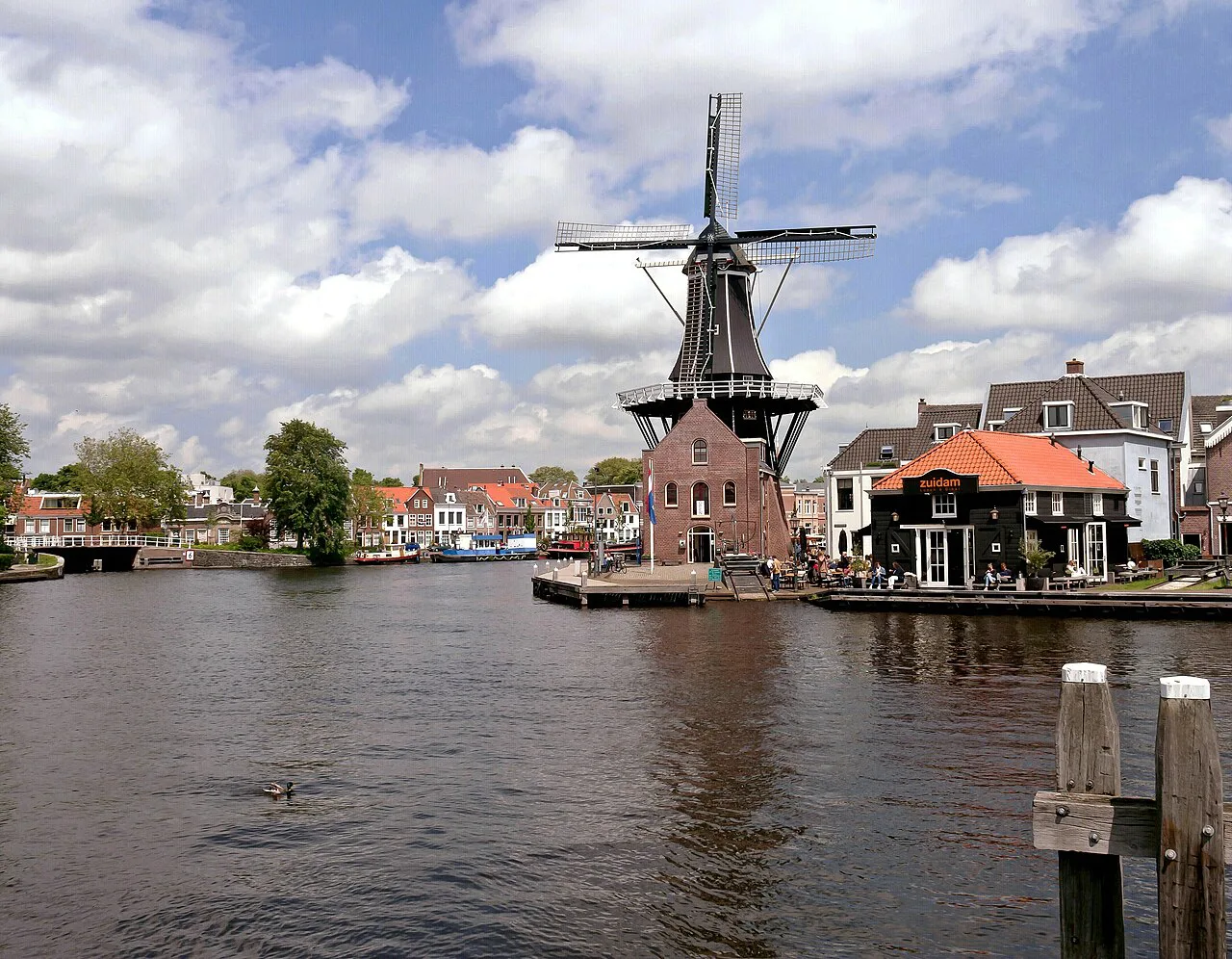
The rebuilt mill: burned in 1932, reopened in 2002
On 23 April 1932 the mill caught fire and thousands of Haarlemmers watched it burn; the extinguishing lasted for days. Rebuilding plans came and went through the Depression and the Second World War, including a 1953 scheme to put a café in the base. In 1963 the city took over the land on which the mill stood and took on an obligation to reinstate the mill, a promise later forgotten and rediscovered in old records in 1996.
Can you visit Molen De Adriaan without booking ahead? The mill states that it is open for guests. Availability on a given date depends on how busy it is, so checking the mill's own site for opening times and tickets ahead is the safer approach on a short city break.
How does De Adriaan compare with the Kinderdijk windmills? De Adriaan is a single rebuilt city mill beside the Spaarne, while Kinderdijk is a whole landscape of mills that takes a day out of your itinerary. If you want scale and polder scenery, Kinderdijk wins; if you want a compact stop inside Haarlem, the city mill is the better fit.
Is the windmill suitable for children? As a short, compact stop it can work for children. The mill's own site states that it is open for guests, so it is worth checking that before you bring younger visitors.
The rebuild drew on city money, European Union support, subsidies and roughly NLG 900,000 raised by Haarlem businesses, sponsors and residents, against a total cost of 2.5 million guilders. The first stone was laid on 21 April 1999, and the new mill opened on 23 April 2002, seventy years after the fire. You are paying for a careful modern reconstruction with a strong civic backstory, not for surviving eighteenth-century fabric.
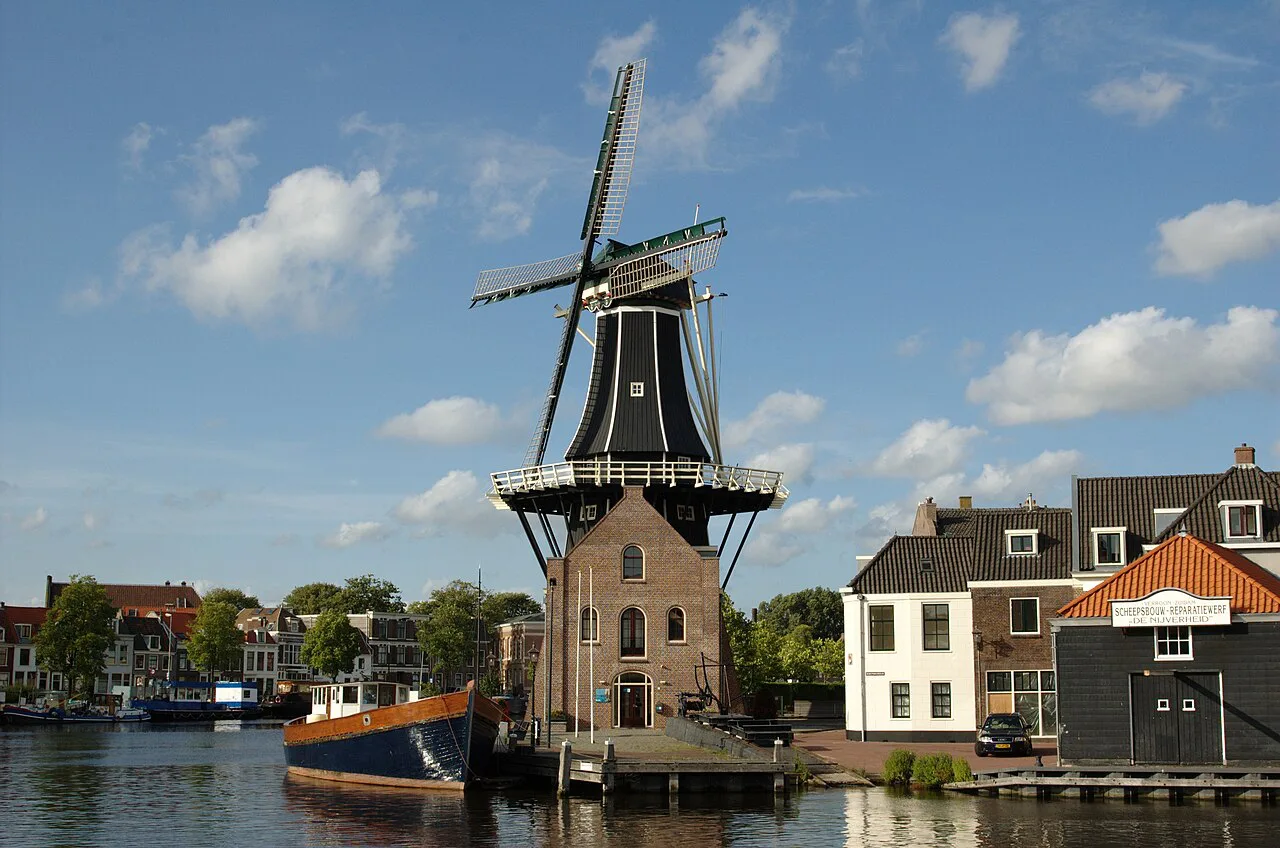
Where the mill sits on the Spaarne and how to walk to it
The mill's address is Papentorenvest 1-A, on the Spaarne near the centre of Haarlem. Treat it as a stop on a loop through the centre rather than a separate trip out of town.
Walking is the sensible way to arrive, because the main pleasure is the approach along the Spaarne. The mill is not a long-distance destination in itself. Save any longer ride for a windmill day out elsewhere and use the wider guides to Kinderdijk and to Windmills in the Netherlands to plan it.
Visiting the mill: what the site confirms
The mill's own site states that it is open for guests, so confirm the current arrangement there before you travel.
Going inside rather than photographing the sails from the bank is the reason to make the stop. If the engineering history of Dutch windmills interests you, read up on the history of Dutch windmills before you arrive so the mill lands as detail rather than introduction.
The mill above the Spaarne: setting and engineering
The mill was sited high above the Spaarne so its sails could catch every breath of wind, which is why it still reads as a landmark from the riverbank. Expect a working mill rather than a museum gallery.
Keep the visit in proportion: the mill is a compact stop, so it pairs well with a museum or a market rather than filling a morning. The riverside setting is the main draw.
Tickets: use the mill's own site
The mill's own site is the place to confirm opening times and tickets, rather than a secondary listing.
The mill is a small building, so checking availability before travelling across town is sensible. The mill's own site is the place to confirm what a ticket covers and any conditions that apply.
Opening times: confirm on the mill's own site
The mill's own site has pages for its opening times and tickets, and those are the place to check for the day you plan to visit. Confirm the opening days in the week before you travel and build the rest of the day around that.
If the mill is shut on your dates, the Spaarne walk past it still works as a way to see the riverside and the mill from outside. That fallback keeps a tight one-day itinerary intact.
Is De Adriaan worth an hour of a Haarlem city break?
Yes, if you want one compact, well-told piece of Haarlem's history with a riverside setting, and no if you are chasing the dense windmill landscapes of Kinderdijk. De Adriaan is a single mill in a city, and its appeal is the story of loss and rebuilding as much as the machinery.
Keep the visit proportionate and you will not feel short-changed; stretch it out and you will be filling time, which is the honest trade-off at a site this size.
Pairing the mill with the rest of central Haarlem on a day visit
Start at the Grote Markt and a museum in the morning, then follow the Spaarne north to Papentorenvest for the mill, and finish along the river. That order keeps the mill as a breather between museum time and an afternoon wander rather than a detour.
On a longer break, use Haarlem as a base for a windmill day out, with Kinderdijk from Rotterdam a straightforward add-on by train. Read the wider Windmills in the Netherlands guide to see which option suits your itinerary and how each compares with De Adriaan.
Should the mill make your Haarlem shortlist?
Put De Adriaan on the list if you are in Haarlem for a day or two and want one easy, characterful stop that explains the city's relationship with the Spaarne. It takes a short slice of your day, delivers a story and a riverside setting, and sits inside the centre rather than requiring a trip out.
Skip it in favour of Kinderdijk if windmills are the main purpose of your trip, and use Haarlem for museums and canals instead. Either way, check the mill's own site for current opening days and ticket prices before you commit the slot.
Explore more Netherlands guides
Frequently Asked Questions
Can you visit Molen De Adriaan without booking ahead?
The mill states that it is open for guests. Availability on a given date depends on how busy it is, so checking the mill's own site for opening times and tickets ahead is the safer approach on a short city break.
How does De Adriaan compare with the Kinderdijk windmills?
De Adriaan is a single rebuilt city mill beside the Spaarne, while Kinderdijk is a whole landscape of mills that takes a day out of your itinerary. If you want scale and polder scenery, Kinderdijk wins; if you want a compact stop inside Haarlem, the city mill is the better fit.
Is the windmill suitable for children?
As a short, compact stop it can work for children. The mill's own site states that it is open for guests, so it is worth checking that before you bring younger visitors.
Sources
Notes for your next Dutch city break
Optional updates to our Netherlands guides.
You might also like
Continue reading
More guides you'll find useful