5-Day Netherlands Itinerary: Dutch Cities by Train
A five-day Netherlands itinerary built around Dutch cities other than Amsterdam: which cities to pair, how long each needs and what you give up by moving on.
On this page
Five days is enough for three Dutch bases and five full city days if you keep Amsterdam as a transport hub rather than a base. The strongest shape is The Hague first, Rotterdam second and Utrecht third, with Delft or Leiden folded in as a day out from The Hague and Schiedam run as a short excursion from Rotterdam or The Hague. This Netherlands Itinerary sets out that structure day by day, then covers the train hops, bike hire, seasonal timing and euro costs that decide whether it works.
The plan deliberately gives each city a single day and accepts what that costs: you see the core streets and one or two sights properly rather than the whole museum list. If you would rather add a fourth base or slow each stop down, that is a different trip with a different rhythm, and the trade-offs are flagged day by day.
Five days, three bases: the shape of the trip
Three bases over five days means two moves with luggage, which is the maximum most travellers tolerate on a short break. The Hague and Rotterdam sit close enough on the same rail corridor that you can sleep in one and day-trip to the other, but staying in both cuts the back-and-forth and lets you use evenings in the city you are actually in. Utrecht then works as a final base because it is compact and central, giving you a short walk from station to canals.
The order matters more than the map suggests. Starting in The Hague puts the historic, formal city first; Rotterdam's modern centre then reads as a deliberate contrast rather than a disappointment; Utrecht finishes on canals and towers, which is the note most people want to end on. Reverse it and the sequence still works, but you lose the build from old to new to classic Dutch canal city.
For a wider menu of cities before you commit to three, the best cities in the Netherlands covers what each Dutch city is actually good at, which helps you swap Delft for Leiden or drop Rotterdam if modern architecture is not your thing. Treat this five-day plan as one strong arrangement, not the only one.
Which cities earn a place and which do not
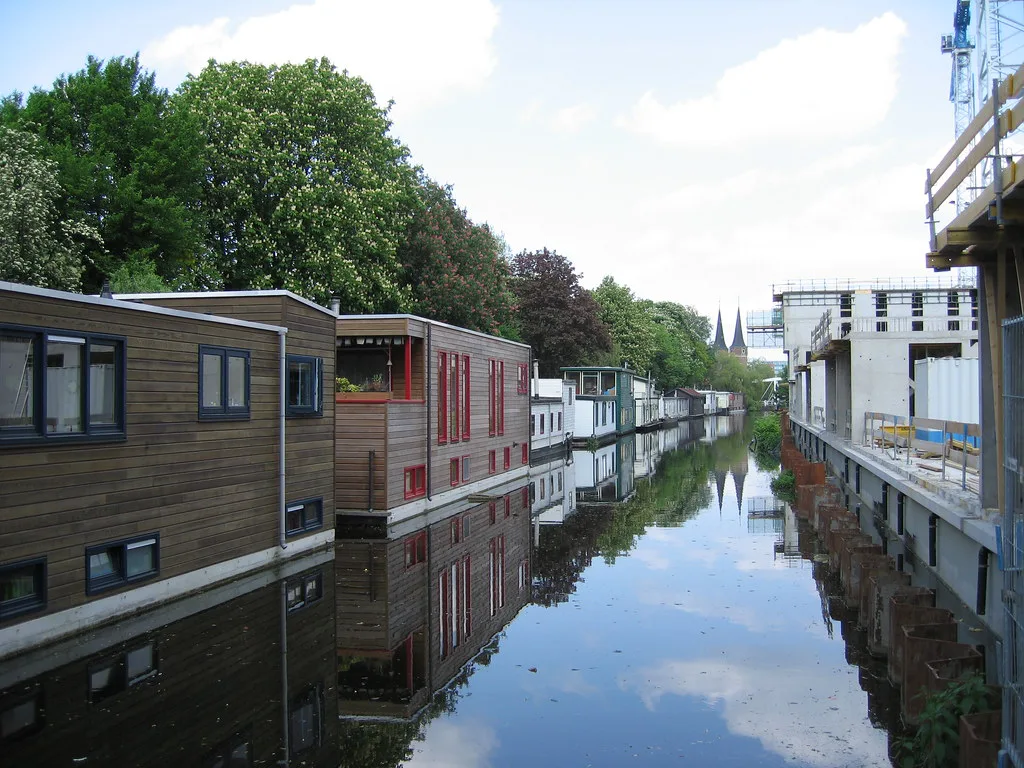
The Hague earns its place on Binnenhof, Mauritshuis and the layout of the old centre, which is walkable and understandable within an hour of arriving. Rotterdam earns its place on contrast: Markthal, the post-war centre and the Céramique quarter give you a day that looks and feels nothing like the rest of the trip. Utrecht earns its place because the Domtoren and the Oudegracht wharf level are the single most satisfying pair of sights in the country for a short-break traveller, and the Domtoren gives you a fixed point to orient a walk through the centre.
Is five days enough for the Netherlands without Amsterdam? Yes, if you keep to three bases and accept one main sight plus a walk each day. The Hague, Rotterdam and Utrecht fill five days comfortably, with Delft, Leiden or Schiedam as a shorter excursion rather than a fourth base.
How many days is enough in the Netherlands? Most short-break travellers find five days is the point where three Dutch cities can each get a proper day without constant moving. Three or four days suits one or two bases; a week or more lets you add a fourth city and slow the pace.
Delft, Leiden and Schiedam are the honest maybes. Delft is small and canal-heavy with a pottery tradition that gives it a purpose beyond scenery; Leiden is a university city with a strong museum and canal mix; Schiedam is the windmill and jenever town that pairs naturally with Rotterdam. If you are weighing a different set of stops entirely, where to go in the Netherlands sets out the alternatives by type of trip.
Amsterdam is the one city this plan keeps out of the day list. It works as an arrival and departure hub and as a comparison point when you are deciding whether a smaller Dutch city suits you better, which is the logic behind these alternatives to Amsterdam. A five-day trip that spends three of those days in Amsterdam is a different holiday, and the smaller cities get squeezed accordingly.
Day 1: The Hague — Binnenhof, Mauritshuis and the layout of the centre
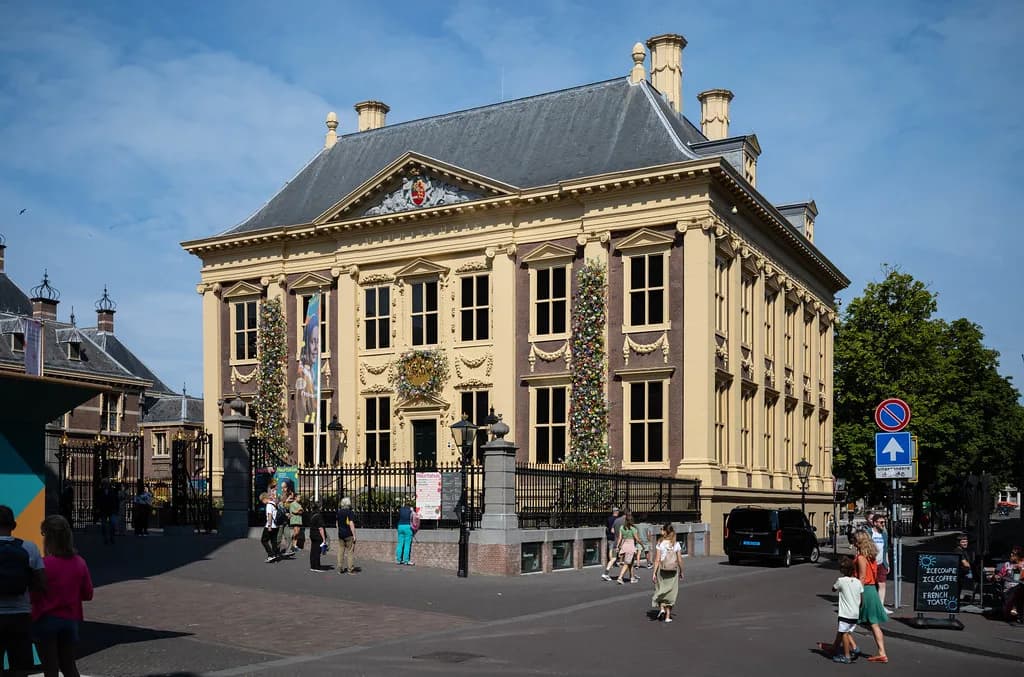
Start at Binnenhof and the Hofvijver, the parliamentary complex and pond that anchor the old centre and give you an instant orientation. Mauritshuis sits a couple of minutes away and holds the Dutch Golden Age paintings most people come for, so it is the natural single museum for the day rather than one of several. The centre around these two sights is compact enough to cover on foot, with the shopping streets and Plein filling the gaps between them.
Keep the first day's plan loose on purpose. Arrival days absorb time in ways that are hard to plan for, and a single museum plus a walk around the Hofvijver and the old streets is a realistic half day to full day depending on when you land. If you arrive early and want more, add a second museum rather than a second city.
The Hague's advantage for a five-day trip is that it is a real city with a formal centre, not a canal-town set piece. That makes day one feel substantial even if you only manage two sights, which is exactly what you want before the trip picks up pace.
Day 2: Delft or Leiden as a compact second day
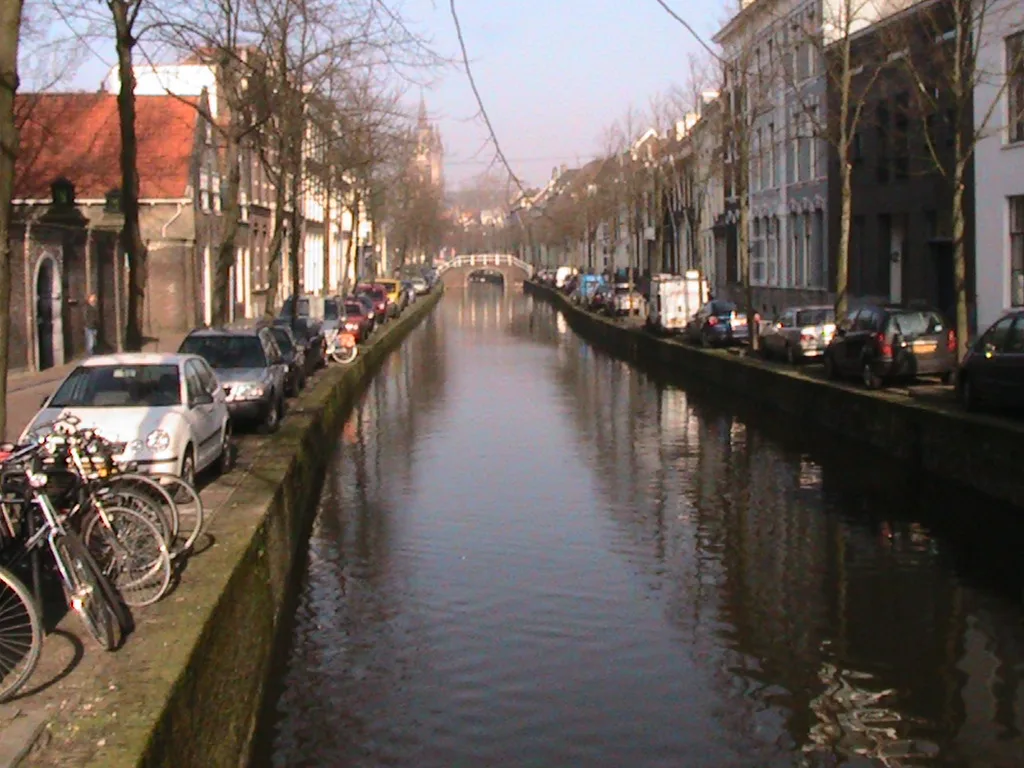
Delft is the easier swap from The Hague and the better choice if you want a small, walkable canal centre you can cover in a morning and afternoon without rushing. The pottery angle gives the day a spine beyond canals, and the Delft Blue pottery guide explains what the workshops and showrooms actually offer before you commit part of a day to them. Leiden is the better choice if you want a bigger city with more museum weight and a student population that keeps the centre lively.
Pick one, not both. Doing Delft in the morning and Leiden in the afternoon is technically possible on the rail network but leaves you with two half-experiences and a lot of platform time, which is the classic mistake on day two of a short trip. A compact city rewards a slow lunch and a second loop of the canals far more than it rewards a tick-box second stop, and the tulip fields near Haarlem on a spring visit are a separate day in their own right.
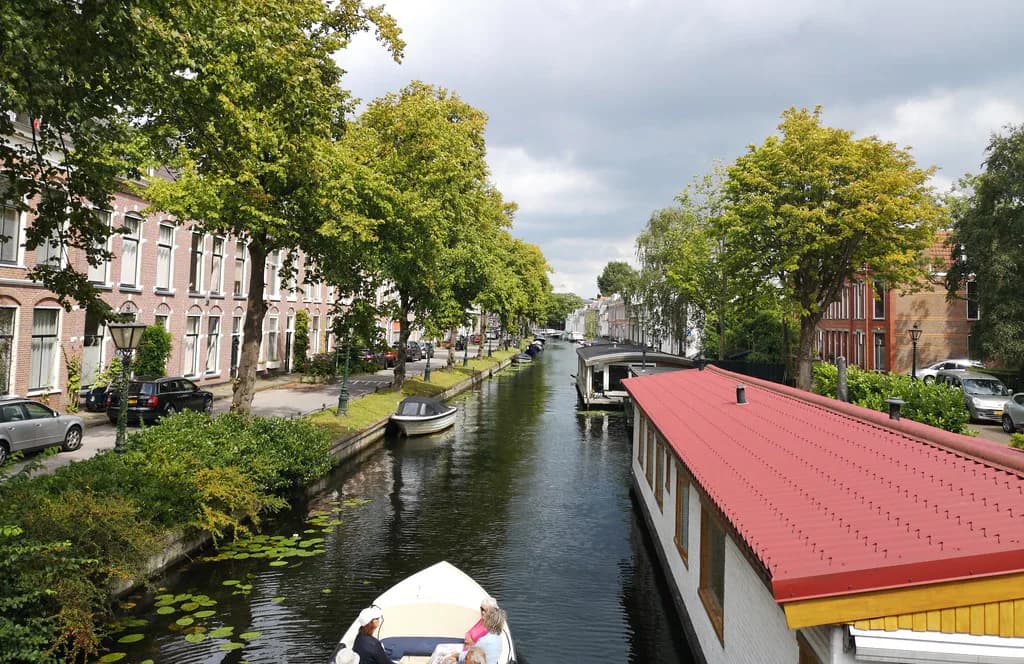
Both cities are canal towns, so if canal scenery is already the reason you came, this is the day to lean into it rather than chase museums. Walk the water, take the photos, and leave the museum list for Rotterdam and Utrecht.
Day 3: Rotterdam — Markthal, the modern centre and the Céramique quarter
Rotterdam's Markthal is the obvious starting point: a covered market hall with stalls and food counters under a printed arch, useful as both breakfast stop and orientation point. From there the post-war centre is a walk through squares and rebuilt streets rather than a single sight, and the Céramique quarter across the river gives you the architecture-led side of the city with the riverside walk between them.
The trade-off on day three is time. Rotterdam rewards a full day because the distances are larger than in Delft or Leiden and the city is spread across the river. If you cut Rotterdam to a half day you get Markthal and a walk, not Céramique, and the day stops justifying the move from The Hague.
This is also the day to accept that Rotterdam is not a prettified canal city and does not try to be. Its appeal is scale, modern architecture and the riverfront, and travellers who arrive expecting seventeenth-century streets leave disappointed. Go in for what it is and the day works.
Day 4: Utrecht — Domtoren, Oudegracht and the museum quarter
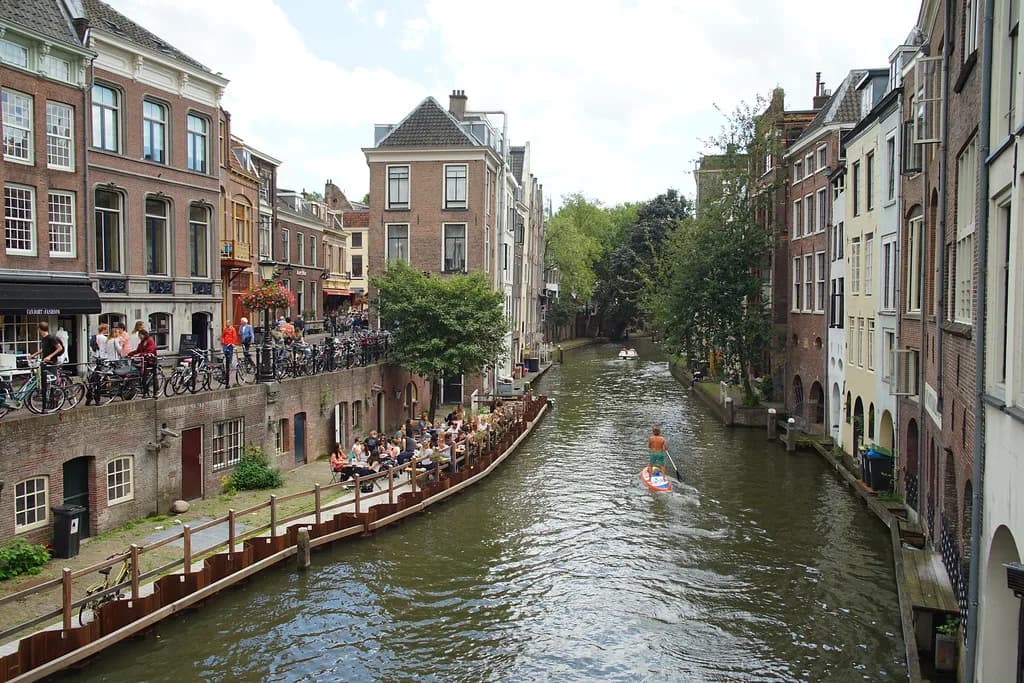
Utrecht's Domtoren is the tower that genuinely structures a day: you orient yourself by it, and the climb is the memorable physical effort of the trip. Below it, the Oudegracht runs through the centre with a lower wharf level of former warehouses that gives the canal a second street most Dutch cities do not have. The museum quarter around the Dom and the university buildings fills the afternoon without a long walk.
Utrecht is compact, so day four needs less transport thinking than Rotterdam. Base yourself within the canal ring and everything on this list is a short walk. The trade-off is that Utrecht's centre is busy with locals and students, so the quiet version of the city is found on the wharf level and the smaller side streets rather than the main shopping spine.
Walking the Oudegracht wharves takes an hour or so if you keep moving and longer if you stop. Do it in the late afternoon when the light drops into the canal and the day-trippers thin out, then eat near the water rather than in the shopping streets.
Day 5: Schiedam's windmills and canals, or a slower last day
Schiedam makes a fitting last day because it is small, it has canals to walk or cruise, and its windmills are the reason most people come; the town is known for having the tallest historical windmills in the world, and several can be visited depending on which are open, with guided tours and a restaurant in De Noord windmill. Wealth from the gin trade built much of the city from the 1700s, and that history sits alongside the windmills rather than behind them, giving you a compact story to follow for a few hours. De Plantage, laid out around 1767, is described as the oldest city park in Holland and is an easy add-on near the centre.
The alternative is to spend day five in Utrecht rather than moving again. A slower final day means one museum, one long canal walk and an early dinner, which is often what a five-day trip actually needs by the end. Choose Schiedam if you want one more distinct place and a windmill in your photos; stay put if you want the trip to feel finished rather than truncated.
Schiedam lies close to Rotterdam and works best as a short excursion from Rotterdam or The Hague rather than a base of its own, which keeps the pacing of the trip right.
Getting between the cities by train and what that does to your days
All five cities in this plan sit on the Dutch rail network, and the moves between The Hague, Rotterdam and Utrecht are short hops rather than travel days. The practical consequence is that you can move base in the morning and still have an afternoon in the new city. The trap is doing this twice in one day: two moves plus luggage eats the middle of the day and leaves you with an evening instead of a day.
Check journey times and any engineering works on the NS planner before you fix your base order, because planned disruption can turn a short hop into a long one. That check takes two minutes and is the single most useful thing you can do before booking accommodation in a fixed sequence.
Keep the number of moves to two. With five days, every extra move costs you roughly half a day once packing, platforms and check-in are counted, and that half day comes straight out of a city.
Using the OV-fiets for the last stretch from station to centre
The OV-fiets is the NS hire bike available at around 300 locations, mostly stations, and it solves the last kilometre between platform and city centre. You hire it with an NS Flex subscription on your OV-chipkaart; NS no longer offers a standalone OV-fiets subscription, and its free NS Flex Basis option carries no subscription fee. Pick up a bike, unlock it with the card and return it to the same location, because the hire only stops when the ring lock is closed.
Pricing is per 24 hours rather than per hour, from €4.80 per day at the base rate, rising to €9.80 per day after three days, with a €5 per-day surcharge from day three on top of the hire price, and the maximum hire is seven days. For a five-day city trip, that structure suits a single day's riding rather than a whole-trip rental.
Ride only where you are comfortable. Dutch city centres mix bikes with pedestrians and trams, and Utrecht's wharves and Rotterdam's wide crossings ask different things of you. If city cycling is not something you do at home, the OV-fiets is still useful for a straight station-to-centre run on a quiet morning, but it is not the moment to learn traffic.
When to go: season, crowds and spring bulb fields
Spring is the one season that fixes a date in your diary, because Keukenhof in Lisse opens only for a set window each year. The published future season runs from 18 March to 9 May 2027; if you are travelling in another year, use the dates published for that season. Tickets are sold online only and are tied to a fixed date and time slot, so a spring trip needs booking before you leave, not on the day.
Prices for the 2027 season are listed as €21 for adults, €11 for children aged 4 to 18, free for children up to 3, €20.50 per person for groups of 20 or more, and €10 for car parking, all subject to change. If you finish the trip at Keukenhof, plan around the fixed time slot on your ticket rather than turning up on spec.
Outside the bulb season, the five cities in this plan are year-round destinations and spring is not automatically the best time to go. Spring brings the flowers and the crowds together, and a mid-week city day in The Hague or Utrecht is calmer than a weekend in tulip season. Choose the season for the trip you want, then decide whether Keukenhof, open only in its spring window, is worth rearranging a day for.
Costs to budget for in euros
The fixed costs you can pin down in advance are small: OV-fiets hire from €4.80 per 24 hours, and Keukenhof at €21 per adult in the 2027 season. Everything else, from museum tickets to meals, varies enough by city and by choice that a single figure is misleading. Build your budget from the specific sights you plan to enter rather than from an average.
For a fuller breakdown of what a Dutch city break costs in euros, including the categories that catch people out, is the Netherlands expensive covers the numbers in more detail. Read it before you fix the number of bases, because the answer often decides whether three cities in five days is comfortable or tight.
One budget line worth planning deliberately is souvenirs. Dutch souvenirs worth buying separates the things worth luggage space from the airport-shop filler, which is useful when you are moving between three bases and carrying everything you buy.
Where five days feels too rushed
Five days feels rushed the moment you add a fourth base, because the moves start to outnumber the days. It also feels rushed if you insist on a museum in every city: Rotterdam and Utrecht each want a proper half day indoors, and squeezing both into the same day leaves you with neither. The fix is to pick one museum city per two days and let the others be walking days.
The other pressure point is the spring visit. Adding Keukenhof to a five-day trip costs most of a day once transport, the timed slot and the return are counted, and it has to sit alongside the city you are based in that day. If the flowers matter more than a city, cut a city; do not try to fit both.
If you have more time, the 10 day Netherlands itinerary shows how the same three bases stretch into a slower trip with room for a fourth stop. It is the honest comparison for anyone wondering whether five days is the right length.
Which three bases should you book?
Book The Hague, Rotterdam and Utrecht in that order, and use Delft or Leiden as a day out from the Hague end rather than a base of its own. That gives you two moves, five distinct days and a final day in Schiedam or a slow Utrecht morning, which is the most a five-day trip can carry without turning into a train tour.
If you want more space between stops, or you are already planning to add a fourth city, the 10 day Netherlands itinerary shows what the extra days buy you. Five days is enough for three bases done properly, and not enough for four.
Frequently Asked Questions
Is five days enough for the Netherlands without Amsterdam?
Yes, if you keep to three bases and accept one main sight plus a walk each day. The Hague, Rotterdam and Utrecht fill five days comfortably, with Delft, Leiden or Schiedam as a shorter excursion rather than a fourth base. Adding a fourth base or a spring bulb-field day costs you a city day.
How many days is enough in the Netherlands?
Most short-break travellers find five days is the point where three Dutch cities can each get a proper day without constant moving. Three or four days suits one or two bases; a week or more lets you add a fourth city and slow the pace. The constraint is moves, not distance, because each change of base costs roughly half a day.
Sources
Notes for your next Dutch city break
Optional updates to our Netherlands guides.
You might also like
Continue reading
More guides you'll find useful