Delft Blue Pottery: What It Is and How to Tell the Real Thing
Delft Blue pottery explained: what Delftware is, how hand-painted pieces differ from printed souvenirs, what Royal Delft sells, and what to check before you buy.
On this page
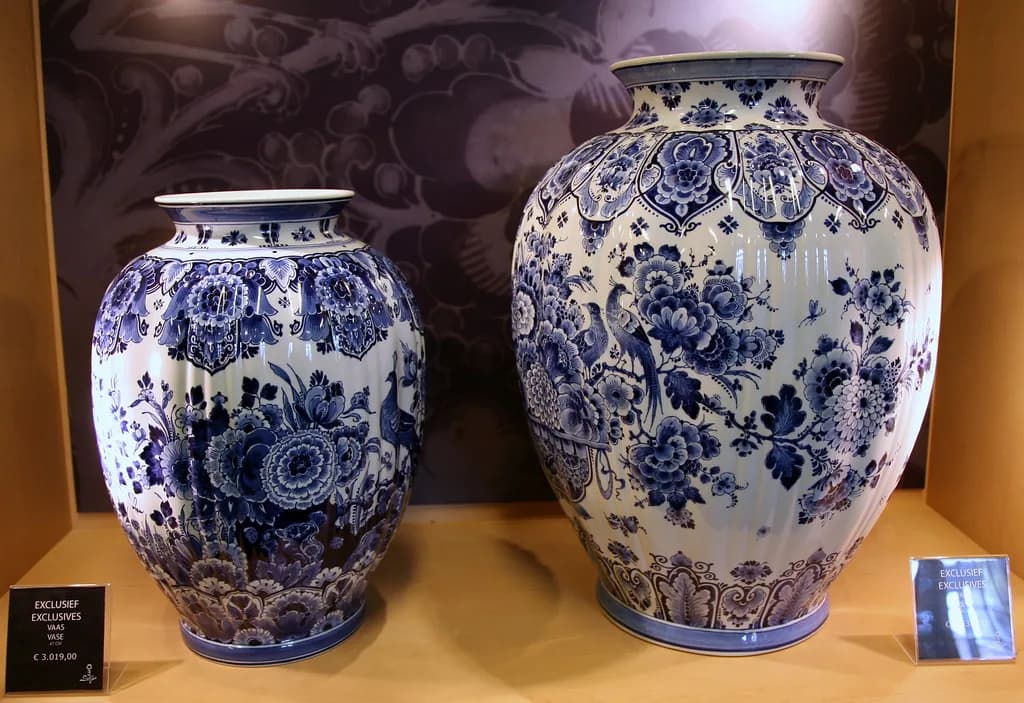
Delft Blue is tin-glazed earthenware decorated in blue, the Dutch pottery the English call Delftware and the Dutch call Delfts blauw. The distinction that matters when you shop is not old versus new but hand-painted versus transfer-printed: a piece painted by hand carries a painter's work on its surface, while a printed tile repeats an image onto it. This guide covers what the ware is, what Royal Delft and specialist retailers such as Heinen Delfts Blauw sell, and which details decide whether a piece is worth its price to you. Delft is a city worth planning into a wider Dutch trip alongside other cities in the Netherlands.
Delft sits in South Holland, within easy reach of The Hague and Rotterdam, so a pottery stop slots easily into a wider Netherlands itinerary built around the province. Buyers who want the real thing should plan the purchase as a deliberate stop rather than an impulse at a souvenir rack. For the practical details, see the Netherlands itinerary.
What Delft Blue is
Delftware is a general term for Dutch tin-glazed earthenware: pottery fired with a white tin glaze and painted with blue decoration. It is the category of object you are buying.
Delftware is decorated in blue, and Delft Blue is the best-known form of it, so the city's name and the style are used almost interchangeably. The look is close enough to Chinese blue-and-white porcelain that the two are easily confused across a shop shelf, which is exactly why the decoration method matters more than the label.
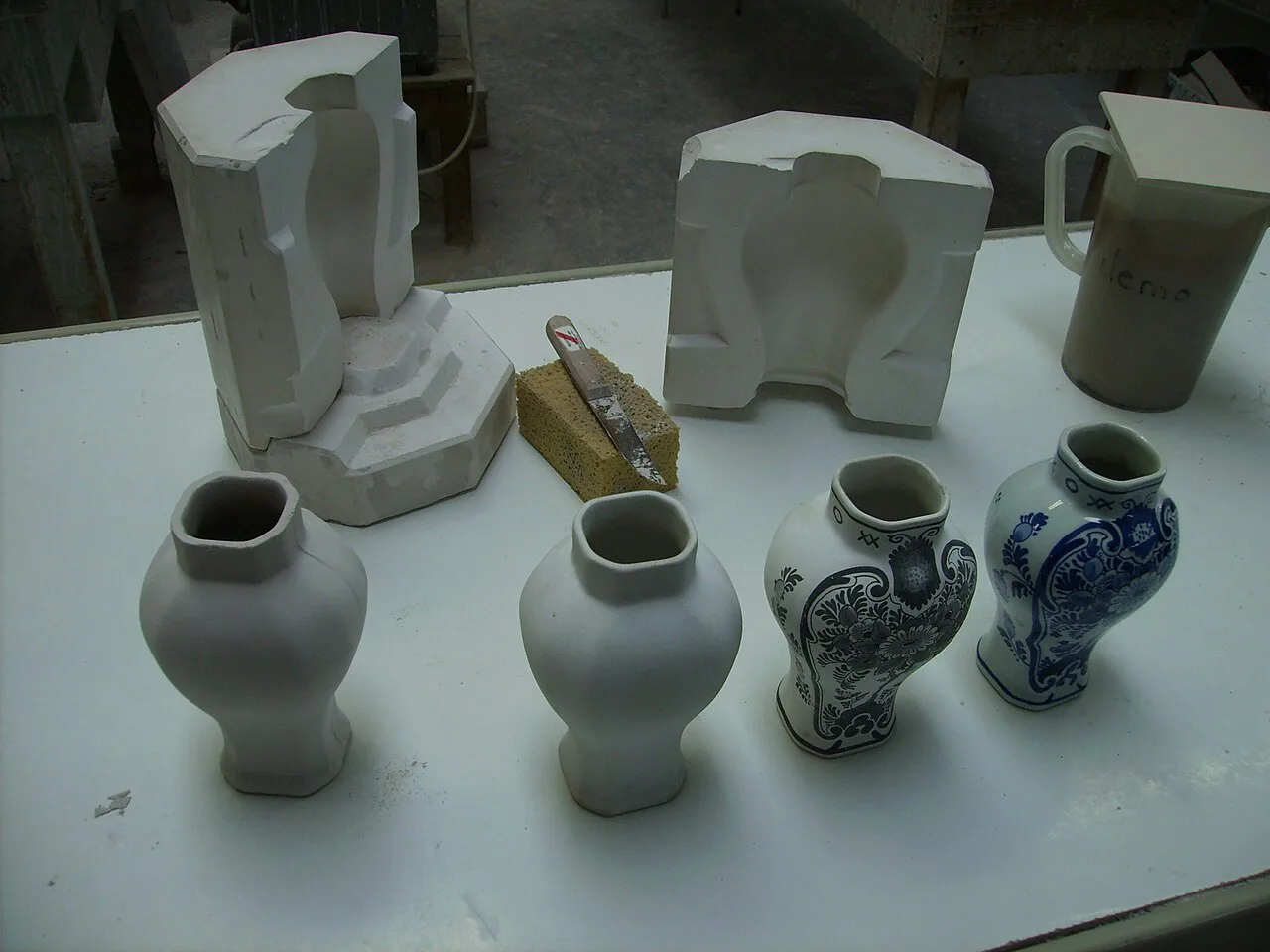
Why it is blue, and why the Delft name is on it
Blue is the colour convention for this ware, not a technical necessity you can infer from the label. What you can judge in the shop is how the blue was put on: whether a painter worked it in by hand or a printed transfer repeated it.
Is Delft Blue worth anything? Value depends on how a piece was decorated, its size, its maker and the evidence for its age. Modern hand-painted Delft Blue from a specialist shop carries a real price because of the labour, while a printed souvenir tile is worth roughly what you paid for it.
How can I tell if Delft Blue is real? Real Delftware is tin-glazed earthenware, so look for a white glaze with blue decoration beneath it rather than sitting on top like a print. Compare brushwork between pieces: hand-painted decoration varies in depth and edge, while printed decoration repeats exactly.
Why is hand-painted Delft Blue so expensive? Each piece is decorated stroke by stroke, so the time of a trained painter is built into the price. Larger and more complex shapes take longer to paint and are harder to fire successfully, which pushes the price up further.
The Delft name describes a style rather than a guarantee of where a piece was painted. If origin matters to you, look for the maker's name on the base and ask the seller where that workshop is, rather than relying on the phrase on the shop sign.
Hand-painted versus transfer-printed
Hand-painted decoration is applied brushstroke by brushstroke, so no two pieces are identical and the paint shows small variations in thickness and edge. A transfer print is a printed image applied to the piece, which gives a crisp, repeating image and a much faster production run. The difference in labour is the main reason two plates of the same size can sit at very different prices.
Turn a piece over and look at how the decoration behaves. On hand-painted ware you would expect visible pressure changes where the brush travelled and a slightly uneven blue depth; printed ware tends to look uniform across the whole surface and identical to the next piece on the shelf. Neither is a defect, but you should know which one you are paying for, especially on tiles sold in stacks where every unit looks the same.
Royal Delft and its range
Royal Delft sells its own collection of interior objects with Delft Blue decoration through its shop. The range runs beyond tiles, taking in interior pieces so that it is a place to see the style applied at full scale rather than on a single souvenir.
The shop presents the house's own designs and shapes rather than a general secondhand market, which makes it a straightforward stop if you want a current-production piece with the maker's name attached.
Buying Delft Blue in the Netherlands
Three buying routes cover most travellers. The maker's own shop gives you the house's current range with the brand attached; specialist retailers stock several producers and often have a wider spread of sizes and shapes; museum and souvenir shops are the most convenient and the easiest place to confuse printed tiles with painted ones. Choice and certainty rise as you move towards the specialist end, and so does the need to know what you are looking at.
Heinen Delfts Blauw is a specialist seller of Delft blue ceramics; its own website lists a 17 cm ceramic piece at €19,95 and a 26 cm cylinder vase at €39,95. Those are that shop's listed prices for those two items, not a market range.
Delft can be costed as one line in a wider South Holland route rather than a detour, and it helps to decide your pottery budget before you go browsing.
What a piece costs, and why sizes change the price
Price tracks three things: how much of the decoration is painted by hand, how large and complex the shape is, and who is selling it. A small hand-painted dish from a specialist can cost more than a much larger printed platter from a souvenir shop, because the labour sits in the brushwork rather than the clay. Compare pieces of similar size and decoration if you want a meaningful comparison.
Ask for the price of the exact piece you are holding rather than a category price, because ranges shift with size and pattern. Where a shop lists its prices online, use that figure as the reference and expect the shelf to carry more options than the website shows.
Reading marks and signatures honestly
A maker's mark on the base tells you who says they made the piece; it does not by itself tell you when. Marks can also be copied and reused, and a printed mark under the glaze of a modern piece can look very like an older one to an untrained eye. A mark is a starting point for a conversation with the seller, not a certificate of age.
Signatures work the same way. A painter's initials or a house name can identify a workshop, but confirming age usually means an expert handling the piece, checking the glaze, the body and the wear patterns together. Treat any claim of a particular year or century as something to verify with the seller in writing, or buy for how the piece looks rather than what it might be worth.
Common buying mistakes
The most frequent error is paying hand-painted money for a printed souvenir tile because the shop described it as Delft Blue. The second is paying an age premium for a piece whose marks you cannot verify. Both are avoidable by asking two questions: how is the decoration applied, and what exactly is being claimed about its age.
A third mistake is treating a purchase as an appraisal exercise. Nobody at a till can tell you what your grandmother's plate is worth, and a shop assistant is not acting as a valuer. Buy what you like at a price you are happy with, and keep the receipt and any written description in case you later want a proper assessment.
Fitting Delft into a short city break
Delft works as a half-day from The Hague or Rotterdam and as a full stop on a longer route. If your trip covers several Dutch cities in four or five days, a 5-Day Netherlands Itinerary leaves room for one pottery-focused morning without cutting a museum day.
Cycling between Delft's station and centre is quick, and an OV-fiets is hired with an NS Flex subscription on your OV-chipkaart; NS Flex Basis is advertised as free of subscription charges. NS lists the bike from €4,80 per day, with a €5 per-day supplement after three days and a seven-day maximum. The bike has to go back to the same hire location, so return it before a shop visit rather than parking it outside.
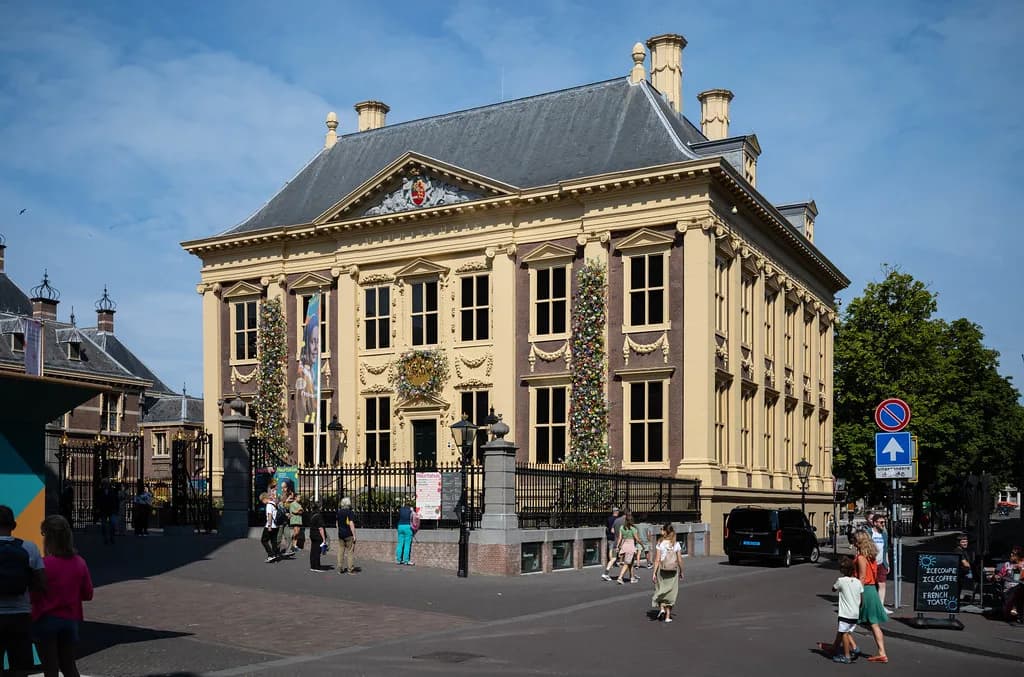
If pottery is the point of the trip, give Delft its own slot rather than squeezing it between The Hague's Mauritshuis and the Binnenhof. Buyers who want to browse several shops need a morning, not an hour, and a heavy purchase travels better from a base where you are staying two nights.
Which piece should you actually buy?
Buy the piece whose decoration you can see was applied by hand if that is what you came for, and accept a printed tile only when you want a cheap reminder rather than a handmade object. Ask where it was made, how it was decorated and what the shop knows about its age, then decide whether the answers justify the price on the shelf.
Leave the appraisal to an expert. A Delft Blue purchase should be something you want to look at every day, not a bet on a mark you cannot read.
Explore more Netherlands guides
Frequently Asked Questions
Is Delft Blue worth anything?
Value depends on how a piece was decorated, its size, its maker and the evidence for its age. Modern hand-painted Delft Blue from a specialist shop carries a real price because of the labour, while a printed souvenir tile is worth roughly what you paid for it. For a piece you already own, a written description from the seller and a professional assessment are the reliable route.
How can I tell if Delft Blue is real?
Real Delftware is tin-glazed earthenware, so look for a white glaze with blue decoration beneath it rather than sitting on top like a print. Compare brushwork between pieces: hand-painted decoration varies in depth and edge, while printed decoration repeats exactly. The maker's name on the base is a useful start, but it identifies the maker rather than proving age.
Why is hand-painted Delft Blue so expensive?
Each piece is decorated stroke by stroke, so the time of a trained painter is built into the price. Larger and more complex shapes take longer to paint and are harder to fire successfully, which pushes the price up further. Printed ware skips that labour, which is why two pieces of similar size can sit far apart in price.
Can I tell how old a piece of Delft is from its mark?
A mark can point to a maker, but it does not reliably date a piece, because marks are copied and reused and a printed mark can mimic an older one. Dating usually requires an expert to examine the glaze, the body and the wear together. Treat any specific year as a question for the seller rather than a fact on the label.
Sources
Notes for your next Dutch city break
Optional updates to our Netherlands guides.
You might also like

Continue reading
More guides you'll find useful