Best Cities in the Netherlands for a Short Break
The best cities in the Netherlands for a city break, what each one is best at, how many days it needs and how they connect by train from Schiphol.
On this page
Utrecht, Rotterdam, The Hague, Haarlem, Delft, Leiden, Maastricht, Den Bosch and Groningen are the Dutch cities that repay a one- to three-day break, and the right pick depends on whether you want canals, modern architecture, museums or a smaller historic centre. This guide takes each city in turn and answers the same three questions: what it is best at, how long it needs, and how it connects to the others by train. Painters, potteries and a bookshop in a church all feature, and so do the trade-offs nobody mentions until you are standing on the platform.
Use it as a shortlisting tool rather than a ranking. Pick one city as a base, add a second only where the rail link is quick, and keep Amsterdam as a transport hub rather than a destination.
Utrecht: multi-level wharves and the Domtoren climb
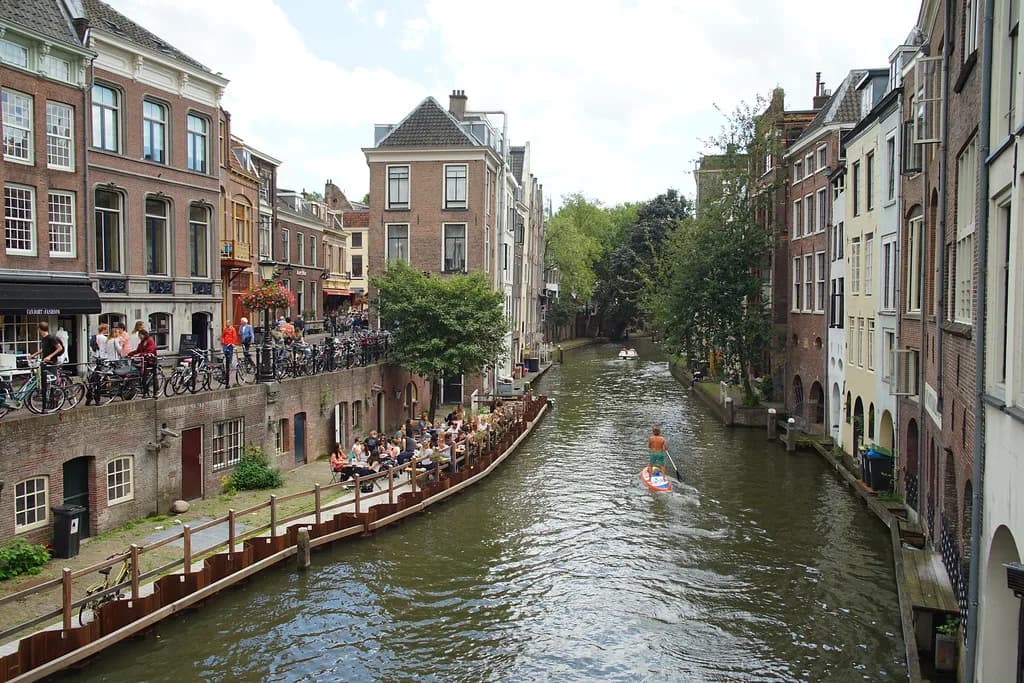
Utrecht pairs one very big sight with a street pattern you can spend a day inside. The Domtoren is the tallest church tower in the country, and the climb gives you the whole city at once; below it, the Oudegracht runs on two levels, with wharf cellars at water height now used as cafés and terraces. That double-decker canal is unusual in the Netherlands and is the reason Utrecht feels different from every other canal city on this list.
Aim for a full day, or two if you also want the Centraal Museum, Museum Speelklok and the university's botanical gardens. It is about a 30-minute direct train from Amsterdam, which makes it the easiest first stop if you land at Schiphol and want to be on a canal by mid-afternoon. It also works well as the middle leg of a longer route, and our Netherlands itinerary shows how Utrecht slots between the western cities and the south.
If Utrecht is your first stop after landing, the rest of the trip follows naturally: Rotterdam and Delft to the south-west, The Hague and Leiden further along the same line, and Haarlem back towards Schiphol. That geography, not a ranking, is what should decide your order.
Rotterdam: post-war architecture, the Markthal and the Erasmus Bridge
Rotterdam is the least Dutch-looking city in the country, and deliberately so: the historic centre was destroyed in the Second World War and the decision was taken not to rebuild it in the old style. What replaced it is a modern architecture showcase, with Europe's first skyscraper, the White House, still standing a few steps from the Cube Houses, a set of tilted yellow homes inspired by trees in a forest, one of which is open to visitors as a museum.
What is the nicest city in the Netherlands for a short break? Utrecht is the most balanced choice: a walkable canal centre, the Domtoren climb and quick trains to the rest of the country. Rotterdam and The Hague suit travellers who want modern architecture or formal museums instead, and Haarlem is the quieter alternative to Amsterdam.
What are the top five cities in the Netherlands for a first visit? Utrecht, Rotterdam, The Hague, Delft and Haarlem cover the widest range in the least travel time. Leiden and Maastricht are strong additions if you have four days or more, or want a university town or a southern base.
Where is the prettiest place in the Netherlands? Delft and Haarlem both deliver the classic canal-and-gabled-house picture at small-city scale. Utrecht's Oudegracht offers something you cannot see elsewhere in the country: a canal with a second street level at the water.
The Erasmus Bridge, nicknamed the Swan, is the city's signature silhouette and the largest bascule bridge in western Europe, with ferries running beneath it into what is Europe's biggest port. The Markthal, a food hall under an arched ceiling painted by Arno Coenen, is the obvious lunch stop, and the Museumpark holds most of the city's museums, including the Boijmans Van Beuningen. Expect bold, functional and occasionally brutal rather than pretty.
Two days is a comfortable fit; one day covers the Markthal, the Cube Houses and a port or street-art tour. It is under an hour from Amsterdam by train.
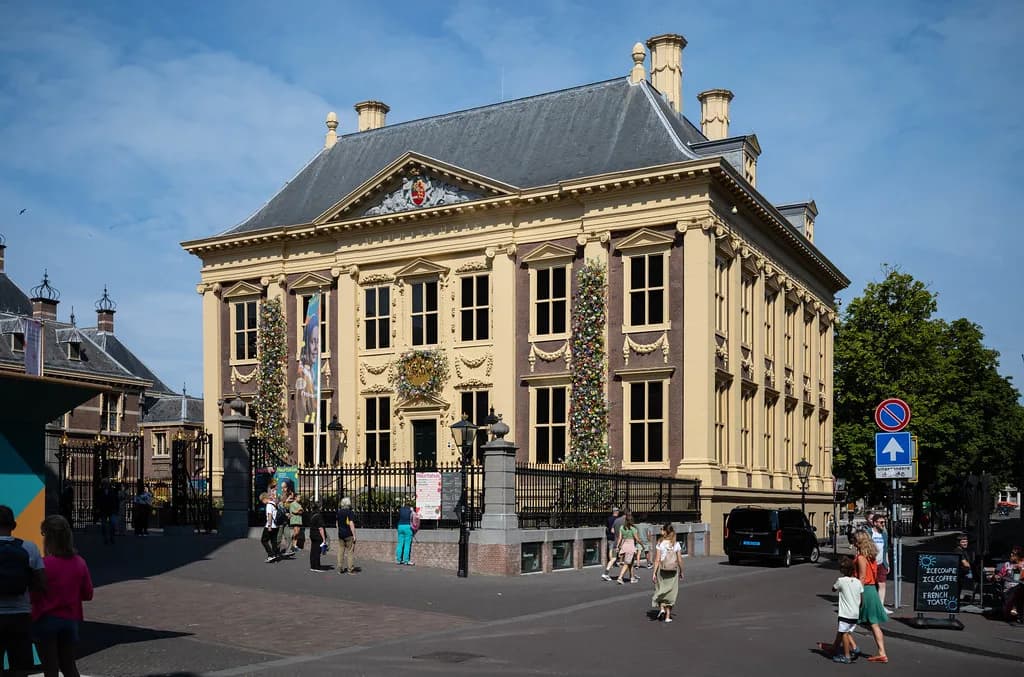
The Hague (Den Haag): the Binnenhof and Mauritshuis in a formal, spacious centre
The Hague, or Den Haag, is the grand, formal counterweight to Rotterdam's experiments. It is the seat of Dutch government and international justice, and the centre reflects it: wide streets, embassies, manicured gardens and a stately calm rather than a tourist scrum. The Binnenhof, the historic parliamentary complex around a courtyard and pond, and the Mauritshuis, with its Golden Age paintings, are the two anchors of a day here.
The city is around 30 minutes by train from Amsterdam and about ten minutes from Leiden, which makes it easy to combine with either. Give it a day for the Binnenhof and Mauritshuis, and a second if you want Scheveningen, the coastal district, as well. It is also the most natural stop to build into a longer Dutch itinerary that runs north to south.
Haarlem: a compact historic centre with medieval churches and hofjes
Haarlem is what many travellers picture when they imagine a Dutch city, without the crowds of Amsterdam: a small, well-kept centre with medieval churches, hofjes (courtyards tucked behind street doors) and a handful of serious museums, in a city that protects its historic core rather than selling it. It is the capital of Noord-Holland and sits halfway between Amsterdam and the coast, with good train connections in several directions. One day is enough for the centre; two if you want a museum and a slow canal walk.
Haarlem works best as a quieter alternative to Amsterdam for a short break, or as a first or last night if you want to be near Schiphol. It pairs naturally with Leiden and The Hague on the same rail line, and it is a sensible base for a three-day trip that does not need a car.
Delft: canals, gabled houses and Delft Blue pottery in a small city
Delft is the picture-postcard version of the Netherlands: canals, 17th-century gabled houses, market squares and two historic churches, with a small-city feel that never becomes a theme park. It is known for Delft Blue pottery and for Johannes Vermeer, and both are on the visitor trail, alongside the Nieuwe Kerk tower climb for skyline views.
Because it is compact, half a day covers the centre and a full day covers the Royal Delft factory tour and the Vermeer Centrum, with a Wednesday market on the Markt adding to the draw. Take it slowly: the pleasure here is the scale, not a checklist. If you want to bring something home, our guide to Dutch souvenirs worth buying covers what is actually worth the luggage space.
Delft is about 12 minutes by train from Rotterdam, which makes the two an obvious pairing: modern city in the morning, Golden Age canals in the afternoon. From The Hague it is a similarly short hop, so Delft fits neatly between the two larger cities on a four-day route.
Leiden: canals and a university city feel between Amsterdam and The Hague
Leiden is a university city with canals and Dutch architecture in the classic mould, and it makes a good alternative to the tourist-heavy streets of Amsterdam. It is also conveniently placed: less than 30 minutes by train from Amsterdam and about ten from The Hague, so you can drop bags at the station and explore in a day.
One day is the right allowance for Leiden unless you are using it as a base for the wider region. It is the ideal middle stop between The Hague and Haarlem, and it keeps a four-day trip from doubling back on itself.
Maastricht: southern character, Vrijthof square and Boekhandel Dominicanen
Maastricht feels closer in spirit to Belgium and Germany than to Amsterdam, which is exactly why it is worth the journey south. The Vrijthof is the city's main square and the place to end a day, while Boekhandel Dominicanen, a bookshop inside a 13th-century church, is one of the most striking interiors in the country. Roman remains and the Sint-Pietersberg caves add a second layer if you have the time.
This is a two-day city at minimum, because the journey from the western cities eats into a short break. Treat Maastricht as the southern end of a longer route, or as a combination with Belgium and Germany, rather than a day trip from Utrecht.
Den Bosch ('s-Hertogenbosch): a smaller historic city for a one- or two-day break
's-Hertogenbosch, known to everyone as Den Bosch, is a smaller historic city that rewards a slower pace than the big names. Its appeal is the compact old centre, the canals and the sense of a place that functions for its residents as much as for visitors. It suits a one- or two-day stop rather than a flying visit squeezed between two others.
In practice, Den Bosch works as a filler between Utrecht and the southern cities, or as the base for a quiet couple of nights. The trade-off is that it has less of the headline sightseeing that Rotterdam or The Hague offers, so it is better for a repeat visitor or a slower trip.
Groningen: a northern option with its own character and student energy
Groningen is the northern outlier, a city with its own identity and a large student population that gives the centre a lively, creative edge. It is further from Schiphol than the western cities, so it rarely appears on a first short break, but it is a strong choice if you have already seen Utrecht and Rotterdam. Give it a day on the ground plus travel time, or two nights if you want to explore the surrounding province.
The trade-off is the journey: Groningen is not a quick hop from the western cities, so it suits a longer trip or a northern-focused itinerary rather than a four-day dash.
How many days each city needs: one, two or three
For a short break, one day is enough for Haarlem, Leiden or Delft, though Delft's factory and museums can fill a second. Two days suits Rotterdam, The Hague, Maastricht and Groningen better, and Utrecht is the most comfortable single base for a three-day trip because the centre is deep enough to revisit without repeating yourself.
The practical rule: count half a day for the headline sight, then add a day for each city you want to see at a walking pace. A four-day break realistically covers two or three cities, not five, once train time and luggage are counted.
If you are building a longer trip, our 5 day Netherlands itinerary shows a workable pacing for a short loop.
Pairing cities by train and which combinations work in four days
The Netherlands has one of Europe's most efficient rail networks, and most of these cities are within one to two hours of each other. That makes a four-day break feasible without a car, provided you pick pairs on the same line rather than criss-crossing the country.
The strongest four-day pairings are Rotterdam with Delft (about 12 minutes apart), The Hague with Leiden (about ten), and Haarlem with Leiden if you want to stay near Schiphol. Utrecht works as a first or last stop on most routes. For a slower five-day version, our 5-Day Netherlands Itinerary shows a comfortable city-by-city sequence.
Avoid the temptation to add Maastricht and Groningen to a four-day western loop; both need their own travel time. If you have a week or more, our 10-Day Netherlands Itinerary covers how the longer distances work out.
When to go: spring, summer and autumn trade-offs
April to May is the classic window, with tulip season and mild weather; June to August brings the warmest days and the longest evenings but also the biggest crowds and the highest prices. September is the connoisseur's month, with fewer crowds, still-pleasant temperatures and a city centre that has calmed down after the summer peak.
Autumn is the best value for a city break: the canals are still walkable, the museums are quieter, and you are not competing for restaurant tables. Whatever the season, plan around the daylight rather than the forecast, and leave flexibility for a wet afternoon.
How the cities compare at a glance: size, feel and best-for
Rotterdam is the architectural playground and the biggest, best for design fans and food halls. The Hague is formal and spacious, best for museums and government history; Utrecht is the canal city with the best single climb; Haarlem and Delft are the small, pretty, walkable choices; Leiden is the university alternative; Maastricht is the southern escape; and Den Bosch and Groningen reward repeat visitors.
If you are still narrowing it down, our where to go in the Netherlands guide sorts these cities by trip length and interest, and the alternatives to Amsterdam guide is the place to start if you want a quieter base.
Which Dutch city should you book first?
Pick Utrecht or Rotterdam for a first short break: Utrecht if you want canals and one great climb, Rotterdam if you want architecture and food. Add Delft or Leiden as a half-day second stop on the same rail line, and keep The Hague for a second visit when you have time for the Binnenhof and Mauritshuis.
Before booking, check current opening days and ticket prices on each museum's own website, especially if you are travelling on a Monday.
Explore more Netherlands guides
Frequently Asked Questions
What is the nicest city in the Netherlands for a short break?
Utrecht is the most balanced choice: a walkable canal centre, the Domtoren climb and quick trains to the rest of the country. Rotterdam and The Hague suit travellers who want modern architecture or formal museums instead, and Haarlem is the quieter alternative to Amsterdam.
What are the top five cities in the Netherlands for a first visit?
Utrecht, Rotterdam, The Hague, Delft and Haarlem cover the widest range in the least travel time. Leiden and Maastricht are strong additions if you have four days or more, or want a university town or a southern base.
Where is the prettiest place in the Netherlands?
Delft and Haarlem both deliver the classic canal-and-gabled-house picture at small-city scale. Utrecht's Oudegracht offers something you cannot see elsewhere in the country: a canal with a second street level at the water.
Sources
Notes for your next Dutch city break
Optional updates to our Netherlands guides.
You might also like
Continue reading
More guides you'll find useful