Utrecht Architecture: The Buildings That Define the City
Utrecht architecture from medieval canal wharves to Rietveld and a reborn Catharijnesingel: what to look for, where to walk or cycle, and how long it takes.
On this page
Utrecht's architecture is a medieval canal core with modern buildings dropped into it, and you can read most of it on foot in a day, then spend a second day on De Stijl by bike. The old centre has stayed largely intact, with canals, parks and cultural venues packed into a small area beneath the Dom Tower, and recent decades have added concert halls, a rebuilt canal and high-rises around the station.
This guide groups the buildings by where they stand and when they were built, gives the architect and year for each so you can place it in a period, and separates what is walkable from what needs two wheels. It starts at Domplein, works along the Oudegracht and its wharf cellars, then heads south to the Catharijnesingel and east to the station district around Utrecht Centraal.
What defines Utrecht architecture
Utrecht is the fourth biggest city in the Netherlands and has almost 2,000 years of history behind an architectural legacy that runs from ancient to thoroughly modern. The medieval street plan, the two-level canal and the church tower give the centre its shape; the newer work is mostly public buildings, cultural venues and housing slotted into and around that frame.
The clearest way to read the city is by period: medieval canals and cellars, nineteenth-century and early-twentieth-century civic buildings, post-war experimentation, and the last two decades of station-area development. A three-hour architecture walk for private groups covers exactly that mix, moving from old merchant houses and wharf cellars to new public buildings in a single loop.
Domplein and the Dom Tower: start here
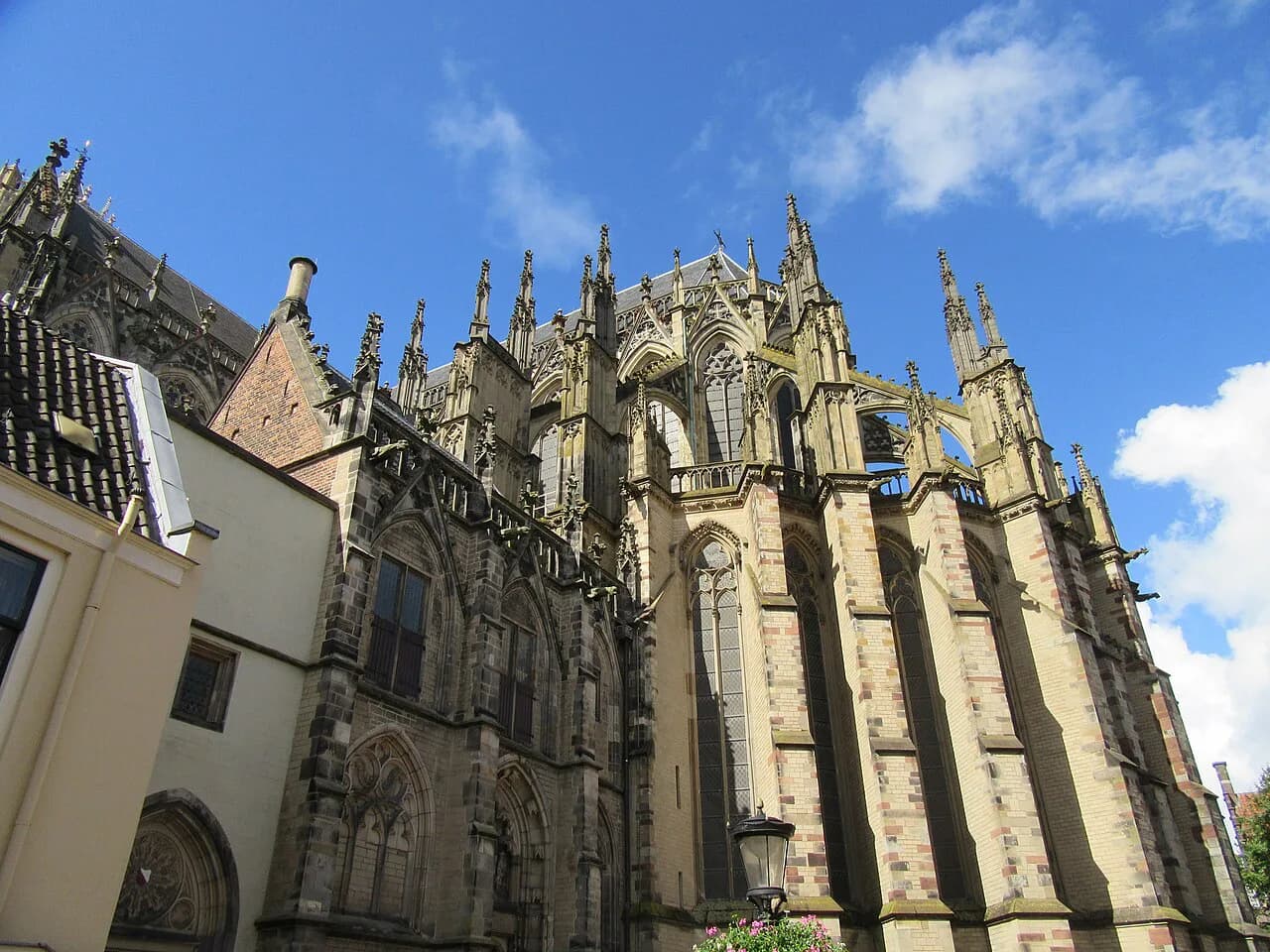
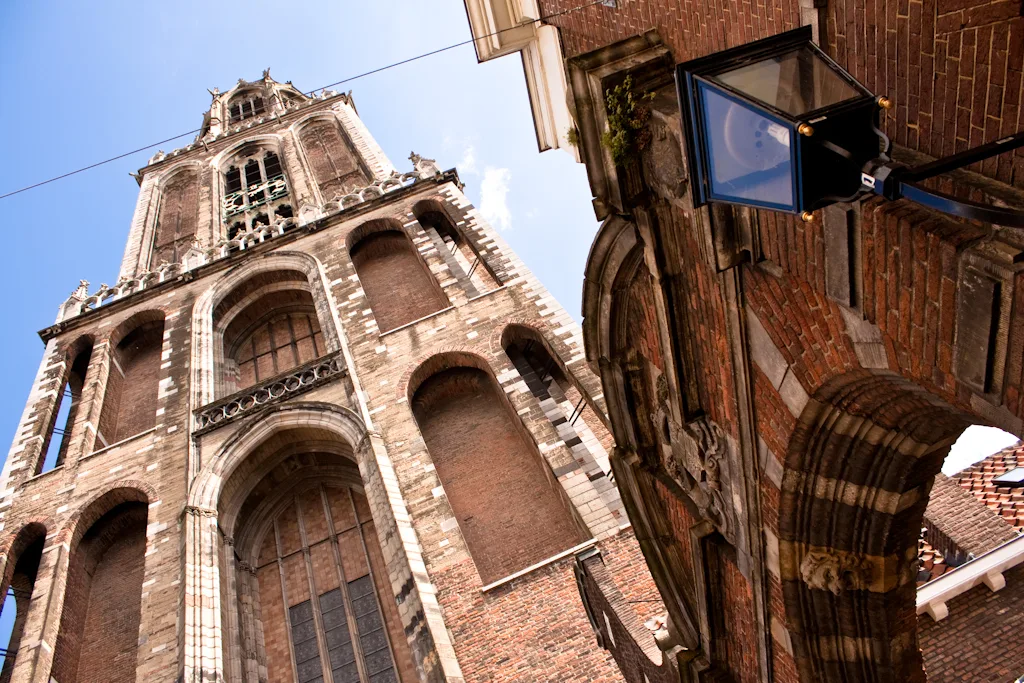
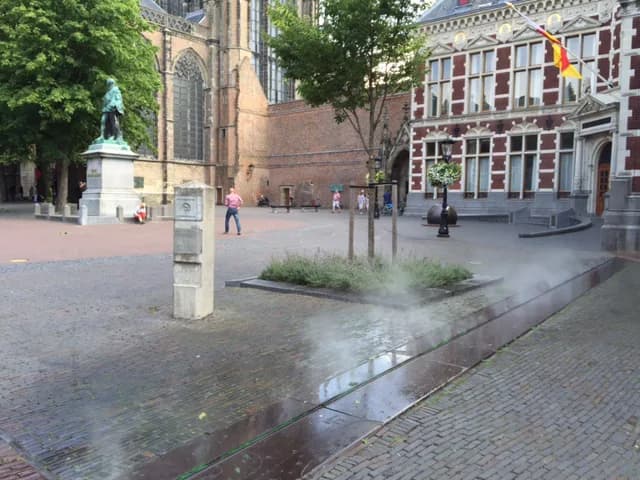
Domplein is the anchor of the old centre, and the Dom Tower rising above it is the landmark you navigate by all day. Below the tower the square is ringed by restaurants, cinemas and boutiques, so it works as both a starting point and a place to end up.
Architectural tours treat the cathedral square and its bell tower as the first highlight of the centre, which makes sense as an orientation: from here the Oudegracht and the rest of the old town loop are a short walk away.
The Oudegracht and its wharf cellars
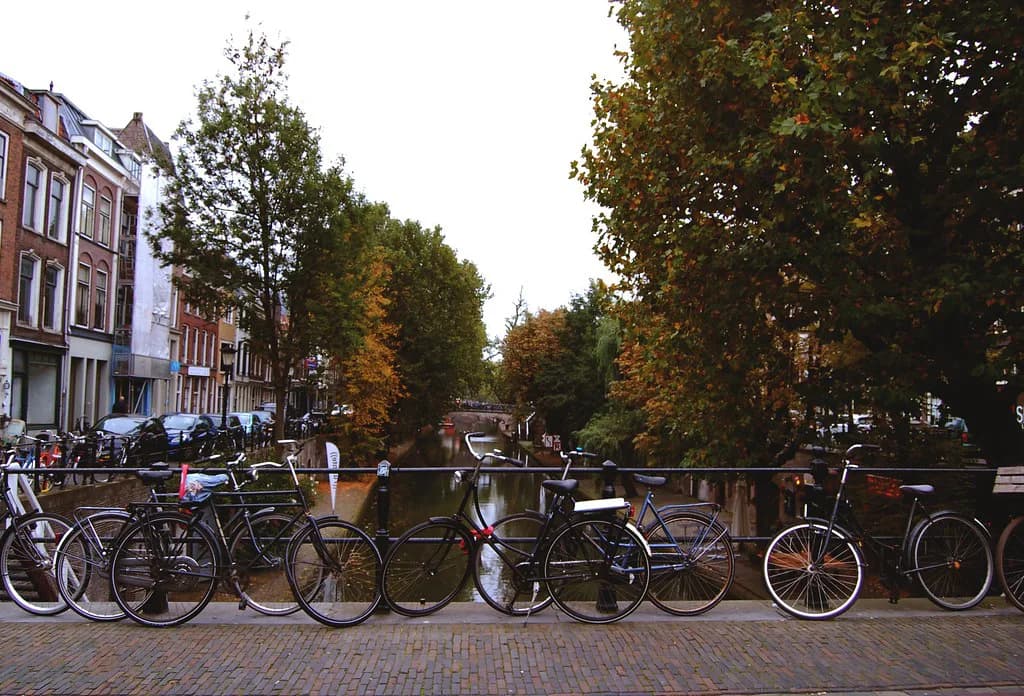
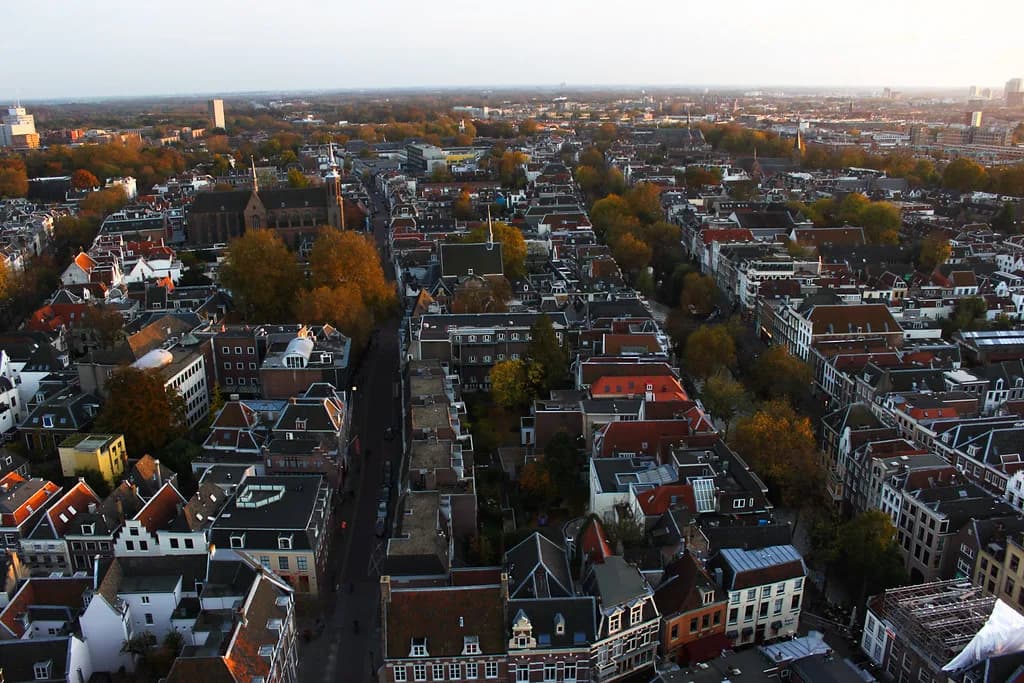
The Oudegracht is Utrecht's main canal, lined with merchant houses, and its defining oddity is the werfkelders: cellars that open directly onto the water at wharf level. That gives the canal two levels, street above and wharf below, a typological quirk that shapes the whole old centre and gives it a character other Dutch canal cities do not have.
Walk the quays at both heights rather than only the street: the lower wharf level is where you see how the cellars meet the water, and the upper level shows the merchant fronts they served. Modern canal houses have since joined the historic row — the Sluijmer en van Leeuwen house from 2002 is one — so the street reads as a continuous argument between old and new.
Kromme Nieuwegracht and the old town loop
Kromme Nieuwegracht adds a twenty-first-century note to the canal circuit, with a modern canal house by Sluijmer en van Leeuwen completed in 2002. Seeing it in sequence with the medieval wharf houses is the quickest way to understand how Utrecht inserts new architecture into protected streetscapes.
The old town loop is compact enough to treat as one continuous walk, and it pairs naturally with the museums that sit inside it. If you want to break the walk with a collection rather than a café, see our guide to the Museums in Utrecht, and note that the Centraal Museum is also the starting point for the city's six-kilometre Rietveld walking route.
Catharijnesingel: a motorway turned back into a canal
The Catharijnesingel is the most talked-about modern intervention in the centre: an urban motorway reconstructed as a canal. Architecture tours list it alongside the medieval canal as a highlight, which tells you how central the restoration is to how Utrecht now presents itself.
Come here to see infrastructure as design rather than as scenery, and to compare the new water line with the old canal loop a few minutes' walk north. It is also the area where you notice how quickly the centre shifts from medieval scale to open, engineered space.
The public library in the former main post office
The former main post office, designed by Joseph Crouwel in 1918 and converted by Rijnboutt and ZECC in 2020, now holds the public library. It is a useful case study in Dutch reuse: a civic building of the early twentieth century kept in public hands and given a new programme a century later.
Step inside during library opening hours and look at how the conversion handles the old hall rather than only at the books. The post office sits on the Catharijnesingel route, so it fits into the same half-day as the canal restoration, and our Indoor Activities in Utrecht guide covers wet-weather stops.
TivoliVredenburg
TivoliVredenburg is the city's concert hall complex, begun by Herman Hertzberger in 1979 and extended in 2014 by Jo Coenen, Thijs Asselbergs and NL Architects. Four names and two dates make it the clearest single example of Utrecht layering new work onto an existing building instead of replacing it.
Architecture walks include it as a highlight between the old centre and the station district, which means you can see it on the same loop as the Catharijnesingel and the library. Allow time to admire the building from outside as well as around a performance, since the complex is a working concert hall.
Around Utrecht Centraal
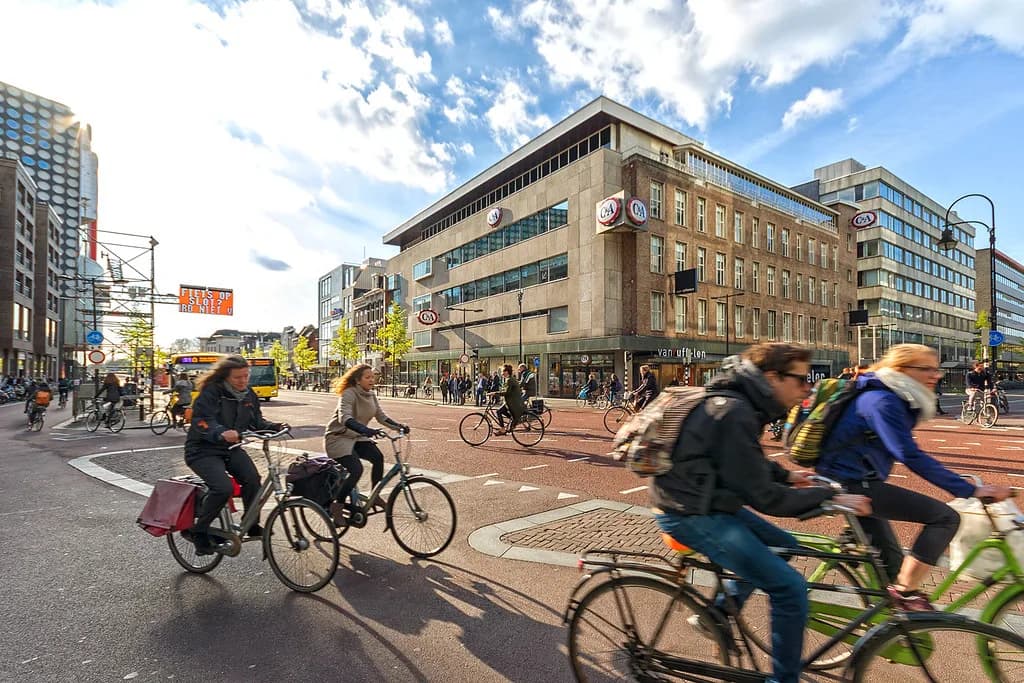
Utrecht Centraal is the largest railway station in the Netherlands, rebuilt by Benthem Crouwel and completed in 2016, and it comes with a bicycle garage holding 12,000 spaces. Beyond the station, the city administration high-rise by MVSA (2014) and the Central Park office tower by GroupA (2021) form the new skyline of the station district.
Treat this area as a separate hour rather than tacking it onto the old centre: the scale is completely different, and the station halls and bike garage are the parts you can actually walk through. Architecture tours cover the large-scale developments around the station as a distinct chapter of the city.
Wisselspoor and Wonderwoods
Wisselspoor is singled out as an original residential district project, and Wonderwoods, the residential high-rise with a vertical forest by Stefano Boeri completed in 2024, is the newest landmark listed on the same stretch out towards the station. Put them together and you get the city's argument about density and green space in built form.
Both sit beyond the old centre, so they are best folded into a walk towards the station rather than treated as a standalone trip; they are architectural landmarks to see in the cityscape, not interiors to tour.
Gerrit Rietveld and De Stijl
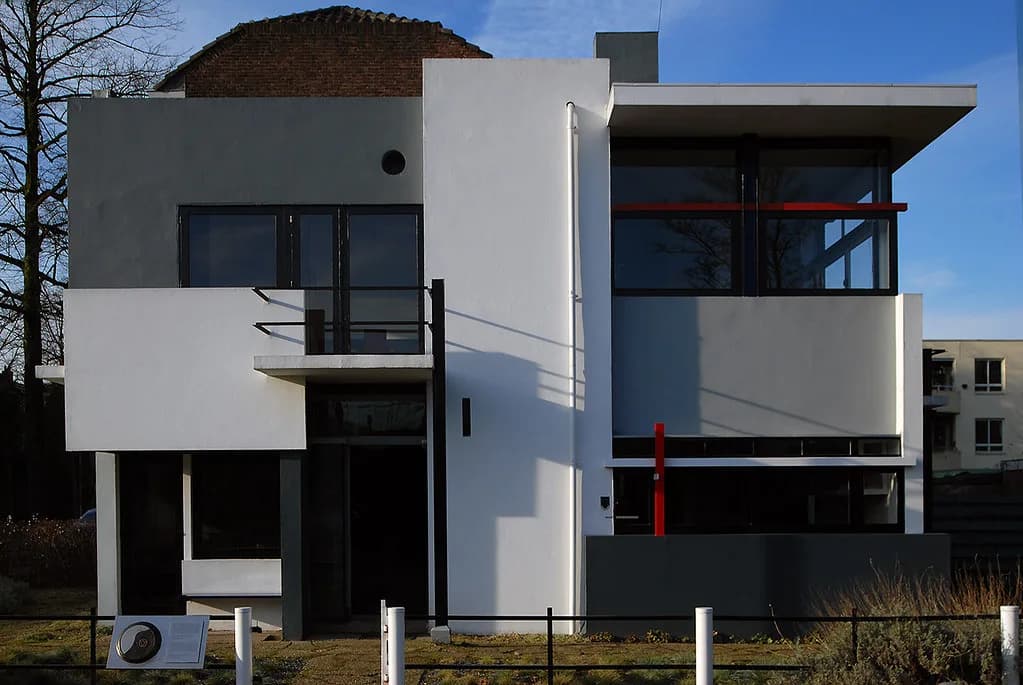
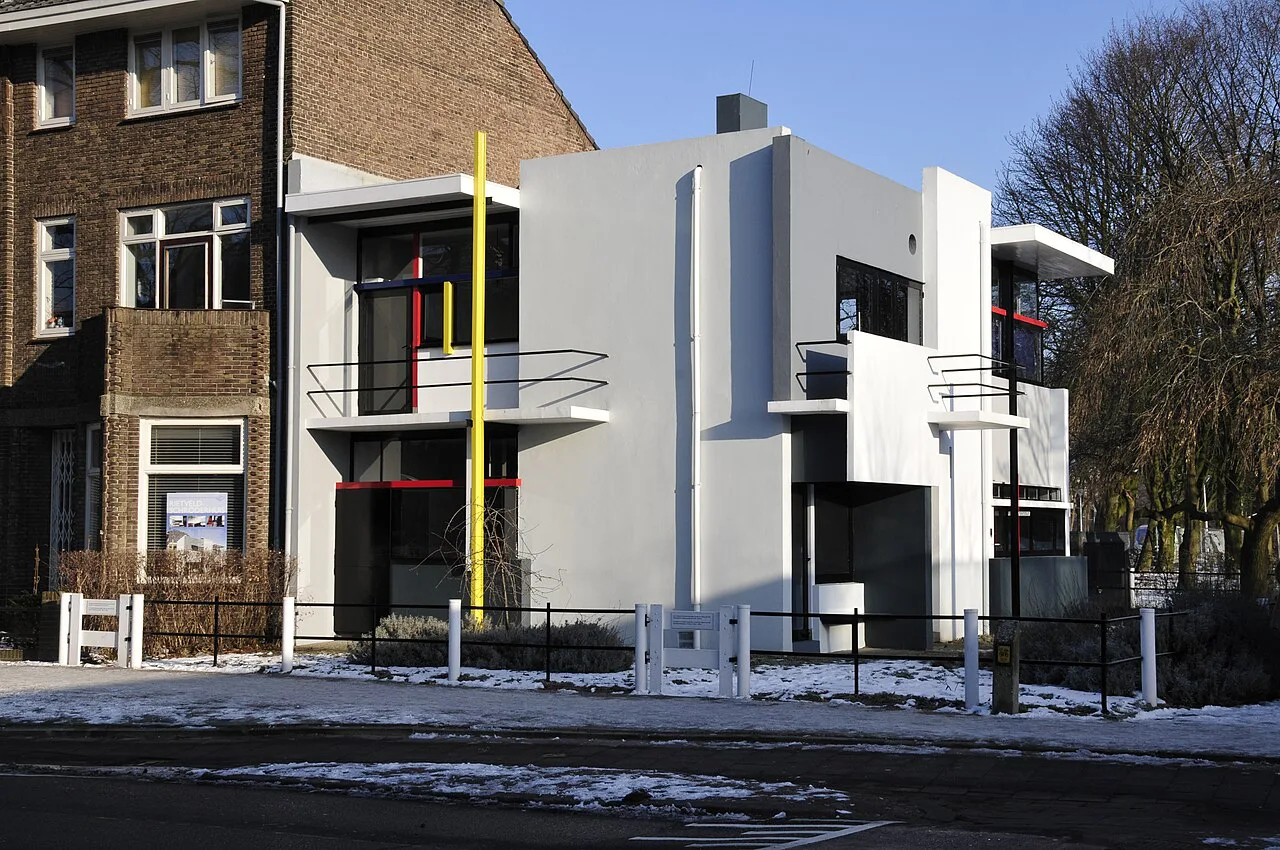
Utrecht is Gerrit Rietveld's city, and the red-and-blue chair and the Rietveld Schröder House made him internationally famous, but his work here goes well beyond that one house. The city's own Rietveld walking route starts at the Centraal Museum and takes in highlights of his work across the city over six kilometres.
Pair the walk with the Centraal Museum for the De Stijl context, then decide whether the house itself is a priority; the city publishes the routes but not the house's visiting arrangements, so check the house's own information before you build a day around it.
Cycling and walking the architecture
The De Stijl bicycle route in Utrecht runs nine kilometres and can be cycled independently using the extended directions, so you do not need a guide or a fixed departure. The Rietveld walking route covers six kilometres from the Centraal Museum, which makes a comfortable half-day on foot.
There is also a longer regional option, a 23-kilometre De Stijl route linking Utrecht and Amersfoort, with ten statues placed between the two cities. Choose it only if you have a full day and want the landscape between the cities, not just the streets.
Rain is the main planning risk for both routes. Line up wet-weather alternatives such as the library conversion on the Catharijnesingel, so a damp morning does not collapse the day; see Indoor Activities in Utrecht for more.
How many days Utrecht architecture needs
Give the old centre one full day on foot: Domplein, the Oudegracht at both levels, Kromme Nieuwegracht and the Catharijnesingel with the library and TivoliVredenburg. That is a compact loop and the most rewarding single day for anyone interested in how a Dutch city layers periods.
Add a second day for the station district, Wisselspoor and Wonderwoods, and for the De Stijl cycle route if the weather holds. A third day is only worth it if you want a deeper pass at the museums.
Group architecture tours
Architour runs a three-hour walking tour of the centre for private groups of up to 25 people per guide, with date and time set by arrangement and a quote on request. It covers the cathedral square, the Oudegracht with its wharf cellars, the modern canal house, the library conversion, the Catharijnesingel, TivoliVredenburg and the station area in one go.
That format suits a group that wants the whole chronology in one sitting; the trade-off is pace, since three hours across that many sites leaves little time inside any of them. Independent travellers are better served by splitting the same list across two days and lingering where it interests them.
Which walk to do first
Start with the old centre on foot, because the Oudegracht's two levels and the Domplein frame explain everything that came after. Then take the nine-kilometre De Stijl cycle route if you have a second day and dry weather, and use the six-kilometre Rietveld walk as the shorter alternative.
Interiors such as the Rietveld Schröder House and the museum collections are not always open, so check visiting arrangements and opening days directly before you travel; much of the architecture itself is visible from the street.
Explore more Utrecht guides
Frequently Asked Questions
What building style is Utrecht known for?
No single style: the centre is medieval canal houses with wharf cellars, layered with early-twentieth-century civic buildings, post-war cultural venues and twenty-first-century additions such as the reconstructed Catharijnesingel and the Wonderwoods tower. De Stijl, through Gerrit Rietveld, is the city's best-known modern contribution.
Can you see Rietveld's work in Utrecht without a guide?
Yes. The city publishes a nine-kilometre De Stijl bicycle route that can be cycled independently using its extended directions, and a six-kilometre Rietveld walking route starting from the Centraal Museum.
Sources
Notes for your next Dutch city break
Optional updates to our Netherlands guides.
You might also like
Continue reading
More guides you'll find useful