
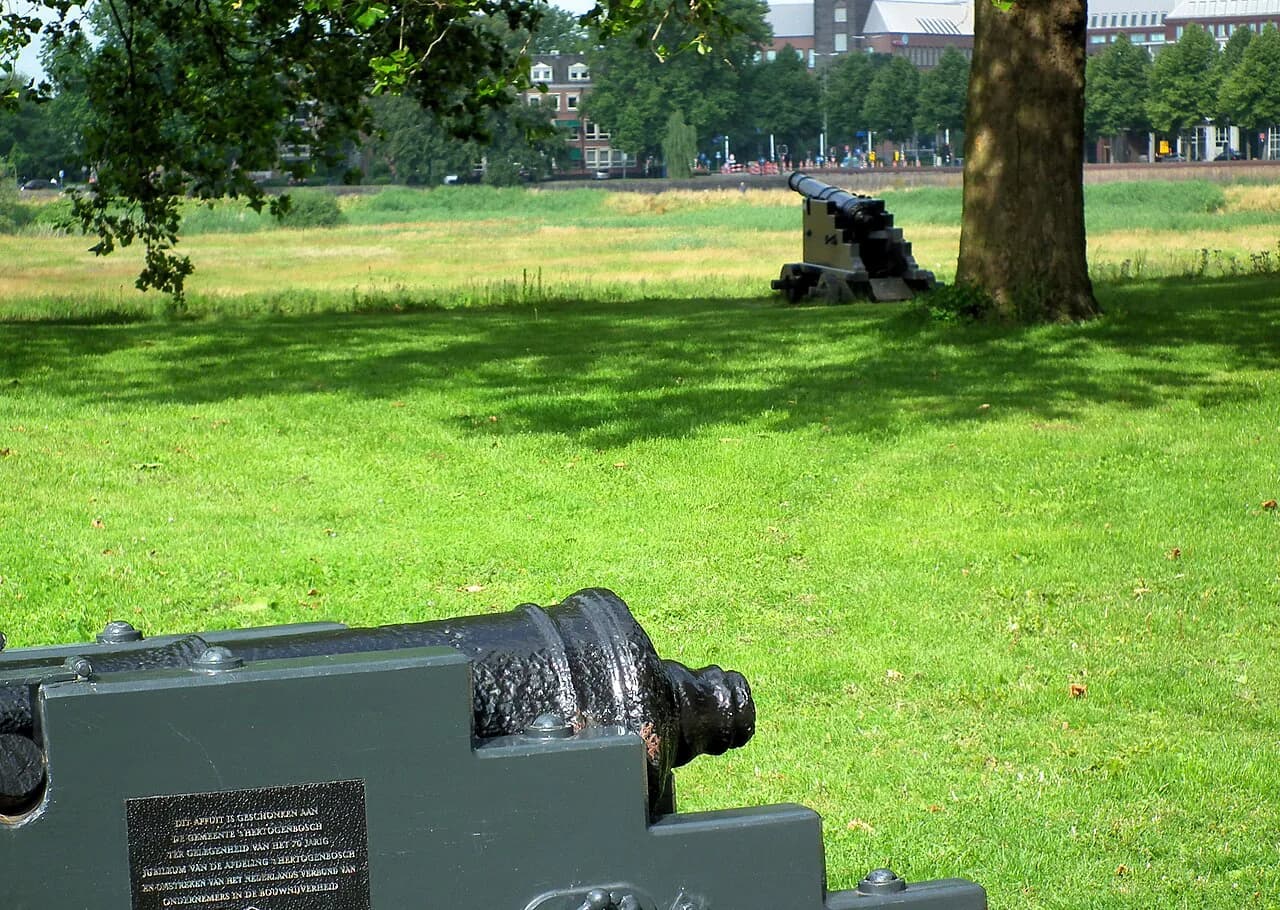
Bastion Oranje in Den Bosch: the bastion, the Bastionder and the view over het Bossche Broek

Bastion Oranje is a 1634 fortification work on Den Bosch's city walls, built to close the gap between the bastions Vught and Baselaar, and the ground has been a small public park since 1885, with the underground information centre known as the Bastionder housed at the same site. It is a short stop rather than a half-day sight, best folded into a walk along the vestingwerken. This page covers what the bastion is, how to reach it, what you actually see there and how to combine it with the rest of the walls.
What Bastion Oranje is and why it was built
In 1629 the city was taken by the Staatse armies of Prince Frederik Hendrik, and with a Spanish return considered likely, the defences were reviewed. The distance between the bastions Vught, near the Wilhelminaplein, and Baselaar, at the Hekellaan, was judged too great, so a new work for heavy guns went in halfway between them. That work was Bastion Oranje, built in 1634 as part of the Bossche vestingwerken.
The construction is the interesting part for a visitor, because you can read it in the fabric of the mound. The bastion has walls two metres thick with an earth rampart piled above them, and it was laid in front of the old main wall and a medieval roundel rather than replacing them, so several generations of defence sit in one place. The ground was bought by the municipality in 1885 and turned into a small park, which is what you walk through today.
Where it sits on the city walls
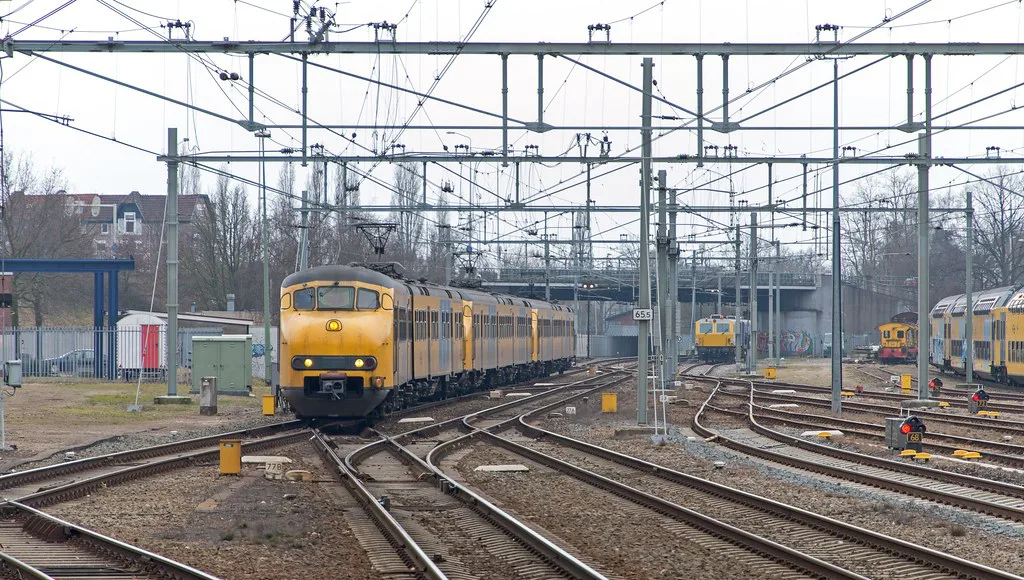
Historically the bastion was built on the stretch between Bastion Vught, by the Wilhelminaplein, and Bastion Baselaar, at the Hekellaan, precisely because the gap between those two works was judged too long to defend. Use those two landmarks as your reference points on the wall line: Bastion Oranje was thrown up mid-way between them on the edge of the old city, where the walls face open country.
From the old centre it is a short walk or an easier bike ride out along the wall line, and the approach on foot is the better choice because the fortifications are the point rather than the destination. The bastion is a grassy mound in a park, so there is no grand entrance to look for; aim for the raised ground and the information centre beneath it.

The walls, the rampart and the park on the mound
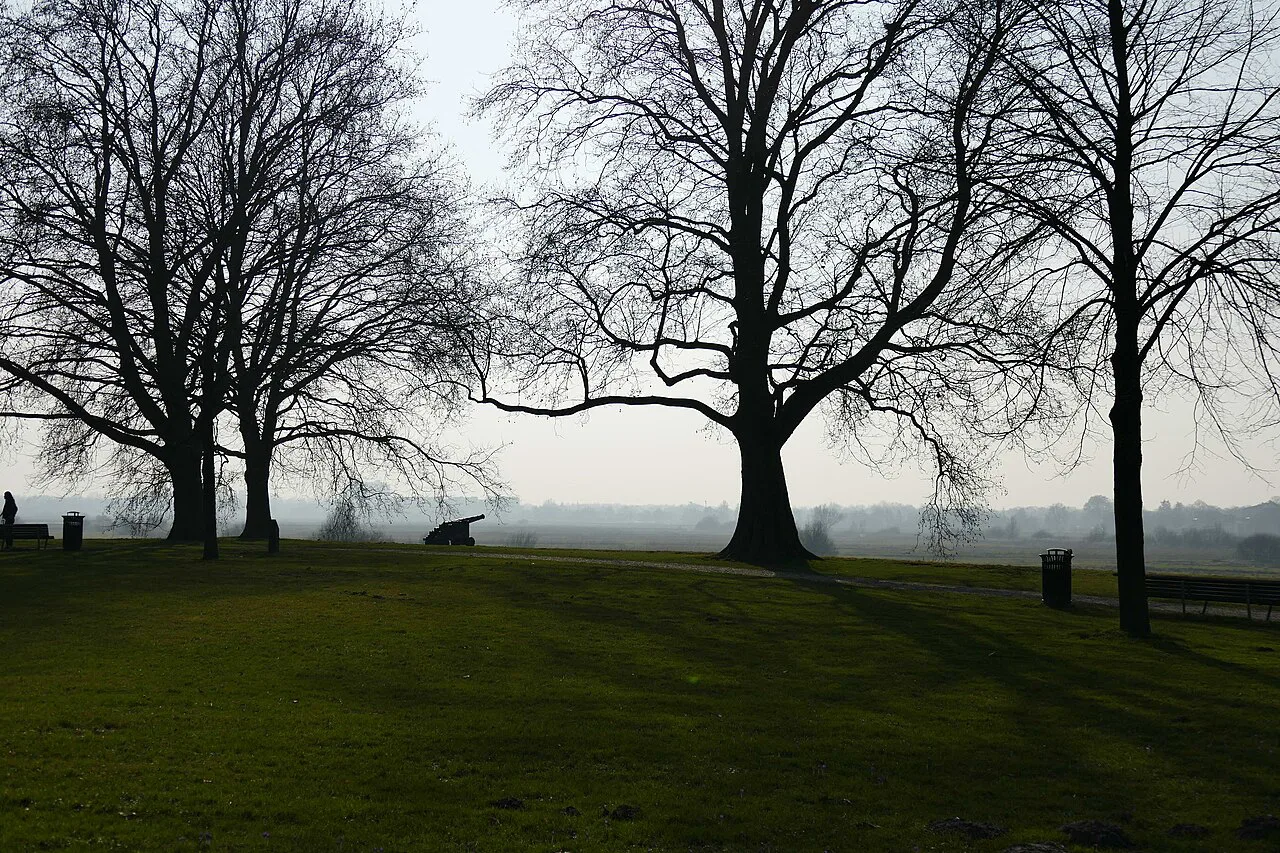
Above ground the site reads as a park on a mound rather than a fortress, which is exactly what it became. The two-metre walls and the earth rampart above them survive as the shape of the ground, and the medieval roundel the bastion was thrown up in front of lies under the later work. That layering, medieval city wall beneath a seventeenth-century gun platform, is what makes a short stop worthwhile.
A windmill once stood on this exposed spot, and in the mid-nineteenth century an oil and flour mill worked here before the municipality bought the land in 1885. That working history explains why the mound reads as an open grassy platform rather than a decorative folly.
The Bastionder underneath
The Bastionder is an underground information centre about the Bossche Vestingwerken, housed at the bastion itself. Treat it as the interpretive layer for the walls you have just walked along: the bastion is the outdoor site, the Bastionder is the centre beneath it, and they are not the same thing. For more of the city's fortifications, see our guides to nearby Bastion Baselaar and Fort Isabella.
Opening days, admission and whether you need to book for the Bastionder should be confirmed with Erfgoed 's-Hertogenbosch before you make it the reason for the trip. If it is shut, the bastion, the ramparts and the view are still there and still worth the detour. Our Den Bosch history guide sets the walls in the wider story of the city.
The view over het Bossche Broek
The payoff at the top is the wide look-out over het Bossche Broek, the open country beyond the walls. It is a long view from the edge of the old city, and the sort of open ground that made the bastion a useful gun position facing the approaches.
The park was laid out once the ground passed into municipal hands, and that is why the viewpoint feels relaxed rather than defensive. Bring nothing more than shoes that cope with grass and a bit of wind, and give yourself a few minutes at the edge before heading back along the wall.
How long to allow
Budget 20 to 30 minutes for the bastion and the view, and add time for the Bastionder only if you have confirmed it is open when you go. This is a short stop on a fortifications walk, not a sight that fills an afternoon, and expecting more than a grassy mound and a long view would leave you disappointed.
The better plan is to walk a stretch of the vestingwerken and let Bastion Oranje be one point on it, rather than a destination in its own right. The walls, the bastions and the water defences make sense in sequence; our Den Bosch walking tour maps an on-foot route through the centre.
Combining it with the rest of Den Bosch
The old centre is close enough to pair with the walls in a single day, and the city's museums make a natural wet-weather or afternoon complement. The Noordbrabants Museum in Den Bosch covers the province's art and history, and the Jheronimus Bosch Art Center deals with the city's most famous painter, so either gives the fortifications some context. Our Den Bosch Attractions: 12 Visitor Guides collects the rest of the city's sights in one place.
Smaller collections sit within the same central circuit if you want to stay on foot, including Museum Slager and the Zwanenbroedershuis, both compact stops that fit around a wall walk. Whichever you pick, check days and times before you set out, since Dutch museums commonly close one day a week.
Is Bastion Oranje worth the detour?
Yes, if you are already walking the Den Bosch city walls, and no if you are looking for a standalone attraction: the bastion is a 20- to 30-minute stop with a strong view and a good story about how the city defended itself. Go for the rampart, the layering of medieval wall and 1634 gun platform, and the look-out over het Bossche Broek.
Plan it as one link in a fortifications walk between Bastion Vught and Bastion Baselaar, and check the Bastionder's current opening arrangements with Erfgoed 's-Hertogenbosch before you count on going inside. That single check is the difference between a pleasant half-hour and a locked door.
Explore more Den Bosch guides
Frequently Asked Questions
Is Bastion Oranje free to visit?
The bastion is a public park on the city walls, laid out after the municipality bought the ground in 1885, so there is no entrance charge for the mound and the view. Any charge for the Bastionder at the site is a separate matter, and the current position should be confirmed with Erfgoed 's-Hertogenbosch before you go.
Is Bastion Oranje the same as the Bastionder?
No. Bastion Oranje is the 1634 fortification work and the park; the Bastionder is the underground information centre about the Bossche Vestingwerken housed at the same site. You can visit the mound and the view independently of the Bastionder.
Where is Bastion Oranje in Den Bosch?
It was built mid-way between Bastion Vught, by the Wilhelminaplein, and Bastion Baselaar, at the Hekellaan, on that spot in 1634 precisely because the gap between those two bastions was considered too long to defend properly. Use those two landmarks as reference points on the wall line when you walk there.
How long should I spend at Bastion Oranje?
Allow around 20 to 30 minutes for the ramparts and the view over het Bossche Broek, plus extra time for the Bastionder only if you have confirmed it is open. It works best as one stop on a longer walk along the walls rather than as a stand-alone outing.
When was Bastion Oranje built and why?
It was built in 1634, five years after Staatse forces under Prince Frederik Hendrik took the city, when the defences were reviewed against a possible Spanish return. The new work gave heavy guns a position midway between the bastions Vught and Baselaar.
Do I need to book the Bastionder in advance?
Booking arrangements and opening days for the Bastionder should be confirmed with Erfgoed 's-Hertogenbosch before you travel. The bastion, the ramparts and the look-out can be enjoyed whether or not the centre is open.