
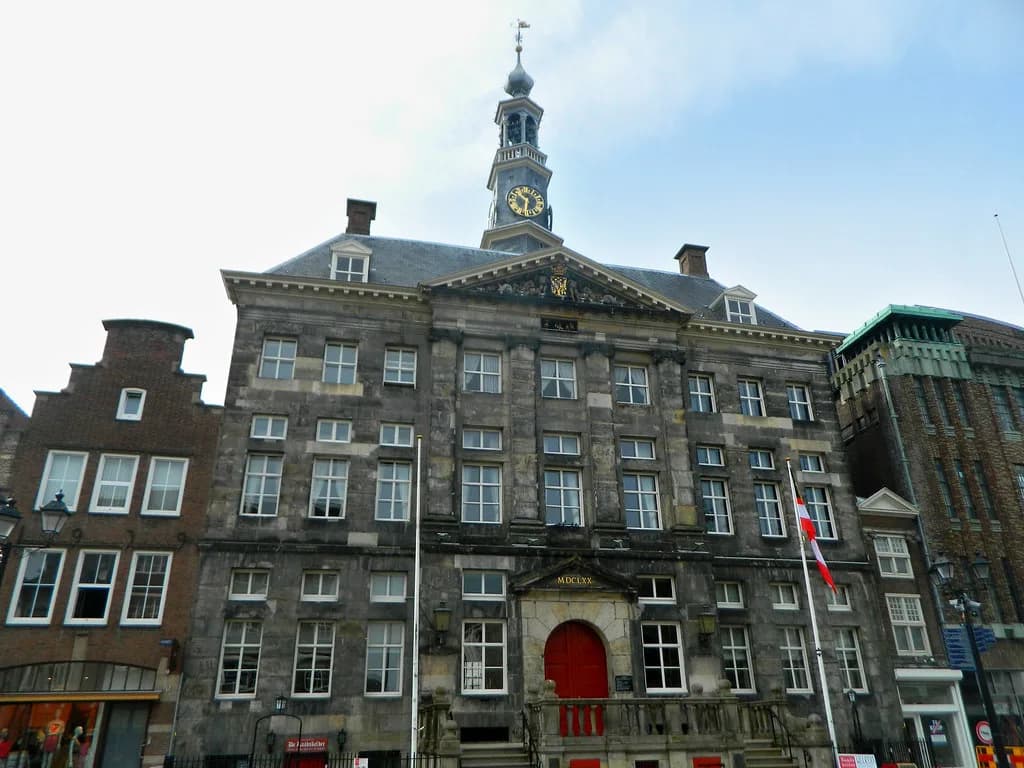
De Moriaan, Den Bosch: what to see at the Markt's oldest brick house
De Moriaan is a short stop, not a sight that fills an afternoon. Give it ten to fifteen minutes as part of a walk across the Markt, because the house is viewed from the street and its story is in the brickwork rather than in rooms you tour. This page covers where it stands, what survives inside, how it survived demolition in the 1950s, and how to tell it apart from the similarly named venue at Markt 79.
What De Moriaan is: a medieval hall-house on the Markt
De Moriaan is a large hall-house, a zaalhuis, on the Markt in the centre of 's-Hertogenbosch, and it counts among the oldest brick houses in the Netherlands. Tradition holds that Duke Hendrik I had it built for his friend Beckerlijn, but that founding story is handed down rather than documented. What is certain is that the house belonged to prominent Den Bosch families and has stood on this square through most of the city's history.
The name and the shape both point to a hall-house rather than a town palace: a tall brick volume closing one side of the Markt, with the Brabant Gothic lines you see across the square. Stand back towards the middle of the Markt to take in the roofline and the facade together, because from close up the ground floor reads as shopfront. The square itself is the historic heart of Den Bosch, and De Moriaan is one of the buildings that gives it its character.
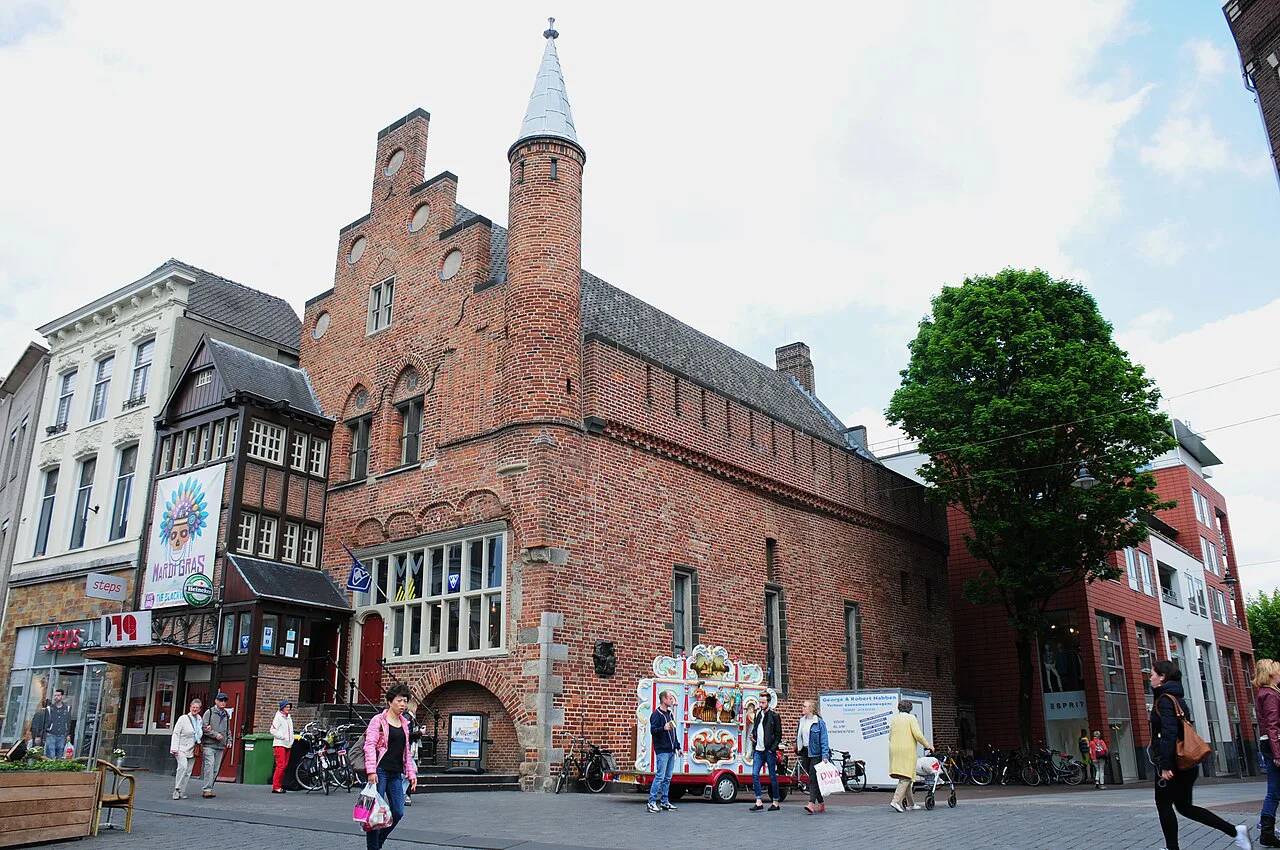

Where it stands on the Markt and how to reach it
The address is the Markt in the pedestrian centre of 's-Hertogenbosch, a few minutes' walk from the Markt's open space and the surrounding shopping streets. From the station side, the walk into the old centre brings you to the Markt without any transport at all: this is compact, flat city-centre walking, and the square is the natural orientation point for the medieval quarter. Arrive on foot or by bike and leave the car outside the centre.
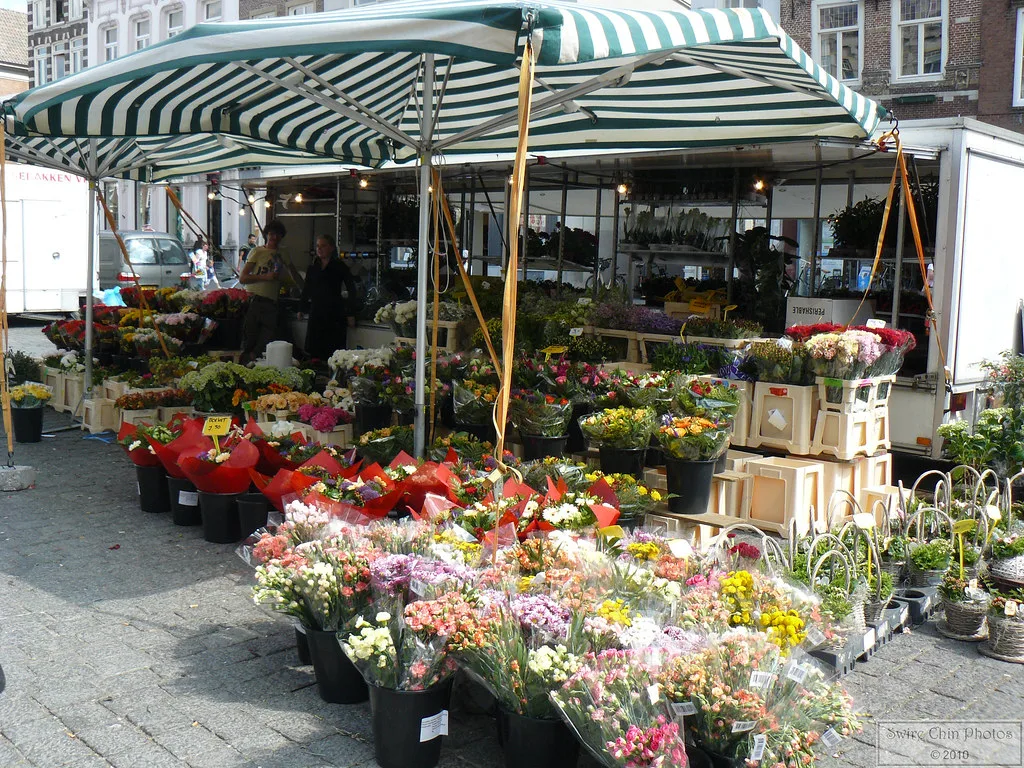
The Markt is a busy pedestrian square, and the open space in front of De Moriaan shifts through the day as shoppers and traders move across it. If you want a clear view of the building and room to stand back, come in the morning before the square fills. Treat De Moriaan as something you pause over rather than study — a facade to read as you cross the square.
What survives inside: 13th-century walling and 1310 beams
Much of the interior fabric is original. Walling and cellar beams from the thirteenth century survive, while the timber floor beams and roof trusses date from a rebuild in 1310. That makes De Moriaan worth more than a glance at the front: the oldest material sits behind and below the later facade, and the 1310 timbers are the reason architectural historians treat the house as a rare survival rather than a rebuilt showpiece.
Access to the interior is not something to count on. The house has served as shop and storage space in modern times, and the heritage record describes the fabric rather than a visitor route. Check at the door on the day whether anything is open, and plan your visit around the exterior so a closed door does not spoil the stop.
The building's later lives: meeting room, theatre, storage and shop
De Moriaan has been many things. During the iconoclastic troubles of 1566, Protestants used it as a meeting space, and in the seventeenth century it worked as a Speelhuys where theatre companies performed. Later it served as storage and as shop premises, which explains why the ground floor today looks commercial rather than medieval.
Reading those layers is the point of the stop. The facade you see is the result of a long working life, not a museum reconstruction kept behind glass, and that is what makes it typical of the Brabant city centre: medieval fabric still in everyday use. If you enjoy that kind of layering, the medieval churches and city walls elsewhere in Den Bosch reward the same eye.
The 1956 demolition threat and the 1960s restoration
In 1956 De Moriaan was lined up for demolition, and only a campaign against the plan stopped it. A large-scale restoration and reconstruction followed in 1963, bringing the building close to how it is thought to have looked originally. The house you photograph today is therefore a rescued and restored building, which is why its brickwork looks so tidy for something with thirteenth-century walls.
That date matters when you look at the details. Restoration of this kind mixes genuine old fabric with renewed elements, so the value of the visit is in knowing which is which: the cellar beams and walling are old, the roofline and facade are largely the 1960s reading of the original. Approach it as a piece of conservation history as much as a medieval house.
How much time to allow and when to walk past
Ten to fifteen minutes is enough for the exterior, the Markt and a look at the surrounding facades. The best light on the front comes in the morning, and the square is quieter before the shops get going. Build the stop into a route that also takes in the medieval streets around the Markt rather than making a special trip: De Moriaan is one element of a Markt walk, not a destination on its own.
Combine it with the museums that sit within a few minutes of the Markt. The Noordbrabants Museum in Den Bosch holds the city's art and history collections and is the obvious next stop for context on what you have just seen, while the Jheronimus Bosch Art Center Den Bosch covers the city's most famous painter in a former church. Both keep their own opening days, so check before you set out.
Nearby: the Markt and the rest of the medieval centre
The Markt is the pivot for the old centre, and several sights sit within a short walk. The Zwanenbroedershuis Den Bosch, home of the Illustre Lieve Vrouwe Broederschap, is a small, particular museum for anyone interested in the city's Catholic and civic elite. The Drakenfontein Den Bosch marks the junction where the centre opens towards the station side, a useful landmark when you are finding your bearings.
For the city's fortifications, walk out to the bastions on the former ramparts. Bastion Oranje in Den Bosch and Bastion Baselaar pair well with a circuit of the old walls, and the Kruithuis Den Bosch, a seventeenth-century powder magazine, is a specialist stop for anyone following the Eighty Years' War story. Design Museum Den Bosch covers the twentieth century and sits in the same museum cluster as the Noordbrabants.
One caution on names: Onder de Moriaan is a separate venue at Markt 79, 's-Hertogenbosch, a café-club in the centre rather than the historic hall-house. Its own site lists Markt 79 as the address and notes that opening hours vary by day and event, with terrace and café times published separately. If you want the medieval building, look for the brick hall-house on the Markt itself, not the nightlife address.
Away from the Markt, the Korte Putstraat is the street to know for eating in the evening, and it sits close enough to fold into the same walk. Fort Isabella in Vught is a short trip out of the city for anyone extending the stay. Keep the De Moriaan stop short, use it as the anchor for a morning on the Markt, and spend the rest of the day on the museums and walls.
Should De Moriaan be on your Den Bosch list?
Yes, as a ten-minute stop on a Markt walk, not as a sight that justifies a journey of its own. The reason to go is the combination of thirteenth-century walling, 1310 beams and a 1950s rescue story compressed into one facade you can read from the square. Fold it into a morning with the Noordbrabants Museum in Den Bosch and the surrounding streets, and you get the city's medieval core in half a day.
Check the day's museum times before you go, since Den Bosch's museums keep their own schedules, and leave the Markt for a non-market morning if you want a clear view of the building. Otherwise, walk past, look up at the brickwork, and carry on into the centre.
Explore more Den Bosch guides
Frequently Asked Questions
How old is De Moriaan in Den Bosch?
The surviving fabric reaches back to the thirteenth century, with walling and cellar beams from that period, and the timber floor beams and roof trusses date from a rebuild in 1310. The house is counted among the oldest brick houses in the Netherlands, though much of its present appearance comes from a restoration in 1963 that rebuilt it in its presumed original form.
Is De Moriaan the same as Onder de Moriaan?
No. De Moriaan is the medieval hall-house on the Markt. Onder de Moriaan is a separate café-club at Markt 79 in 's-Hertogenbosch, with its own programme and opening times published on its own website.
Can you go inside De Moriaan?
Treat the exterior as the main visit and ask on the day whether the interior is accessible. The house has been used as storage and shop space in modern times, so there is no standing visitor route to rely on. The building is easy to see from the Markt, and the facade is clearest when the square is quiet.