
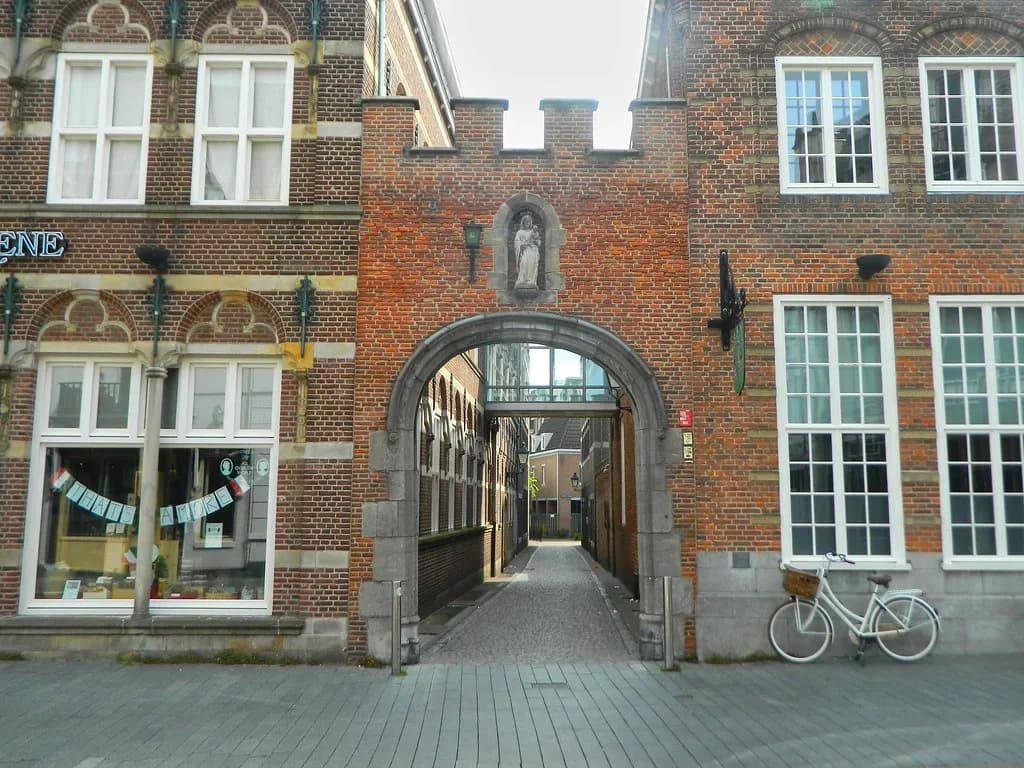
Zwanenbroedershuis Den Bosch: What to See at Hinthamerstraat 94
The Zwanenbroedershuis is worth an afternoon slot in Den Bosch if you want a small, specific interior rather than a conventional museum: it is the house of the Illustre Lieve Vrouwe Broederschap, a Marian brotherhood founded in 1318 that has occupied the site at Hinthamerstraat 94 since 1483. Tours last about 1.25 hours and run on fixed afternoon times rather than open-door hours, so you build the rest of the day around the booking.
This guide covers where the house is in the old centre, how the guided visit works, what tickets cost in euros, what to look for inside and on the facade, and which Den Bosch sights sit close enough to pair with a 14:00 start.
What the Zwanenbroedershuis is
The Illustre Lieve Vrouwe Broederschap began in 1318 as a group of local men devoted to the Virgin Mary and to care for the poor, and it settled on the Hinthamerstraat site in 1483. The present building is not medieval: the old house was demolished in 1847 and replaced with a neo-Gothic design by the Den Bosch architect Laffertee. That makes the visit a look at a working brotherhood house dressed in nineteenth-century architecture, with objects and archives inside that reach back much further.
It has been a listed rijksmonument since 1965, and a museum has been housed in the building since 2005, displaying choir books and altarpieces. Treat it as a fraternity building with a collection rather than a museum with free flow through galleries: you go in with a guide, at a set time, and the rooms you see are the brotherhood's own.
Where it is and how to reach it
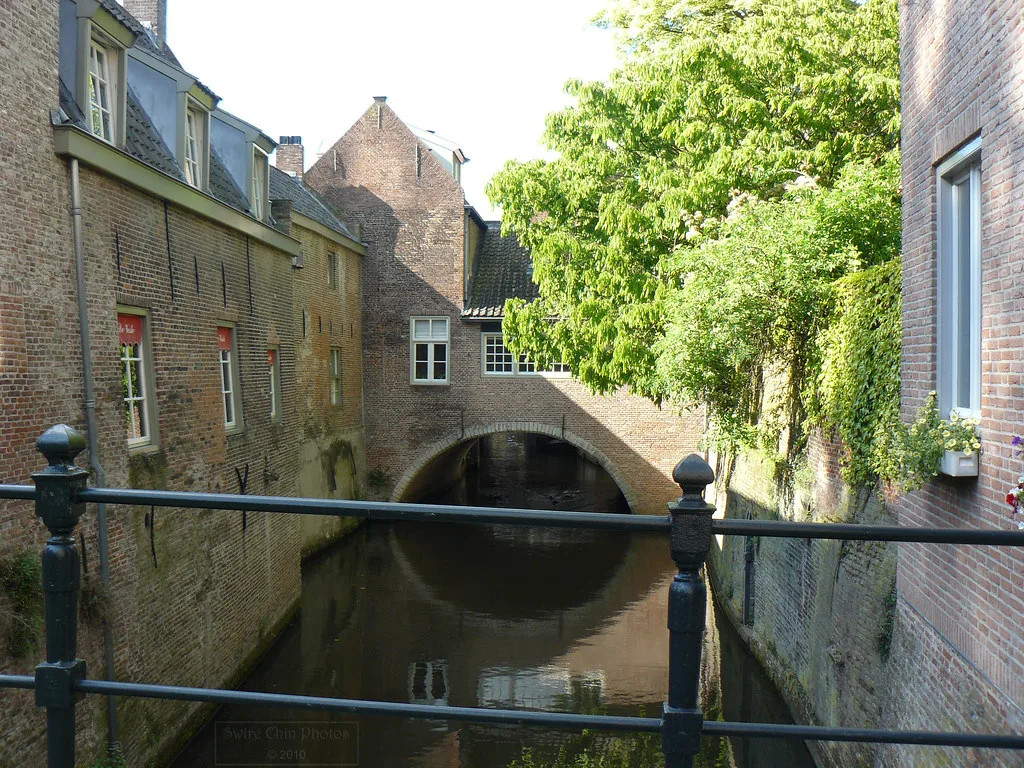
Hinthamerstraat 94 sits in the old centre of 's-Hertogenbosch, on one of the main streets running north-east from the Markt area, and the entrance is a door you ring at rather than an open museum frontage. Everything in this part of town is walkable: from the Markt and the Sint-Janskathedraal you are looking at a short walk up Hinthamerstraat, which makes the house easy to slot between a cathedral visit and a café stop.
Because the street is a shopping spine of the old centre, you will pass it anyway on a wander between the Markt and the Hinthamerstraat quarter. Arrive a few minutes before your slot so you are at the door when the guide opens up, rather than counting on walking straight in.
How to visit: guided tour only
Visits run as guided tours with the Kring Vrienden van 's-Hertogenbosch, scheduled on Tuesday, Wednesday, Thursday and Sunday at 14:00, and the house is closed on public holidays. The tour lasts about 1.25 hours, which is long enough to see the interior properly and short enough to leave the rest of the afternoon free. Booking is possible online up to one hour before the start.
The tour operator asks visitors to check its own page for current closing days, so use that rather than assuming the weekly pattern holds across holiday periods. If your Den Bosch day falls on a Monday or Friday, put the Zwanenbroedershuis on a different day or fill those days with the city's other museums.
Ticket prices in euros
Tickets cost €9.50 per person, with a reduced rate of €5.25 for children aged 4 to 12 and free entry for children up to 3. All rates include VAT plus a €1 service cost per ticket, and reservations can be made through the website until one hour before the tour starts.
Groups pay €9.25 per person with a minimum of €92.50, and a maximum of 15 people per guide, so a small group of six or seven pays the minimum rather than the per-head rate. The house is a private brotherhood building entered only with a guide, so the ticket buys a led visit at a fixed time rather than day-long access.
The swan on the facade and the name
Look up before you ring the bell: a swan sits at the top of the facade, made by the Den Bosch silversmith Cordang, and it refers to the brotherhood's swan banquets. Members earned the honorary name swan brothers from those feasts, which put swan meat on the menu.
Below the swan, four statues placed in 1962 by Marius van Beek show figures tied to the brotherhood's history: Prince Willem van Oranje, Gijsbertus van der Poorten who donated the house, Gerardus van Uden who founded the brotherhood, and Count Floris van Egmond en Buren. Naming them as you stand at the door gives the facade a purpose beyond decoration.
Inside: music books, artworks and a drinking cup
The interior holds artworks, historic music books and the drinking cup of Willem van Oranje, shown in a neo-Gothic house rather than a modern gallery. The scale is domestic: you are looking at a fraternity's own rooms and its prized objects, and the guide's commentary is what ties the collection to the people who used it.
Who belongs to the brotherhood
Jheronimus Bosch was a sworn brother, which gives the Bosch connection in Den Bosch a concrete address beyond the paintings. Since 1642 the brotherhood has counted 18 Catholic and 18 Protestant members, and today royal swan brothers are among its members, including King Willem-Alexander, Princess Beatrix and Princess Irene.
That membership mix is the reason the house feels like a living institution: it is still an active society with a membership list, not a frozen historic interior. If Bosch is the reason you came to Den Bosch, the Jheronimus Bosch Art Center, Den Bosch fills in the painter's world with reproductions and background that the brotherhood house only touches on.
What else to see nearby
The Noordbrabants Museum in Den Bosch is the obvious pairing for a 14:00 tour: give it a couple of hours either side of the slot, since both sit within the same central circuit. It gives you the wider art and history context that a carefully preserved fraternity house deliberately keeps narrow.
Also close by is the Stedelijk Museum Den Bosch, known as the Design Museum Den Bosch, for a contrasting programme of applied art and design. Two museums and one guided tour is a full day in a city this compact, and you can walk between them without a bus.
If you want one more small collection, Museum Slager, Den Bosch displays the work of a Den Bosch painting family in a townhouse setting and takes far less than a morning. The Kruithuis is the other name that comes up close to the centre, a former powder magazine whose sightline to the city walls makes the old fortifications of the Eighty Years' War easier to picture on the ground.
For a wider pick of the city, the things to do in Den Bosch guide covers the Markt, the Binnendieze and the Korte Putstraat, and the Bastion Oranje in Den Bosch adds a walk on the old ramparts if the weather holds. None of these need a timed booking, so they are the flexible half of the day around your slot.
Should you book the Zwanenbroedershuis tour?
Book it if you want a small, led visit with a real story attached, and if Tuesday, Wednesday, Thursday or Sunday afternoon fits your plans. Skip it if your day in Den Bosch is built around a Monday museum day or you prefer to wander unguided; check the tour page and the house's own visiting page for current closing days before you commit.
Either way, the Hinthamerstraat address sits on the walking route through the old centre, so you will pass a house crowned by a swan, with a facade whose statues name the prince, the founder and the benefactor behind the brotherhood.