Groningen History: The Periods That Shaped the City
A short history of Groningen for visitors, from its founding and Hanseatic years to the modern student city, with the periods that shaped its layout.
On this page
Groningen is one of the oldest cities in the Netherlands, established more than 980 years ago and holding city rights de facto in 1245. This guide sets out the periods that shaped it, from the Hanseatic trading years to the modern student city, and points you to the parts of the centre where each one still shows.
You do not need a degree in history to read the city, but a rough chronological spine helps enormously when you are choosing what to see over a one to four-day break. Keep the sequence below in mind and the old core stops looking like a random set of brick buildings.
How old is Groningen, and what does its founding date mean?
Groningen was established more than 980 years ago, which puts its origins firmly in the early medieval period. It gained city rights de facto in 1245, a date that matters more for visitors than a founding year because it marks the point at which Groningen could govern itself and trade on its own terms. Treat the 1245 date as the start of the city as a political and commercial entity rather than the moment the first house went up.
The practical consequence is that the oldest parts of the centre are medieval in plan, not in every brick. Fires, rebuilding and nineteenth and twentieth-century redevelopment have replaced most individual buildings, but the street pattern and the canal ring around the core still follow lines laid down centuries ago. Walk the centre with that in mind and you are reading the medieval city through later fabric.
The Hanseatic period: Groningen as a trading city
The first documents of Groningen as a Hanseatic city date from 1229, which means Groningen was a member of the Hanseatic Alliance. That membership was a trading arrangement before it was anything else: a network of northern European towns that cooperated on commerce, shipping and mutual protection.
For a visitor, the Hanseatic story explains why a city this far north grew into a trading centre. Its position between the coast and the inland provinces made it a natural market and storage point, and the wealth that flowed through it paid for the churches, warehouses and civic buildings whose successors you still see. Read the old core as a trading city first and a religious or aristocratic city second.
The medieval and early-modern core: what the streets tell you
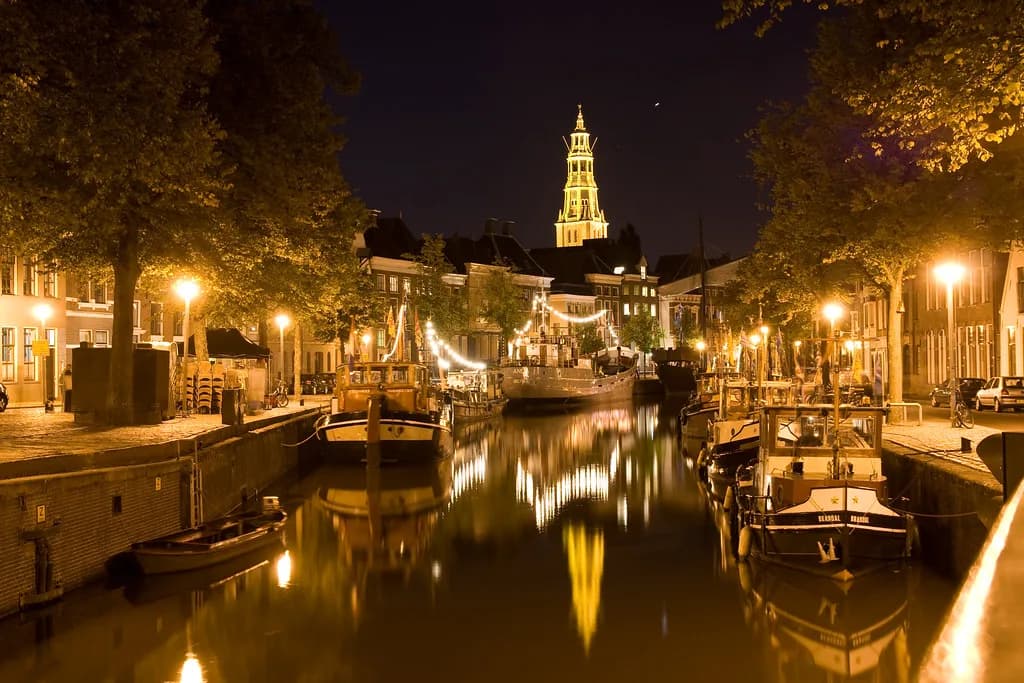
The medieval city grew as a compact, defended settlement, and the shape of that settlement survives in the ring of water and green around the centre. Groningen's canals and the old fortification line now form a loop of parks and water that is easy to walk and the simplest way to understand where the historic city began and ended.
Inside that loop, the pattern is dense and irregular: narrow streets, small squares, churches set back from the main routes. That is typical of a city that grew by accretion over centuries rather than by a single plan, and it is why a short walk across the centre covers a lot of the story in one go. If you want the architectural detail behind these generalities, the buildings deserve a closer look, and the city's architecture is covered in our related Groningen Architecture guide.
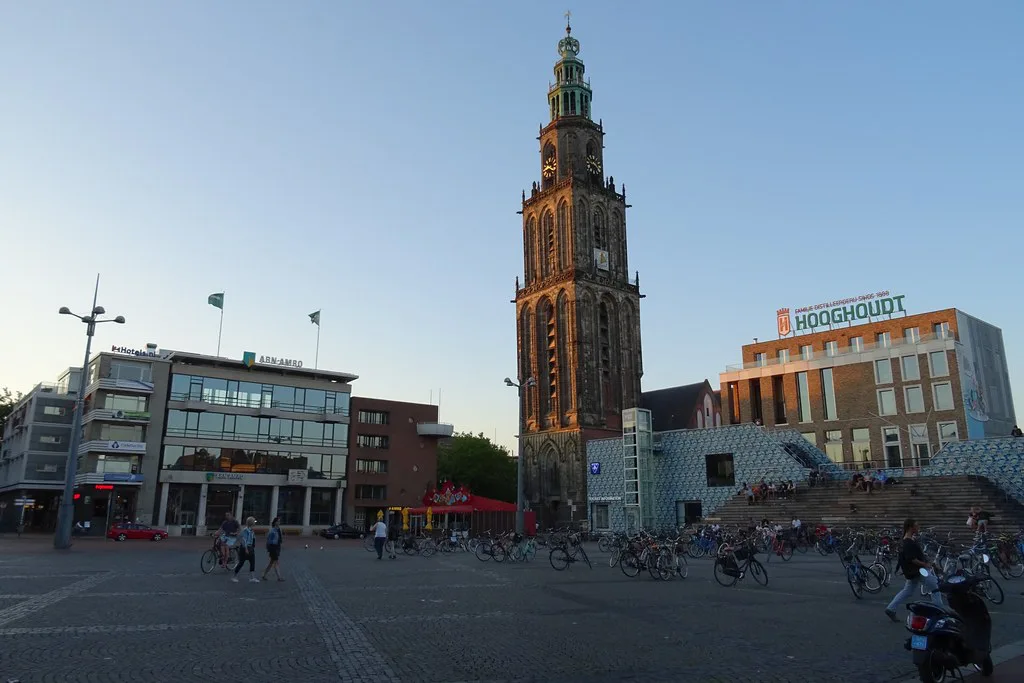
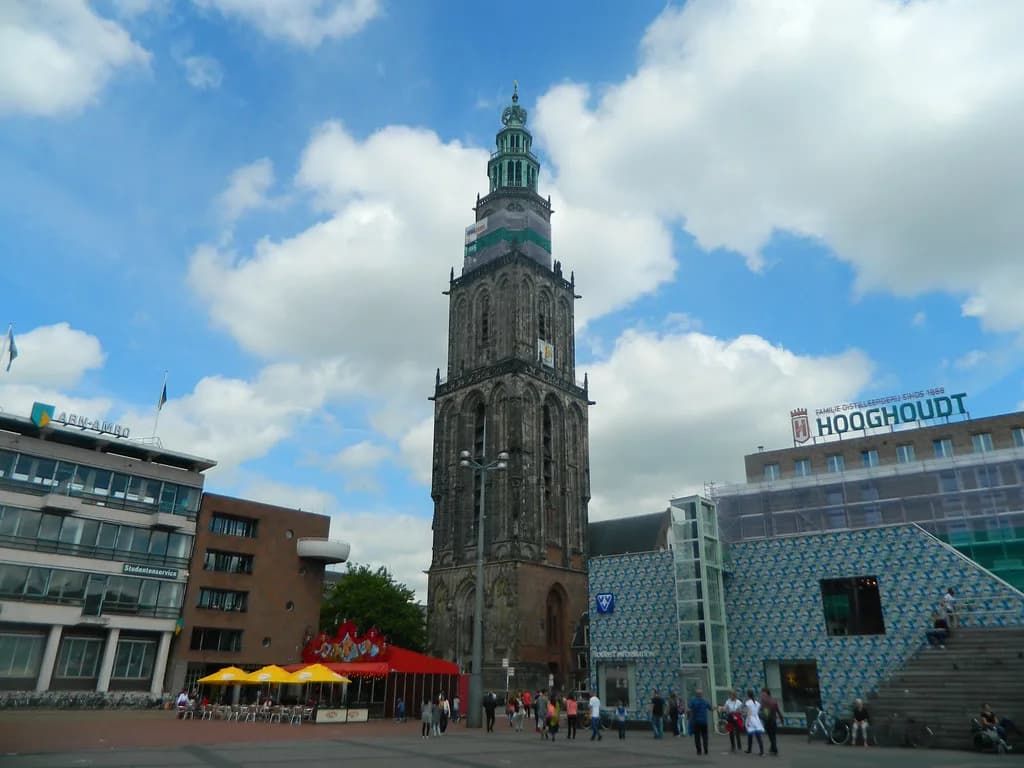
The early-modern period is the one most visible in the older civic and religious buildings that still stand. Groningen's historic churches show how a wealthy trading city invested in religious architecture, and the tall towers associated with them are the landmarks you will use to orient yourself in the centre.
The university and the student city
The Rijksuniversiteit Groningen is the institution that most changes how the modern city feels. Its History programme is a bachelor's degree taught over 36 months (180 EC), with teaching in both English and Dutch and a September start. That mix of languages and the steady flow of students is part of why the centre has the cultural life it does.
For the visitor, the university explains a few practical things. Groningen is a student city during term time, so the centre feels livelier than a town of its size would otherwise. The university buildings and the streets around them are part of the city's fabric, not a separate campus you need a reason to enter.
Groningen today: what to understand before you walk
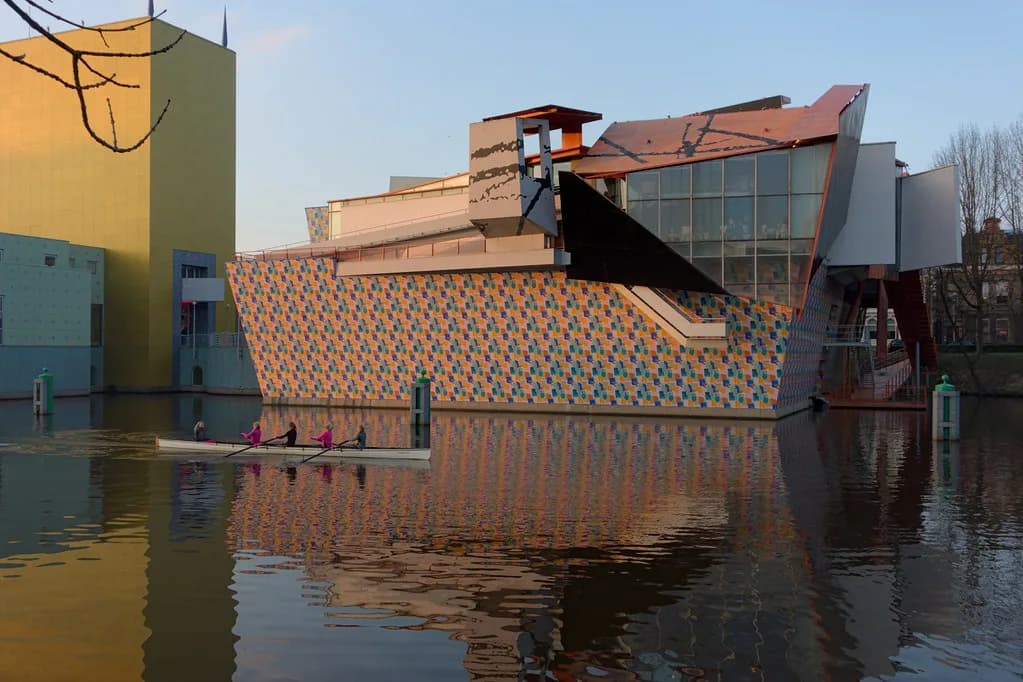
Modern Groningen is a regional capital with a compact, walkable centre. Art and design are a major draw, and the city has a dense set of galleries and smaller museums, which makes it easy to fill a rainy morning without leaving the centre.
If you want a museum-heavy trip, check opening days before you commit a day to indoor sights, since museum closing days vary across the Netherlands and can reshape a short break. The museums guide sets out where to start in the city.
Pair a walk along the canal ring with the medieval core and you have a quick orientation route that covers the medieval shape of the city and its modern self in a couple of hours. There are plenty of other things to do in Groningen if you want to fill the rest of the day.
A chronological spine for a one to four-day break
Day one: start at the medieval core, walk the canal ring, and keep the Hanseatic idea in mind — a trading city built on water and cooperation — because the density of the old centre makes sense once you do.
Day two: take in the churches and the older civic buildings in the morning, when the centre is quieter, then spend the afternoon in the smaller specialist museums. Day three, if you have it, is the day to slow down: pick a single museum or neighbourhood and read it properly rather than rushing between sights.
The full set of guides for the city sits under Museums in Groningen, which covers the key places to see and how they fit together. Use the history as background, but plan your days around what you actually want to look at.
Which period should you walk first?
Start with the medieval core and the canal ring, because it is the layer that explains the city's shape, then add the Hanseatic story and the modern university city on top. That order turns a pleasant walk into a coherent one, and gives you a reason to notice the parts of Groningen you would otherwise pass by.
If you have a rainy Monday, check which museums are open before you set out, and keep the streets as your fallback for the day.
Explore more Groningen guides
Frequently Asked Questions
What is Groningen famous for?
Groningen is known as one of the oldest cities in the Netherlands, with origins more than 980 years ago and city rights de facto in 1245, and as a former Hanseatic trading city. Its university and its compact medieval core are the features that most define a visit today.
Is Groningen in Holland?
No. Groningen is in the north of the Netherlands, not in the province of Holland, which covers the western cities including Amsterdam and Rotterdam. It is the capital of its own province, also called Groningen.
Is Groningen a nice city to visit?
Yes, if you like compact historic cities with a strong cultural offer. The centre is walkable, the canal ring makes orientation easy, and the university gives it a livelier feel than its size suggests. It suits a one to three-day break better than a flying visit.
How do you pronounce Groningen?
Roughly GRON-ing-un, with a hard g that sounds like the ch in Scottish loch. English speakers who flatten the second syllable into an unstressed schwa are close enough to be understood.
Sources
Notes for your next Dutch city break
Optional updates to our Netherlands guides.
You might also like
Continue reading
More guides you'll find useful