Rotterdam Architecture: The Buildings and Streets to See
Rotterdam architecture explained by area and period, from the Markthal and Central Station to the Depot, Museum Park and Scheepvaartkwartier.
On this page
Rotterdam is the city to visit if you want modern architecture rather than a historic Dutch canal backdrop. Its centre was rebuilt after the bombing of 1940, which is why you get bold, experimental buildings here that you will not find in Amsterdam, Delft or Maastricht. This guide groups the main buildings by area and period, says what to look for at each, and explains how many days the architecture alone needs.
The short answer is two to three days: the centre eye-catchers fit a day, the Depot and Museum Park a second, and the Scheepvaartkwartier with the Euromast a third. Rotterdam rewards walking between buildings rather than hopping on transport, because the pleasure is in the contrast from one block to the next.
What defines Rotterdam architecture
Rotterdam's distinctiveness comes from what replaced what was lost. After the bombing of 1940, the city rebuilt with modern and experimental structures, while Amsterdam, Delft and Maastricht kept their historic streetscapes, and the result is a centre of modern and unique places you can admire on foot. That reset is why progressive design is the main reason to visit Rotterdam, and why the skyline reads as a timeline of post-war Dutch architecture.
Two threads run through the city. One is the large civic and commercial gesture: stations, markets, towers and museums designed as landmarks. The other is the experimental housing and cultural building, where Dutch architects pushed ideas about structure, materials and public space; the city's contemporary work is shaped by that post-war rebuilding instinct. That framing helps you read the buildings as arguments rather than decoration.
Start in the centre: Markthal and Central Station
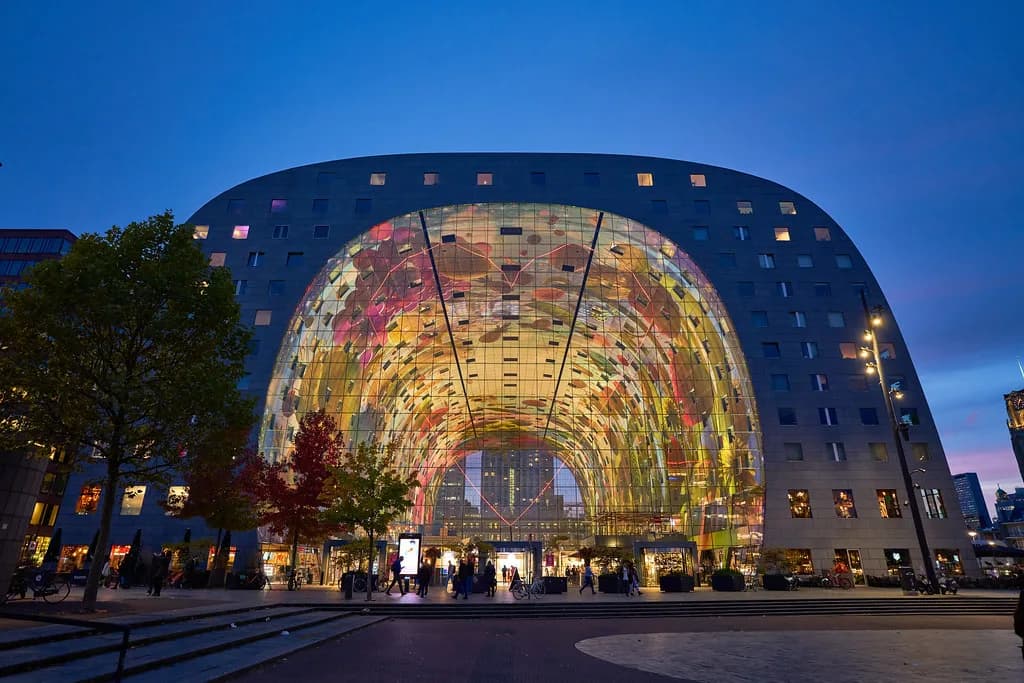
The Markthal is the centre's signature building: an enormous grey arch pierced with dozens of windows, with a colourful ceiling painted across its inner curve. Walk around the outside before you step in, because the arch reads differently from each approach and the window grid is the detail most people photograph least. It sits right in the heart of the centre, so it makes the natural first stop.
Rotterdam Central Station is the other centrepiece, an asymmetrical building with an aluminium roof. The angle is deliberate and best seen from the square in front rather than from the platform side. Pair the two on foot: the station, the Markthal and the surrounding streets give you the clearest single lesson in how Rotterdam builds.
The Depot: the reflective egg
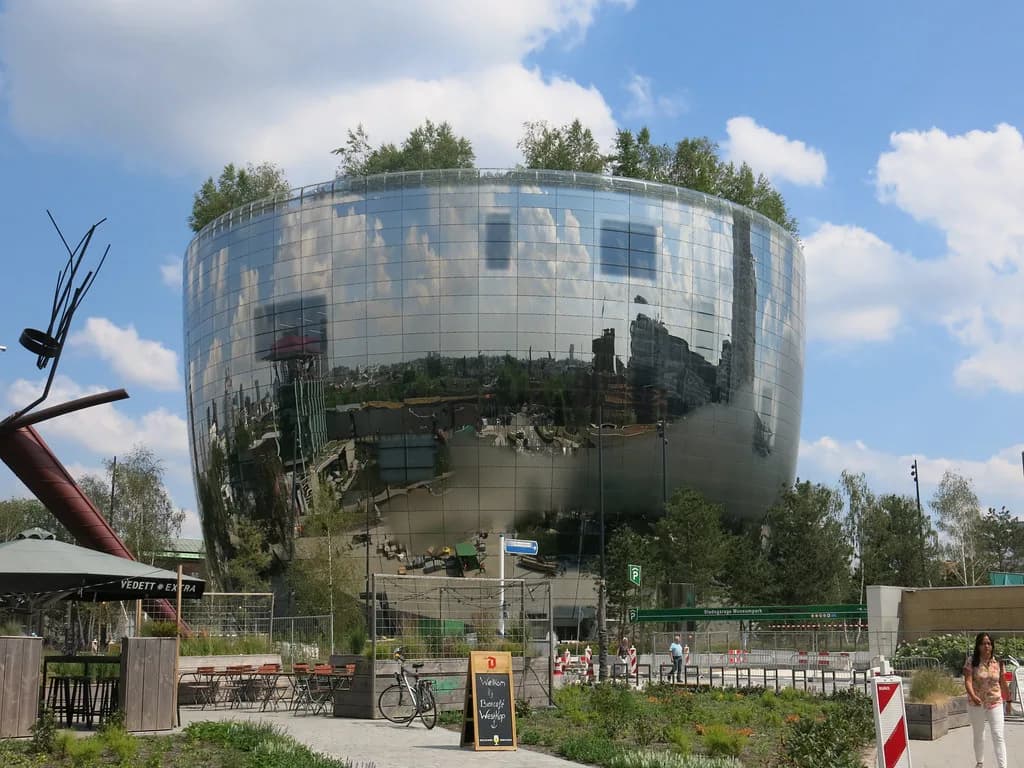
Beside Museum Park stands the Depot, a forty-metre-high reflecting building in an egg shape with trees on its roof. The mirrored skin reflects the park and the surrounding streets, which is the point: it is designed to be seen as part of the landscape rather than as a sculpture dropped onto it. For anyone working through the Museums in Rotterdam, it is also the most striking recent addition to the museum quarter.
Approach it from the Museum Park side so the reflection works on you first, then walk round to see how the shape changes against the sky. It is a quick stop once you are in the museum quarter, which makes it an easy add-on to a museum day rather than a destination in itself.
Museum Park: lawns, water and sculpture
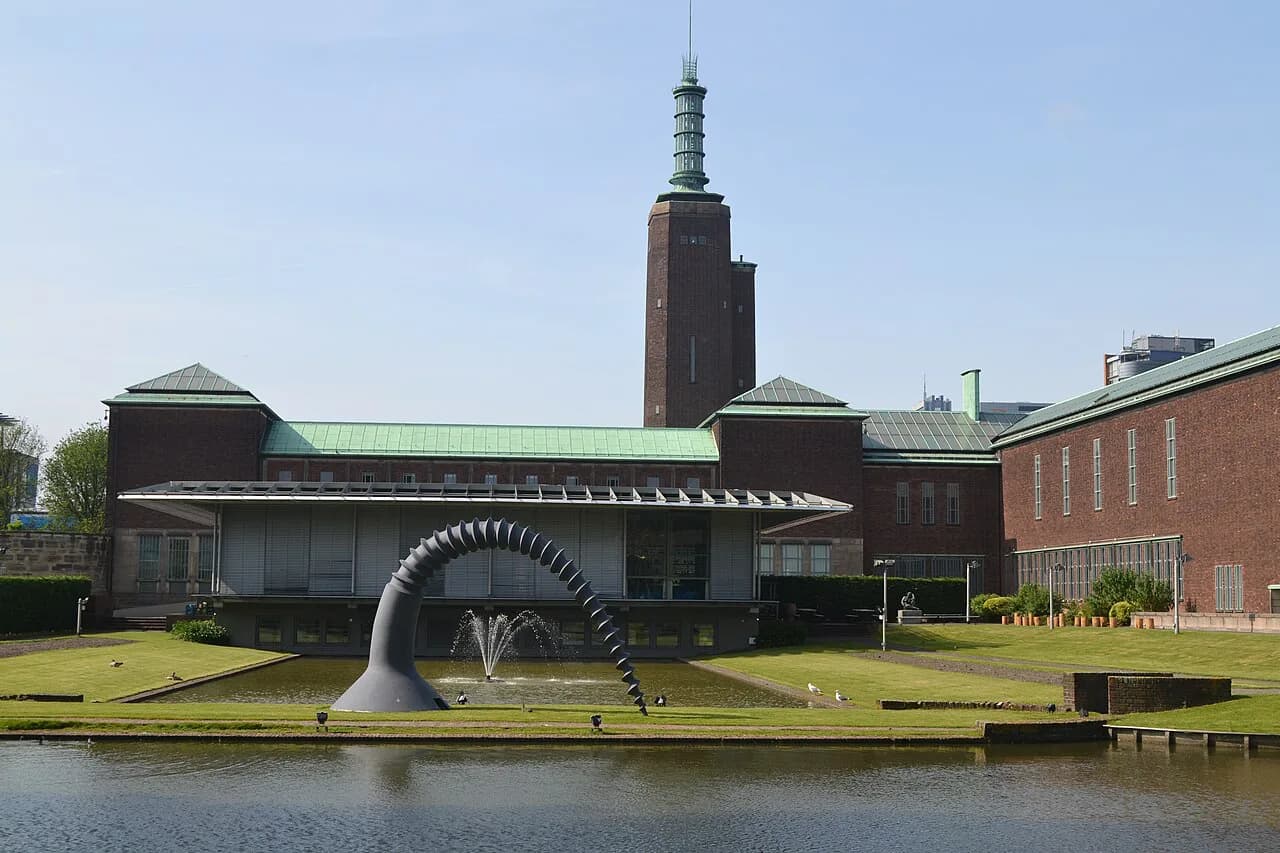
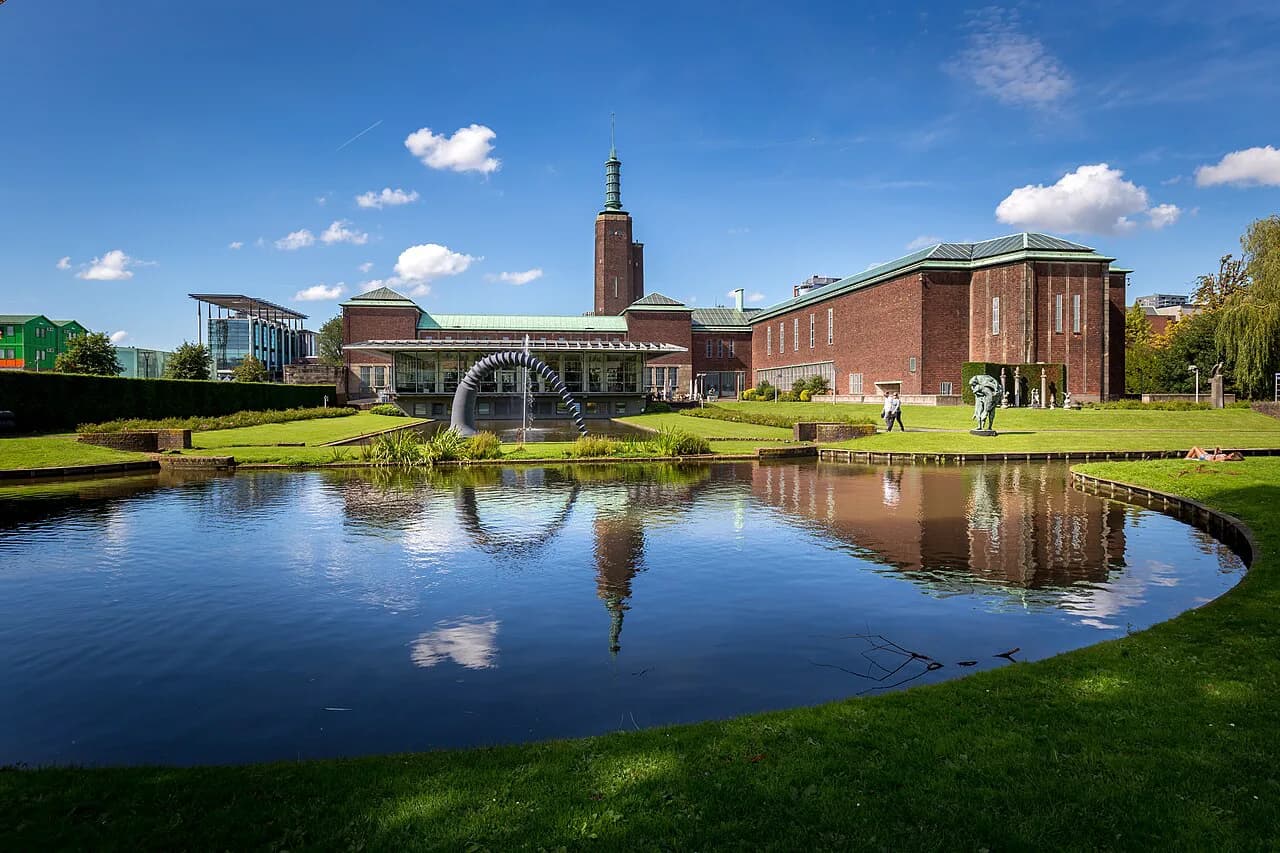
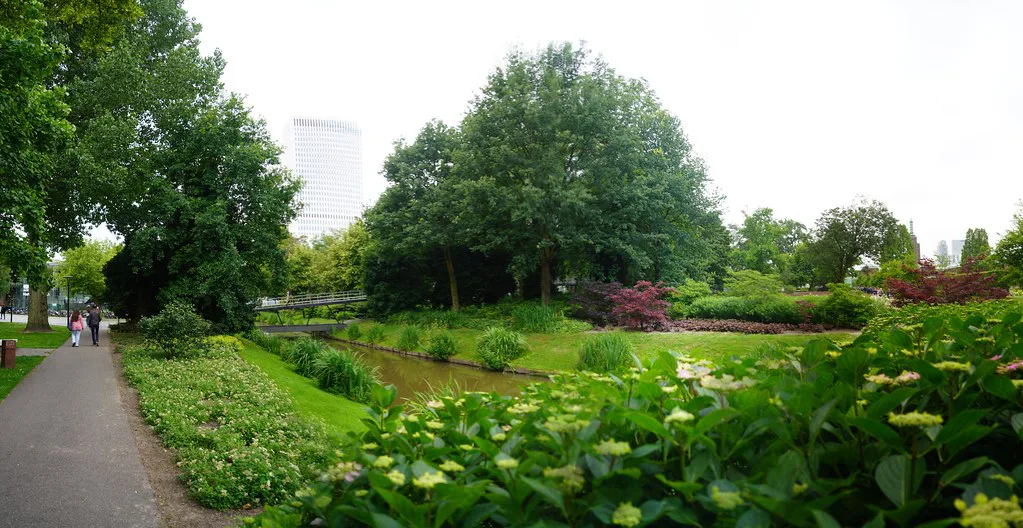
Museum Park is the oasis in the middle of all that steel and glass: lawns, trees, plants, a pond and works of art laid out for slow walking. The park is the place to rest between buildings and to see how Rotterdam's newer architecture sits against green space. Give it half an hour minimum, longer if the weather is good.
Architecture and art meet here rather than in a gallery: the park's sculptures and sightlines are part of the composition, and the surrounding museums form the walls of the room. If rain sets in, use the park as a crossing point between buildings rather than a stop. For a wet afternoon elsewhere in the centre, the Indoor Activities in Rotterdam guide makes a sensible fallback.
Scheepvaartkwartier and the Zalmhaven tower
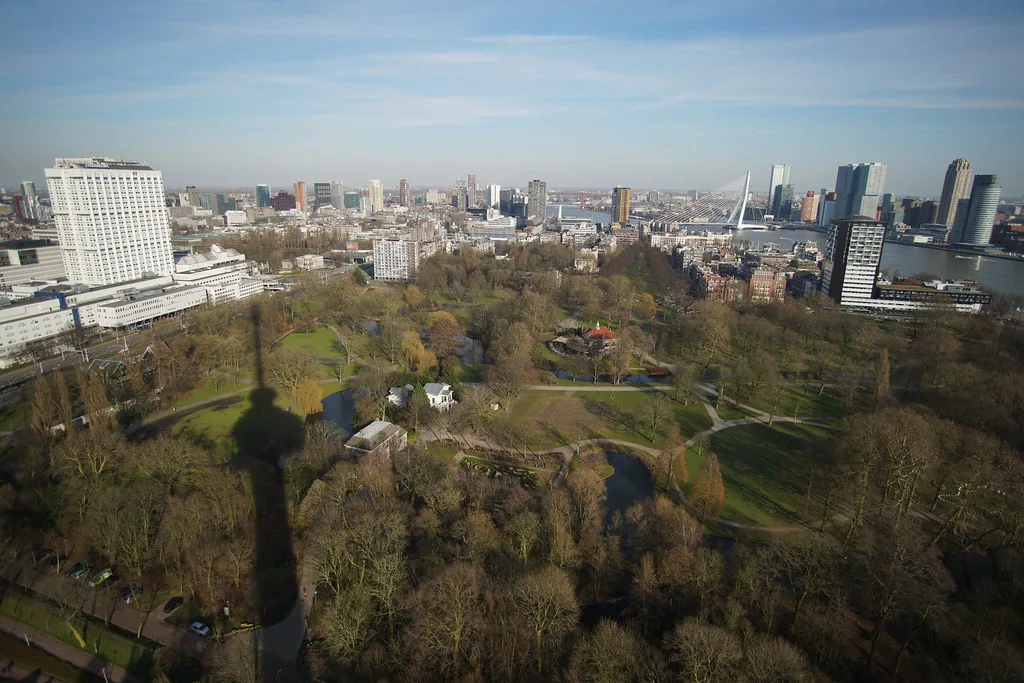
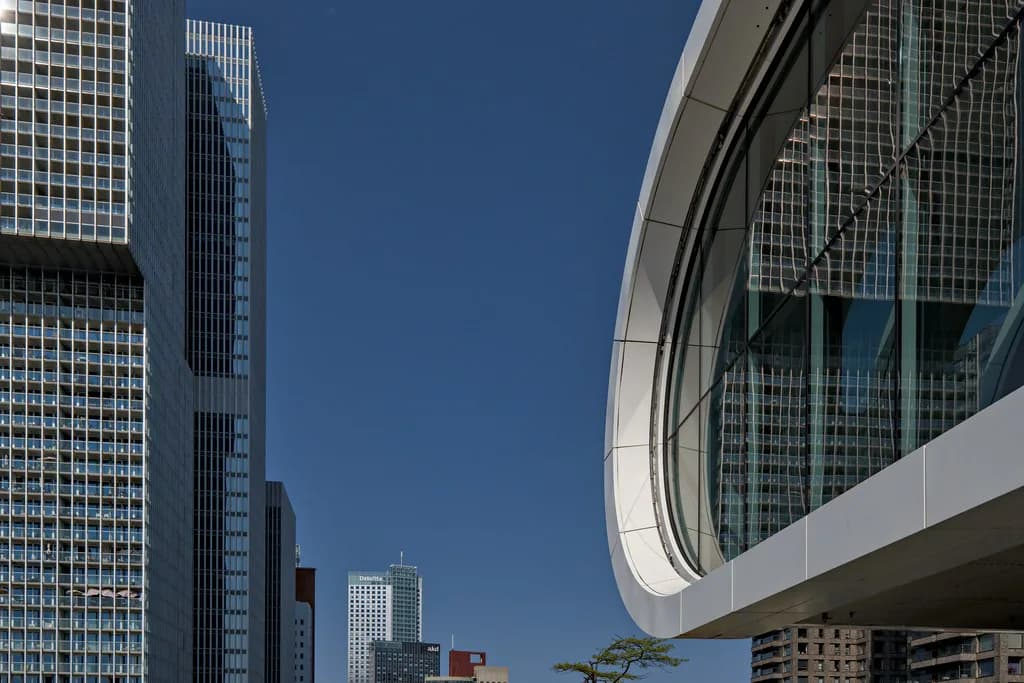
Head west from the centre via the Wijn- en Glashaven, where new architecture is finished or going up along the water, and you reach the Scheepvaartkwartier. This is where the scale changes: the harbour quarter's older streets sit below the Zalmhaven tower, described as the tallest skyscraper in the Benelux. Seeing a tower of that height rising from low-rise streets is the clearest illustration of how Rotterdam's building eras sit side by side.
Do this on foot in one direction rather than doubling back, because the sequence from the centre to the harbour is the experience. Keep the Maas in view where you can: the river's presence shapes how the buildings are sited and lit. Allow an hour for the walk at an unhurried pace.
The Euromast and the Euroscoop
Street level will not show you the whole picture. The Euromast is the classic vantage point for reading the skyline, with its towers, the river and the rebuilt centre laid out together. It also houses the Euroscoop, the lift that carries visitors up for that view. Go up once, at the start or end of your trip, so the rest of the walking makes sense in plan as well as in elevation.
The trade-off is time set against a view you cannot get elsewhere on foot. If you only have a day, the centre eye-catchers matter more; if you have three, the Euromast is worth its slot. Treat it as a separate outing rather than something to squeeze between buildings.
Bridges and the Nieuwe Maas
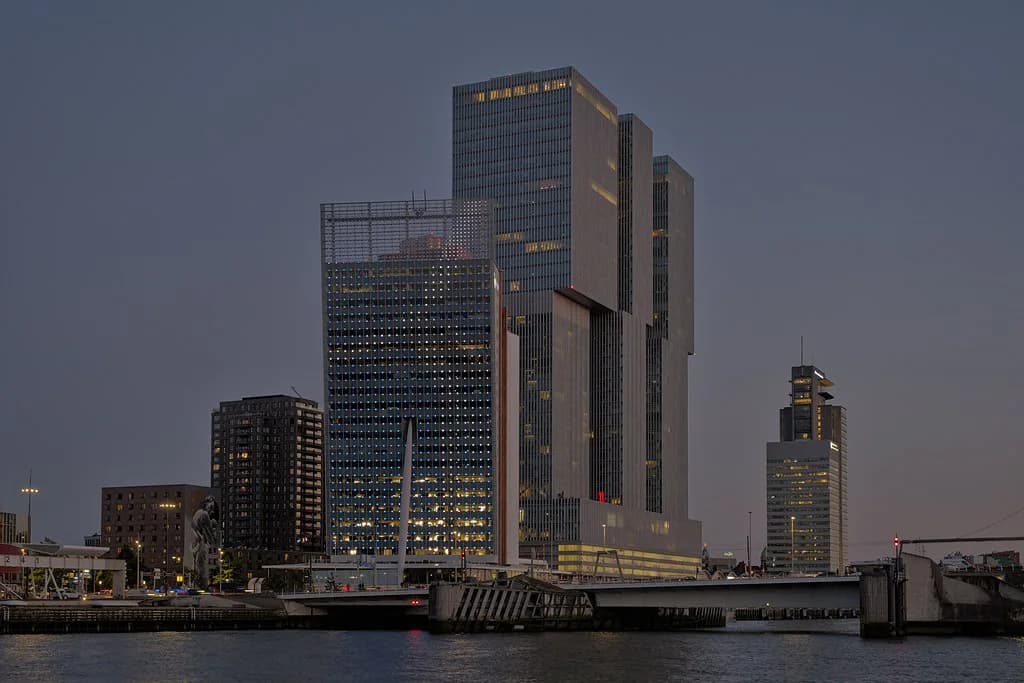
The Nieuwe Maas is not scenery at the edge of Rotterdam; it is the reason the city looks the way it does. Bridges, quays and water views frame almost every architectural photograph you will see, and a waterside walk explains why towers cluster where they do. The river also gives the city its calm: the contrast between the busy centre and the wide water is part of the experience of being here.
A loose waterside route linking the centre, the Scheepvaartkwartier and the Maashaven end of the city covers the main water relationships in a couple of hours. Watch how the buildings turn their braver faces towards the river. The water is the constant around which the modern city has been built, and that relationship is legible from the quays.
Post-war rebuilding and the skyline
The comparison with other Dutch cities is the quickest way to understand Rotterdam. Amsterdam, Delft and Maastricht are known for their historically beautiful buildings; Rotterdam, after the bombing of 1940, produced a city of modern and unique places instead. That is not an absence of history but a different one: the story here is what architects did with the chance to start again.
Look for the skyline expanding as you walk: new skyscrapers with apartments above the Maas are still going up alongside the post-war landmarks. The result is a city where architectural eras sit side by side within a few streets, and where a building from the 1950s can face one from last year. Walk with that in mind and the whole centre becomes a timeline.
Architecture events worth timing a trip around
Rotterdam's architecture is not only baked into the streets; it has a public face. Programmes such as Rotterdam Architecture Month, the Day of Architecture, Open Monument Day and the Rotterdam Rooftop Days are covered on the city centre's events pages, and they add events and guided programmes alongside the year-round buildings. If architecture is your main reason for coming, it is worth seeing whether one falls during your trip.
Each is announced separately with its own programme, so treat the dates and any booking requirements as things to confirm before you fix travel. Architecture discovery walks are likewise listed as scheduled events rather than drop-in tours.
How many days Rotterdam architecture needs
One day covers the centre: Central Station, the Markthal and the surrounding streets, walking between them rather than crossing the city repeatedly. Two days adds the Depot and Museum Park, with the surrounding museums as a natural extension. Three days adds the Scheepvaartkwartier and the Euromast, giving you both the waterside and the skyline view.
A fourth day is for going deeper rather than wider: revisiting the buildings you liked at a different time of day, or taking in an architecture event if one is running. The mistake to avoid is chasing every named building across the map in a single day. Group by area and the walking stays short and the looking stays long.
Practical trade-offs for an architecture trip
If your plan leans on museum interiors, check opening days and any ticketing requirements before committing a day to them, so a short day does not catch you out. The streets and skyline need no ticket, which is the argument for starting outside and saving interiors for a wet or tired afternoon.
Check opening days and any ticketing requirements for the museums you want to include before you commit a day to interiors. When you want a break from exteriors, art galleries make a good half-day indoors.
How many days should you give Rotterdam's architecture?
Give Rotterdam two days if architecture is the point of the trip and three if you want the river as well as the centre. Start at Central Station and the Markthal, add the Depot and Museum Park, then finish with the Scheepvaartkwartier and the Euromast. That sequence keeps you walking in one direction instead of zigzagging across the city.
Decide your dates around an architecture event if one is running, and keep Monday light. The buildings will still be there on any other day, and a second look at the same street at dusk is worth more than a rushed sweep of the whole map.
Explore more Rotterdam guides
Frequently Asked Questions
Why is Rotterdam so popular for architecture?
Because the city rebuilt after the bombing of 1940 with modern and experimental buildings, rather than restoring the historic streetscape you find in Amsterdam, Delft or Maastricht. That gives visitors a compact centre of eye-catchers such as the Markthal, Central Station and the Depot within walking distance of each other.
What city is known for its architecture in the Netherlands?
Rotterdam is the Dutch city most associated with contemporary architecture, with progressive post-war design defining its centre. Amsterdam, Delft and Maastricht are better known for historic buildings, which is exactly the contrast that makes Rotterdam worth visiting.
Can you see Rotterdam's main buildings in a day?
Yes, the centre's eye-catchers fit into a day on foot. Add a second day for the Depot and Museum Park, and a third for the Scheepvaartkwartier and the view from the Euromast.
Sources
Notes for your next Dutch city break
Optional updates to our Netherlands guides.
You might also like
Continue reading
More guides you'll find useful