Groningen City Centre: What to See on Foot in the Old Town
A walking guide to Groningen city centre: Grote Markt, Vismarkt, the Martinitoren climb, Hoge der A warehouses, hidden courtyards and the canal-side museum.
On this page
Groningen city centre fits into a single day on foot: the old town wraps around Grote Markt and Vismarkt, with the Martinitoren, the canal quays at Hoge der A, a run of hidden courtyards and the Groninger Museum all within an easy walk. This guide sets out how the centre is laid out, what each sight gives you and a walking order that keeps backtracking to a minimum.
Groningen sits in the far north of the Netherlands, a lively student city with plenty going on, and the historic core is where a short break spends most of its time. It is an easy trip from Amsterdam and the surrounding neighbourhoods are reachable by bike, but the centre itself rewards plain walking, especially since much of it is closed to cars.
How the old town is laid out around two squares
The centre pivots on two squares in the heart of the city: Grote Markt, the main square, and Vismarkt just a few minutes away. Most of the sights a first-time visitor wants sit within a ring bounded by these squares, the Martini church, the canal at Hoge der A and the station side of the centre. The main sights are easy to find on a Things to Do in Groningen shortlist.
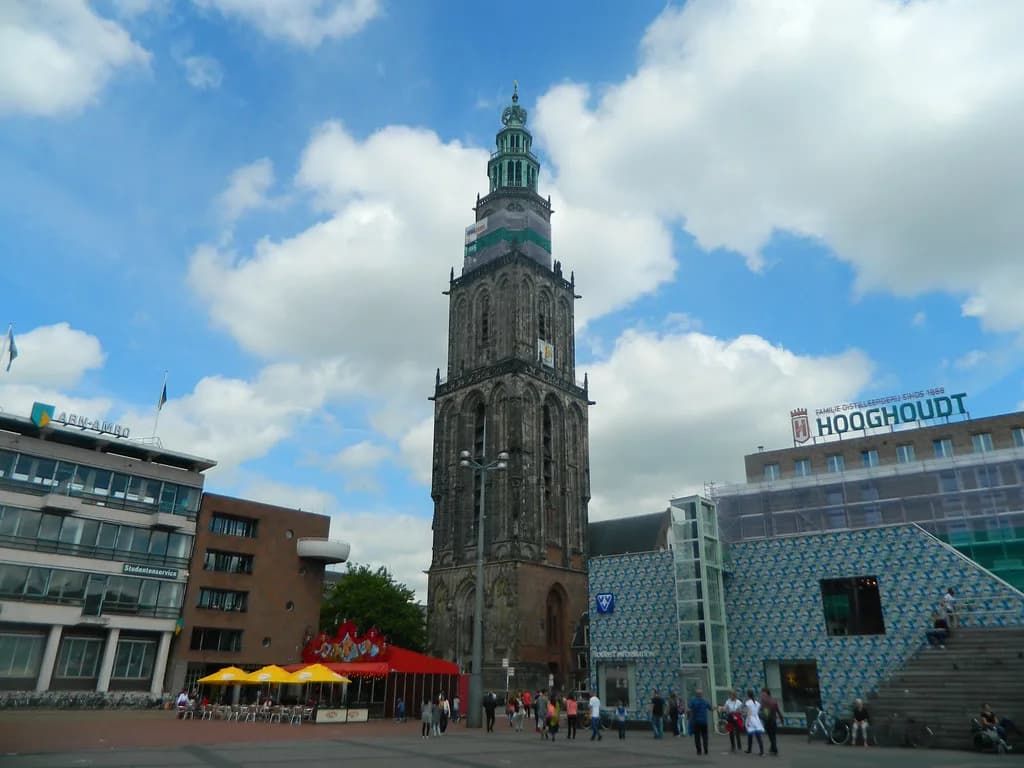
Treat Grote Markt as your anchor and work outward: the Martinitoren rises directly off it, Prinsenhof is a few minutes away in the heart of town, and the Groninger Museum sits across from the train station on the opposite edge of the centre. Hoge der A, the old canal quay with its warehouses, marks the northern waterfront and is best folded into a loop rather than visited as a separate trip.
If you would rather follow a set route than assemble your own, a self-guided walk keeps the courtyards and side streets in a sensible order. A guided bike tour covers famous sights such as Oosterpark and Prinsenhof alongside the hidden courtyards, and the Groningen Walking Tour is a good alternative for a first visit on foot.
The Martini church and Martinitoren climb
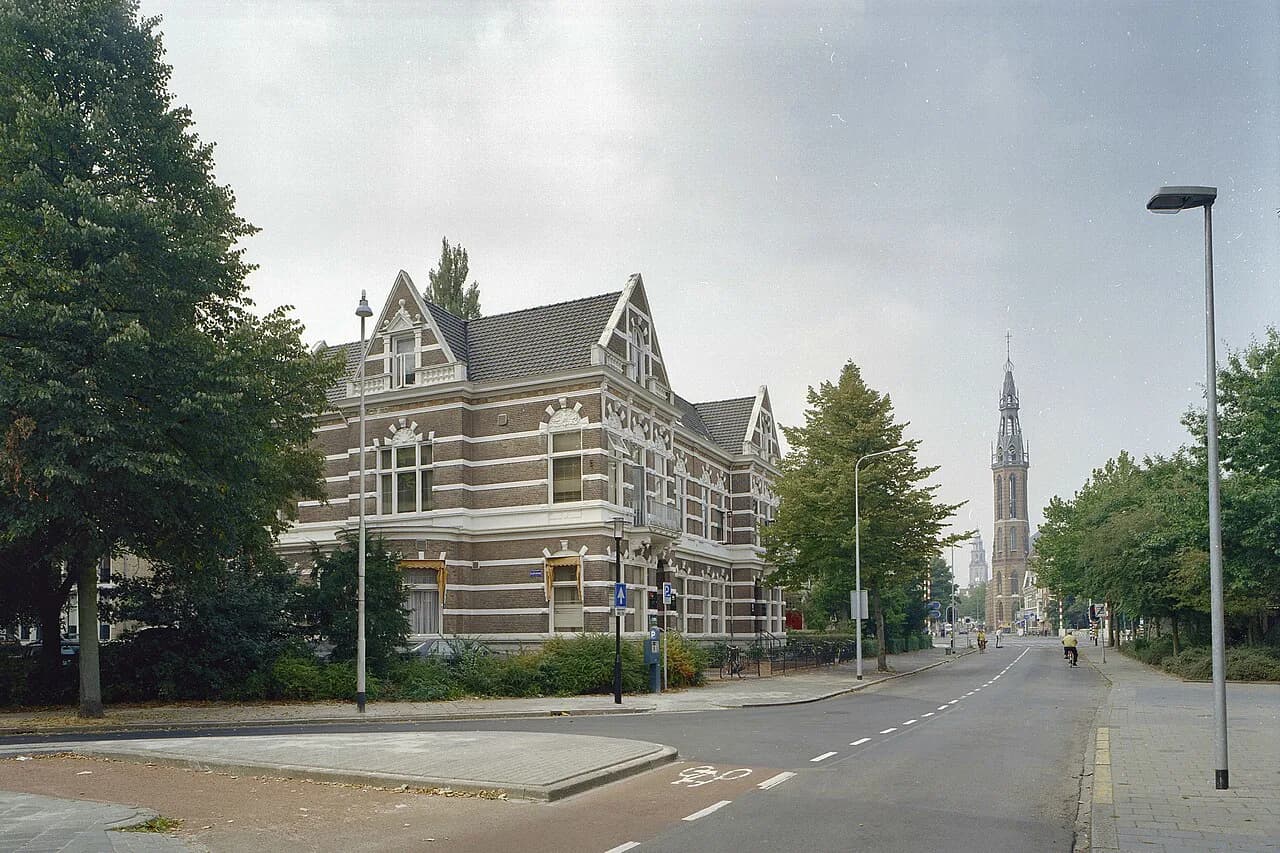
The Martini church and its tower are the one sight you cannot miss: the Martinitoren rises 96 metres, and the climb to the top runs to 251 steps, rewarded with views over the whole city centre and a close look at the enormous bells.
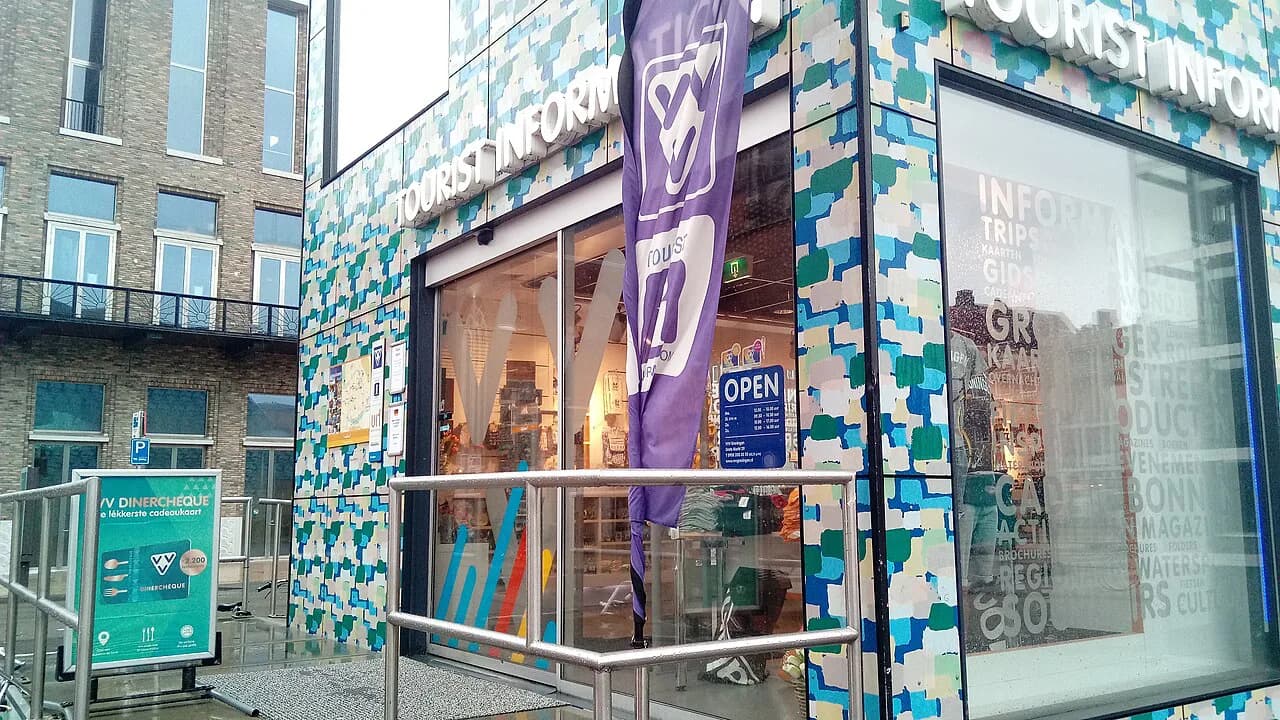
Tickets for the tower are bought at the Tourist Information office rather than at the door, so sort that out before you plan the climb. Inside, the church itself is worth the time: a light interior with a beautifully dark wooden pulpit.
Build the climb into the middle of a walking day rather than the start, since the stairs are steady work and the views are clearer once you know the streets below. Allow a proper block of time for tower plus church instead of squeezing it between two other stops.
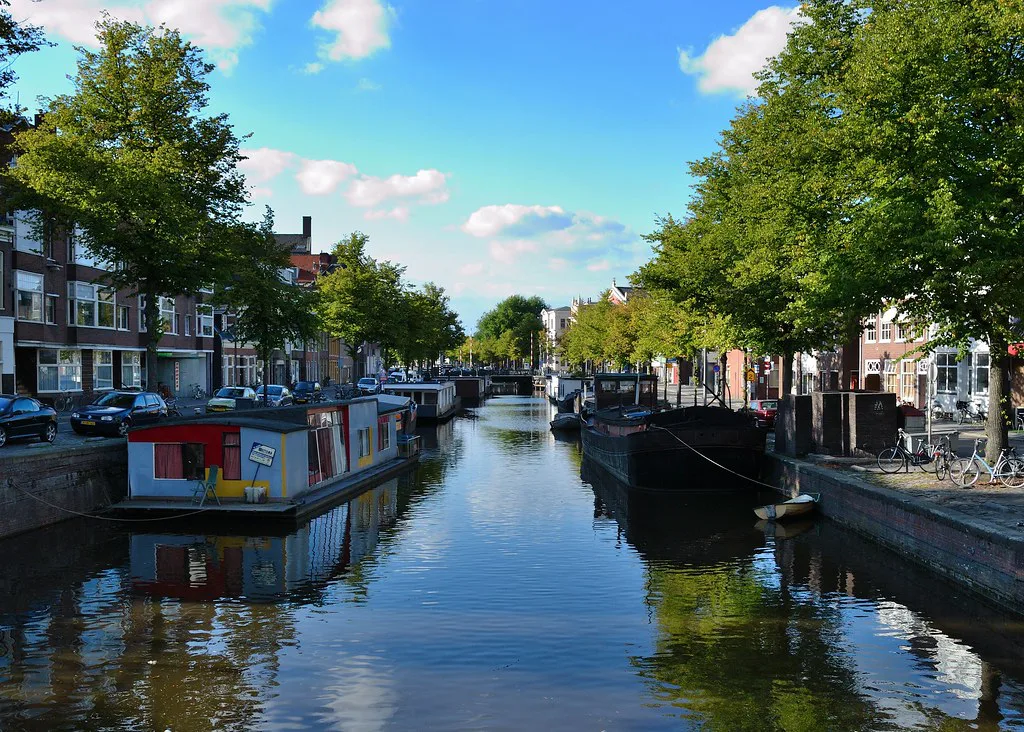
Grote Markt and Vismarkt: the two main squares
Grote Markt and Vismarkt are the two main squares in the heart of the city centre. Grote Markt is the bigger stage and the natural meeting point; Vismarkt sits a short stroll away.
Use the squares as orientation points rather than destinations in themselves. Cross Grote Markt, note the tower and the streets leading off it, then drift towards Vismarkt and the shopping lanes between them.
If markets are the draw, look up the Groningen market days before you travel rather than hoping to stumble on one.
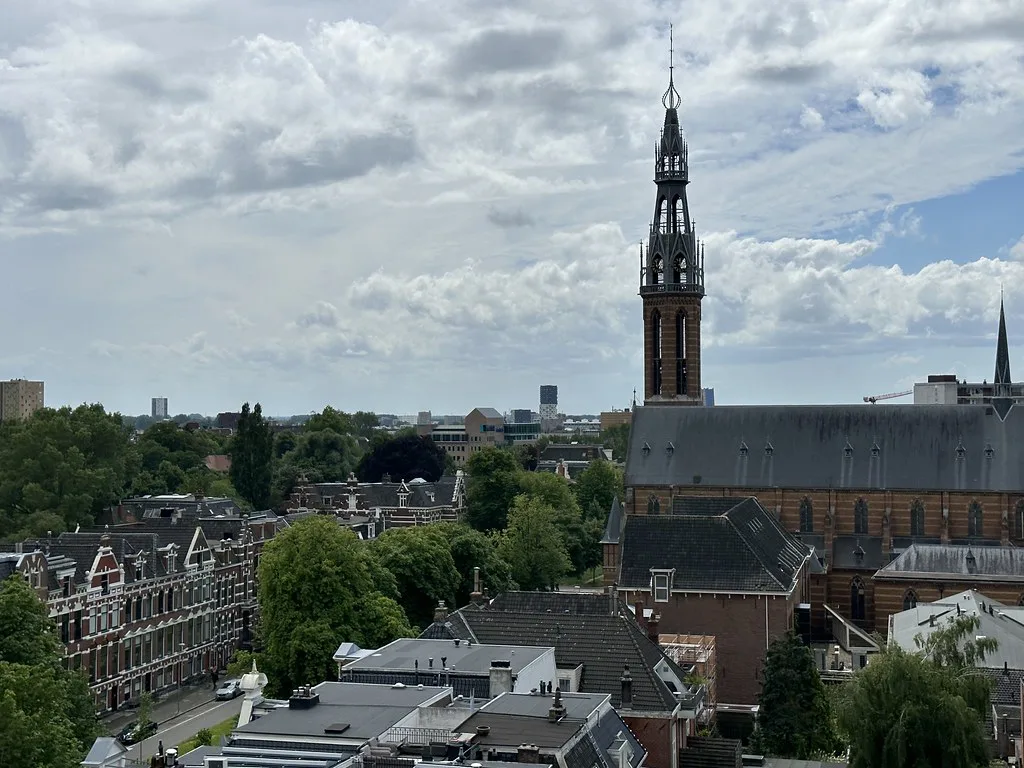
Hoge der A and the old canal warehouses
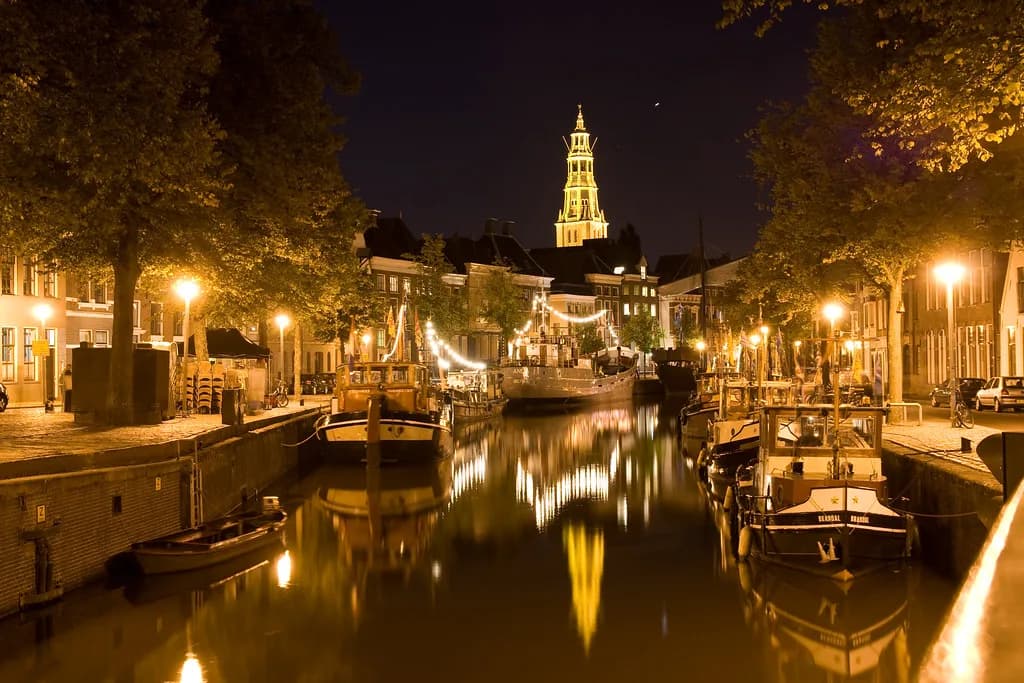
Hoge der A is the canal front where old warehouses still line the water and tell the story of the city's trading past. Walk the quay slowly: the point here is the rise and fall of the brick storefronts against the water, not a single sight to tick off.
Places such as Reitdiep, outside the old town, are the kind of neighbourhood that best shows another side of Groningen. If you rent a bike, it is easy to add that loop onto a day spent in the centre.
Hidden courtyards near the gasthuizen
The courtyards are the part of Groningen most visitors walk straight past. Centuries ago they sheltered the poor and sick; today they are quiet pockets of garden and brick, and they give the centre a calm counterweight to the squares.
You will find them tucked away near Heiligen Geestgasthuis, Pieternellagasthuis and Aafien Olthofsgasthuis in the old town. Follow a self-guided courtyards walk to thread them into a sensible loop rather than hunting for signage.
These are quiet, less-obvious hideaways rather than attractions, so keep your voice down and treat a closed gate as a closed gate.
Groninger Museum on its three canal islands
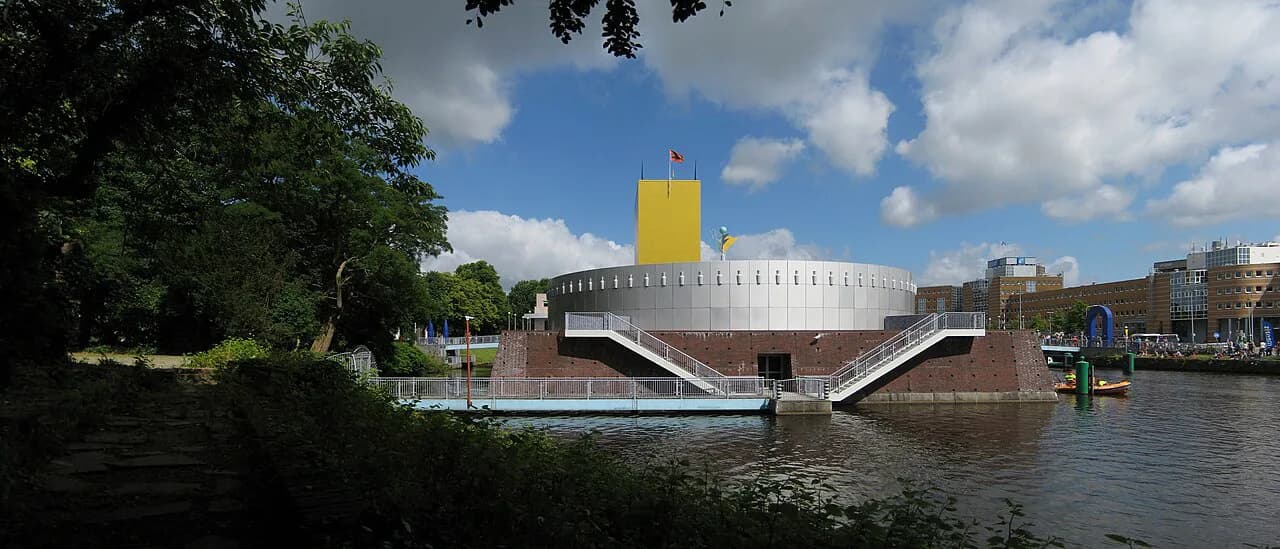
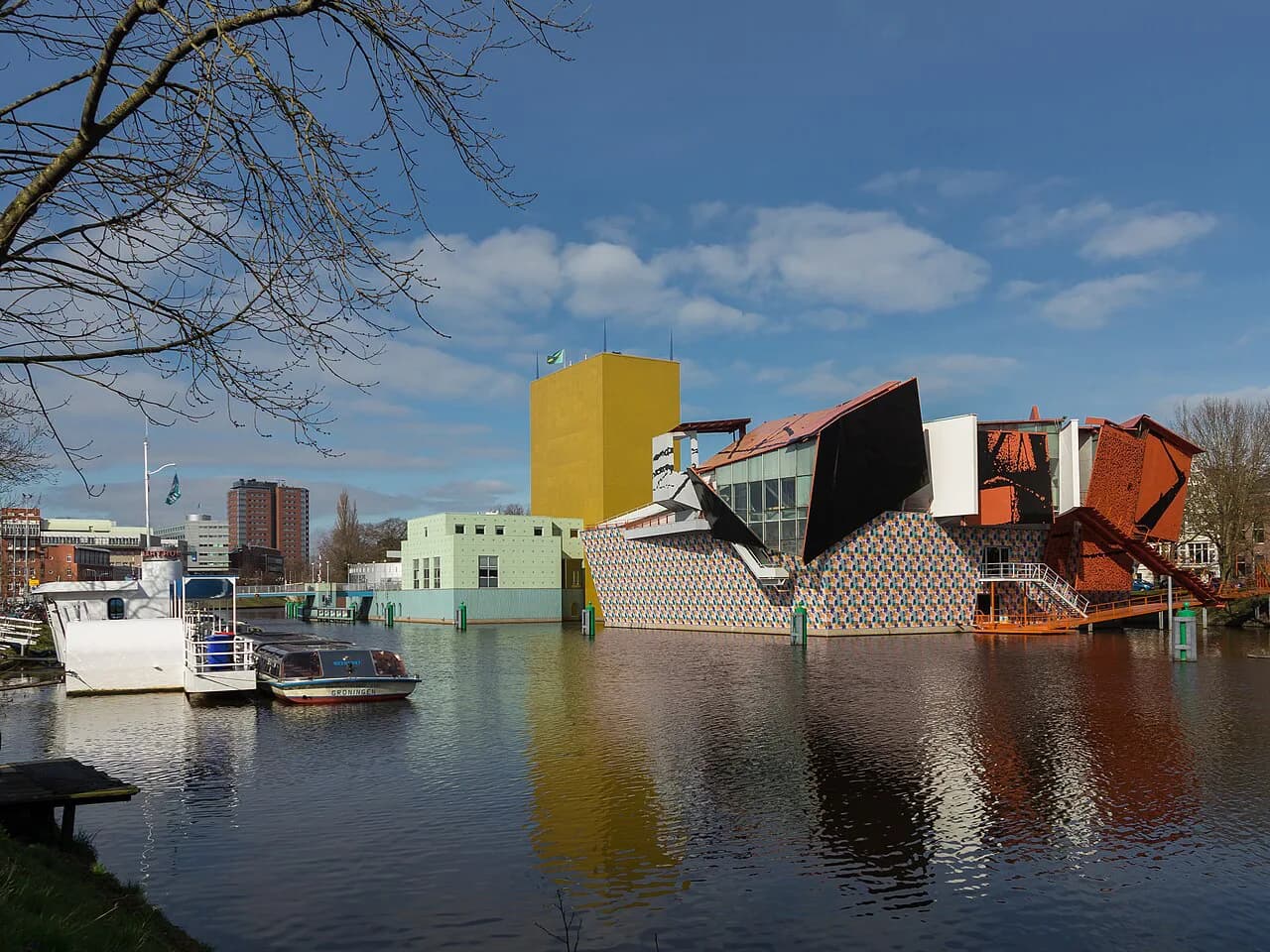
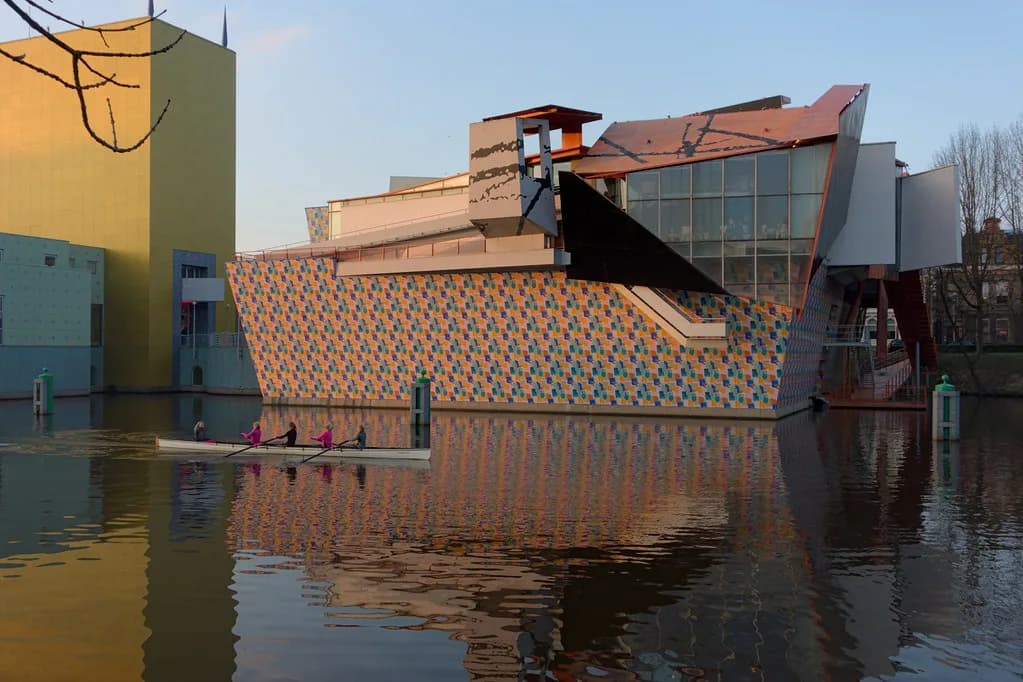
The Groninger Museum is the striking building across from the train station, spread over three islands in the canal. Its eye-catching structure is half the reason to go; inside it mixes international art, local artists and temporary exhibitions that change the reason for a return visit.
Place it at the start or end of a walking day, since it sits on the station side of the centre rather than among the squares. Check the exhibition programme in advance if a particular show is the reason for your trip.
Noordelijk Scheepvaartmuseum in an old distillery
The Noordelijk Scheepvaartmuseum, the maritime museum of the north, occupies a 16th-century distillery and covers the lives of seamen and their ships across the centuries. It builds neatly on what you see on the canal quays: the warehouses show the trade, the museum explains the lives behind it.
Pair the two rather than choosing one, since they sit close enough to visit in the same stretch of the day. The building itself, an old distillery, is part of the appeal.
Prinsenhof and its courtyard garden
Prinsenhof, not five minutes from the Martini church, is a former lodging for royals visiting the north and now a hotel with a courtyard garden worth a look. The garden is the draw: a green, enclosed space in the middle of the old town.
Slip it in between the tower and the squares, since it sits in the heart of town and costs you only a short detour. Because it operates as a hotel, behave like a guest passing through rather than a sightseer on a circuit.
The Synagogue and its Moorish interior
Groningen's Synagogue is one of the last working synagogues in the Netherlands and rewards a visit for the building alone: a century-old structure heavily decorated in Moorish ornament, with a wooden ceiling that stops people in their tracks.
If you want the visit explained in English, arrange a tour with the synagogue in advance rather than turning up and hoping.
A walking order for one day in the centre
Start at the station, take in the Groninger Museum on its canal islands, then cross into the centre to Grote Markt. From there the Martinitoren and Martini church are immediate, with Prinsenhof a few minutes further in.
Continue to Vismarkt and the shopping lanes, then out to Hoge der A and its warehouses, adding the Noordelijk Scheepvaartmuseum while you are on that side. Loop back through the side streets for the courtyards near the gasthuizen, and finish at the Synagogue if it is on your list.
On foot the centre is compact; the distances between these stops are short, and the day is shaped by how long you spend in the tower and museums rather than by walking. This outline is a sequence for one day in Groningen rather than a timed schedule.
Cycling the centre and out to Reitdiep
A bike changes the day in two ways: it makes the centre quick to cross and it opens the neighbourhoods beyond the old town. Reitdiep is the clearest case, a part of Groningen with colourful houses along and around a small harbour; it sits outside the centre but is easy to reach on a rental bike.
Guided bike tours cover famous sights such as Oosterpark and Prinsenhof alongside the most beautiful hidden courtyards, which suits a first visit. If you prefer your own pace, rent a bike and build your own loop out to Reitdiep and back through the old town.
The practical catch: a pedestrianised, one-way centre
A large part of the centre is a pedestrian zone and most streets are one-way, which makes driving in frustrating and parking expensive. If you do drive, leave the car at a P+R space just outside the centre, where you can get into town easily, cheaply and quickly.
That constraint is a gift for walkers: the squares, quays and courtyards connect without traffic to dodge. Plan your day on foot from a P+R or the station and you will see more of the old town than any driving route allows; the Groningen Walking Tour covers a similar circuit with commentary.
Should you give Groningen city centre a full day?
Yes: the centre is compact, the sights are close together and a single day covers the tower, both squares, the quays, the courtyards and at least one museum without rushing. Add a bike and Reitdiep fits on the same trip.
The trade-offs are simple. Climbing the tower takes real time and effort, the museums reward a slower pace than a list allows, and driving in is a waste of a good day. Walk in from the station or a P+R and let the old town set the order.
Explore more Groningen guides
Frequently Asked Questions
Can you see Groningen city centre in one day on foot?
Yes. The centre is compact and the main sights sit close together: Grote Markt and Vismarkt, the Martini church and Martinitoren, the canal quays at Hoge der A, the hidden courtyards near the gasthuizen and the Groninger Museum. A single day covers these without rushing, though the tower climb and any museum visit will shape how much else fits in.
How many steps are there up the Martinitoren, and how tall is it?
The Martinitoren stands 96 metres tall and the climb to the top runs to 251 steps. The reward is a view over the whole city centre and a close look at the enormous bells. Build the climb into the middle of the day rather than the start, and allow a proper block of time for tower plus church.
Where do you buy tickets for the Martinitoren climb?
Tickets for the tower are bought at the Tourist Information office rather than at the door, so sort that out before you plan the climb.
Where are Groningen's hidden courtyards?
The courtyards, once refuges for the poor and sick, are tucked away near Heiligen Geestgasthuis, Pieternellagasthuis and Aafien Olthofsgasthuis in the old town. They are quiet, less-obvious hideaways rather than attractions, so keep your voice down and treat a closed gate as closed.
Where is the Groninger Museum and what is inside?
The Groninger Museum is the striking building across from the train station, spread over three islands in the canal. Inside it mixes international art, local artists and temporary exhibitions, so it repays a slower pace than a checking-off list allows.
Should you drive into Groningen city centre?
No. A large part of the centre is a pedestrian zone and most streets are one-way, so driving is frustrating and parking expensive. If you do drive, leave the car at a P+R space just outside the centre, where you can get into town easily, cheaply and quickly.
What can you see beyond the centre by bike?
Reitdiep is the clearest case: a part of Groningen with colourful houses along and around a small harbour, outside the centre but easy to reach on a rental bike. A guided bike tour also covers sights such as Oosterpark and Prinsenhof alongside hidden courtyards.
Sources
Notes for your next Dutch city break
Optional updates to our Netherlands guides.
You might also like
Continue reading
More guides you'll find useful