
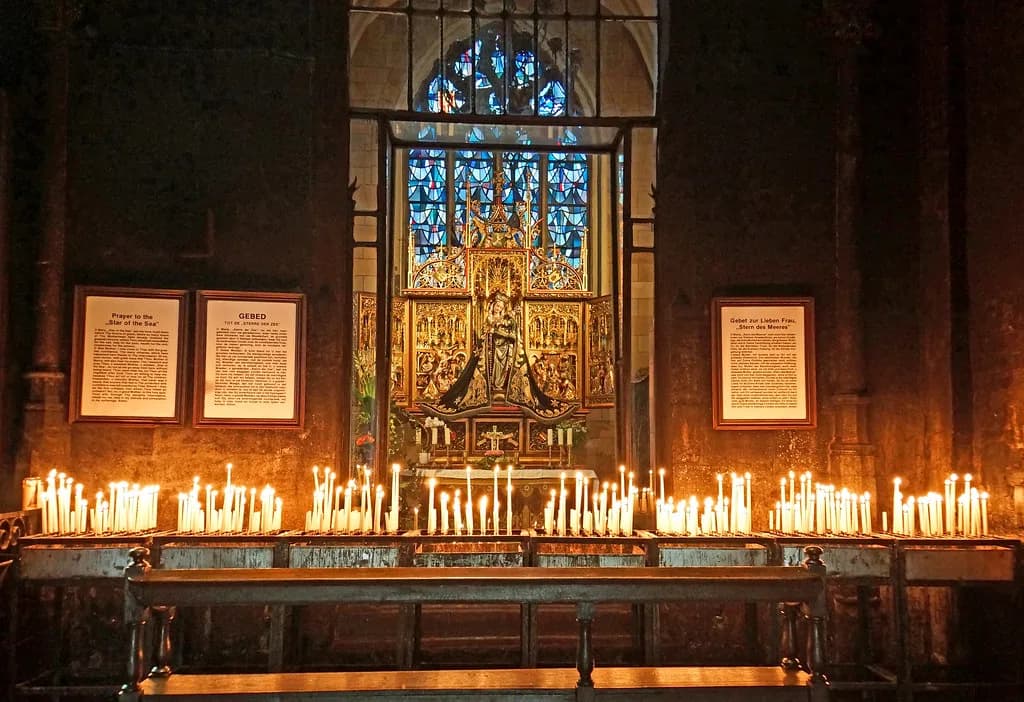
Basilica of Our Lady, Maastricht: What to See and How Long to Allow
The Basilica of Our Lady is a small, dark, Romanesque-and-Gothic church on Onze Lieve Vrouweplein, and 45 minutes to an hour covers it comfortably. It is also known as the Star of the Sea, a dedication that fits a river city. This guide covers where it sits in Maastricht, its daily opening window, what to look for inside and which sights sit within a few minutes' walk.
Treat it as a morning stop rather than a half-day out. The building rewards a slow look at the stonework and the treasury, but it is compact, so it chains naturally with the Vrijthof and the bookshop in the Dominican church.
An 11th-century church on an old Roman site
The present church was built in the 11th and 12th centuries in a Gothic and Romanesque style, a mix that shows how long the building took to finish. Its position inside the former Roman castrum has led to speculation that a temple to Jupiter once stood here, and the first church on the site is of unknown date. The blending of heavy Romanesque stonework with later Gothic additions is what gives it a different feel from the pure Gothic churches elsewhere in the Low Countries.
Visitors often confuse this church with the much larger Basilica of Saint Servatius by the Vrijthof. They are separate churches, and only Saint Servatius stands over the tomb of Maastricht's first bishop. If you want the pilgrimage church, head for the Vrijthof instead; for a quieter, older-feeling interior, stay on Onze Lieve Vrouweplein.
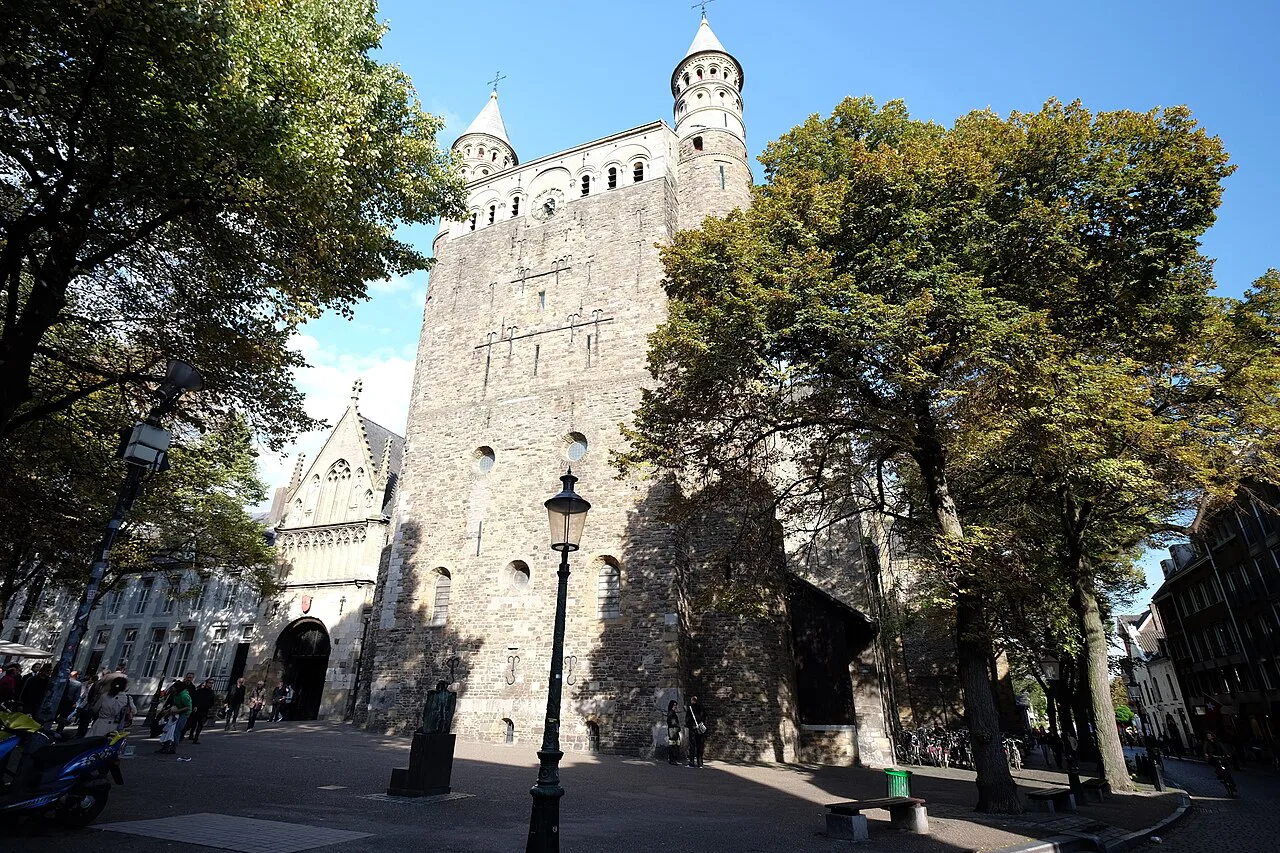

Where the basilica is: Onze Lieve Vrouweplein
The address is Onze Lieve Vrouweplein 7, a small square in the city centre a short walk west of the Maas. The square is pedestrian-friendly, with cafes set back from the church front, so it works as a place to sit for ten minutes before or after going in.
From the Markt and the city hall the walk takes only a few minutes, and from the Vrijthof perhaps ten. If you are coming from the station end of town, the church makes a sensible first stop before you work north-east through the shopping streets.
Opening hours
Published visiting hours are daily from 08.30 to 17.00, making it a dependable stop when several Dutch museums are shut on Mondays. Because it is an active place of worship as well as a monument, services can interrupt sightseeing, so aim for the morning or early afternoon rather than late in the day. Treasury access and any entry arrangements are handled on site, so ask when you arrive rather than counting on pre-booked tickets.
What to see inside
Look first at the surviving Romanesque stonework, then at the Gothic additions that came later. The church is dedicated to the Star of the Sea, and the maritime name suits its position in a river city; the interior has the thick walls and dim calm of an old pilgrimage church.
The treasury room holds important religious artefacts from around the 14th century. It was emptied during the Napoleonic occupation, so what you see today is a later assembly rather than an unbroken collection. Give the treasury a focused twenty minutes rather than a rushed glance.
The building is compact, so you can see the whole church without hurrying, and the treasury alone rewards a few focused minutes.
How long to allow and when to go
Budget 45 minutes to an hour: roughly half of that in the church itself and the rest in the treasury and cloister. That is enough to read the interpretation, sit for a while and still have most of the morning free for the rest of the centre.
Go early, close to opening, if you want quiet. Mid-morning brings tour groups to this part of the centre, and the square outside fills up around lunchtime. Late afternoon is the other calm window, provided you arrive well before the 17.00 close.
What is nearby
St Janskerk and the Waalse kerk both stand within a few minutes of the basilica, so you can see three churches of very different character in one walk. The Waalse kerk is an 18th-century Baroque building that served French-speaking Protestants after the city was taken by Frederick Henry.
Boekhandel Dominicanen, the bookshop inside a 13th-century Dominican church, is a short walk away and has kept its ceiling and wall paintings. It is the obvious next stop if the basilica has left you interested in what Maastricht does with old religious buildings.
For a contrast in scale and setting, walk over to the Vrijthof Maastricht, the city's main square, where the Basilica of Saint Servatius sits over the tomb of the Saint. It charges adults €7.50, with under-18s free and students €4.00, and opens Monday to Saturday from 10.00 to 17.00, with an 11.30 start on Sundays and a later close in the summer months, though it shuts on certain holidays, so check before you rely on it. Knowing this helps you plan which church gets your ticket money and which gets a shorter look.
Getting there and fitting it into a short break
Onze Lieve Vrouweplein is walkable from almost anywhere in the centre, and a bike is more trouble than it is worth for such a short hop. Lock up on the square if you are cycling through, then continue on foot through the lanes towards the Markt.
On a one-day visit, pair the basilica with the Markt and the Vrijthof for a compact loop of the centre. With two or three days, you can add the Bonnefanten museum and a walk on Sint-Pietersberg without squeezing the church in at the end of a tired afternoon.
Nearby sights worth the extra walk
To round off the visit, the lanes around Onze Lieve Vrouweplein connect quickly to the Markt and the riverfront, so a short loop on foot from the church takes in the old centre without much extra effort. Keep it loose rather than treating the walk as a fixed route, and it fits neatly before or after the church.
If you are building a fuller day, the Maastricht caves under Sint-Pietersberg are a good counterweight to a morning of churches: cold, dark and entirely underground, so check current opening times and book ahead where that is offered.
Is the basilica worth an hour of your Maastricht trip?
Yes, if you want one quiet, old interior rather than another museum. The Basilica of Our Lady takes under an hour, sits in the middle of the centre and publishes daily opening hours, which makes it easy to slot into a one- to four-day plan.
Skip it if you have already booked the Basilica of Saint Servatius and only want one church treasury. Otherwise, use it as the anchor of a morning walk that takes in Onze Lieve Vrouweplein, the Waalse kerk and the Dominican bookshop before lunch.
Explore more Maastricht guides
Frequently Asked Questions
Do I need to book a ticket for the Basilica of Our Lady in Maastricht?
Published visiting hours are daily from 08.30 to 17.00, and most visitors simply turn up. Treasury access and any entry arrangements are handled on site, so ask when you arrive.
How does the Basilica of Our Lady differ from the Basilica of Saint Servatius?
They are two separate churches. The Basilica of Our Lady on Onze Lieve Vrouweplein is the smaller, mixed Romanesque-and-Gothic building known as the Star of the Sea. The Basilica of Saint Servatius stands on the Vrijthof over the tomb of the city's first bishop, charges an entry fee and gives access to its crypt and treasury.
Is the basilica open on Mondays?
Yes. It publishes daily opening hours, from 08.30 to 17.00, which makes it a useful stop on a Monday when other Maastricht sights are shut.