
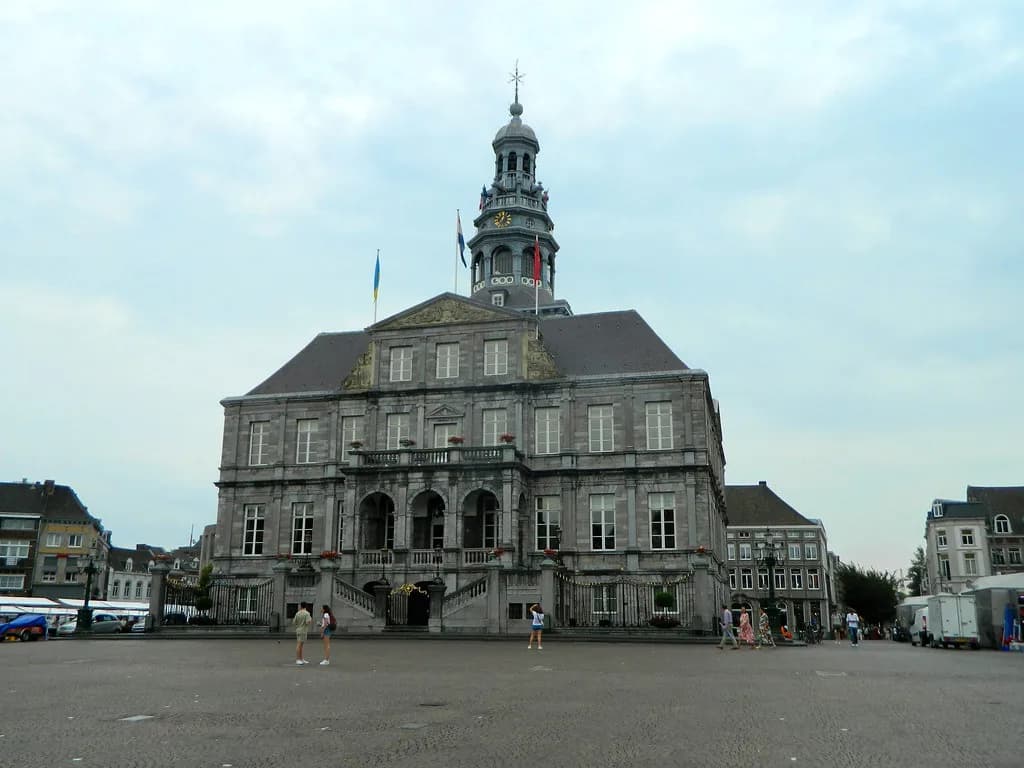
Maastricht City Hall (Stadhuis) on the Markt
Maastricht City Hall is the Stadhuis, the historic town hall that fills the centre of the Markt in Maastricht's old town. It is a square to walk through and look at rather than an attraction you tour, and it works best as a ten-minute pause on a circuit of the centre. This guide covers what the building is, where it sits, how to reach the Markt on foot or bike and what lies within easy walking distance.
Treat the Stadhuis as a landmark and orientation point. Its central position on the Markt makes it a natural place to start a walk, check where you are and decide which quarter to head into next.
What Maastricht City Hall is
The Stadhuis is Maastricht's raadhuis, the historic council building standing at the middle of the Markt in the city centre. It is a civic building in its square rather than a palace or a church, and that is the reason to come.
Because it is a municipal council building, the reason to come is the exterior and the square around it. Look at the building as you cross the Markt rather than counting on getting inside; this guide makes no claim about interior access, so treat any question of rooms or visiting rules as one for the municipality.
Where the Markt sits in the city centre
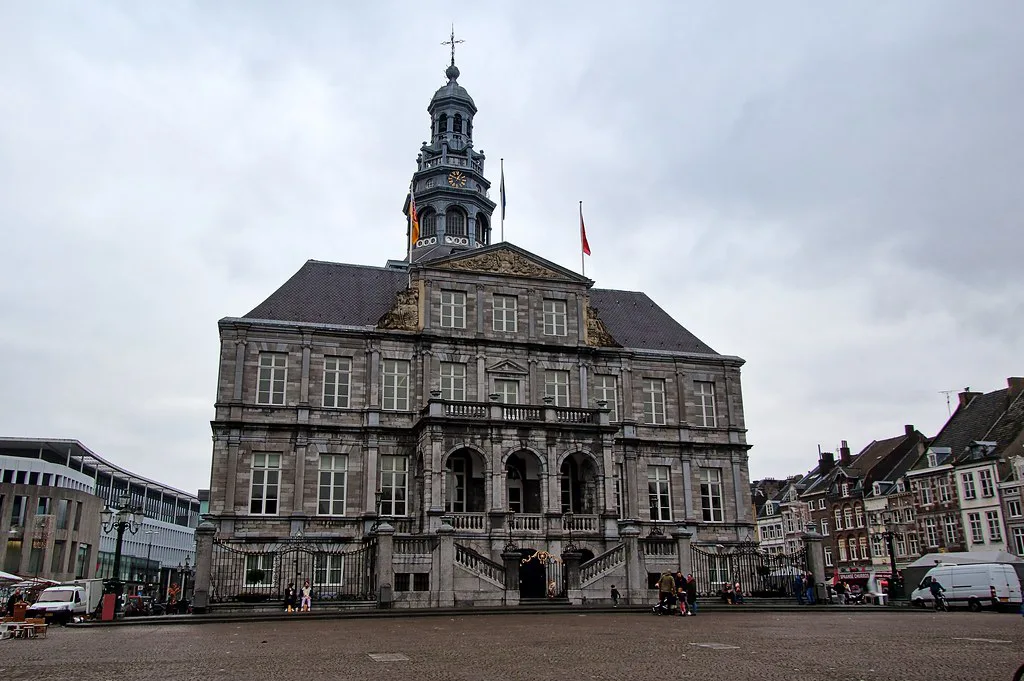
The Markt is in the City centre district, one of eight districts that the city's tourism board uses to describe Maastricht. The others are Wyck, Stokstraat Quarter, Jekerkwartier, Sphinx Quarter, Céramique, Statenkwartier and St Peter's, each with its own character. Knowing which district you are standing in makes it much easier to read a map of the old town.
Practically, the Markt is one of the open squares in the middle of the historic core, a short walk from the river and the streets that lead towards the station side of town. Use it to split a walk: the river and Wyck on one side, the smaller streets of the Stokstraat Quarter and Jekerkwartier on the other.
What you see from the square
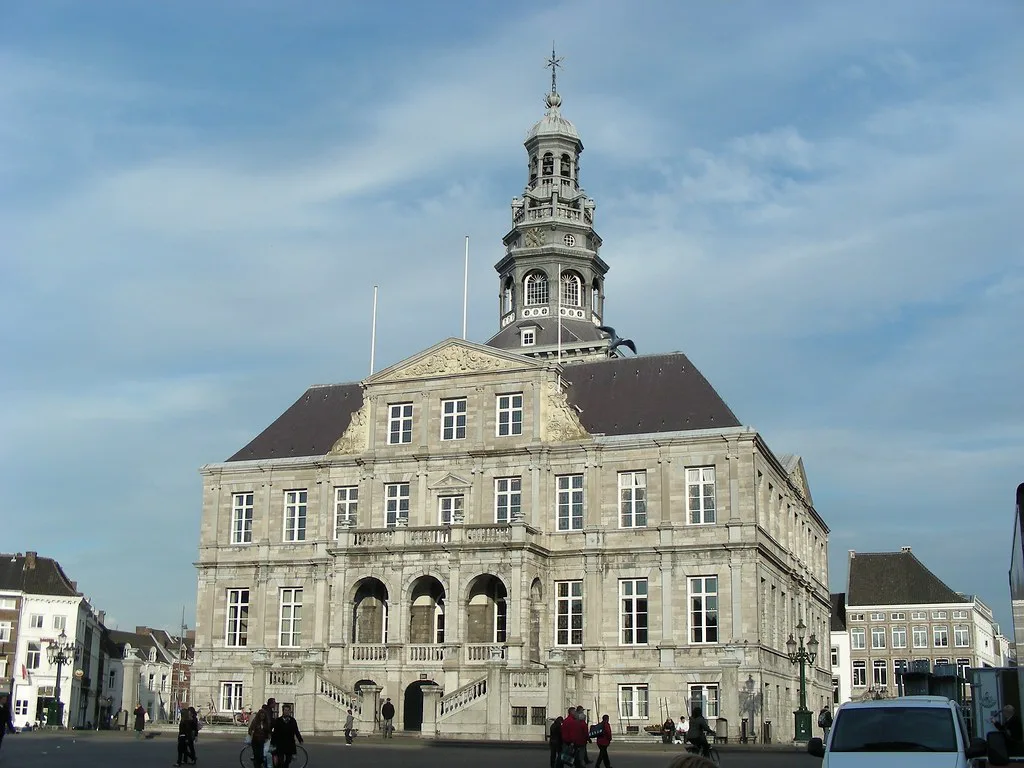
The Markt is a broad, open square, and the Stadhuis sits squarely in the middle of it, which is what makes the building so legible. You get a full view of the façade simply by walking around the edge of the square, and the symmetry of the design reads best from a few steps back rather than up close.
The square itself is part of the sight. It is a place to stand still, look at the building from several angles and then move on into the surrounding streets, which are narrow, older and much more enclosed than the Markt.
Getting there and getting around
Maastricht is compact and the centre is within walking distance of the station, which makes the Markt an easy target on foot. Bicycles are convenient and free to park, and a P&R is the sensible option if you arrive by car. In practice, most travellers will walk from the station into the centre and reach the Markt without needing any transport at all.
Bring your own bike if you want to cover more ground; bicycles are convenient in the compact centre and free to park, so use a designated bike area rather than the square's edges. If you are driving, leave the car at the P&R and continue on foot.
How long to allow on the Markt
Give the Markt ten to fifteen minutes, enough to walk the perimeter, look at the Stadhuis from a few angles and get your bearings. It is a stop on a walk, not a half-day in itself.
If you want a fuller half-day in the centre, pair the Markt with the streets around it and one museum or church, then keep the rest of the day for a different district. That keeps the pace comfortable and stops the old town blurring into one long sequence of squares.
Nearby: the districts around the centre
Wyck is one of the eight districts and has a different feel from the old core around the Markt. The Stokstraat Quarter and Jekerkwartier are the districts closest to the Markt and are the natural next step if you want smaller streets and quieter corners after the open space of the square. If you want the wider context, see Maastricht Attractions: 12 Visitor Guides.
Céramique is another of the eight districts the city uses to describe Maastricht, listed alongside the City centre, Wyck, Stokstraat Quarter, Jekerkwartier, Sphinx Quarter, Statenkwartier and St Peter's. The Bonnefanten museum is one of the city's cultural addresses.
The Vrijthof is the other great square of the centre and a short walk from the Markt, with the Basilica of Saint Servatius close by. If you only have time for two squares, make them these two.
Further out, the Sint-Pietersberg ridge and the Fort Sint Pieter are the classic half-day extensions, and the caves are the reason many people make the trip. None of these are on the Markt's doorstep, so plan them as a separate block of time.
If you are already circling the old core, the basilica of Our Lady is the other church worth building into a walk. It fits naturally into a loop through the centre's smaller streets.
Routes and local information at the Dinghuis
For walking and cycling routes, the Maastricht Store in the Dinghuis at Kleine Staat 1 is the place to pick them up. It also stocks local souvenirs and gifts, and the team there helps visitors discover the city. It is a sensible first stop if you want a printed route rather than a screen.
The Dinghuis is itself an old building in the centre, so collecting a route map doubles as a look at another piece of the city's historic fabric. Allow a little time there before you set off.
Events and activity on the Markt during your visit
Squares in Maastricht host events through the year, and the city's events calendar is the reliable way to see what is on during your dates. Check it before you travel if a particular square or street matters to your plan.
Outside event days the Markt is simply an open square, and that is when the Stadhuis is easiest to see. If your trip coincides with something on, expect a different atmosphere and plan your look at the building for another moment.
Is the Stadhuis worth seeking out?
Yes, as a landmark rather than a destination. The Stadhuis is the anchor of the Markt and an example of the civic architecture that reflects how the city has built on its past, so build it into a walk through the centre instead of making a special journey for it alone.
Start at the Markt, look at the building from the edges of the square, then head for the Vrijthof or down towards the river. That single loop covers the Stadhuis and the best of the old centre in an afternoon.
Explore more Maastricht guides
Frequently Asked Questions
Can you go inside Maastricht City Hall?
The Stadhuis is Maastricht's municipal council building, so come for the exterior and the Markt rather than counting on a visit inside. This guide makes no claim about interior access; treat any question of rooms or visiting rules as one for the municipality.
How do you reach the Markt from Maastricht station?
On foot. The centre is compact and within walking distance of the station, so the Markt is a straightforward walk rather than a trip needing transport.
How long should you spend at the Stadhuis?
Ten to fifteen minutes is enough to walk the square and look at the building from a few angles. Combine it with the Vrijthof or the riverfront to fill a couple of hours in the centre.