Van Gogh in the Netherlands: Where to See His Work and Where He Lived
Van Gogh's Dutch story runs from Zundert and Nuenen to the Kröller-Müller and the Van Gogh Museum. See which Dutch collections hold his paintings.
On this page
Van Gogh was Dutch, born in Zundert in 1853, and the Netherlands holds two of the largest collections of his work anywhere: the Kröller-Müller Museum in Otterlo with 88 paintings and 172 works on paper, and the Van Gogh Museum in Amsterdam with the famous masterpieces. This guide compares the two collections, then follows his early years through Brabant at Zundert, Etten-Leur and Nuenen, so you can decide how much of the story fits your trip.
The short answer for planning: choose the Kröller-Müller if you want sheer depth of paintings and a day in a national park, the Van Gogh Museum if you want the celebrated Amsterdam masterpieces under one roof, and Brabant if you want the churches, houses and squares behind his Dutch period. One day covers a single museum; two days covers both cities; a long weekend adds the Brabant villages.
Where to see Van Gogh's paintings in the Netherlands
The two big collections divide neatly by character. The Kröller-Müller Museum in Otterlo, on the Hoge Veluwe, describes itself as holding the finest Van Gogh collection in the world, built from Anton and Helene Kröller-Müller's purchases; Helene bought her first Van Gogh, Edge of a Wood, at auction in 1908 for 110 guilders, and the couple went on to acquire 88 paintings and 172 works on paper. The Van Gogh Museum in Amsterdam is the single-artist museum, with a permanent exhibition of masterpieces celebrating works such as Sunflowers and Almond Blossom.
A third stop sits in Den Bosch: Het Noordbrabants Museum, the provincial museum for North Brabant, the region where Van Gogh was born and grew up. Treat it as an indoor stop on a Brabant day rather than a rival to the two large Van Gogh collections.
If you are weighing these against the rest of the country, our guide to the Best Museums in the Netherlands puts them in context with the Rijksmuseum, Mauritshuis and others.
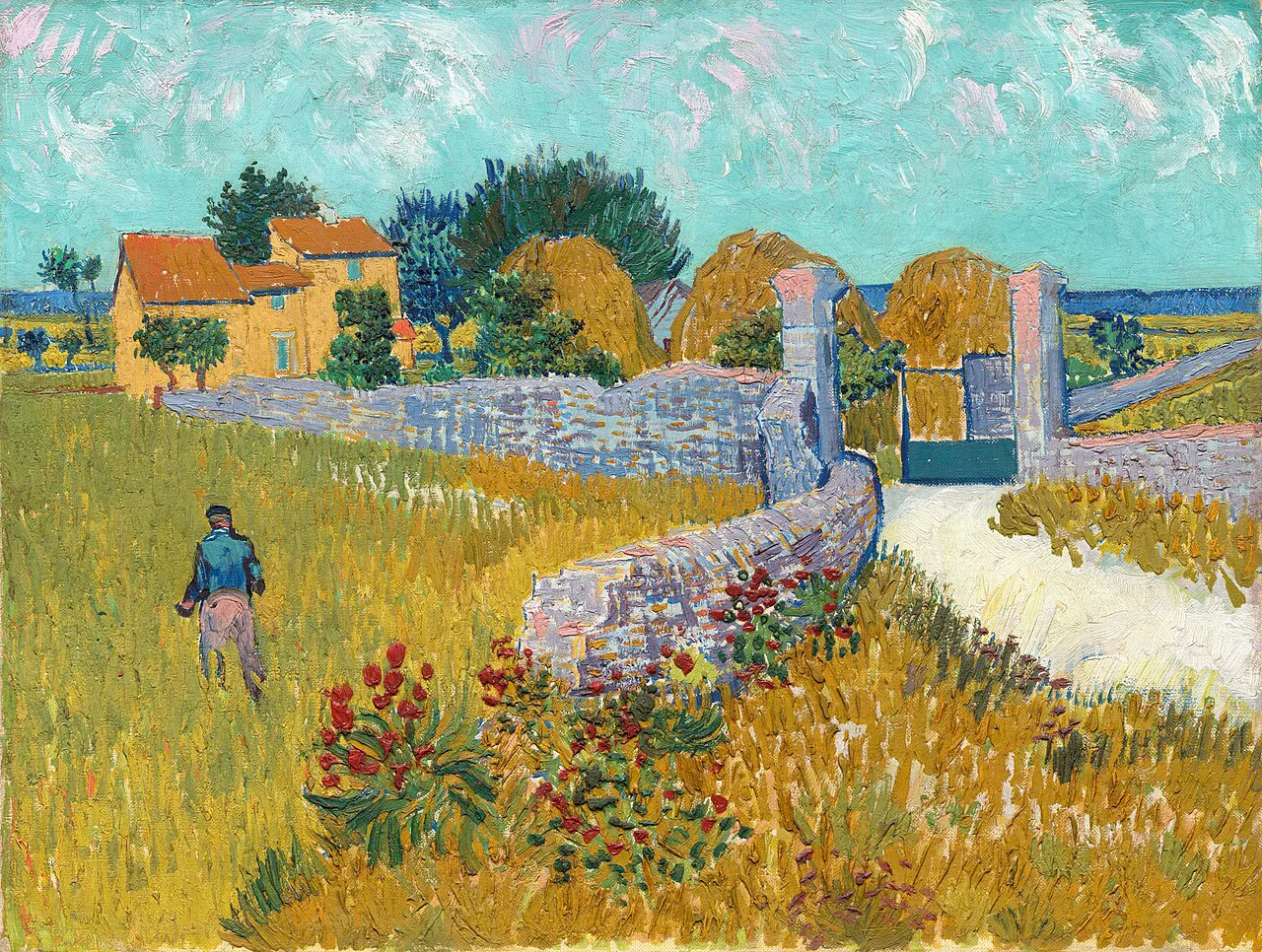
Kröller-Müller Museum: 88 paintings inside Hoge Veluwe
The Kröller-Müller sits inside Hoge Veluwe National Park near Otterlo, so reaching it involves entering the park and then the museum, which makes it a poor fit for a rushed schedule and an excellent one for a full day. Until 3 January 2027 the Van Gogh paintings are shown in four larger exhibition rooms for Van Gogh, All Our Paintings, rather than in the Van Gogh Gallery, with part of the permanent collection moved into the gallery instead. Highlights in the collection include De aardappeleters, Caféterras bij nacht and Treurende Oude man ('At Eternity's Gate').
Is Van Gogh from the Netherlands? Yes. Vincent van Gogh was born in Zundert, in the Dutch province of Brabant, on 30 March 1853, and he later lived in Etten-Leur and Nuenen.
Is the Van Gogh Museum in Amsterdam worth it? If you want the celebrated Amsterdam pictures in one place, yes: the permanent exhibition gathers masterpieces including Sunflowers and Almond Blossom along with the life story that frames them. If you prefer a quieter setting and a wider survey of his career, the Kröller-Müller holds 88 paintings and 172 works on paper inside a national park.
What is the difference between the Kröller-Müller and the Van Gogh Museum? The Kröller-Müller holds 88 paintings and 172 works on paper built from one couple's private collection, and sits inside a national park near Otterlo. The Van Gogh Museum is a single-artist museum in Amsterdam centred on the celebrated masterpieces and his biography.
The collection's strength is range rather than a handful of icons. Because the Kröller-Müllers bought across his whole career, you see the Dutch period, the Paris years with their Japanese influence, and the Arles and Saint-Rémy pictures in sequence, which is why the museum calls it the finest Van Gogh collection in the world.
This is also the place to see the family's collecting story: Helene Kröller-Müller's first purchase, Edge of a Wood, bought in 1908 for 110 guilders, began an acquisition campaign with a virtually unlimited budget that ran for around twenty years. That history explains why one regional Dutch museum ended up with 88 paintings and 172 works on paper.
The museum sits inside a national park, so pair the collection with a walk or ride through Hoge Veluwe National Park and make a full day of it.
Van Gogh Museum in Amsterdam: the masterpieces
The Van Gogh Museum in Amsterdam is the museum most travellers mean when they search for Van Gogh in the Netherlands, and it presents his life story alongside the paintings. Its permanent exhibition gathers celebrated masterpieces including Sunflowers and Almond Blossom, set within the biography the museum builds around them. If you have one museum day in the country and want the famous Amsterdam pictures, this is the one.
The museum's own site sets out its current exhibitions and stories, such as the influence of Japanese prints on Van Gogh's work, so look at the programme before you book.
The trade-off against Otterlo is straightforward. Amsterdam gives you the greatest hits and the tightest narrative in a big-city setting; the Kröller-Müller gives you almost the whole career in a park outside a small town. If you want a quiet day out of the city, the Kröller-Müller wins.
For Dutch art more widely, our guide to Dutch Golden Age art covers the seventeenth-century painters who shaped the tradition Van Gogh reacted against.
What you see at each museum
At the Kröller-Müller, the highlights list reads as a career survey: De aardappeleters from the Dutch period, Vier uitgebloeide zonnebloemen, Brug te Arles (Pont de Langlois), Caféterras bij nacht, De zaaier, Olijfgaard and Treurende Oude man ('At Eternity's Gate'). The Saint-Rémy pictures, including De tuin van de inrichting in Saint-Rémy, sit alongside the Arles works, so you can trace the last two years of his life in one walk.
At the Van Gogh Museum, the masterpieces are presented as a permanent exhibition built around his life story, with Sunflowers and Almond Blossom among the celebrated works. The museum frames the visit as being moved by the life story as much as seeing the paintings, which is a useful expectation to set if you are travelling with someone who is not already a Van Gogh enthusiast.
The practical difference for planning: one museum is a survey you can spend time in, the other a narrative you can work through at your own pace. Neither needs to swallow the whole day, which leaves room for a second museum or a city walk on the same trip.
Van Gogh's Brabant: Zundert, Etten-Leur and Nuenen
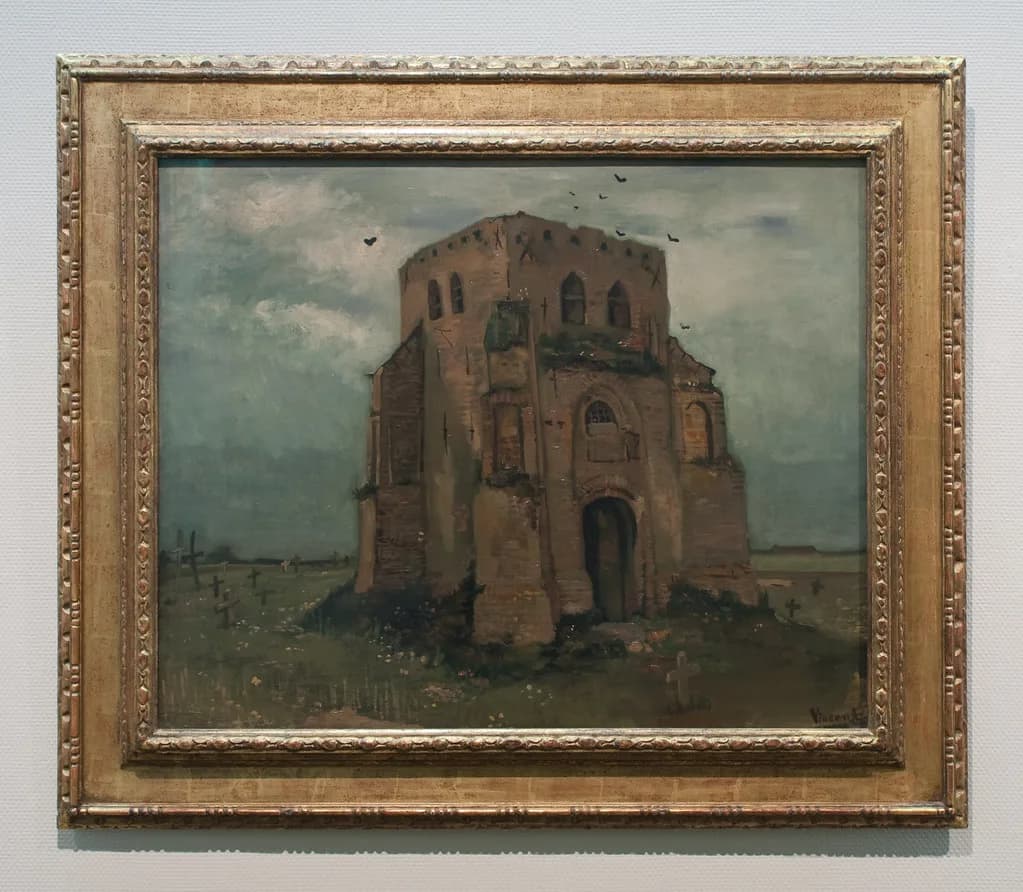
Brabant is where the biography happened, and three places carry most of it. Van Gogh was born in Zundert on 30 March 1853, son of a Protestant pastor in a predominantly Catholic region; he moved to Etten-Leur in 1881, where a local registration document lists his profession as painter, and stayed only a few months before leaving on Christmas Day; and Nuenen is the third Brabant stop, with the house where he lived, the Reformed Church and the Vincentre. Seen as a route, the villages explain the Dutch period better than any single museum room.
The route is best done by car or bus rather than as a city walk, because the villages sit apart from each other in the countryside. Give it a full day or a weekend, and consider Het Noordbrabants Museum in Den Bosch as an indoor stop on the regional story.
If your interests lean towards the art rather than the biography, our Kröller-Müller Museum page covers that collection in more depth so you can decide whether the Brabant detour is worth the time.
Zundert: the Vincent van Gogh Huis, the church and the Zadkine statue
In Zundert, the family's original house is gone, but the Vincent van Gogh Huis museum stands on the same spot at Markt 26-27, and its garden is the original one from Vincent's time. The museum's aim is to encourage young painters to create work inspired by Van Gogh, which gives it a different tone from a conventional heritage house.
Around the corner, the Dutch Reformed Church on Vincent van Goghplein is where his father preached, and the grave of the older brother who was stillborn a year before Vincent's birth lies there. In front of the church, Ossip Zadkine's statue of Vincent and Theo stands on the small square.
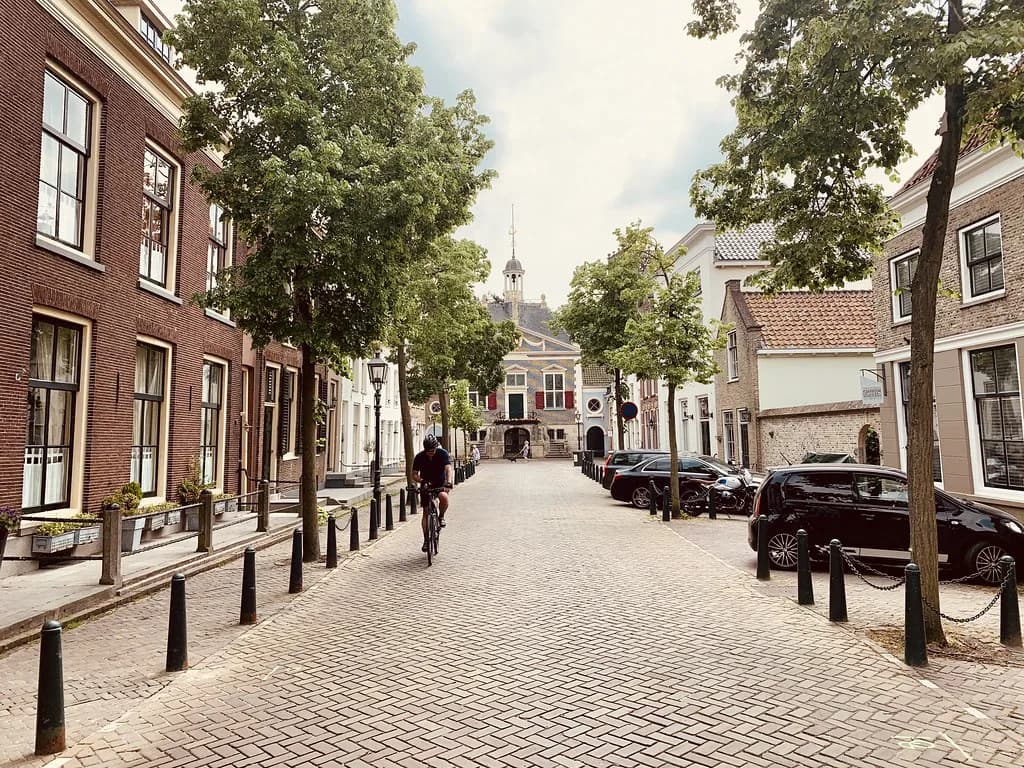
Zundert is a small village of brick houses and trees, walkable in an hour or two, which makes it an easy first stop if you are driving down from the north.
Etten-Leur: where he registered as a painter
In 1881 Van Gogh moved to Etten-Leur to live with his parents, and the local registration document recording his profession as painter is the reason the village matters: this is where he began working as an artist. His stay was short, ending after conflicts with his parents, and he left on Christmas Day in 1881.
The link to the paintings is concrete rather than atmospheric: in 1888, while in Arles, Paul Gauguin asked him to paint something from memory, and Van Gogh produced a scene from Etten-Leur that became one of his celebrated works. Seeing the village first and the painting later is the appeal of including it.
The village is small, so treat the Etten-Leur markers as part of the same day as Zundert rather than building a separate trip around Etten-Leur alone.
Nuenen: the house, the Reformed Church and the Vincentre
Nuenen is the third Brabant stop, with the house where Van Gogh lived, the Reformed Church and the Vincentre visitor centre as the main points, plus signs at the spots where he painted particular works. The painted-location signs are the practical highlight: they turn a walk through the village into a comparison between the scene in front of you and the painting it produced.
Budget for a morning or afternoon in Nuenen. If you are doing Brabant in a weekend, Zundert and Etten-Leur on day one and Nuenen plus Den Bosch on day two is a sensible split.
Readers who want the wider Dutch art context can pair the Brabant villages with our overview of Dutch Golden Age art, which covers the tradition that shaped the museums further north.
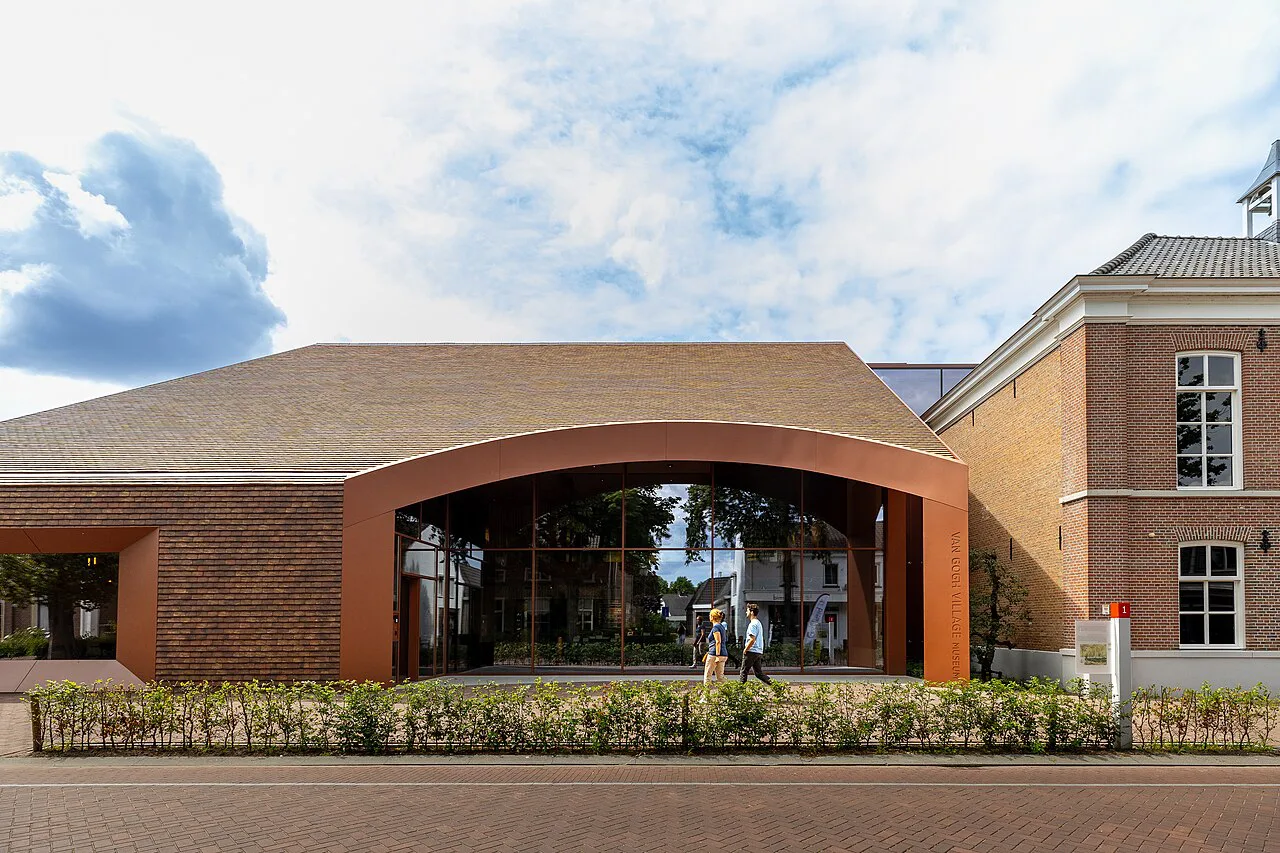
Het Noordbrabants Museum in Den Bosch
Het Noordbrabants Museum is a provincial museum in Den Bosch ('s-Hertogenbosch) that sets out the region's art and history and gives context to the villages you have just driven through.
Den Bosch itself is a worthwhile stop, and the museum's position makes it a natural base for a night if you are extending the route. Our selection of the Best Museums in the Netherlands places it alongside the country's other regional collections.
Which museum to choose with one day, two days or a Brabant weekend
With one day, pick one museum and do it properly: the Van Gogh Museum if you are in Amsterdam and want the masterpieces, the Kröller-Müller if you want the widest survey and a park day. Do not attempt both. With two days, split them across Amsterdam and Otterlo, which is realistic by train and bus but still a full day each.
With a long weekend, add Brabant: Zundert and Etten-Leur on one day, Nuenen and Den Bosch on the next, with the museums either side. That sequence gives you the paintings first and the places second, or the reverse if you prefer to build up to the art.
If you are choosing between Dutch museums more broadly, our Best Museums in the Netherlands guide compares the national collections so you can see where Van Gogh fits against the Rijksmuseum and Mauritshuis.
Tickets and opening days: what to check before you go
Book through the museum's own ticket pages. The Van Gogh Museum directs visitors to buy tickets at tickets.vangoghmuseum.com, and the Kröller-Müller sells tickets online via a Buy tickets link on its Van Gogh collection page. Those are the safest routes for each venue.
Confirm opening days for your dates, because both museums publish their own calendars. The Van Gogh Museum lists its address and opening hours under Tickets & Visit, and the Kröller-Müller sets out its opening hours in the plan-your-visit area of its site.
If you plan to use a Museumkaart, check the current conditions before relying on it at either venue; our Museumkaart guide explains how the card works.
The 2026–27 exhibition: all 88 paintings together
The exhibition Van Gogh, All Our Paintings runs from 15 September 2026 to 3 January 2027, and for the first time since 1984 the Kröller-Müller shows all 88 Van Gogh paintings in the collection together in one place. The Van Gogh collection moves from the Van Gogh Gallery into four larger exhibition rooms for the run.
Plan around the relocation: until 3 January 2027, part of the permanent collection is displayed in the Van Gogh Gallery while the paintings are in the exhibition rooms, so the hang is not the usual one.
If your dates fall inside that window, this is the strongest single reason to travel to Otterlo; outside it, the permanent collection remains the draw.
Which Van Gogh trip suits you
Choose the Van Gogh Museum for the masterpieces in a city break, the Kröller-Müller for the deep collection and a park day, and Brabant for the churches, houses and painted locations of his early life. If your dates land between 15 September 2026 and 3 January 2027, the all-88-paintings exhibition tips the balance towards Otterlo.
Book through the museum's own ticket page and confirm the opening calendar for your dates, then build the rest of the day around the visit rather than squeezing it between other sights.
Frequently Asked Questions
Is Van Gogh from the Netherlands?
Yes. Vincent van Gogh was born in Zundert, in the Dutch province of Brabant, on 30 March 1853, and he later lived in Etten-Leur and Nuenen. His Dutch period is the subject of the Brabant villages covered above.
Is the Van Gogh Museum in Amsterdam worth it?
If you want the celebrated Amsterdam pictures in one place, yes: the permanent exhibition gathers masterpieces including Sunflowers and Almond Blossom along with the life story that frames them. If you prefer a quieter setting and a wider survey of his career, the Kröller-Müller holds 88 paintings and 172 works on paper inside a national park.
What is the difference between the Kröller-Müller and the Van Gogh Museum?
The Kröller-Müller holds 88 paintings and 172 works on paper built from one couple's private collection, and sits inside a national park near Otterlo. The Van Gogh Museum is a single-artist museum in Amsterdam centred on the celebrated masterpieces and his biography. Amsterdam suits a city break; Otterlo suits a dedicated art day.
Sources
Notes for your next Dutch city break
Optional updates to our Netherlands guides.
You might also like
Continue reading
More guides you'll find useful