Parks in Maastricht: Green Spaces Worth a Walk
A practical guide to Maastricht's parks, centred on the Stadspark with its Jeker river, old city walls and Helpoort, and how to fit it into a city break.
On this page
The Stadspark is the one Maastricht park that earns a place in a short city break, because it sits against the old town rather than out on the edge. A single loop of an hour or so takes you past the Jeker, medieval city walls, the Helpoort, the Hertenkamp, the former bear pit and the d'Artagnan monument. This guide explains what each of those is, how to walk it, and how much time to give it depending on whether you have one, two or three days here; the rest of your sightseeing is covered in the wider things to do in Maastricht planning.
What Maastricht's parks give you that the old centre does not
The historic centre is dense with stone: the Vrijthof, the Markt, the Basilica of Saint Servatius and the shopping streets around them. A park gives you the pause in the middle of that, and in Maastricht the pause comes with fortifications attached rather than flower beds. The Stadspark is a place to walk, rest, exercise or meet people, and that everyday working-park character is exactly what it delivers; the Basilica and the rest of the historic core are set out in the Maastricht Old Town guide.
Set your expectations accordingly: this is a city park with history layered onto it, not a landscaped show garden with parterres and bedding schemes. You come for the course of the Jeker, the line of the old walls and the shade of mature trees, and you get a green corridor that feels woven into the town rather than a manicured detour. If you want a formal garden afternoon, plan something else; if you want an hour of green between museums, this is it.
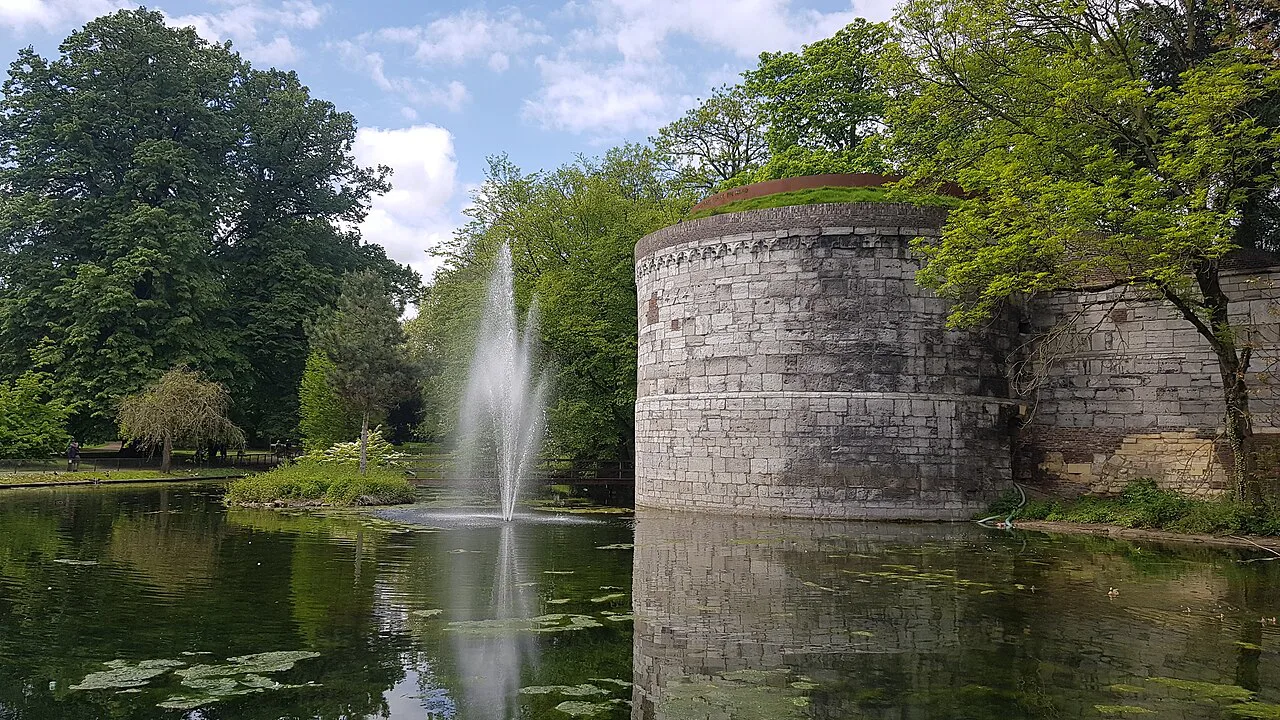
Stadspark: the main green space in the centre, and where it sits
The Stadspark is one of the most important green spaces in central Maastricht, with its address listed as 6211 JW. It lies where the river Jeker, centuries-old city walls and monumental trees meet, and the park took shape in several phases rather than being laid out all at once. The oldest section grew out of a green strip along the city wall known as 'Onder de Boompjes', laid out as a park from 1837.
The decisive moment for the park's size came in 1867, when Maastricht lost its fortress status and more ground became available for expansion. Sections were added over the following years, which is why the park feels like a chain of different spaces rather than one designed whole. Reading it that way turns a wander into something closer to a walk through the city's military past.
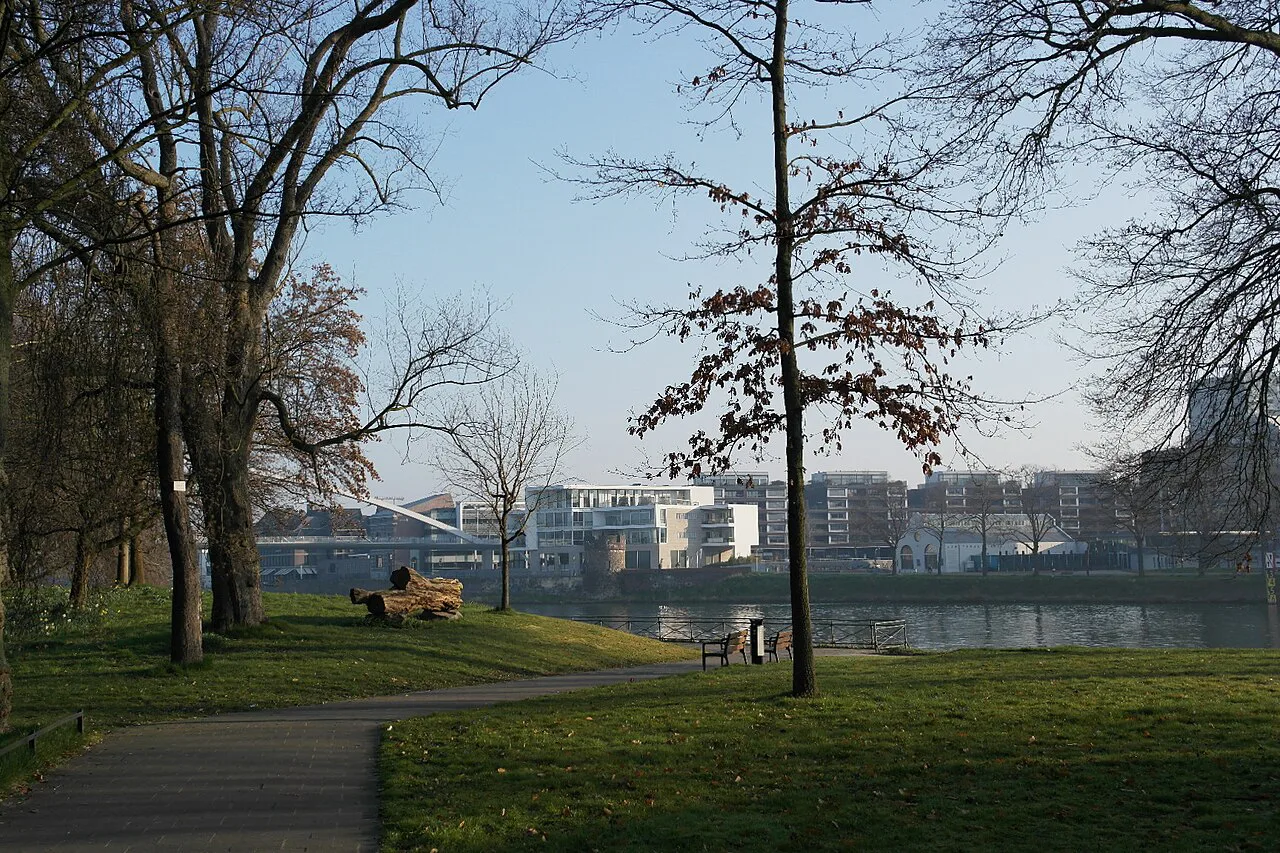
The Jeker, the city walls and the Helpoort inside the Stadspark
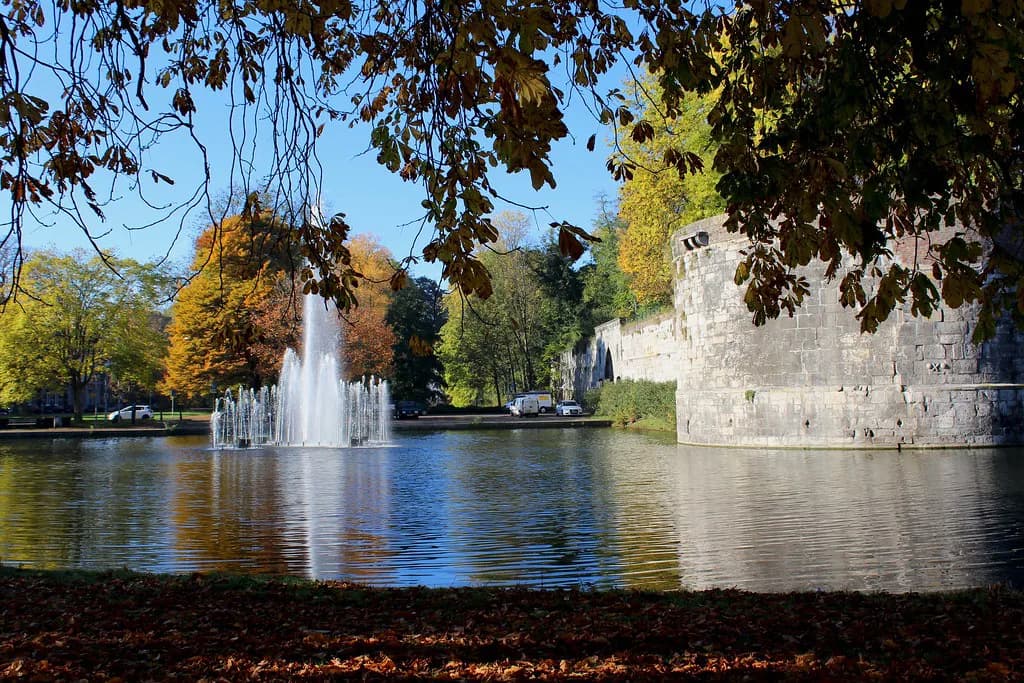
The Jeker winds past old walls, lawns and trees, and it once formed part of the defence of this side of Maastricht. In the low ground around the fortifications, water could be used to flood the terrain during a siege, so river, greenery and defences are still tangled together in the park's layout. Look for the medieval city walls and the Helpoort among the fortifications that remain in the landscape.
The Helpoort is the feature to plan around if you are short of time: it is the point where the park's history is most legible, and it anchors the walk at the old-town end. The walls and gate also explain the park's odd shape, which follows a defensive line rather than a designer's geometry. Walk the Jeker side first and the fortifications second, and the sequence makes sense.
Hertenkamp, the former Berenkuil and the d'Artagnan monument
Because the park grew in stages, it holds a scatter of distinct places with their own histories. These include the Hertenkamp, laid out around 1920, and the former Berenkuil, which today has an artistic purpose rather than housing bears. A monument to d'Artagnan also stands in the park and points back to the city's military story.
Treat these as markers on the route rather than destinations that need separate trips. The d'Artagnan monument is the one most travellers recognise, and it rewards a two-minute stop rather than a detour across town. Children often enjoy the Hertenkamp more than the masonry, which is worth knowing if you are pacing the day for a family.
Tapijntuin and the Tapijn barracks grounds next to the park
On the former Tapijnkazerne barracks site, the Tapijntuin adjoins the greenery of the Stadspark, so the two can be walked as one continuous stretch. The barracks connection matters: it extends the same military thread you have just followed along the walls and through the Helpoort. Treat the Tapijntuin as the far end of the loop rather than a separate outing.
How long the Stadspark takes to walk, and a route through it
Allow around an hour for a relaxed loop that takes in the Jeker, the walls, the Helpoort, the Hertenkamp, the former Berenkuil and the d'Artagnan monument, with the Tapijntuin added at the end. Push it to ninety minutes if you stop for photographs, sit by the water or let children run. Thirty minutes only works for a quick cut-through that skips the side features, which rather misses the point of coming.
A sensible order starts at the old-town end near the Helpoort, follows the Jeker through the oldest park sections, then works along the walls towards the Hertenkamp and the former Berenkuil before finishing at the Tapijntuin. That sequence moves you from the most historic fabric to the most modern reuse, and it keeps the return leg short. Join it after a morning in the old town, when you will already be on that side of the centre, and it slots neatly into a Maastricht walking tour of the historic streets.
Adding the Stadspark to a one-, two- or three-day Maastricht plan
On a one-day trip, use the park as a late-afternoon break: see the old town and a museum in the morning, then walk the Stadspark loop before dinner, when the walls and water give you the quiet the squares do not. With two days, give the park its own unhurried morning and pair it with the Tapijn grounds, which frees the rest of the day for the Basilica of Saint Servatius and the Vrijthof. On a three-day visit it fits naturally as the transition between the centre and the sights south of it.
The park's real advantage in planning is that it is a central green space to fold in around fixed museum slots, so a visit can absorb delays elsewhere in the day rather than tying you to a booking. Build it in as flexible time, and it will rarely be the thing you have to cut.
Other green spaces around the city and when they suit you
Beyond the Stadspark, Maastricht has other green spaces scattered around the city, including larger parks on the outskirts and the river landscape of the Maasvallei. Most sit outside the old centre, so they make sense only if you are staying nearby or have a spare half-day.
For a one- to four-day city break, the Stadspark and the Tapijntuin cover the green side of the trip, and adding another park usually means trading out a museum or a square. Pick one of the outer parks only if it is close to where you are sleeping. Otherwise spend the time in the centre, where the walking is better value.
Is the Stadspark worth an hour of your Maastricht trip?
Yes, if you treat it as a historical walk rather than a garden visit: the Jeker, the medieval walls, the Helpoort, the Hertenkamp and the d'Artagnan monument give you an hour of city history that no museum reproduces. Skip it only if your trip is a single day built entirely around the Vrijthof and the Basilica of Saint Servatius.
Explore more Maastricht guides
Sources
Notes for your next Dutch city break
Optional updates to our Netherlands guides.
You might also like

Continue reading
More guides you'll find useful