Maastricht vs Utrecht: Which Dutch City Suits Your Break?
Maastricht and Utrecht both trade on canals and history, but they feel different. Compare sights, layout, atmosphere and costs before you pick one.
On this page
Pick Maastricht for a slower, southern city with a café-lined central square and a riverfront; pick Utrecht for a compact, canal-ringed university city in the middle of the country with the strongest rail links. Both reward a short break, but they ask different things of you: Utrecht is a city you walk in circles around one tower, Maastricht is a city you sit in. This comparison covers layout, headline sights, museums, markets, water, trip length, costs, getting there and when to go, so you can commit to one.
The two are easy to combine if you have time, since both sit on the Dutch rail network, and Maastricht makes a natural base for a longer southern trip. If you lean towards Maastricht, our Maastricht itinerary lays out a workable route through the old centre.
What each city is like in a sentence
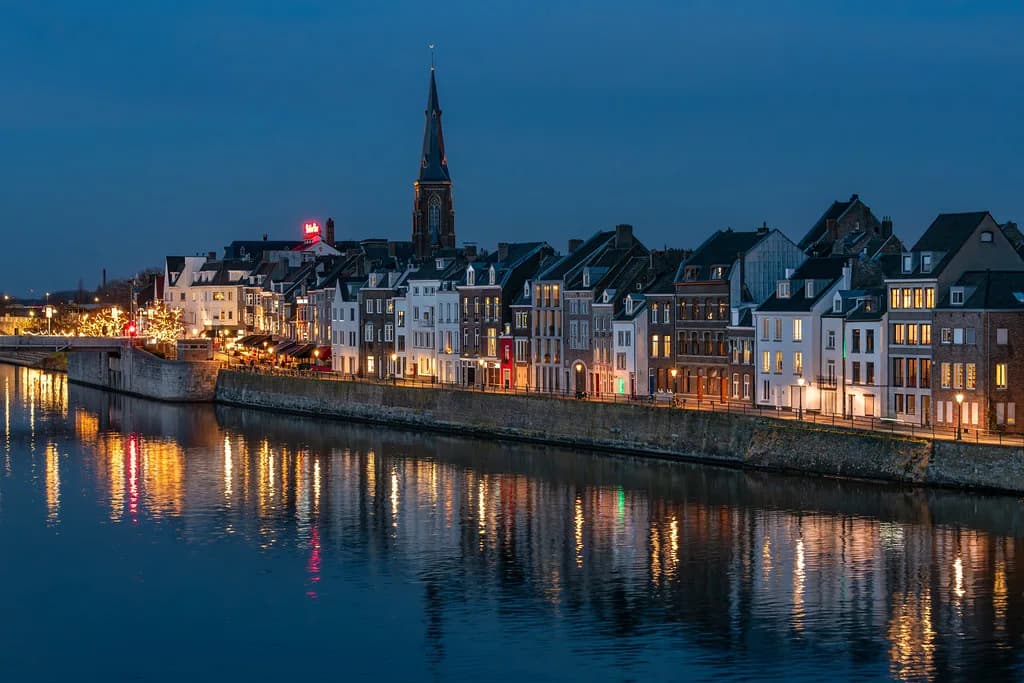
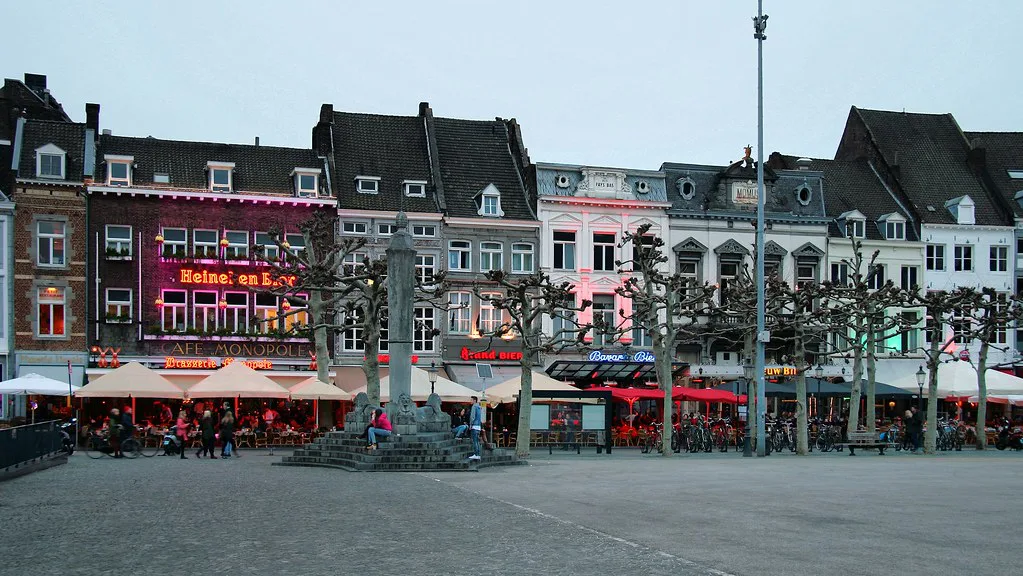
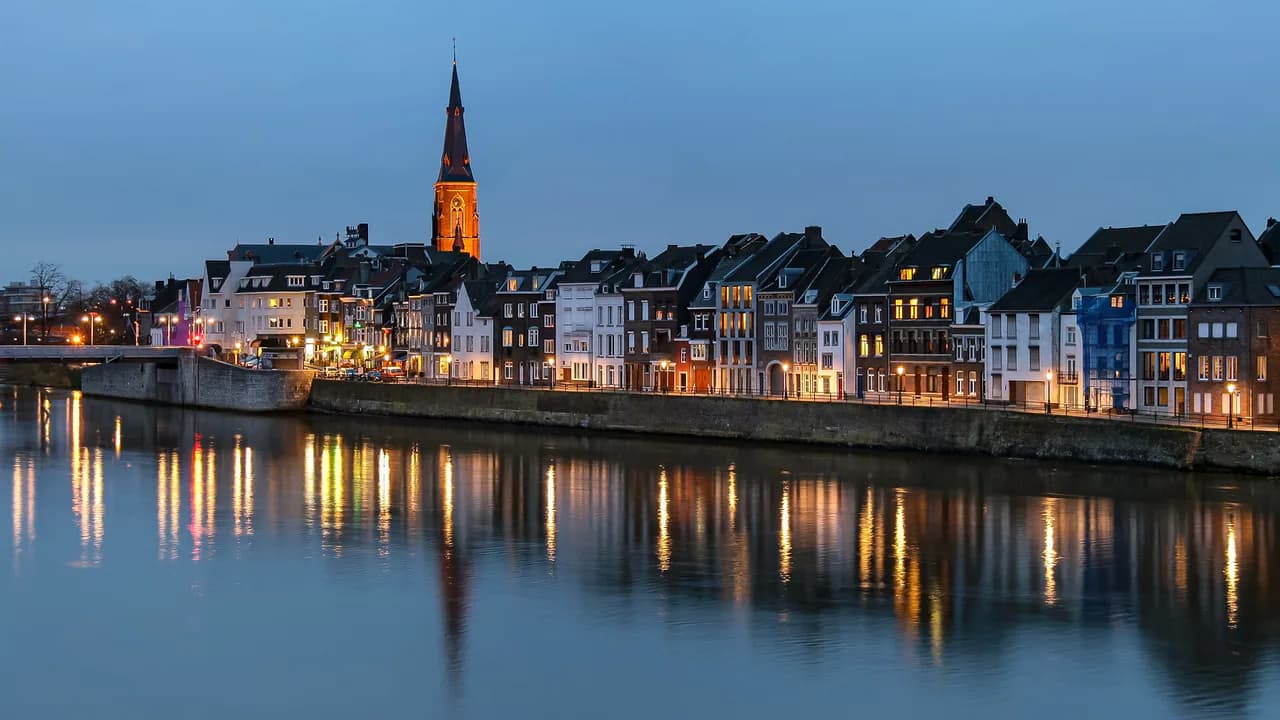
Maastricht is a southern river city where the Maas runs past medieval walls and the centre is anchored by the Vrijthof, a broad square of cafés facing the Basilica of Saint Servatius. It feels closer to Belgium and Germany than to the Randstad: low-rise, relaxed, and best enjoyed slowly.
Utrecht is a university city in the geographic middle of the Netherlands, small enough to cross on foot and dense with students, bikes and canal-side terraces. Its centre is organised around the Domtoren, the cathedral tower that dominates the skyline, and the Oudegracht, the canal that loops through the middle.
How each city is laid out on foot
In Maastricht the natural circuit runs from the Vrijthof to the Onze-Lieve-Vrouweplein, a smaller square a few minutes south, then down to the Maas and the old city walls. Everything sits inside a compact ring of former fortifications, so you can cross the centre in well under half an hour. Add the riverside path for a longer loop.
Utrecht works differently because of its two-level canal. The Oudegracht has a wharf level below street level, reached by stairways, with vaulted cellars built into the canal wall. Walking both levels is the point of the city, and it makes Utrecht feel more layered than flat old towns elsewhere.
If Maastricht is your choice, the Stokstraat quarter between the Vrijthof and the river is the most rewarding small detour, a short street of boutiques and restored townhouses. It slots neatly into one day in Maastricht without lengthening the route much.
Utrecht's headline sights
The Domtoren is the sight to build a day around: climb it for the view over the old centre, and note that the tower stands apart from the cathedral nave, which collapsed centuries ago. Below and around it, the Museum Catharijneconvent area gives you a quieter block of religious art and medieval streets.
Then walk the Oudegracht from end to end, dropping to the wharf level where the cellar arches open onto the water. In the evening the same stretch is where the city gathers, which tells you something about how Utrecht uses its canal as public space rather than scenery.
Maastricht's headline sights
Start at the Vrijthof, where the Basilica of Saint Servatius and the Sint-Janskerk face each other across the square. The basilica holds the shrine of Saint Servatius, Maastricht's patron, and the two towers give the square its silhouette. A few minutes south, the Onze-Lieve-Vrouweplein is smaller, older-feeling and better for a coffee.
The riverside and city walls complete the picture: the old fortifications along the Maas are a walk in themselves, and the Basse Little Switzerland area nearby adds a shift in level. Detail on the basilica sits in our guide to Sint Servaasbasiliek.
Best museums in each
Utrecht's two strongest picks for a short break are Museum Speelklok, devoted to self-playing musical instruments, and the Centraal Museum, which covers art and design with a strong Utrecht collection. Both sit within walking distance of the Domtoren, so you can pair one with the tower on the same day.
Maastricht's standout is the Bonnefantenmuseum, an art museum housed in a landmark building on the east bank of the Maas, reached by crossing the river from the centre. Its collection covers old masters and contemporary art, which makes it a good wet-weather anchor.
Museums and opening days
Monday is the weak day for museums in both cities, and it catches people out because Monday is often the day of arrival or departure. Plan museum visits for Tuesday to Sunday and use Monday for streets, squares and the riverside instead.
Opening hours and ticket prices change, so confirm on each museum's own site before you build a day around one. If you are weighing the cost of a Maastricht break overall, see is Maastricht expensive for what a city break really costs.
Markets: what each city adds
Both cities run weekday markets in their central squares, and for a short break the market is less a shopping stop than a way to read the city: what people buy, what they eat standing up, and which square the locals actually use. Check the market day for your dates on the city's own visitor pages before you plan around it.
In Maastricht the Vrijthof and surrounding squares host the regular market trade, and the Onze-Lieve-Vrouweplein area has its own rhythm of small shops. If your trip is built around a weekend in Maastricht, plan your market visit around the days the city's own visitor pages list.
Canals and water compared
Utrecht's wharf cellars along the Oudegracht are the feature you will not find in Maastricht: a whole second street level of vaulted spaces opening onto the canal, once used for storage and trade. Walking down and back up is part of the day, and the terraces at wharf level are where the city feels most itself.
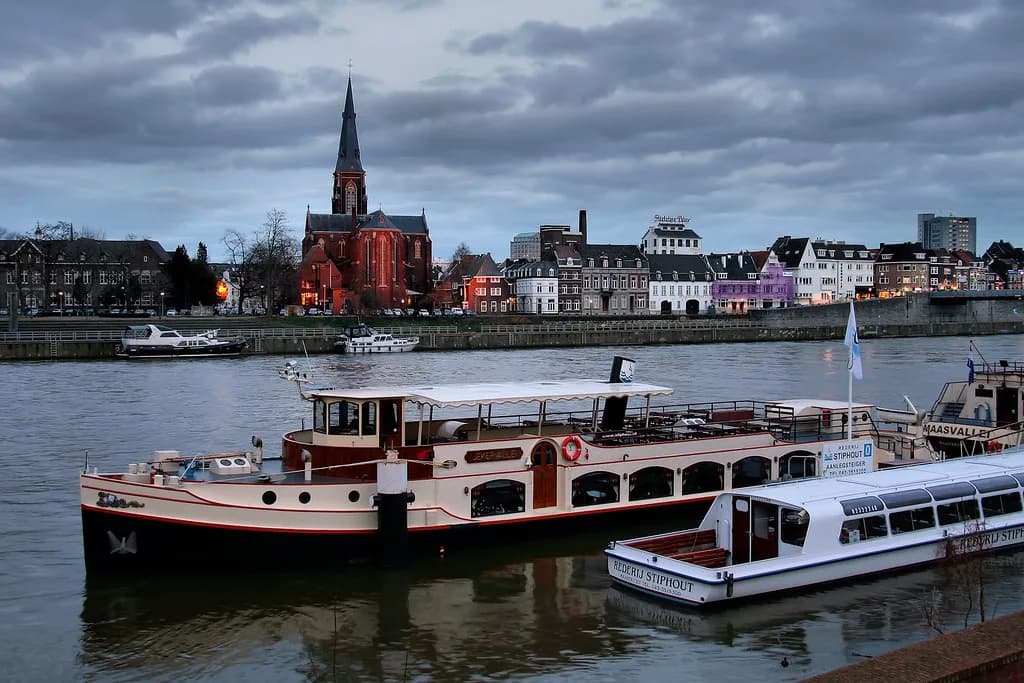
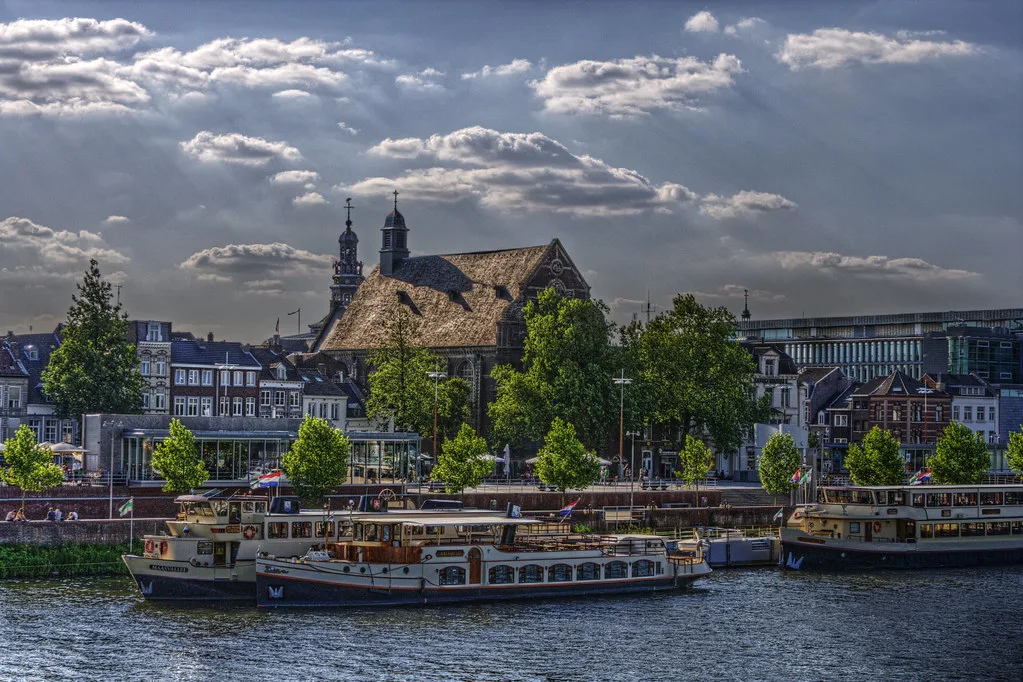
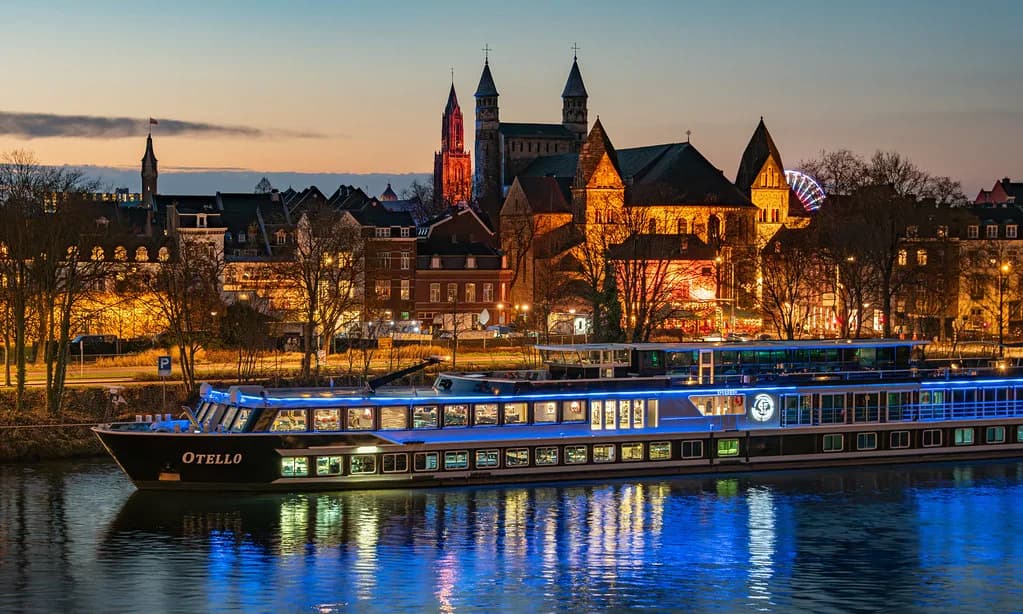
Maastricht's water is the Maas, wider and more industrial in feel than a canal, with the old city walls running along the west bank. The appeal is the openness and the riverside walk rather than cellar arches. Neither city is a gondola-and-quiet-backwater canal town in the Amsterdam sense, and that is part of their charm.
How many days each city needs
Utrecht fits comfortably into one full day for the Domtoren, the Oudegracht and one museum, with a second day for a second museum and the streets around the Museum Catharijneconvent. Two days is the sweet spot; three is generous unless you use Utrecht as a rail base.
Maastricht rewards two days, because the Vrijthof, the basilica, the Onze-Lieve-Vrouweplein, the Bonnefantenmuseum and the riverside walk do not compress into one without rushing. If you are deciding between one and two nights, How many days do you need in Maastricht? weighs the trade-offs.
Costs compared
Neither city is a budget destination, and museum tickets are the line item that varies most, so check each museum's own site for the current entry price and whether a timed slot is required before you commit a day to it. Coffee, a simple lunch and an evening drink land in similar territory in both cities, which narrows the gap between them more than headline museum prices suggest.
Football fans may want to check the calendar: Maastricht's MVV and Utrecht's Jong FC Utrecht, the reserve side of FC Utrecht, both play in the Eerste Divisie, though a Jong FC Utrecht home fixture is not a first-team Utrecht game. The two sides met at De Geusselt in Maastricht on 23 January 2026, when the league fixture finished 2-2, after pre-match analysis had made MVV Maastricht the likeliest winner.
Getting there and moving between the two
From the UK, Maastricht is reached via Brussels or Eindhoven and onward by train or bus, while Utrecht is one of the easiest Dutch cities to reach by rail from Schiphol and from Brussels. That difference matters for a short break: Utrecht costs you less of your first day in transit.
If you are flying, our London to Maastricht notes cover the airport and onward connections; Utrecht is simpler via Schiphol. Once in the Netherlands, the two cities are linked by rail, which makes a two-city trip feasible if you have three or four days.
When to go
Both cities are at their best from late spring to early autumn, when terraces are open and the light lasts into the evening. Utrecht's canal wharves are more pleasant in warm weather, and Maastricht's café culture is essentially an outdoor activity.
Summer brings crowds and higher room rates in both, and spring and autumn give you cooler walks with shorter queues at the Domtoren and the basilica. Winter is quiet and cheap but the terraces close, so if café life is the point, aim for May to September.
Atmosphere and who each city suits
Utrecht suits travellers who like a compact, walkable centre, strong rail links and a student energy of bikes, bookshops and canal-side bars at wharf level. It is the better base if you want to see more of the Netherlands without long transfers.
Maastricht suits travellers who want a slower southern rhythm, a broad square to sit on, and a river rather than a canal ring. It feels less like a university city and more like a small European provincial capital with good food and a compact old centre.
Which city should you book?
Book Utrecht if you want the easiest trip: one compact centre, the Domtoren and the wharf canals, and quick rail links from the airport and to the rest of the country. Book Maastricht if you want the southern feel, the Vrijthof, the basilica and a riverside walk, and you are happy to spend a little more of your first day getting there.
If you can stretch to three or four days, do both: rail connects them, and the contrast between Utrecht's two-level canal and Maastricht's Maas-side old town is the reason to go. If you are still weighing whether Maastricht is worth the trip at all, Is Maastricht Worth Visiting? An Honest Answer sets out the case plainly.
Explore more Maastricht guides
Frequently Asked Questions
Is Utrecht or Maastricht better for a first Dutch city break?
Utrecht is the easier first break: it is compact, centred on the Domtoren, and well connected by rail. Maastricht is better if you specifically want a southern, slower city with a broad central square and a riverfront.
Can you visit Maastricht and Utrecht on the same trip?
Yes. Both sit on the Dutch rail network and the journey between them is straightforward, so a three- or four-day trip can cover both without rushing. Give Maastricht two nights and Utrecht at least one full day.
Are museums open on Mondays in Maastricht and Utrecht?
Many museums in both cities close on Mondays, so plan museum visits from Tuesday to Sunday and use Monday for squares, streets and the riverside. Confirm opening days on each museum's own site before you travel.
Sources
Notes for your next Dutch city break
Optional updates to our Netherlands guides.
You might also like
Continue reading
More guides you'll find useful